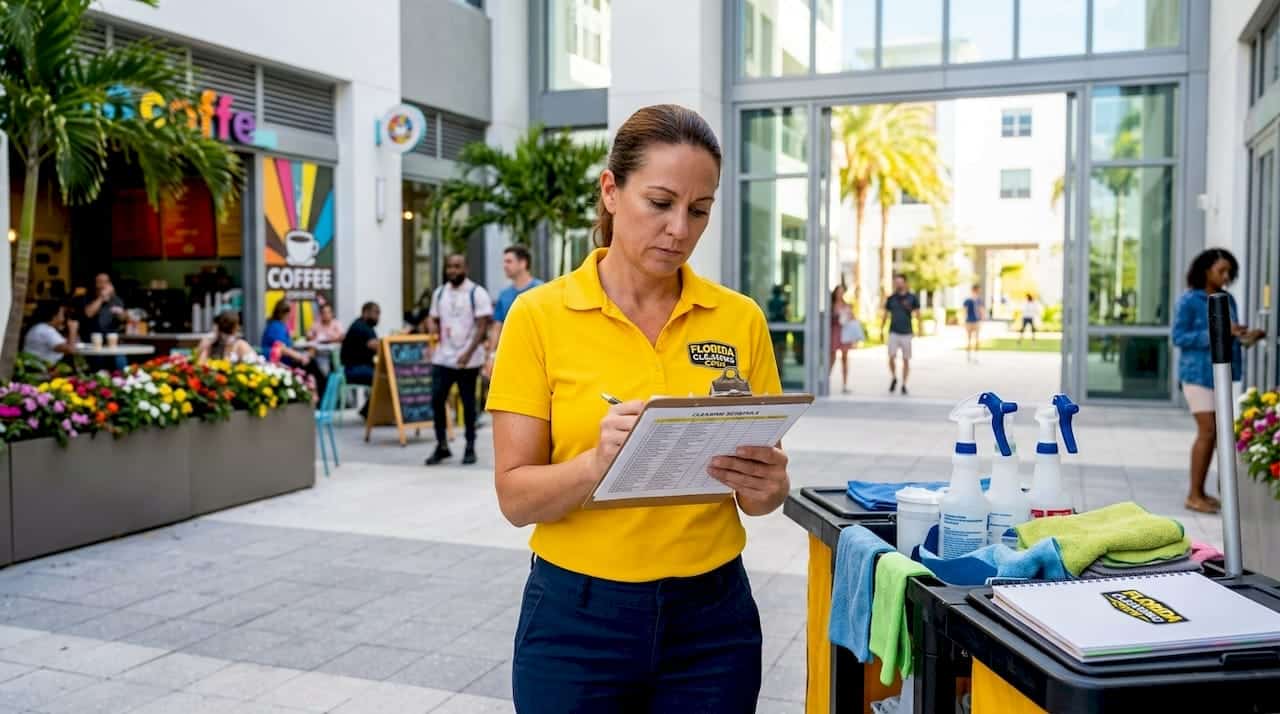
Office space cleaning for mixed-use properties is the coordinated maintenance of shared and tenant-specific areas within a single building that serves multiple functions, such as retail, office, and residential use. Unlike standard office cleaning, this process demands tailored schedules, zone-specific protocols, and constant communication with diverse tenants. Property owners, facility managers, and real estate investors who get this right protect their asset value and keep tenants satisfied. Those who treat it like a standard office job create gaps that cost them leases.
What is office space cleaning for mixed-use buildings?
A mixed-use property is a building or development that combines two or more distinct uses under one roof. Common combinations include ground-floor retail with upper-floor offices, residential units above commercial suites, or co-working spaces sharing a lobby with medical practices. The industry term for maintaining hygiene across all these zones is multi-tenant commercial cleaning, though “office space cleaning for mixed-use” describes the same practice from a facility management perspective.
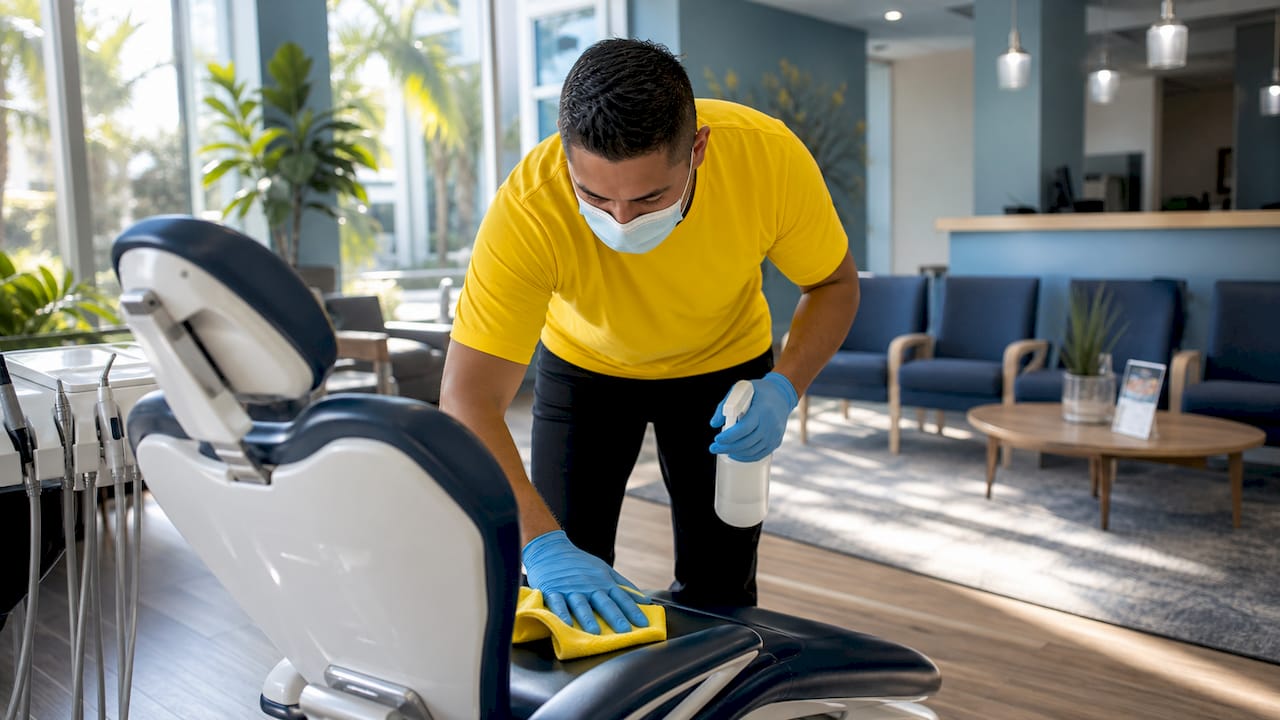
The core challenge is that each tenant type generates different cleaning demands. A dental office needs clinical-grade disinfection. A co-working suite needs daily surface wipe-downs. A retail storefront needs floor care and window cleaning on a different schedule than either. One building can contain all three, and a single cleaning program must serve all of them without disrupting operations.
Standard office cleaning assumes a single tenant with predictable hours and uniform surfaces. Mixed-use cleaning assumes nothing. It requires a written plan that maps every zone, identifies who controls it, and assigns a cleaning frequency based on actual foot traffic rather than a generic schedule.
What unique cleaning challenges do mixed-use office spaces present?
Mixed-use buildings create operational complexity that single-tenant offices never face. The challenges fall into four main categories: tenant diversity, traffic patterns, regulatory compliance, and coordination logistics.
Tenant diversity and scheduling conflicts
Customized cleaning programs enhance efficiency and tenant satisfaction precisely because rigid, one-size-fits-all checklists fail in these environments. A law firm on the third floor may need cleaning after 6 p.m. A coffee shop on the ground floor needs it before 6 a.m. A fitness studio needs it between classes. Coordinating all three without overlap requires scheduling precision that most generic cleaning contracts do not provide.
High-traffic common areas versus private tenant zones
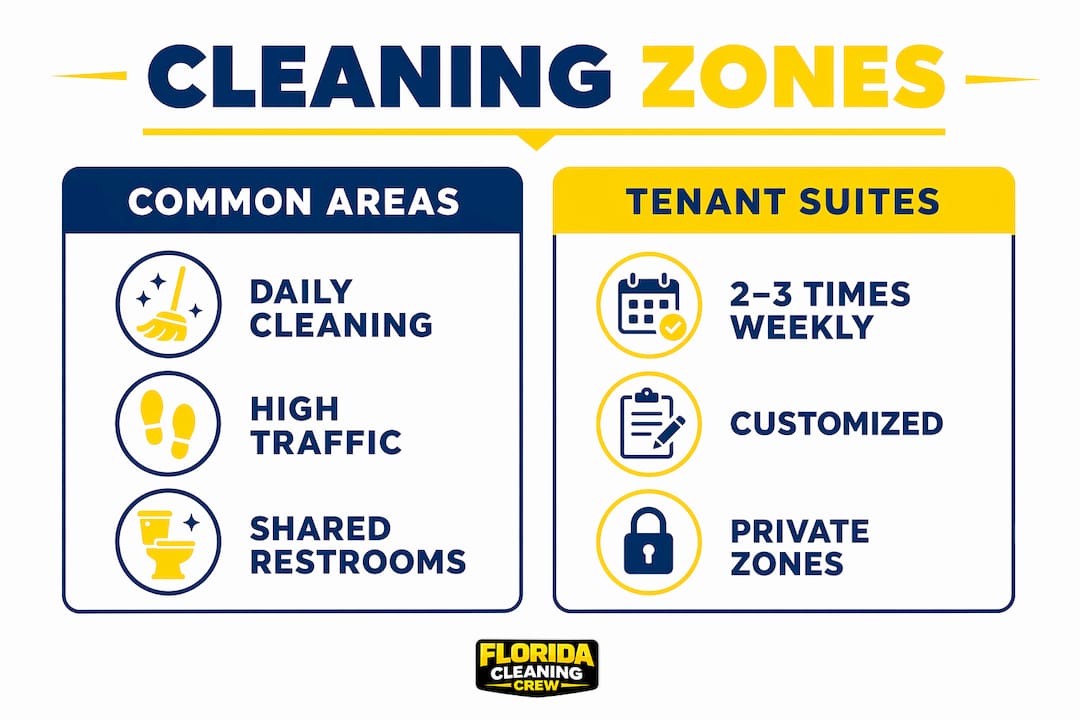
Lobbies, elevators, stairwells, and shared restrooms absorb foot traffic from every tenant and their visitors. These areas deteriorate faster than private suites and need more frequent attention. Cleaning shared restrooms multiple times daily with detailed sanitation protocols for high-touch points is not optional in multi-tenant buildings. It is a direct factor in health outcomes, liability exposure, and tenant satisfaction scores.
Regulatory and safety compliance
OSHA-compliant Safety Data Sheets for all chemicals on-site are mandatory, though many cleaning programs overlook this requirement until an exposure incident forces the issue. In a mixed-use building, this matters more because different zones may require different chemical classes. A cleaning crew moving from a medical suite to a food service area must switch products and document the transition.
Coordination to minimize disruption
- Cleaning crews must work around tenant business hours, deliveries, and client visits.
- Access to locked suites requires advance coordination with individual tenants.
- Noise-generating tasks like vacuuming or floor buffing must be scheduled outside peak hours.
- Emergency spill response needs a clear escalation protocol that does not require a property manager to be on-site.
Pro Tip: Create a shared digital calendar that all tenants and your cleaning provider can access. When a tenant schedules an after-hours event or a delivery, the cleaning crew adjusts automatically rather than showing up at the wrong time.
What best practices define effective office cleaning for mixed-use properties?
Effective mixed-use cleaning services start with a written scope of work that separates landlord-controlled common areas from tenant-specific interiors. Separating these zones and documenting cleaning for each one improves accountability and reduces service gaps. Without this separation, cleaning crews default to the easiest areas and skip the ones that generate the most complaints.
Frequency recommendations by zone type
Professional cleaning frequency for corporate offices in mixed-use buildings is 2–3 times per week, with daily cleaning required in high-traffic areas such as restrooms and lobbies. Medical facilities and gyms typically require daily cleaning. Low-traffic suites may only need weekly service. Matching frequency to actual usage is the single most effective cost control measure in any mixed-use cleaning program.
Equipment and cross-contamination prevention
Color-coded microfiber systems and HEPA-filter vacuums capturing 99.97% of particles improve cleaning efficacy and prevent cross-contamination between zones. This matters most in buildings where a medical or food service tenant shares common areas with standard office tenants. A red microfiber cloth used in a restroom should never touch a breakroom counter. Color coding makes this rule enforceable without relying on memory.
For effective office cleaning supplies, the product selection must match the surface type and the tenant’s industry requirements. A co-working space needs different disinfectants than a physical therapy clinic sharing the same building.
High-priority areas and cleaning checklist elements
- Lobbies and elevators: Daily mopping, surface wipe-downs, and glass cleaning. These are the first impression for every visitor.
- Shared restrooms: Multiple daily cleanings, restocking of supplies, and documented sanitation of all high-touch points including door handles, faucets, and flush levers.
- Breakrooms and kitchens: Daily cleaning of counters, sinks, and appliance exteriors. Weekly deep cleaning of refrigerators and microwaves.
- Workstation surfaces: Disinfecting desk surfaces consistently achieves a 99% bacteria reduction over 48 hours, with bacteria levels peaking after lunch. This makes midday touch-ups in high-use areas worth the added cost.
- High-touch points: Light switches, door handles, elevator buttons, and shared equipment need daily disinfection regardless of the tenant type.
Pro Tip: Build a zone-specific checklist for every area in the building, not just a master list. When a cleaning crew checks off “restroom cleaned,” that entry should specify which restroom, what products were used, and what time the service occurred. This documentation protects you during lease disputes and property inspections.
How does office cleaning affect tenant satisfaction and property value?
Clean buildings retain tenants. This is not a soft claim. Tenants who experience consistent cleanliness in lobbies, restrooms, and shared spaces renew leases at higher rates than those who field complaints from their own staff about hygiene. The benefits of office cleaning extend beyond appearance into measurable financial outcomes for property owners.
Health, air quality, and liability
Indoor air quality in densely occupied office buildings degrades quickly without proper cleaning. HEPA-filter vacuums remove fine particulate matter that standard vacuums recirculate into the air. In a mixed-use building with a medical tenant, poor air quality is not just a comfort issue. It is a liability issue. Documented cleaning records demonstrate due diligence if a tenant or visitor files a health-related complaint.
Lease compliance and property inspections
Many commercial leases include cleanliness standards as a landlord obligation for common areas. Failing to meet those standards gives tenants grounds to withhold rent or terminate early. Documented cleaning logs, signed by the cleaning provider after each visit, create a paper trail that protects the property owner during disputes. Documenting completion and exceptions for each cleaning zone establishes accountability and supports lease compliance in multi-tenant office buildings.
Asset preservation and long-term value
- Regular floor care prevents premature wear on carpet, tile, and hardwood surfaces.
- Consistent window cleaning protects glass coatings from mineral buildup, which is especially relevant in Tampa Bay’s humid, salt-air environment.
- Grout cleaning and restroom maintenance prevent water damage and mold growth that require expensive remediation.
- A well-maintained building commands higher rents and attracts higher-quality tenants at lease renewal.
Professional mixed-use cleaning programs pay for themselves through reduced maintenance costs and stronger tenant retention. The math is straightforward: one lost lease in a mixed-use building costs far more than a year of professional cleaning service.
What operational strategies support efficient mixed-use office cleaning?
The most effective mixed-use cleaning operations combine phased scheduling, documented protocols, and the right product selection. Technology plays a growing role, but the fundamentals still drive results.
Phased cleaning for turnover and construction
Post-construction cleaning in mixed-use buildings should be phased according to zone readiness rather than performed as a single final clean. Cleaning a finished suite before adjacent construction is complete results in re-soiling and wasted labor. A phased approach cleans each zone as it becomes ready, which keeps the building move-in ready without redundant work.
Cleaning management and scheduling tools
Facility managers in Tampa, St. Petersburg, and Clearwater increasingly use cleaning management software to track service completion, flag missed tasks, and communicate with cleaning crews in real time. Tools like Swept and Janitorial Manager allow property managers to assign zone-specific tasks, receive photo documentation of completed work, and generate reports for lease compliance purposes. This level of oversight is not practical with paper checklists.
Comparison: common area cleaning vs. tenant suite cleaning
| Factor | Common area cleaning | Tenant suite cleaning |
|---|---|---|
| Frequency | Daily to multiple times daily | 2–3 times per week or as negotiated |
| Responsibility | Landlord | Tenant or landlord by lease terms |
| Documentation | Required for lease compliance | Recommended for dispute prevention |
| Products used | OSHA-compliant, multi-surface | Tenant-specific requirements may apply |
| Access coordination | Open access | Requires tenant scheduling |
| Priority areas | Lobbies, restrooms, elevators | Workstations, breakrooms, private restrooms |
Environmentally responsible product selection
Tampa Bay’s proximity to the Gulf of Mexico makes chemical runoff a real concern for property owners who care about their community footprint. OSHA-compliant, biodegradable cleaning products protect both occupant health and local waterways. Many commercial tenants, particularly in professional services and healthcare, now ask about cleaning product safety as part of their lease due diligence. Workplace cleanliness strategies tailored for Tampa Bay properties account for both the regulatory environment and tenant expectations around sustainability.
Pro Tip: Ask your cleaning provider for the Safety Data Sheets for every product they use in your building before signing a contract. If they cannot produce them immediately, that is a red flag for OSHA compliance and tenant safety.
Key Takeaways
Effective office space cleaning for mixed-use properties requires zone-specific protocols, documented accountability, and cleaning frequencies matched to actual tenant usage rather than a generic schedule.
| Point | Details |
|---|---|
| Zone separation is non-negotiable | Separate landlord common areas from tenant suites and document each zone independently. |
| Frequency must match usage | High-traffic areas need daily cleaning; low-traffic suites may only need weekly service. |
| Equipment prevents cross-contamination | Color-coded microfiber systems and HEPA vacuums protect tenants in adjacent zones. |
| Documentation protects owners | Signed cleaning logs support lease compliance and reduce liability exposure. |
| Phased cleaning saves money | During turnover or construction, clean zones as they become ready to avoid re-soiling. |
What I’ve learned from watching mixed-use cleaning go wrong
The most common mistake I see property owners make is hiring a standard office cleaning company and handing them a single master checklist. It looks organized on paper. In practice, the crew cleans what is easy and skips what is complicated. The lobby looks fine. The shared restroom on the second floor gets missed three times a week. A tenant complains. The property manager blames the cleaning company. The cleaning company blames the checklist. Nobody wins.
The real issue is that mixed-use buildings require a cleaning partner who understands the difference between a landlord obligation and a tenant obligation, and who can document both. I have seen lease disputes resolved or escalated entirely based on whether the property owner had cleaning logs. Owners with logs win. Owners without them settle.
The other thing I would tell any facility manager in Tampa Bay specifically: humidity and salt air accelerate surface degradation faster than in inland markets. Grout, window seals, and HVAC vents need more frequent attention here than the national averages suggest. A cleaning program designed for a Chicago office building will underperform in St. Petersburg. Local experience matters more than a national brand name on the contract.
Flexibility is the trait that separates good mixed-use cleaning providers from great ones. Tenant variety and overlapping schedules make rigid cleaning schedules ineffective. The best providers build communication into the contract, not just the scope of work. They check in with tenants, adjust when a suite’s hours change, and flag problems before they become complaints. That kind of relationship is worth paying for.
— Matt
Floridacc handles mixed-use office cleaning the right way
Mixed-use properties in the Tampa Bay area need a cleaning partner who understands the difference between a lobby and a leased suite, and who shows up with the right products, the right documentation, and the right schedule every time.

Floridacc provides commercial cleaning for Tampa Bay offices and mixed-use properties with customized plans built around your tenants’ schedules and your lease obligations. Every service is backed by OSHA-compliant products, licensed and insured crews, and documented completion records. Whether you manage a two-tenant retail and office building or a larger multi-floor development, Floridacc builds a cleaning program around your property, not a generic template. Request a free estimate and see what a cleaning plan designed for your specific building actually looks like.
FAQ
What is a mixed-use space in real estate?
A mixed-use space is a property that combines two or more distinct uses, such as retail, office, and residential, within a single building or development. These properties require specialized cleaning programs because each use type generates different hygiene demands and operating schedules.
How often should common areas in a mixed-use building be cleaned?
Lobbies, restrooms, and elevators in mixed-use buildings require daily cleaning at minimum, with shared restrooms often needing multiple cleanings per day. High-traffic areas deteriorate faster than private suites and carry the highest liability risk if neglected.
Who is responsible for cleaning in a mixed-use office building?
Landlords are typically responsible for cleaning landlord-controlled common areas, while tenants handle their private suites unless the lease specifies otherwise. Separating these zones in writing and documenting each one prevents disputes and service gaps.
What cleaning equipment works best in mixed-use office spaces?
HEPA-filter vacuums and color-coded microfiber systems are the standard for multi-tenant environments because they prevent cross-contamination between zones and capture fine particulate matter that standard equipment misses.
How does office cleanliness affect tenant retention?
Consistent cleanliness in shared areas directly influences tenant renewal decisions. Tenants who experience clean lobbies, restrooms, and breakrooms are more likely to renew leases, while recurring hygiene complaints are one of the most cited reasons tenants choose not to renew in multi-tenant commercial buildings.