TL;DR:
- Commercial cleaning directly impacts revenue, employee health, and customer trust.
- Professional cleaning is more cost-effective than DIY when considering hidden costs and compliance.
- Choosing a licensed, insured provider with a strong safety and quality program ensures long-term value.
Most business owners think of commercial cleaning as a fixed overhead cost, like utilities or rent. But that framing quietly costs you money, reputation, and people. Research shows that 73% of studies found a direct link between hygiene compliance and improved business results, which means the decision to clean professionally is not just cosmetic. It affects who stays, who returns, and what your space says about you before anyone opens their mouth. This article breaks down the real financial and operational value of commercial cleaning for Tampa Bay business owners and property managers, so you can make smarter decisions about where this investment fits in your strategy.
Table of Contents
- The true impact of workplace cleanliness
- Commercial cleaning vs. DIY: Cost, quality, and long-term value
- Key elements of a best-in-class commercial cleaning program
- Choosing the right commercial cleaning partner in Tampa Bay
- What most business leaders overlook about cleaning investments
- Invest confidently in your Tampa Bay cleaning solution
- Frequently asked questions
Key Takeaways
| Point | Details |
|---|---|
| Cleanliness boosts performance | Investing in commercial cleaning directly improves health, morale, and business results. |
| Professional beats DIY | Expert cleaning services deliver higher quality, reduce risk, and prove more cost-effective over time. |
| Choose strategically | Selecting the right cleaning partner in Tampa Bay is crucial for sustained workplace safety and value. |
| Mindset matters | Treating cleaning as an investment—not an expense—sets leaders apart in 2026. |
The true impact of workplace cleanliness
If you run a business or manage a property in Tampa Bay, you already know that appearances matter. What surprises most owners is how deeply cleanliness connects to outcomes you actually track, such as revenue, staffing costs, and customer retention.
Businesses with higher hygiene standards consistently see better revenue and greater operational resilience during disruptions. That connection is not accidental. When employees work in a clean, well-maintained space, sick days drop, morale improves, and people simply perform better. When customers walk into a clean facility, trust forms faster. When tenants see that a property is well cared for, they are more likely to renew.
Let’s get specific about what cleanliness actually protects:
- Revenue and foot traffic: A visibly dirty environment signals neglect. Customers notice and they leave, often without telling you why.
- Employee health and productivity: Fewer pathogens on shared surfaces means fewer sick days. The average employee misses about four days a year due to illness, and shared spaces accelerate that.
- Liability exposure: OSHA and local health codes require specific standards. A single complaint or inspection failure can cost more than a year’s worth of professional cleaning contracts.
- First impressions with clients: In professional services, healthcare, hospitality, and retail, your space is your first pitch. A clean environment communicates competence and care before anyone speaks.
- Property value and asset protection: Dirt and grime degrade flooring, fixtures, and surfaces over time. Regular cleaning is preventive maintenance.
“Clean spaces do not just look better. They perform better, retain people better, and recover from disruptions better.”
Understanding why professional cleaning matters goes beyond surface-level results. It is about building a system that protects your business continuously, not just when things look bad.
Pro Tip: High-touch surfaces like door handles, elevator buttons, light switches, and shared keyboards are missed in most DIY cleaning routines. These are the surfaces most responsible for spreading illness in commercial environments. Make sure your cleaning program includes a specific protocol for them.
The bottom line is simple. Cleanliness is not just an appearance metric. It is a performance metric, and treating it as anything less leaves real value on the table.
Commercial cleaning vs. DIY: Cost, quality, and long-term value
Once you understand the stakes, the next question becomes practical: should you hire professionals or handle cleaning in-house? It is a fair question, and the honest answer depends on what you actually count as a cost.
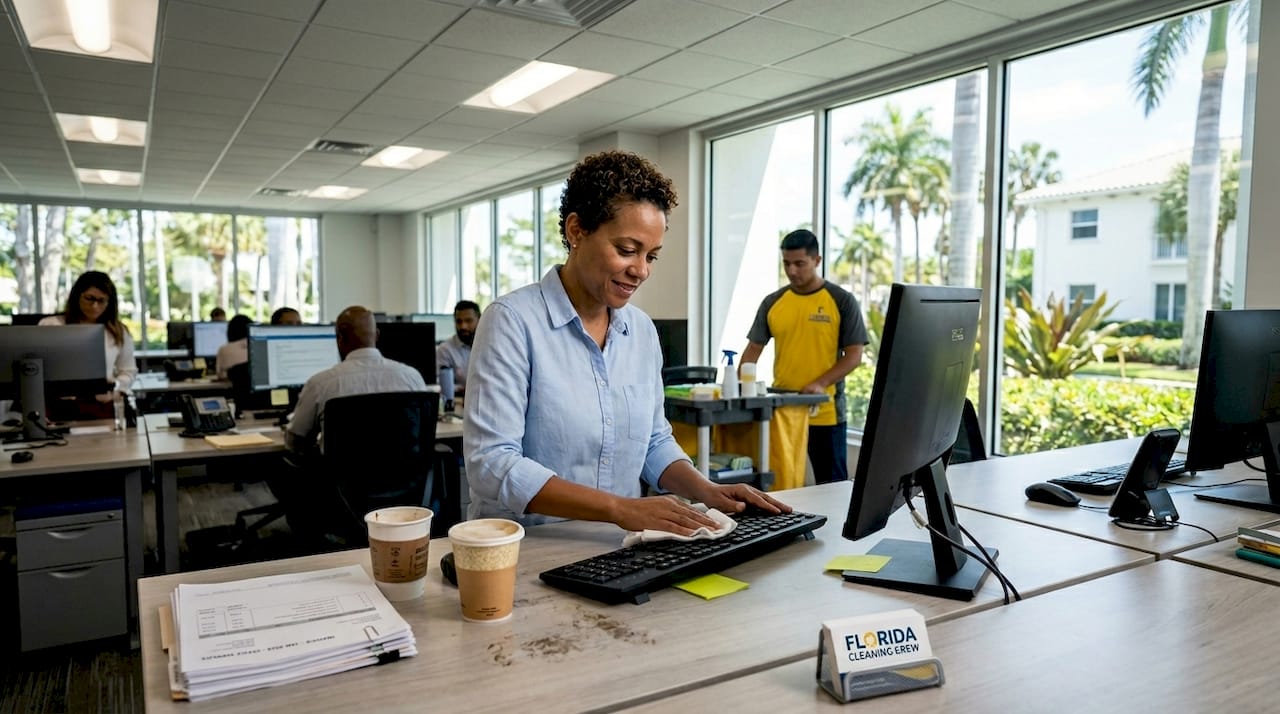
Most owners who go the DIY route think they are saving money. But they often forget to account for indirect costs, such as employee time pulled from productive work, cleaning supply procurement and storage, training time, inconsistent results, and potential compliance gaps. Professional cleaning correlates with increased business resilience and higher customer trust, both of which translate directly into revenue.
Here is a side-by-side comparison to help you see the full picture:
| Factor | Professional cleaning | DIY or in-house |
|---|---|---|
| Upfront cost | Monthly contract fee | Low initial spend |
| Hidden costs | Minimal | Supplies, training, time |
| Consistency | Scheduled and accountable | Varies by staff availability |
| Compliance | Trained in OSHA and CDC standards | Risk of gaps |
| Liability | Covered by insured vendor | Falls on your business |
| Equipment quality | Commercial-grade tools | Consumer-grade, limited results |
| Specialized services | Included or available | Often skipped entirely |
The cost gap narrows fast once you factor in real hours spent managing cleaning tasks, purchasing supplies, and dealing with problems that proper cleaning would have prevented.
Here is a practical checklist for assessing your current cleaning solution:
- Audit your current outcomes: Are sick days trending up? Are customers or tenants complaining about cleanliness? These are data points.
- Calculate true time costs: How many staff hours per week go toward cleaning-related tasks? What is that worth in productivity?
- Review compliance requirements: Does your industry have specific sanitation standards? Is your current setup meeting them?
- Identify high-risk zones: Which areas see the most traffic, moisture, or shared contact? Are they getting the attention they need?
- Compare apples to apples: Get a detailed quote from a professional service and compare it against the true all-in cost of your current approach.
Reviewing commercial cleaning standards in Tampa Bay can help you understand exactly what a qualified provider should be delivering and how that compares to what you currently have.
Pro Tip: Many business owners only realize they should have hired professionals after an OSHA complaint, a bad online review mentioning cleanliness, or a spike in employee sick time. Do not wait for a negative signal to prompt action.
Key elements of a best-in-class commercial cleaning program
Knowing you need professional cleaning is one thing. Knowing what to look for in a program is another. Not all commercial cleaning services are equal, and the gap between an average vendor and a truly top-tier program can be significant.
The best commercial cleaning programs are built on a few non-negotiable foundations. Trained staff is the starting point. Cleaners should know how to handle different surface types, which products are appropriate for which environments, and how to follow health and safety protocols without cutting corners. Generic cleaning skills are not enough for commercial environments.
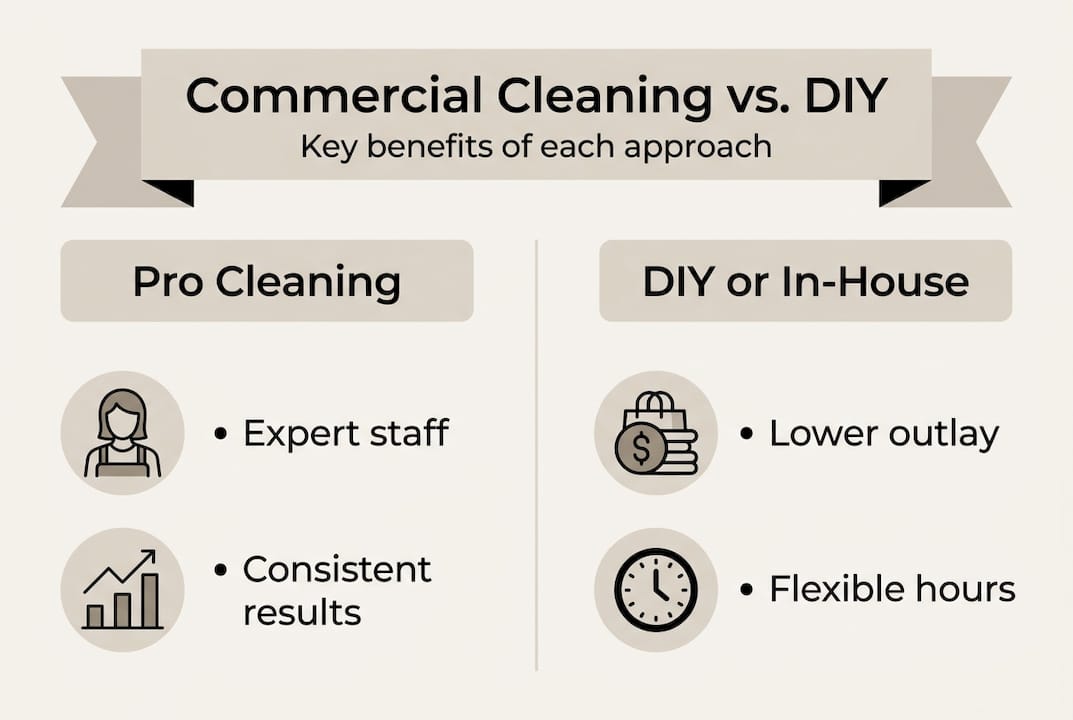
Improved hygiene compliance increases tenant and customer retention, and the programs that consistently deliver compliance share specific characteristics.
| Program element | Why it matters | What to look for |
|---|---|---|
| Cleaning frequency | Prevents buildup and contamination | Daily, weekly, and deep-clean schedules |
| Surface coverage | Ensures no high-risk zone is missed | Documented checklist per area |
| Eco-friendly products | Health and environmental responsibility | Green-certified or non-toxic solutions |
| OSHA and CDC alignment | Reduces liability and ensures safety | Staff trained to current guidelines |
| Licensed and insured vendor | Protects your business | Verifiable credentials and coverage |
| Quality control process | Maintains consistency over time | Inspections, reports, and accountability |
Here is what to require from any reputable cleaning vendor before you sign:
- Written scope of work covering every area of your property
- Proof of liability insurance and workers’ compensation coverage
- Clear product list with safety data sheets available on request
- References from similar commercial clients in the Tampa Bay area
- A defined escalation path for complaints or missed service
- Transparent pricing with no hidden fees for standard services
Exploring small business cleaning benefits and reviewing how office cleaning solutions are structured can help you benchmark what a strong program looks like in practice before you start comparing providers.
The right program does not just clean your space. It protects your people, your assets, and your reputation on a consistent schedule. That is what separates a reactive cleaning arrangement from a proactive one.
Choosing the right commercial cleaning partner in Tampa Bay
Finding a cleaning provider is easy. Finding the right one for your property and your standards takes more intentional effort. Tampa Bay has unique considerations that affect what good commercial cleaning looks like here, and those factors should shape how you vet candidates.
Businesses choosing partners with high hygiene standards consistently gain more customer trust and stronger retention. That outcome starts with a thoughtful selection process.
Here is a step-by-step approach to choosing the right Tampa Bay cleaning services provider:
- Verify credentials first: Confirm that any provider is licensed in Florida, carries general liability insurance, and has workers’ compensation coverage. Ask for documentation, not just a verbal confirmation.
- Request local references: Ask specifically for clients in the Tampa Bay area with similar property types. Call those references and ask about consistency, communication, and how the provider handles problems.
- Get a detailed written proposal: A trustworthy provider will walk through your space and produce a written scope of work. Vague quotes are a warning sign.
- Ask about staff training and supervision: Who cleans your property? Are they background-checked? How is quality controlled?
- Discuss flexibility and communication: Can the schedule flex around your operations? Is there a dedicated point of contact?
Beyond the general checklist, Tampa Bay properties face some specific conditions worth addressing:
- Humidity and mold risk: Florida’s climate accelerates mold growth in bathrooms, storage areas, and HVAC-adjacent spaces. Your provider should have a protocol for this.
- Seasonal traffic surges: Depending on your business type, winter months bring significant foot traffic increases that require adjustments to cleaning frequency.
- Mixed-use properties: Many Tampa Bay commercial properties combine office, retail, and common areas. Your cleaning program needs to address each zone appropriately.
- Allergy and air quality concerns: Florida allergens are year-round. HEPA filtration and dust-reduction practices matter more here than in drier climates.
Before you sign any contract, ask these direct questions: What happens if a cleaner misses a scheduled visit? How do you handle a complaint? What is your turnover rate? The answers will tell you as much as the contract itself.
The goal is a long-term partnership, not just a transactional service. The right provider will treat your property with consistency and accountability.
What most business leaders overlook about cleaning investments
Here is the uncomfortable truth most cleaning-service articles skip: the way most businesses think about cleaning is fundamentally backwards.
Owners treat cleaning as a reaction to mess. Professionals treat it as prevention of loss. The difference between those two mindsets compounds over time into very different business outcomes. Every day you defer proper cleaning, you are not saving money. You are accumulating risk in slow motion.
The conventional wisdom says find the cheapest vendor who gets the job done. But cheap cleaning is almost always expensive cleaning with a delay attached. You will pay for it in equipment degradation, liability exposure, staff turnover, or customer complaints. The cost is real. It just shows up later and is harder to trace back to the original decision.
In 2026, client expectations have moved. Standards have moved. Legal exposure has moved. A “good enough” program that would have passed muster five years ago may now represent a compliance gap or a reputational liability. The bar has risen, and your investment strategy should reflect that.
Treat hygiene as a strategic driver, the same way you treat technology, staffing, or marketing. When your space consistently signals competence and care, it reinforces every other positive impression your business makes. When it does not, it quietly undermines everything else. Professional-grade results are achievable for businesses of any size. The question is whether you are willing to invest in them proactively rather than waiting for a problem to force your hand.
Ask yourself: when did you last formally review your cleaning investment? If the answer is “never” or “a few years ago,” that gap is worth closing now.
Invest confidently in your Tampa Bay cleaning solution
You now understand what a real commercial cleaning investment looks like, what it protects, and how to find the right partner. The next step is putting that knowledge to work.
At Florida Condo & Commercial Cleaning, we serve business owners and property managers across the Tampa Bay area with licensed, insured, and accountable commercial cleaning services built around your specific space and schedule. We use eco-friendly products, follow current health and safety standards, and show up consistently because your business deserves a partner, not just a vendor. Whether you manage a single office or a multi-tenant property, we can help you build a cleaning program that protects your investment. See local cleaning insights to understand what standards apply to your property, then reach out for a free quote today.
Frequently asked questions
How does commercial cleaning improve business performance?
Professional cleaning reduces illness, boosts morale, and fosters customer trust, all of which lead to stronger business results. Cleanliness investments drive measurably better outcomes across industries and property types.
Is hiring a cleaning service really more cost-effective than doing it myself?
Hiring professionals limits risk, improves quality, and often saves long-term costs compared to managing cleaning in-house. Professional cleaning correlates with increased business resilience, which translates into real financial protection over time.
What should I look for in a Tampa Bay commercial cleaning provider?
Look for licensed, insured companies with verifiable local references and a clear scope of work focused on health, safety, and quality control. A trustworthy provider will always document their process and stand behind their results.
Does commercial cleaning really impact tenant or employee retention?
Yes, businesses with higher cleanliness and hygiene standards consistently report improved satisfaction and retention among both employees and tenants. Hygiene improves retention across commercial and residential property settings alike.