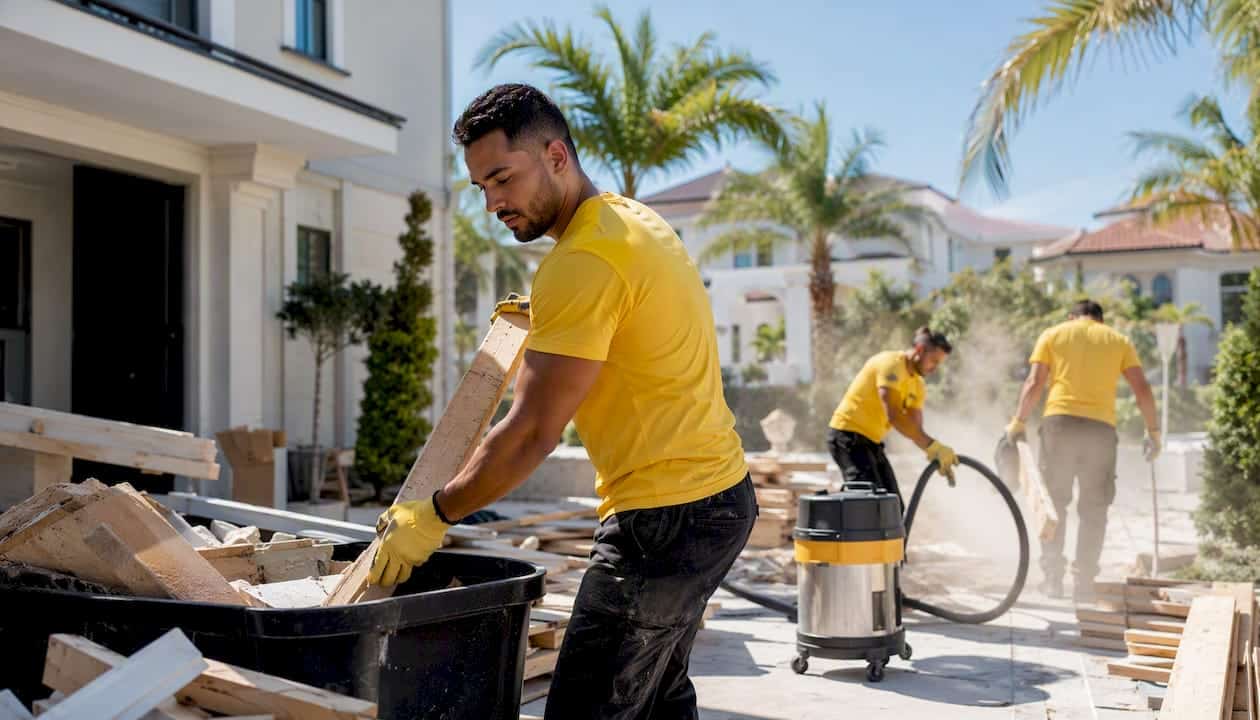
If you’ve just wrapped a build or major renovation, hiring professional construction cleaning services is not optional — it’s the step that gets you from “construction complete” to “ready for occupancy.” For new builds, tenant improvements, or any project where concrete dust, drywall particles, and adhesive residue are present, a licensed cleaning crew is the right call. A general contractor’s broom-out does not meet the standard most property owners, inspectors, or tenants expect at handoff.
Here’s a fast way to decide whether you need a pro:
- New construction or full gut renovation? Yes, hire a professional. The dust load alone requires HEPA-grade equipment.
- Hazardous materials suspected? Any pre-1978 building with disturbed surfaces, fluorescent lamps, or contaminated soil triggers specialized handling before a cleaning crew enters.
- Certificate of occupancy or tenant move-in on the schedule? A phased professional clean is the fastest path to passing inspection without callbacks.
If you’re in Tampa, Clearwater, or St. Petersburg and need a licensed crew for post-construction cleanup, request a free estimate before your GC closes out the job.
Key Takeaways
Professional construction cleaning services require phased execution, HEPA equipment, and verified licensing to get a site from construction-complete to occupancy-ready without delays or inspection failures.
| Point | Details |
|---|---|
| Three-phase workflow | Rough, intermediate, and final cleans must be sequenced to match GC milestones or you risk paying for a second final clean. |
| HEPA equipment is non-negotiable | Crews must use HEPA-filter vacuums capturing 99.97% of fine particles; consumer vacuums redistribute concrete dust rather than removing it. |
| Safety triggers require specialists | Asbestos, lead paint, and mercury lamps require licensed abatement before a cleaning crew enters — confirm documentation before sign-off. |
| Cost drivers to know | Square footage, phase count, site condition, and hazardous-material coordination are the four variables that move the price most. |
| Floridacc for Tampa Bay projects | Licensed, insured, and phased-schedule-ready for residential and commercial post-construction cleanup across Tampa, Clearwater, and St. Petersburg. |
Table of Contents
- What do construction cleaning services actually cover?
- Who normally arranges and pays for post-construction cleaning
- What a professional post-construction cleaning scope usually includes
- What exterior and site cleanup should cover
- Safety, hazardous materials, and disposal: what you need to know
- How much does post-construction cleaning cost?
- How to choose a post-construction cleaning contractor
- What to expect on turnover day
- Post-construction cleaning in Tampa Bay: a local option worth considering
- Sources
- FAQ
What do construction cleaning services actually cover?
Post-construction cleaning follows a three-phase workflow, and each phase has a specific job to do. Skipping a phase or running them out of order is one of the most common reasons a final walkthrough fails.
The three phases at a glance
| Phase | Timing | Primary Goal |
|---|---|---|
| Rough (initial) cleanup | After framing, drywall, and mechanical rough-in | Remove bulk debris, scrap lumber, and construction waste before trades finish |
| Intermediate (light) clean | After paint, flooring install, and fixture rough-in | Remove construction dust, clean surfaces, prep for final trades |
| Final (touch-up) clean | After punch list, just before turnover | Detail clean every surface, streak-free windows, floor finish, and final inspection |
The sequencing matters more than most owners realize. Running the final clean before the GC’s punch-list work is done means you’ll pay for a second final clean. Coordinate the schedule so the cleaning crew enters after the last trade leaves and before the inspector arrives.
Here’s how the phases break down in practice:
- Rough cleanup: Haul scrap lumber, drywall offcuts, packaging, and bulk debris. Sweep and blow out all areas. Remove protruding nails and trip hazards. This phase often runs alongside active construction.
- Intermediate clean: Wipe down all surfaces after drywall dust has settled. Clean window frames, cabinet interiors, and rough-in fixtures. Vacuum with HEPA equipment. This is the phase most often skipped on budget projects, and it shows at turnover.
- Final clean: Detail every surface from ceiling to floor. Clean glass streak-free, polish hardware, finish floors, and run a room-by-room inspection against the GC’s punch list.
Who normally arranges and pays for post-construction cleaning
Responsibility for post-construction cleanup depends on how the contract is written, and it varies more than most people expect.
Common models:
- General contractor hires a cleaning subcontractor. The GC includes cleanup in the bid and manages the crew directly. The owner pays through the GC’s contract. This is the most common setup on commercial projects.
- Owner budgets and hires directly. The owner contracts the cleaning company separately, which gives more control over scope and timing but adds a coordination task.
- Tenant improvement (TI) leases. In commercial TI projects, the lease often specifies who delivers the space “broom clean” versus “move-in ready.” Those two terms are not the same, and the gap between them is where disputes happen.
On payment timing: cleaning is typically billed at phase completion. A rough-clean invoice comes after bulk debris is out; the final clean invoice follows the walkthrough sign-off. Change orders for scope additions (extra floors, hazmat coordination, additional windows) should be documented before the work starts.
Pro Tip: If you’re the owner and the GC controls the cleaning budget, negotiate to have the cleaning scope written into the contract as a line item with specific deliverables, not just “broom clean at completion.” That language protects you when the GC’s idea of clean and yours don’t match.
What a professional post-construction cleaning scope usually includes
A thorough professional scope covers every surface in the building, area by area. Here’s what to expect and what to check for in any proposal you receive.
Ceilings and overhead:
- Wipe and vacuum ceiling fixtures, diffusers, and exposed beams
- Remove dust and debris from soffits and drop-ceiling grid
Walls, trim, and doors:
- Wipe all painted surfaces to remove dust and smudges
- Clean door frames, baseboards, and window casings
- Remove paint overspray and adhesive residue
Windows and glass:
- Clean interior glass and frames streak-free
- Remove construction stickers, labels, and tape residue
- Wipe sills and tracks
Cabinetry and closets:
- Wipe interior and exterior of all cabinets and drawers
- Remove sawdust, packaging, and hardware tags
Plumbing fixtures and hardware:
- Clean sinks, faucets, toilets, tubs, and shower surrounds
- Remove protective film and stickers from fixtures
- Polish hardware to remove fingerprints and adhesive
Light fixtures and electrical:
- Clean globes, covers, and switch plates
- Remove construction dust from recessed cans
HVAC vents and filters:
- Vacuum and wipe all supply and return vents
- Replace filters after cleaning is complete (critical — running a system through a dusty build loads the filter fast)
Floors:
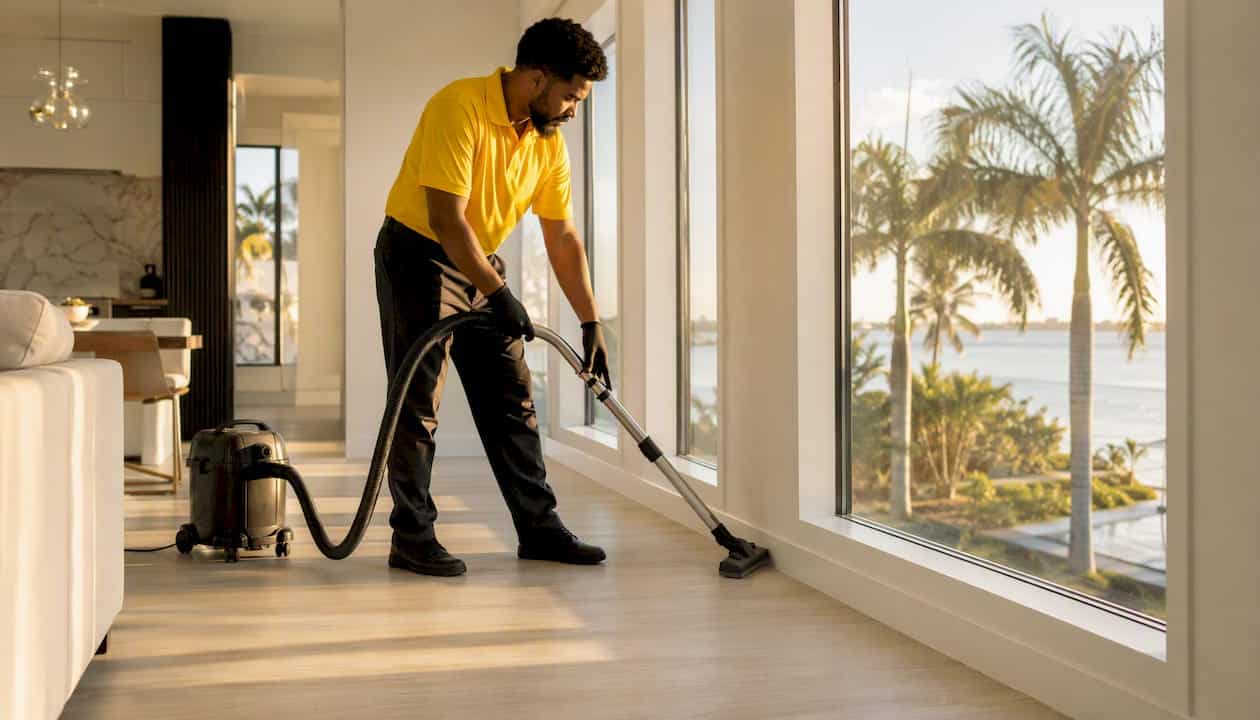
- HEPA vacuum all hard surfaces before mopping
- Mop hard floors with substrate-appropriate cleaner
- Remove grout haze from tile with appropriate acid-based or enzymatic cleaner
- Polish or buff as specified
Carpets:
- HEPA vacuum only — no wet cleaning until the space is occupied and traffic patterns are established
Pro Tip: Ask any proposal whether grout haze removal and adhesive removal are included or priced separately. These two tasks are the most common scope gaps and the most common source of post-turnover complaints.
What’s typically excluded: structural punch-list repairs, hazmat abatement (asbestos, lead, mold), deep staining that predates the project, and exterior landscaping beyond basic debris removal. Confirm exclusions in writing before signing.
HEPA-filter vacuums are the standard tool for construction cleanup because they capture 99.97% of particles 0.3 microns or larger, which matters when concrete and drywall dust are present. A crew showing up with consumer-grade shop vacs is a red flag worth addressing before work starts.
What exterior and site cleanup should cover
Exterior work is often treated as an afterthought, but it’s part of what makes a property genuinely ready for occupancy or sale. A complete building site cleaning scope should include:
Debris removal and disposal:
- Haul all bulk construction waste, packaging, and scrap from the site
- Sort materials for recycling versus landfill; the EPA notes that reuse and recycling of C&D materials can reduce disposal costs and regulatory burden
- Remove large items including pallets, crating, and leftover materials the GC did not take
Pressure washing and surface cleaning:
- Pressure wash driveways, sidewalks, and building exteriors to remove concrete splatter, mud, and construction residue
- Clean signage and remove paint or overspray from curbs and hardscape
- Rinse and clean entry areas, loading docks, and parking surfaces
Site safety tasks:
- Clear all egress paths and emergency exits of debris
- Remove tripping hazards including wire, rebar, and scrap
- Confirm temporary fencing, covers, and barriers are removed or secured per the GC’s closeout plan
Pro Tip: For Tampa Bay properties, pressure washing after construction is especially important because Florida’s humidity accelerates mold growth on concrete and masonry surfaces. Getting the exterior clean within a week of construction completion reduces the chance of staining that requires more aggressive treatment later. See pressure washing for Tampa Bay properties for what the process involves.
Safety, hazardous materials, and disposal: what you need to know
This is the section most cleaning proposals gloss over, and it’s the one that creates the most liability.
OSHA standard 1926.25 requires that scrap lumber with protruding nails and other debris be cleared from work areas, passageways, and stairs. Containers must be provided for waste separation, and combustible scrap must be removed regularly. These are not suggestions — they are statutory requirements that apply during construction and at cleanup.
When cleanup crosses into regulated work:
The EPA’s C&D debris guidance is clear: most construction debris is nonhazardous, but certain materials require special handling and may fall under RCRA or state-specific rules. These include:
- Asbestos: Any pre-1978 building with disturbed pipe insulation, floor tiles, or ceiling texture requires a licensed abatement contractor before a cleaning crew enters. General cleaners are not permitted to perform regulated abatement.
- Lead-based paint: Renovations of pre-1978 structures trigger EPA Renovation, Repair, and Painting (RRP) rules. Ask for documentation that the GC or abatement contractor followed RRP protocols.
- Mercury-containing lamps: Fluorescent tubes and certain compact fluorescents require separate disposal and cannot go in standard construction dumpsters.
- Crystalline silica: Cutting concrete, brick, or tile generates silica dust, which is a serious respiratory hazard. Crews working in these areas need proper respiratory protection and HEPA equipment.
Verifying compliance before you sign off:
Ask for disposal manifests for any regulated materials. Ask for proof of worker training on hazardous materials. For any renovation of a pre-1978 building, request the RRP documentation from the GC. A licensed cleaning contractor should be able to tell you exactly what they are and are not permitted to handle.
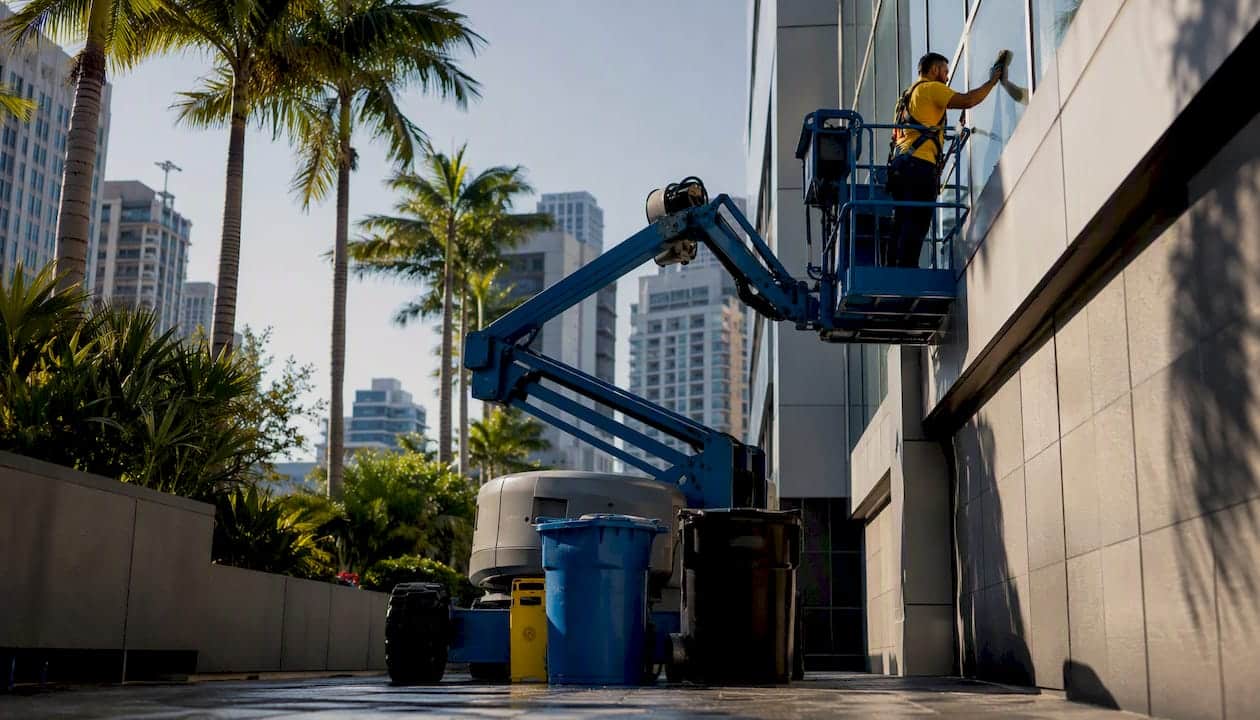
Mechanical lifts and proper waste containers reduce the most common cleanup injuries, including lacerations from scrap and back injuries from improper lifting. A professional crew has this equipment; an ad-hoc labor crew typically does not.
Pro Tip: Review OSHA-aligned housekeeping practices before your final walkthrough. Knowing the standard helps you spot gaps in a contractor’s scope before you sign off.
How much does post-construction cleaning cost?
Pricing for post-construction cleanup varies based on project type, site condition, and scope. There is no single national rate, but the key cost drivers are consistent across markets.
| Cost Driver | Price Impact |
|---|---|
| Total square footage | High — the primary pricing variable |
| Number of phases included | High — each phase is priced separately |
| Site condition (debris load, dust level) | High — heavily soiled sites take longer |
| Specialty surfaces (stone, polished concrete) | Medium — require specific products and methods |
| Window quantity and height | Medium — multi-story adds equipment cost |
| Hazardous material coordination | High — licensed abatement is a separate contract |
| Floor finishing (buffing, polish) | Medium — adds time and materials |
Common pricing approaches:
- Per square foot: The most common method for straightforward residential and light commercial projects. Rates vary by region, phase count, and site condition.
- Phase-based flat fees: Some contractors price each phase as a fixed fee based on a site visit. This works well when scope is clearly defined.
- Hourly for detail work: Used for complicated areas like multi-story atriums, specialty tile, or custom millwork where time is hard to predict.
Typical duration by project size:
- Small residential (under 2,000 sq ft): rough and final clean typically complete in one to two days each.
- Medium commercial TI (5,000–15,000 sq ft): three to five days per phase, depending on finish level.
- Large facility (50,000+ sq ft): phased over one to three weeks, often with multiple crews running simultaneously.
Phasing affects the overall schedule significantly. A project that skips the intermediate clean often requires a longer final clean, which can delay the certificate of occupancy.
How to choose a post-construction cleaning contractor
Vetting a cleaning contractor for a construction project is different from hiring a standard janitorial service. The scope is more technical, the liability is higher, and a bad hire can delay your CO or damage finished surfaces.
Questions to ask every contractor:
- Can you provide proof of general liability insurance and bonding? What are the coverage limits?
- Do your crews use HEPA-filter vacuums for concrete and drywall dust?
- How do you handle hazardous materials — asbestos, lead, mercury lamps? Are you licensed for regulated work or do you subcontract it?
- What worker training do your crews have for construction-site safety?
- Can you provide references from similar projects (same building type and size)?
- What does your scope of work document look like, and how do you handle punch-list items after the final clean?
- What is your warranty or spot-clean follow-up policy if items are missed?
Red flags to watch for:
- Vague scope language (“clean entire building” with no area-by-area breakdown)
- No proof of insurance when asked
- Bids significantly lower than others that skip one or more phases
- Crew arriving with consumer-grade vacuums for a concrete-dust environment
- No mention of HEPA equipment or substrate-specific cleaning products
Contract must-haves:
- Clear phase definitions with start and completion dates
- Accepted disposal documentation for any regulated materials
- Remedies for missed items (re-clean at no charge, credit, or third-party inspection)
- Final sign-off process tied to a room-by-room walkthrough checklist
A property owner’s guide to post-construction service covers the timing and scope questions in more detail if you want a deeper read on what to expect before the first crew arrives.
What to expect on turnover day
Turnover day is not the time to discover that the HVAC filters were never replaced or that the window film is still on the glass. A short, structured walkthrough before you accept the space saves you from those surprises.
Room-by-room inspection checklist:
- All stickers, labels, and protective film removed from windows, fixtures, and appliances
- Windows streak-free inside and out, tracks and sills wiped clean
- Hardware secure, operational, and free of adhesive or fingerprints
- HVAC vents clean and filters replaced
- Floors finished as specified (no grout haze, no adhesive residue, no scuff marks)
- Restrooms clean, fixtures polished, and stocked for first use
- Cabinets and closets wiped inside and out, no sawdust or debris
- Light fixtures clean, bulbs operational, switch plates in place
How to run the walkthrough:
Walk the space with the cleaning supervisor and a copy of the agreed scope. Mark any missed items on a punch-list form before signing off. A good cleaning contractor will have their own room-by-room checklist they run before you arrive; ask to see it.
Suggested sign-off language for your contract:
“Final acceptance is contingent on a joint walkthrough with the cleaning contractor. Any items not meeting the agreed scope will be remediated within [X] business days at no additional cost before final payment is released.”
Pro Tip: Sequence the walkthrough overhead-first: start with ceiling fixtures and HVAC vents, then walls and windows, then floors. This mirrors the cleaning sequence and catches any dust that settled during the final clean before you sign off on the floors.
How a licensed Tampa Bay cleaning crew handles post-construction work
Here’s what a professional phased approach looks like in practice for a Tampa Bay project.
A licensed crew typically deploys in two or three phases coordinated directly with the GC’s schedule. During the rough clean, they remove bulk debris, haul scrap, and clear egress paths. HEPA vacuums run on all concrete and drywall surfaces before any wet cleaning begins. For high fixtures and ceiling work in taller commercial spaces, mechanical lifts replace ladders, which reduces injury risk and speeds up overhead cleaning.
For occupied buildings in Clearwater or St. Petersburg where adjacent spaces are in use, the crew uses containment procedures to prevent dust migration: sealing HVAC returns, using negative-air machines in heavy-dust areas, and scheduling noisy or dusty work during off-hours when building management requires it.
- Phased crew deployment matched to GC milestones
- HEPA vacuums for all concrete and drywall dust
- Mechanical lifts for high fixtures and multi-story window exteriors
- Coordination with building management for occupied-building protocols
- Licensed and insured, with documentation available on request
If you’re approaching turnover on a Tampa Bay project and want a crew to walk the site before you commit to a schedule, request a free site visit and confirm licensing and insurance before the first crew arrives.
What the work actually looks like from the crew’s side
Post-construction cleaning surprises even experienced crews. Grout haze is the most common one: it looks like a light film on tile until the light hits it at the right angle, and by then the flooring contractor has left. The fix requires the right acid-based or enzymatic cleaner and timing it correctly after installation. Get there too late and the haze has cured; get there too early and you risk damaging the grout itself.
Last-minute punch-list dust is the other constant. A GC sends a carpenter back to adjust a door the day after the final clean, and suddenly there’s sawdust on the floor that was just polished. A good crew builds a spot-clean follow-up into the contract for exactly this reason.
For Tampa Bay property owners and facility managers, the practical advice is straightforward: book the cleaning crew before the GC closes out, not after. That window between “construction complete” and “inspector arrives” is shorter than most people plan for, and a licensed, insured crew with the right equipment is the difference between a smooth handoff and a delayed CO.
Post-construction cleaning in Tampa Bay: a local option worth considering
Floridacc handles post-construction cleanup for homeowners, facility managers, and contractors across Tampa, Clearwater, and St. Petersburg. The scope covers everything from rough debris removal and HEPA vacuuming to final detail cleaning, streak-free window cleaning, exterior pressure washing, and junk removal for bulk items the GC leaves behind.

Every crew is licensed and insured, uses HEPA-grade equipment, and works on a phased schedule tied to your project milestones. Free estimates are available for residential and commercial projects across the Tampa Bay area. If you’re within a few weeks of turnover and need a crew that can coordinate with your GC, get a free estimate here and confirm availability before your inspection date.
Sources
- 1926.25 – Housekeeping. | Occupational Safety and Health Administration
- Covering construction debris and construction waste — MSC Industrial Supply
- Post-Construction Cleaning: What It Involves and Why It Matters | Construction Cleanup Authority
- What’s Included in a Post-Construction Cleanup? A Complete NJ Guide | C&S Commercial Cleaning
FAQ
What does construction cleaning include?
Professional construction cleaning covers debris removal, HEPA vacuuming of all surfaces, window and glass cleaning, fixture and hardware detailing, HVAC vent cleaning and filter replacement, floor finishing, and grout haze and adhesive removal. Scope is typically divided across rough, intermediate, and final phases.
How much does cleaning a house after construction cost?
Cost depends on square footage, number of phases, site condition, and any specialty surfaces or hazardous-material coordination required. Per-square-foot pricing is the most common approach; a site visit from a licensed contractor gives you the most accurate estimate for your specific project.
What is post-construction cleaning called in the industry?
The industry uses “post-construction cleaning,” “construction cleanup,” and “building site cleaning” interchangeably. The phased process is sometimes called “rough clean, final clean, and touch-up” or “Phase 1, Phase 2, Phase 3” depending on the contractor.
When should I schedule the final clean?
Schedule the final clean after the GC’s punch-list work is complete and before the certificate-of-occupancy inspection. Running the final clean too early, before the last trades finish, means you’ll likely need a second clean and will delay your inspection.
Does Floridacc handle post-construction cleaning in Tampa Bay?
Yes. Floridacc provides licensed, insured post-construction cleanup for residential and commercial projects across Tampa, Clearwater, and St. Petersburg, including phased cleaning, HEPA vacuuming, window cleaning, pressure washing, and junk removal. Free estimates are available at Floridacc.