A missed trash pickup, smudged glass at the front door, or restrooms that run out of supplies can change how customers see your business in minutes. That is why commercial cleaning for small business is not just about appearance. It affects employee morale, customer trust, health standards, and how smoothly your day runs.
For small business owners, cleaning usually starts as something handled in-house. A manager wipes counters. Staff take turns with the break room. Someone notices the floors only when they start looking dull. That approach can work for a while, but it often breaks down once foot traffic increases, staffing gets tight, or expectations from customers rise. At that point, professional cleaning stops being an extra expense and starts becoming operational support.
Why commercial cleaning for small business matters
Small businesses do not get much room for error. A law office, retail shop, medical-adjacent office, salon, or property management office may not have a giant facilities team behind the scenes. Customers and staff still expect the same basics – clean floors, sanitized touchpoints, fresh restrooms, and a space that feels cared for.
A clean workplace shapes first impressions, but it also protects the parts of the business people do not always see. Dust buildup affects air quality. Dirty floors wear out faster. Neglected restrooms create complaints quickly. Shared surfaces can spread illness through a small team faster than most owners expect. When one or two employees are out, a small operation feels it immediately.
There is also the issue of consistency. Cleaning done only when someone has time usually means standards change from week to week. Professional service creates a routine. That routine matters more than occasional deep efforts because customers notice the overall condition of a space, not whether one corner got extra attention last Tuesday.
What small businesses usually need cleaned
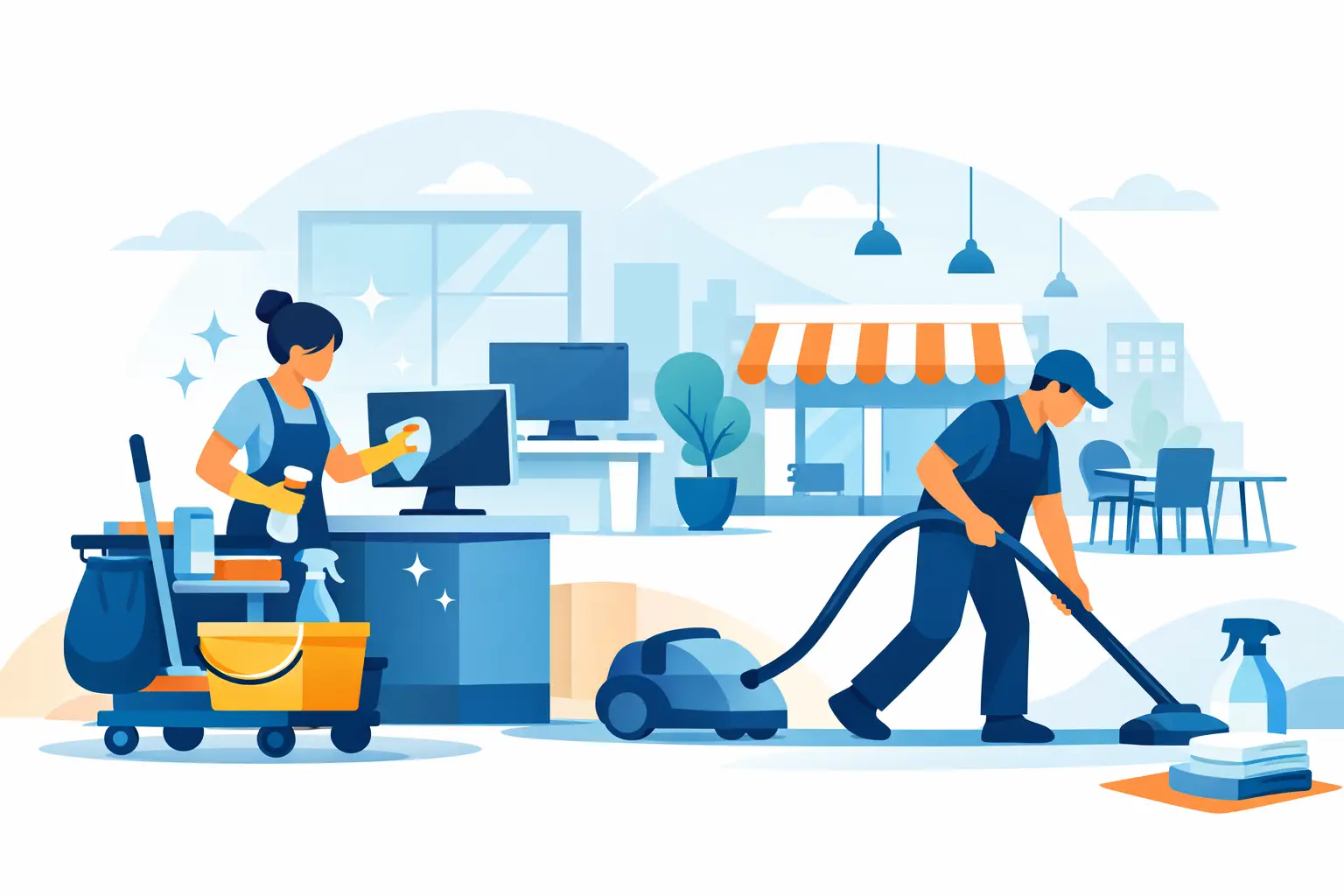
The right scope depends on the business type, square footage, and traffic level. A small office may need trash removal, restroom cleaning, dusting, vacuuming, mopping, and disinfecting a few times a week. A retail location may need more attention on entry glass, floors, fitting rooms, and checkout counters. Multi-tenant offices or client-facing spaces often need a stronger focus on lobbies, shared kitchens, and touchpoints.
Some businesses only need recurring maintenance. Others need a mix of routine service and occasional deeper work like carpet cleaning, window washing, pressure washing, or move-in and move-out cleanup. That is where it helps to work with a company that understands property care beyond basic janitorial tasks. One vendor who can handle interior cleaning and exterior maintenance can save time and reduce coordination headaches.
In-house cleaning vs outsourced service
Many owners compare commercial cleaning against the cost of having staff handle it. On paper, in-house can look cheaper. In practice, it depends on what you count.
If employees clean, you are paying for labor that is not going toward sales, service, or operations. You also have to manage supply ordering, task accountability, and quality control. In some cases, staff members do the minimum because cleaning is not their primary role. That is understandable, but it still leaves the owner with inconsistent results.
Outsourcing usually makes more sense when the business needs dependable scheduling, documented standards, and less interruption to daily work. It also helps when there are insurance requirements, customer-facing expectations, or sanitation concerns that call for trained crews and proper products.
That said, not every small business needs nightly cleaning. Some need two visits a week. Others need a customized schedule built around business hours and peak traffic. Good service should fit the operation instead of forcing the operation to fit the cleaning company.
How to choose a commercial cleaning company for a small business
Price matters, but it should not be the only filter. Low quotes often leave out details that become problems later, like rushed visits, inconsistent crews, or unclear task lists. The better question is whether the company is reliable enough to protect your time and your reputation.
Look for licensed and insured service. That is basic protection, not a bonus. Ask whether team members are vetted and whether the company can handle recurring scheduling without constant follow-up. Small businesses need vendors who show up, communicate clearly, and solve problems quickly.
It also helps to ask how the scope is built. A solid provider should ask about square footage, traffic, restrooms, flooring types, customer-facing areas, and any special concerns. If a company gives a flat price without understanding the space, there is a good chance the service plan will miss something important.
Responsiveness matters more than many owners realize. If you need to reschedule around an event, add a cleanup after a busy weekend, or request a deeper service before an inspection, slow communication becomes expensive. A local company with flexible scheduling is often a better fit than a large provider with rigid systems and long response times.
What affects the cost of commercial cleaning for small business
There is no honest one-size-fits-all price because cleaning needs vary too much. Cost usually comes down to frequency, size of the space, layout, floor type, restroom count, and how detailed the service needs to be.
A compact office cleaned once a week will cost less than a retail store with daily traffic, glass doors, public restrooms, and constant floor care needs. Businesses that need after-hours service, same-day support, or occasional specialty work may also pay more. That does not mean the service is overpriced. It means the scope is broader.
The cheapest option is rarely the most affordable over time. If poor cleaning leads to complaints, staff frustration, or faster wear on flooring and fixtures, the real cost shows up elsewhere. Consistent maintenance usually protects the space and keeps larger cleanup jobs from piling up.
Signs your business has outgrown DIY cleaning
If cleaning gets done only when someone remembers, you are already behind. The same is true if staff are staying late to mop floors, customers notice restroom issues, or managers are spending time checking supplies and wiping surfaces between other responsibilities.
Another common sign is when the business looks acceptable in photos but not in person. Fingerprints on glass, dusty baseboards, stained grout, and odors in shared spaces tend to build gradually. Owners get used to them. Customers do not.
A professional plan helps create a standard you do not have to chase every day. It gives you a cleaner baseline, fewer small problems, and more time to focus on running the business.
Why local service makes a difference
For Tampa Bay businesses, local accountability matters. A cleaning company that knows the area understands the pace of retail corridors, office parks, coastal humidity, rain-related floor issues, and the scheduling demands that come with service businesses and property management.
It also means faster estimates, easier communication, and a better chance of getting help when something urgent comes up. If you need recurring office cleaning, occasional window washing, pressure washing outside the storefront, or a quick reset before a tenant visit, working with one local provider can simplify a lot.
Florida Cleaning Crew is built around that kind of support – licensed, insured, ready to work, and structured for both scheduled service and urgent requests across the Tampa Bay area.
Getting the right cleaning plan
The best cleaning plan is not the biggest one. It is the one that matches your space, traffic, and business hours without adding friction. For some small businesses, that means light but frequent service. For others, it means fewer visits with more detailed tasks each time.
What matters is clarity. You should know what gets cleaned, how often, and who to contact if your needs change. That kind of structure prevents the common problems that frustrate owners: missed details, unclear expectations, and having to re-explain the same issues over and over.
If you are comparing options, ask yourself a practical question. Would a dependable cleaning partner save time, reduce staff distraction, and make your space easier to manage week after week? If the answer is yes, then the value is not just in having a cleaner building. It is in having one less operational problem on your plate.
A clean business should not depend on whoever has a few spare minutes at the end of the day. It should be handled by a team that shows up, knows the work, and helps your space stay ready for customers, staff, and whatever tomorrow brings.