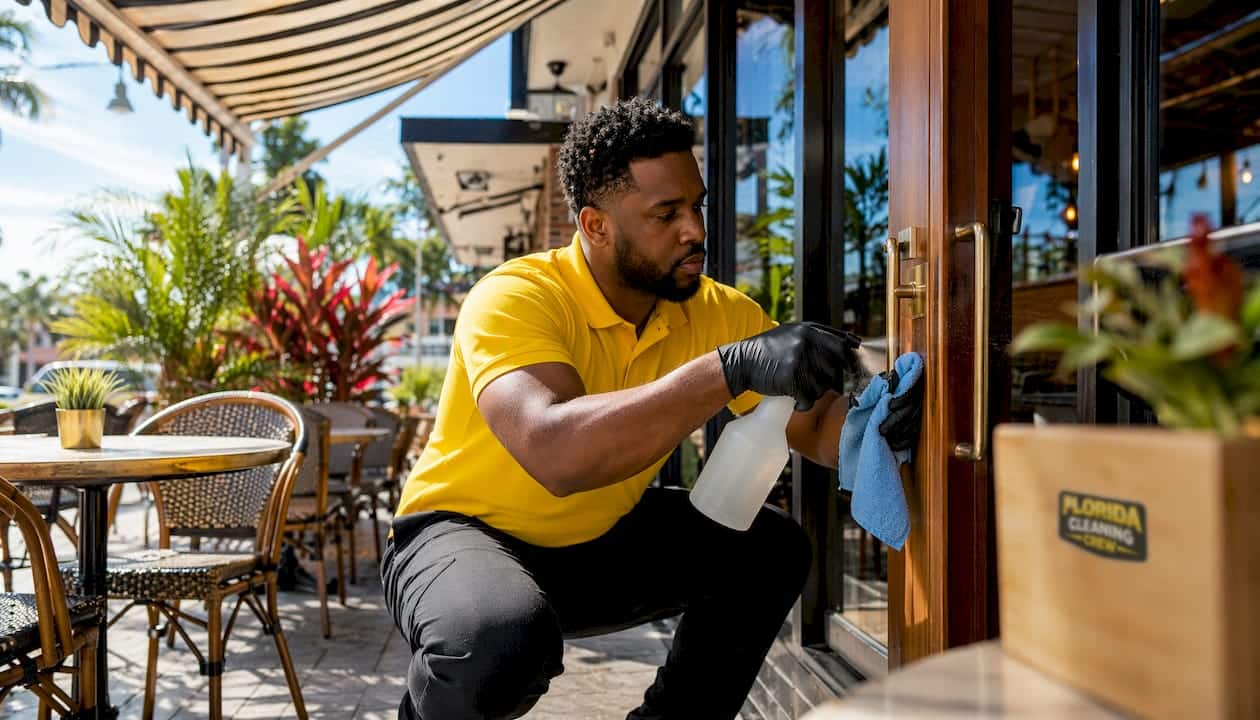
Surface sanitization is the process of reducing harmful germs on surfaces to levels considered safe by public health standards. It sits between basic cleaning and full disinfection, and knowing which method to use, and when, makes a real difference for Tampa Bay homeowners, Airbnb hosts, and small business owners. The CDC defines three distinct processes: cleaning removes dirt and organic matter, sanitizing reduces germ counts to safe levels, and disinfecting kills nearly all pathogens. Getting this right protects your household, your guests, and your customers, especially in high-traffic spaces or during illness outbreaks.
How to sanitize surfaces: what you need before you start
The right supplies make or break your sanitizing results. Skipping preparation is the most common reason sanitizing fails before it even begins.
Essential supplies
Gather these before you start:
- EPA-registered sanitizer or disinfectant. Check the product label for an EPA registration number. Products on the EPA’s List N are tested to kill all known strains of SARS-CoV-2 when used as directed. That verification step matters.
- Dish soap or general-purpose detergent. You need this for the cleaning step before sanitizing.
- Microfiber cloths. These trap and remove particles more effectively than cotton rags or paper towels.
- Disposable or reusable gloves. Protect your skin from chemical exposure during application.
- Spray bottle or bucket. Needed for mixing or applying solutions.
- Adequate ventilation. Open windows or run exhaust fans. Chemical overexposure risks are real, even with common products.
Choosing safer products
Not every sanitizer is equally safe for your household. Products carrying the EPA’s Design for Environment (DfE) certification offer reliable safety and effectiveness without the harsh chemical profile of industrial-grade disinfectants. This matters especially in homes with children, pets, or people with respiratory conditions. For households in Tampa Bay, where humidity keeps windows closed much of the year, lower-toxicity products reduce the risk of indoor air quality problems.
Always read the product label before use. The label tells you the required contact time, the surfaces the product is approved for, and any rinsing requirements. Ignoring the label is not just a safety issue. It also means the product may not work as intended.
Pro Tip: Launder microfiber cloths after every use in hot water without fabric softener. Fabric softener coats the fibers and reduces their ability to trap particles, which defeats the purpose of using them.
A quick reference for supplies
| Supply | Purpose | Key Consideration |
|---|---|---|
| EPA-registered sanitizer | Reduces germ count to safe levels | Verify EPA registration number on label |
| Dish soap and water | Removes dirt and organic matter before sanitizing | Required first step, not optional |
| Microfiber cloths | Traps and removes contaminants | Launder after each use in hot water |
| Gloves | Protects skin from chemical contact | Use nitrile for chemical resistance |
| Ventilation | Reduces chemical inhalation risk | Open windows or run exhaust fans |
What is the step-by-step process to clean and sanitize?
Effective surface sanitization follows a specific sequence. Skipping steps, especially the cleaning step, reduces the effectiveness of everything that follows.
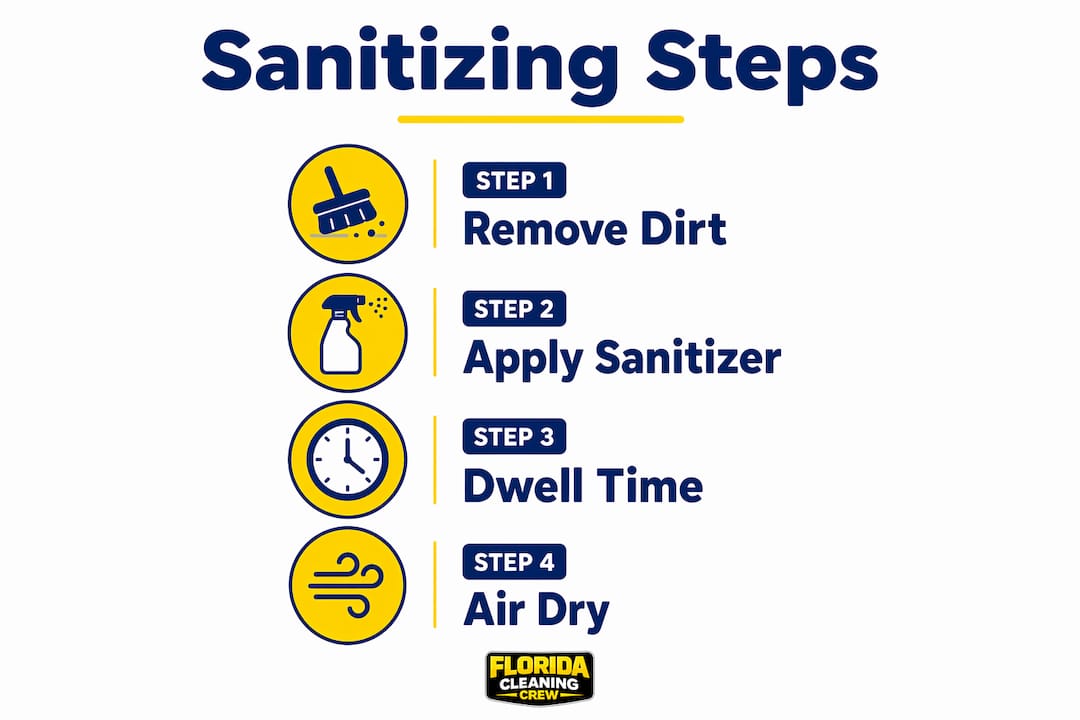
Step 1: Remove visible dirt and organic matter
Start by cleaning the surface with soap or detergent and water. Organic matter on surfaces creates a physical barrier that blocks sanitizers and disinfectants from reaching germs. A sanitizer applied to a dirty surface is working against a wall. Wipe down the surface thoroughly, then rinse if needed, and allow it to dry or move immediately to the next step.
This step is non-negotiable in kitchens, bathrooms, and any surface that sees food, grease, or bodily fluids. In a Tampa Bay Airbnb, this means wiping countertops, bathroom fixtures, and appliance handles before you reach for the sanitizer.
Step 2: Apply your EPA-registered sanitizer
Apply the sanitizer according to the label directions. Some products require dilution; others come ready to use. Spray or wipe the product evenly across the surface, making sure the entire area is covered. Do not spot-treat. Pathogens do not cluster in one corner.
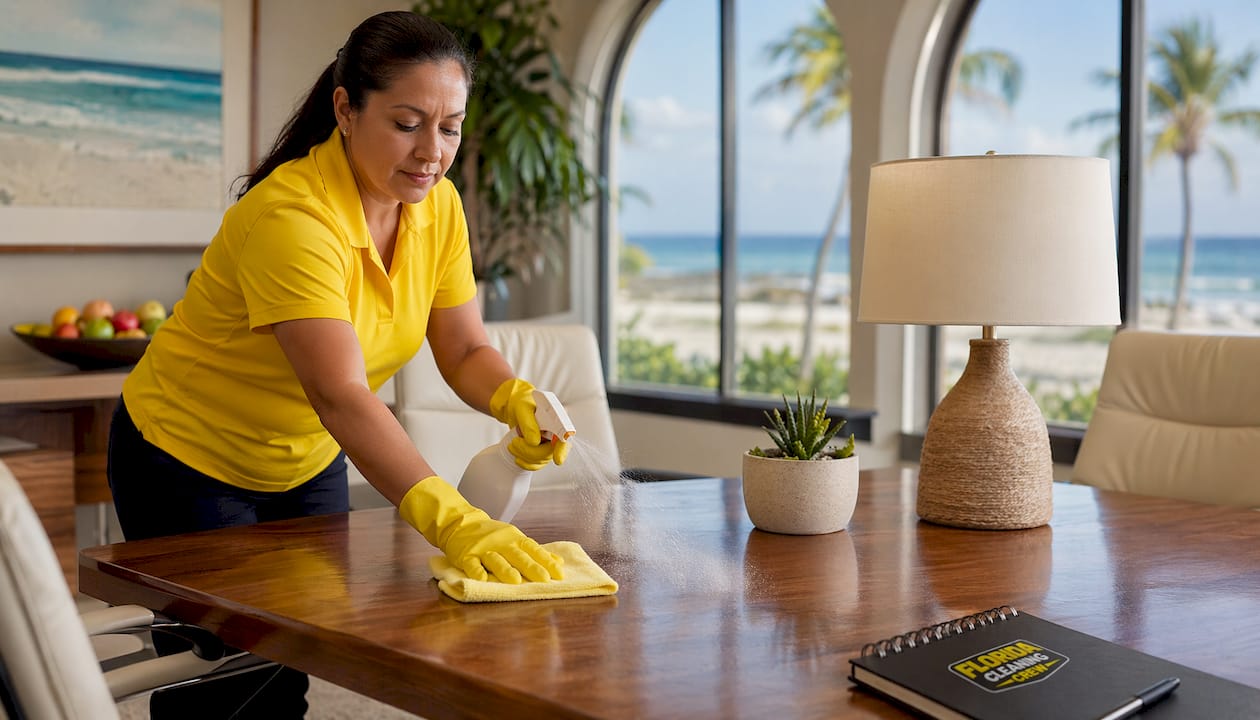
For high-touch surfaces like doorknobs, light switches, keyboards, and faucet handles, apply generously. These areas accumulate the highest germ loads in both homes and commercial spaces. In a small business setting in St. Petersburg or Clearwater, this includes checkout counters, door handles, shared equipment, and restroom fixtures.
Step 3: Respect the dwell time
Dwell time is the amount of time a surface must stay wet with the sanitizer for the product to work. Dwell times typically range from 1 to 10 minutes depending on the product and the pathogen being targeted. Most people wipe the product off within seconds. That single mistake eliminates most of the product’s effectiveness.
Set a timer if needed. Do not let the surface dry prematurely. If the surface dries before the dwell time is up, reapply the product and start the timer again.
Step 4: Allow to air dry or rinse as directed
After the dwell time is complete, allow the surface to air dry unless the label specifies rinsing. Food-contact surfaces like cutting boards and countertops often require rinsing after sanitizing. Non-food surfaces generally do not. Follow the label. Air drying also allows any residual active ingredient to finish working.
Sanitizing differs from disinfecting in one key way: sanitizing targets a reduction in germ count to safe levels, while disinfecting aims to kill nearly all pathogens present. For most daily home and business use, sanitizing is sufficient. Disinfecting is reserved for situations involving illness, confirmed contamination, or high-risk environments. You can find more detail on when to sanitize rental properties in Floridacc’s guide for Airbnb hosts.
Pro Tip: Use damp wiping instead of dry dusting on any surface you suspect is contaminated. Wet cleaning methods capture particles rather than dispersing them into the air, which reduces the risk of inhaling pathogens during the process.
Cleaning vs sanitizing surfaces: which method do you actually need?
The EPA is clear that cleaning, sanitizing, and disinfecting are distinct processes. No single product accomplishes all three. Understanding the difference helps you choose the right tool for the actual risk level you are dealing with.
Cleaning removes dirt, dust, and organic matter using soap and water. It does not kill germs, but it removes them physically and reduces their numbers. Cleaning is the foundation of every sanitizing or disinfecting routine.
Sanitizing reduces the number of germs on a surface to levels deemed safe by public health standards. It is appropriate for everyday use in kitchens, bathrooms, and shared workspaces. Sanitizing is not designed to eliminate all pathogens, but it brings germ counts down to a level that does not pose a significant health risk under normal conditions.
Disinfecting kills nearly all bacteria, viruses, and fungi on a surface. It requires stronger chemical concentrations and longer dwell times. Disinfecting is appropriate after a confirmed illness in the home, in healthcare-adjacent settings, or during an active outbreak. Terminal cleaning in institutional or high-traffic settings takes this further, requiring systematic application across all surfaces after potential exposure.
Comparison: cleaning, sanitizing, and disinfecting
| Method | Germ reduction | Typical use case | Product type |
|---|---|---|---|
| Cleaning | Removes physically | Daily maintenance | Soap and water |
| Sanitizing | Reduces to safe levels | Kitchens, shared surfaces, Airbnbs | EPA-registered sanitizer |
| Disinfecting | Kills nearly all pathogens | Post-illness, outbreaks, high-risk areas | EPA List N disinfectant |
Common misconceptions about alternatives
Vinegar has antimicrobial properties and works against some bacteria and viruses. However, vinegar is not EPA-registered as a disinfectant and cannot reliably eliminate all pathogens. It is a reasonable option for general surface cleaning, but not for situations where confirmed pathogen elimination is needed.
Rubbing alcohol is effective as both a sanitizer and disinfectant when it contains at least 70% alcohol. It works well on non-porous surfaces like metal fixtures and glass. It evaporates quickly, which can make maintaining dwell time difficult. Use it carefully and allow adequate contact time. For a broader look at types of cleaning services and when each applies, the distinctions above translate directly to professional service categories as well.
Overusing disinfectants creates its own risks. Aggressive products used without proper ventilation can cause respiratory irritation and chemical exposure. For low-risk surfaces in a well-maintained home, soap and water followed by a light sanitizer is the safer and equally effective choice.
What mistakes should you avoid when sanitizing surfaces?
Most sanitizing failures come from a handful of predictable errors. Recognizing them in advance saves time and protects your health.
- Skipping the cleaning step. Applying sanitizer to a dirty surface is ineffective. Organic matter physically blocks the active ingredient from reaching germs. Always clean first.
- Wiping the product off too soon. Dwell time is not optional. Removing the product before the required contact time is the single most common reason sanitizing fails.
- Using dry dusting or sweeping in contaminated areas. Dry methods aerosolize particles and spread pathogens. Use damp cloths or mops instead.
- Mixing cleaning products. Bleach and ammonia, for example, produce toxic chloramine gas. Never mix products unless the label explicitly permits it.
- Using the wrong concentration. Too dilute and the product does not work. Too concentrated and you create unnecessary chemical exposure. Follow label dilution instructions exactly.
- Ignoring electronics and soft surfaces. Keyboards, remote controls, and upholstered chairs are high-touch surfaces that require specific sanitizing approaches. Use alcohol wipes rated for electronics and check manufacturer guidance for fabric surfaces.
- Using products without EPA registration. An EPA registration number on the label confirms the product has been tested and approved for its claimed use. Without it, effectiveness is unverified.
Pro Tip: In Tampa Bay’s humid climate, high-touch surfaces in busy homes and offices accumulate germ loads faster than in drier regions. Build a routine that targets doorknobs, light switches, and shared equipment at least twice weekly, and increase frequency during cold and flu season or after guests leave a rental.
Tampa Bay businesses and Airbnb hosts benefit from reviewing workplace cleanliness strategies that address both routine sanitizing and outbreak response. The principles are the same whether you manage a three-bedroom rental in St. Petersburg or a small office in Clearwater.
Key Takeaways
Effective surface sanitization requires cleaning first, applying an EPA-registered product correctly, and respecting dwell time. Skipping any step reduces protection significantly.
| Point | Details |
|---|---|
| Clean before you sanitize | Organic matter blocks sanitizers from reaching germs; always remove dirt first with soap and water. |
| Respect dwell time | Surfaces must stay wet for 1–10 minutes depending on the product; wiping too soon eliminates effectiveness. |
| Match the method to the risk | Use cleaning for daily maintenance, sanitizing for shared surfaces, and disinfecting only after illness or confirmed contamination. |
| Verify EPA registration | Only use products with an EPA registration number; unverified products offer no guaranteed germ reduction. |
| Avoid chemical overuse | Aggressive disinfectants in poorly ventilated spaces create health risks; choose DfE-certified products for routine use. |
What I’ve learned from watching people sanitize wrong
After working with homeowners and small business owners across Tampa Bay, the pattern I see most often is this: people reach for the strongest product they can find and apply it directly to a dirty surface. They assume that more chemical equals more protection. It does not.
The CDC and EPA are consistent on this point. Cleaning is the foundation. A disinfectant applied to a surface covered in grease or food residue is not disinfecting anything. It is just wetting a dirty surface.
The second mistake I see constantly is the dwell time problem. Someone sprays a product, wipes it off in five seconds, and moves on feeling confident the surface is sanitized. The product needed three minutes of wet contact to work. That gap between perception and reality is where illness spreads.
What actually works is boring and simple. Clean the surface. Apply the right product. Wait. Let it dry. That sequence, repeated consistently on the surfaces that matter most, delivers real protection. High-touch surfaces in Tampa Bay homes and businesses, where foot traffic is high and humidity keeps windows closed, need this routine more than most.
Chemical safety deserves equal attention. I have seen clients develop respiratory irritation from using bleach-based products in small, unventilated bathrooms daily. The solution is not to stop sanitizing. It is to choose lower-toxicity products with EPA DfE certification and open a window. Effective sanitizing does not require harsh chemicals. It requires the right product, applied correctly, every time.
— Matt
Professional sanitizing support for Tampa Bay homes and businesses
Knowing the right process is one thing. Executing it consistently across a busy home, rental property, or commercial space is another challenge entirely.
Floridacc serves homeowners, Airbnb hosts, and small businesses across Tampa, Clearwater, and St. Petersburg with residential cleaning services built around health-focused sanitizing protocols. Every service uses EPA-registered products and follows proper dwell times, so you get real germ reduction, not just a clean-looking surface. For business owners, Floridacc’s commercial cleaning services cover high-touch surface sanitizing on a schedule that fits your operation. Licensed, insured, and locally trusted, Floridacc makes it straightforward to maintain a genuinely clean and safe environment without managing it yourself. Request a free quote at floridacc.com.
FAQ
What is the difference between sanitizing and disinfecting?
Sanitizing reduces germs to levels considered safe by public health standards, while disinfecting kills nearly all pathogens on a surface. The CDC recommends disinfecting only when there is a confirmed illness or high-risk exposure.
Do you need to clean a surface before sanitizing it?
Cleaning before sanitizing is required, not optional. Organic matter and dirt block sanitizers from contacting germs, which makes the product ineffective regardless of its strength.
How long does a sanitizer need to stay on a surface?
Dwell times range from 1 to 10 minutes depending on the product and the pathogen targeted. Always check the product label and keep the surface wet for the full required time.
Is vinegar an effective sanitizer?
Vinegar has some antimicrobial properties but is not EPA-registered as a sanitizer or disinfectant. It works for general cleaning but cannot reliably eliminate all pathogens, especially in high-risk situations.
Which surfaces need sanitizing most often?
High-touch surfaces including doorknobs, light switches, faucet handles, keyboards, and countertops carry the highest germ loads. The EPA and CDC both recommend focusing sanitizing efforts on these areas rather than treating entire rooms indiscriminately.