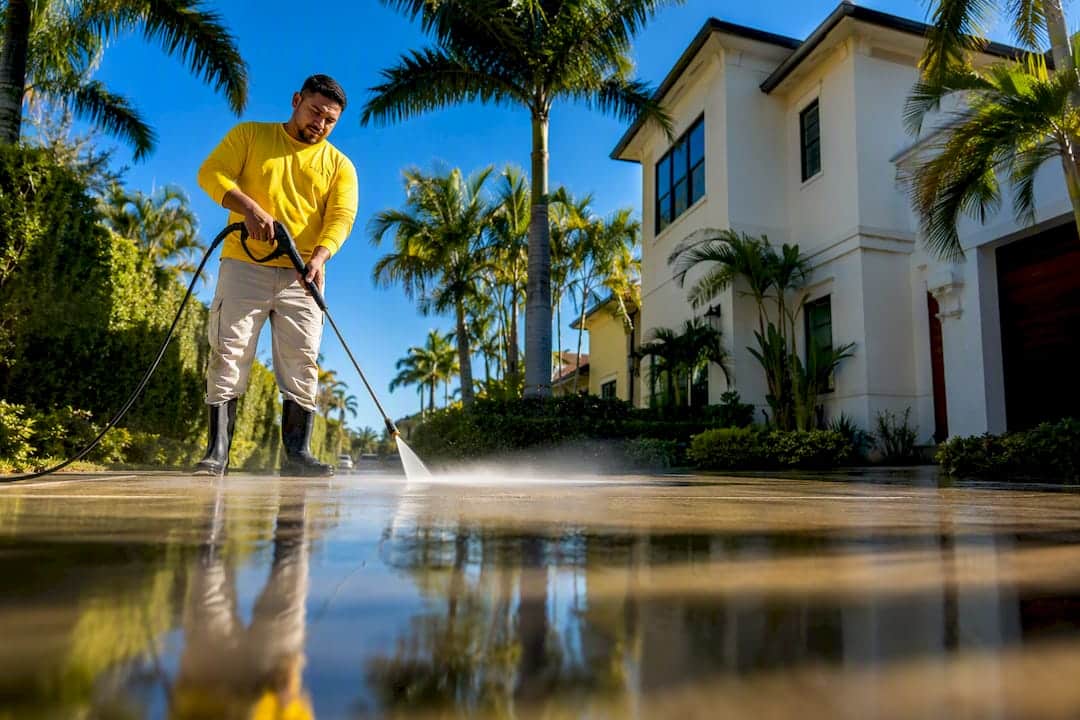
Power washing uses heated water; pressure washing does not. That’s the entire technical difference, and it changes what each machine handles best. Power washing wins on grease, oil, and mildew, which makes it the pick for driveways with old stains or commercial kitchen mats. Pressure washing handles most everyday home jobs, siding, patios, decks, cars, just fine. If a job involves heavy grime, delicate surfaces, or a roof, call a pro instead of guessing.
TL;DR:
- Power washing is more effective for heavy grease, oil, and mildew because of its heated water, making it ideal for commercial surfaces and stubborn stains.
- Most homeowner jobs require pressure washers with 1,300 to 2,800 PSI and lower GPM, suitable for siding, patios, and lightly dirty surfaces, with no need for heat.
- Using the wrong nozzle, exceeding recommended PSI, or working too close can damage surfaces, so testing an inconspicuous area first is crucial for safe cleaning.
- Renting equipment is cost-effective for small projects, but larger or delicate surfaces should be handled by licensed professionals with proper insurance and experience.
- A thorough surface assessment and consultation ensure the correct PSI, nozzle, and safety precautions, reducing risks and achieving better results.
Table of Contents
- Pressure Vs Power Washing: A Quick Comparison
- What Is Pressure Washing, Exactly?
- What Is Power Washing and When Does Heat Matter?
- What PSI and Nozzle Work Best for Each Surface?
- What Safety Gear and Precautions Do You Actually Need?
- Should You Rent a Machine or Hire a Pro?
- How Do You Vet a Pressure Washing Contractor?
- A Tampa Bay Perspective on Getting This Right
- Why Homeowners Choose Floridacc for Pressure Washing
- Sources
- FAQ
Pressure Vs Power Washing: A Quick Comparison
Before you rent a machine or call a crew, it helps to see the differences side by side.
- Temperature: Power washers heat the water; pressure washers use it straight from the tap.
- Machine size and cost: Power washers are bulkier, pricier, and need more upkeep than a comparable pressure washer.
- Best for: Pressure washing handles siding, patios, fences, cars, and driveways with light dirt. Power washing shines on grease-caked concrete, moss, and commercial surfaces.
- PSI/GPM: Most homeowner tasks fall within a moderate range of PSI and GPM suitable for general cleaning. Commercial power washers often run higher on both.
- Trade-off: Heat cleans faster but adds cost, weight, and risk on sensitive materials.
If you’re only cleaning a deck or a set of porch steps once a year, you likely don’t need the heat at all.
What Is Pressure Washing, Exactly?
Pressure washing forces unheated water through a nozzle at high speed, and two numbers control how it performs: PSI (pounds per square inch) measures the force of the spray, and GPM (gallons per minute) measures how much water moves through the machine. Higher PSI knocks loose dirt and grime; higher GPM rinses it away faster. Together they determine how quickly a job gets done.
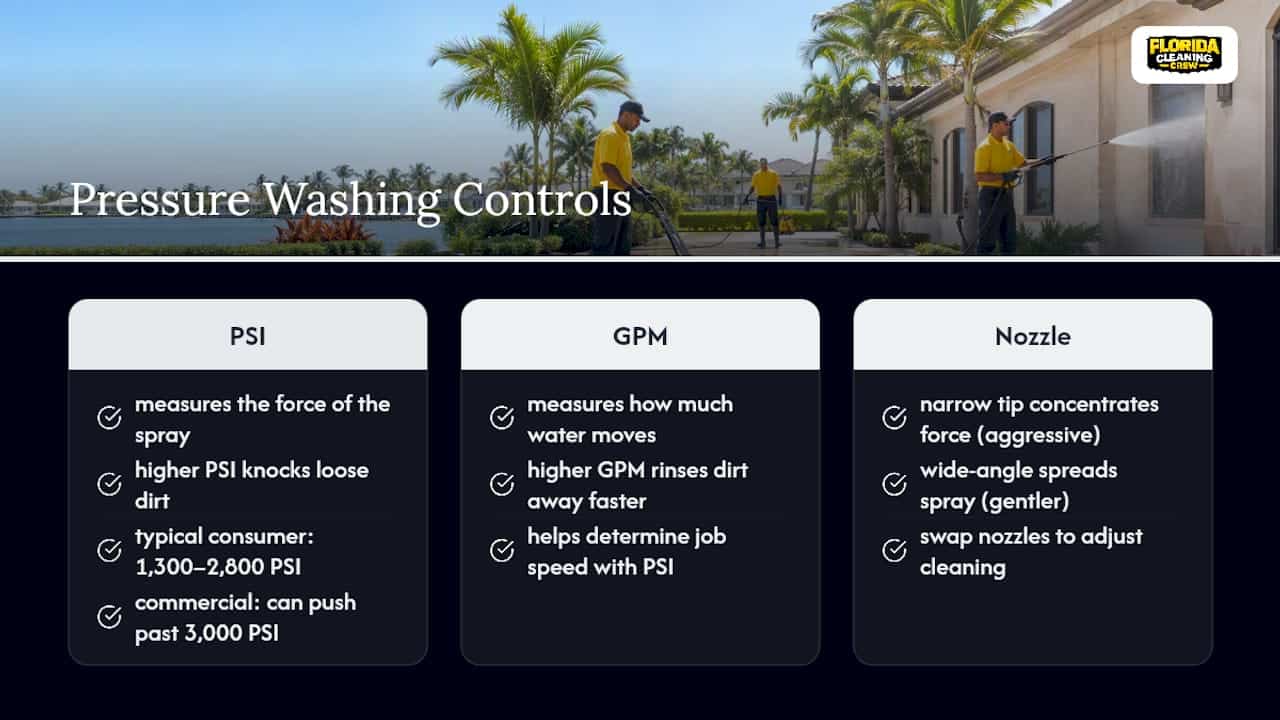
Most consumer machines land between 1,300 and 2,800 PSI, which covers cleaning a car, washing a patio, or rinsing off a fence. Commercial-grade units can push past 3,000 PSI for concrete and masonry. The nozzle you attach matters just as much as the PSI setting. A narrow tip concentrates force into a tight, aggressive stream, while a wide-angle nozzle spreads it out for gentler cleaning on wood or vinyl. Swapping nozzles is often the easiest way to adjust a job without touching the machine’s settings at all.
What Is Power Washing and When Does Heat Matter?
Power washing adds a heating element to the same basic pressure system, and that heat does real work. Hot water breaks down grease, oil, and organic buildup faster than cold water can, since heat loosens the bond between grime and the surface it’s stuck to. That’s why power washing is standard for restaurant dumpster pads, garage floors with oil stains, and commercial equipment.
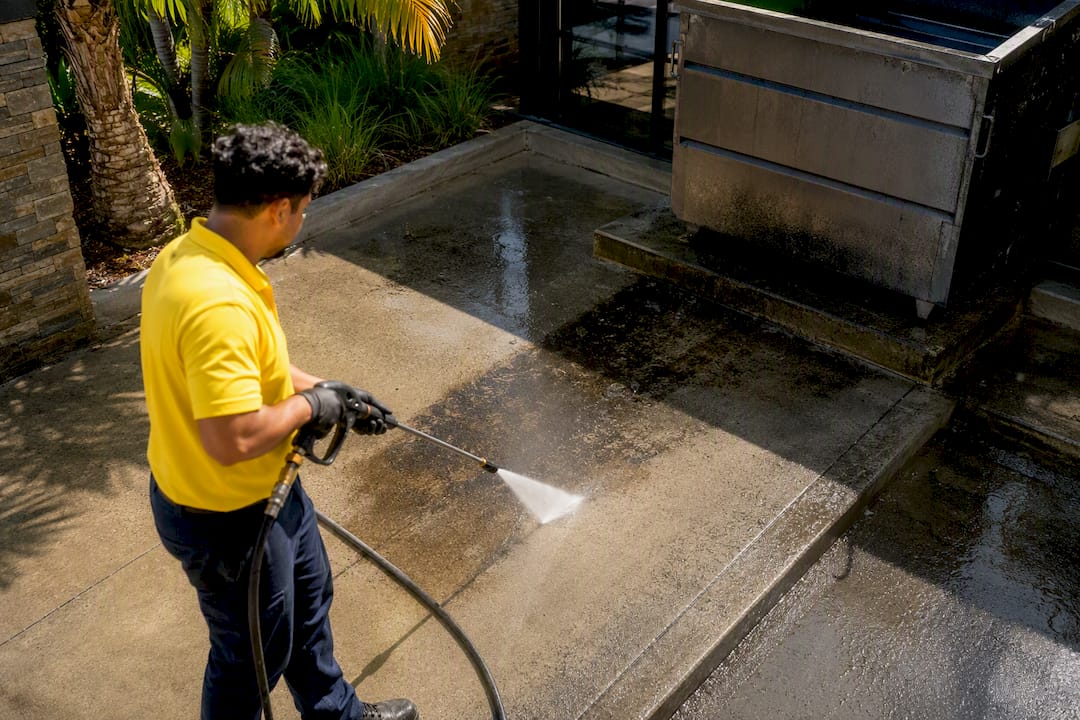
The trade-off is cost and complexity. Power washers cost more, run larger, and need more maintenance than a comparable cold-water unit, mostly because of the heating components and the extra plumbing involved. For most homeowners, that added expense only pays off on jobs where heat genuinely changes the outcome, think years of driveway oil stains or heavy mildew in humid climates. If your project is a seasonal driveway rinse or a once-a-year deck cleaning, heat improves grease and stain removal but raises the risk of damage on materials that can’t handle it, so cold water is usually the safer starting point.
What PSI and Nozzle Work Best for Each Surface?
Every surface has a sweet spot, and going past it is how homeowners end up with gouged wood or stripped paint. Here’s a practical starting point for common jobs:
- Concrete and driveways: Any machine producing at least 1,500 PSI can clean concrete, and 2,500 to 3,000 PSI works faster on stubborn oil or rust stains. Use a 15 or 25 degree nozzle.
- Wood decks: Start around 500 to 600 PSI with a wide fan tip, and always spray with the grain. Too much pressure splinters soft wood and can void a stain or sealant warranty.
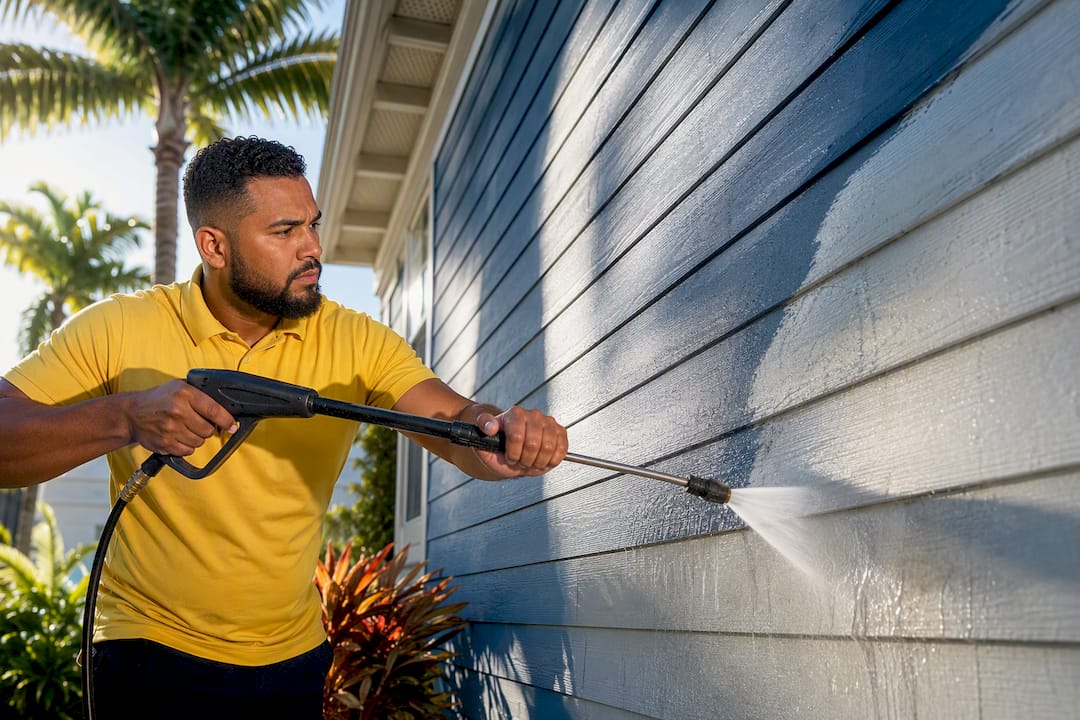
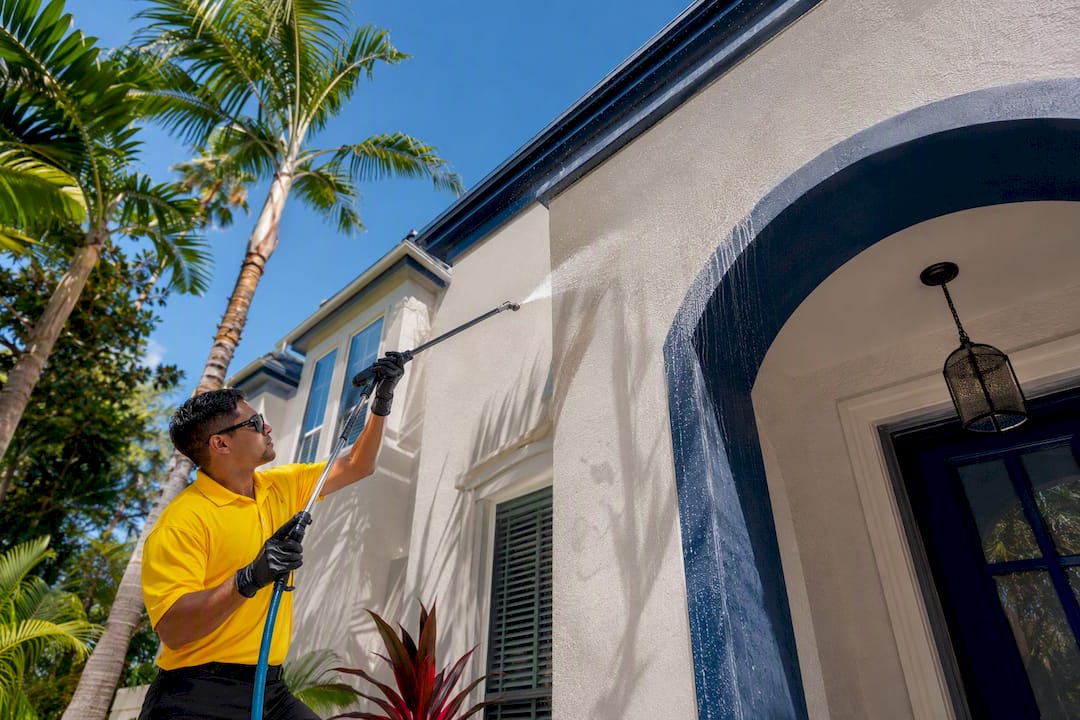
- Vinyl and fiber cement siding: Stay under 1,500 PSI and hold the wand at a slight downward angle so water doesn’t force its way behind panels. Our guide to pressure washing house exteriors walks through the full process.
- Roofs: Skip pressure entirely. High-force spray strips shingle granules and voids most roofing warranties; a low-pressure soft wash is the safer route, as this roofing guide explains.
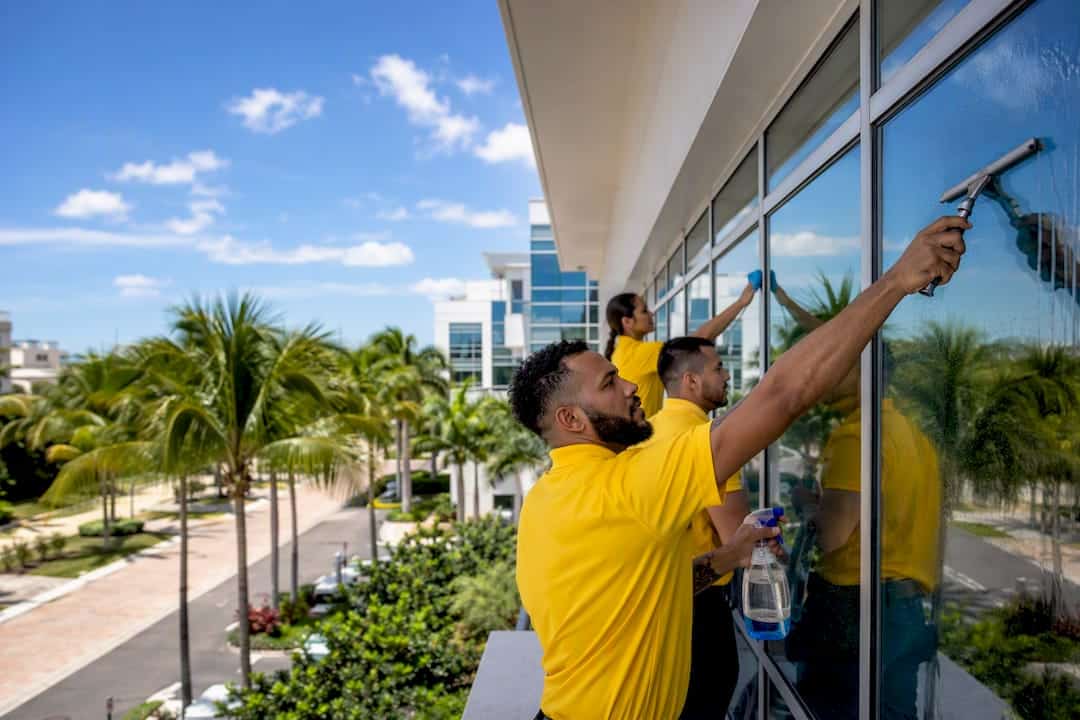
- Cars and windows: Keep it under 1,200 PSI with a wide nozzle, and never aim directly at seals, trim, or window edges.
Pro Tip: Always test an inconspicuous corner first. Thirty seconds of testing beats an afternoon of explaining a pressure mark to your homeowners’ association.
Surfaces that need a gentler touch entirely, like painted stucco or old brick, often do better with soft washing instead of pressure.
What Safety Gear and Precautions Do You Actually Need?
The biggest injuries from pressure washing aren’t dramatic, they’re cuts and burns from misjudging how much force a wand carries. Consumer Reports specifically warns against 0-degree nozzles because that pinpoint stream can break skin and strip paint in seconds, with no real cleaning benefit over a 15 degree tip. Basic gear matters more than most people assume:
- Closed-toe shoes with good traction, since wet surfaces get slippery fast.
- Safety glasses to block flying debris and chemical splashback.
- Long pants and gloves, especially when using hot water or cleaning solutions.
- A stable stance with both hands on the wand at all times.
Heat raises the stakes further. Hot water burns are common on power washing jobs, which is one reason professional crews wear heavier gloves and keep the wand tip farther from skin. Before you start, cover outdoor outlets, vents, and light fixtures, and keep the nozzle at least 12 inches from any surface until you’ve tested the pressure. Working closer than that is how you end up gouging wood or cracking old paint.
Should You Rent a Machine or Hire a Pro?
Renting makes sense for a single, low-risk job, a small patio, a fence, a car. It gets harder to justify once you’re dealing with a two-story house, a steep roof line, or grime that’s been building for years. Ask yourself a few honest questions: How often will you actually use this? Is the surface delicate (old wood, painted siding, roofing)? Do you need a ladder to reach it?
Rental machines typically run $50 to $100 a day, but hidden costs add up, fuel, hose attachments, and the chemicals needed for tougher stains. If something goes wrong, a cracked window or a torn window screen, you’re covering that repair yourself. Insurance and liability are a real part of the professional side of this business, which is exactly why licensed crews carry coverage that protects your property if an accident happens on the job.
How Do You Vet a Pressure Washing Contractor?
A few direct questions separate a professional operation from someone with a machine and a truck. Ask if they carry liability insurance and worker’s comp, since Florida’s humidity and storm debris mean accidents happen more than homeowners expect. Ask whether their equipment includes hot water capability if your job needs it, and whether they’ve handled your specific surface before, tile roofs and pavers require different techniques than vinyl siding.
Get a written estimate that spells out the method, PSI range, and what steps they’ll take to protect landscaping, windows, and outdoor fixtures. Walk away from anyone who can’t answer clearly, who has no proof of insurance, or who pushes for maximum pressure on everything “to save time.” That last one is a red flag, not a shortcut. For Tampa Bay properties specifically, this checklist of essential pressure washing steps covers what a thorough job should include.
A Tampa Bay Perspective on Getting This Right
Salt air, humidity, and heavy pollen make Tampa, Clearwater, and St. Petersburg properties dirty faster than most parts of the country. Mold shows up on shaded siding within months, not years. Floridacc crews are licensed, insured, and use eco-friendly solutions on every job, so a driveway or roofline gets cleaned without unnecessary risk to your landscaping or your wallet. If a job looks tricky or bigger than a weekend project, request a free estimate before you commit to anything.
— Matt
Why Homeowners Choose Floridacc for Pressure Washing
If you’ve read this far, you already know the margin for error on roofs, siding, and older concrete is thinner than most rental counters admit. Floridacc gives Tampa Bay homeowners a way to skip that guesswork entirely: licensed, insured crews who already know which PSI and nozzle a Clearwater driveway needs versus a St. Petersburg pool deck.

Every job starts with a look at the surface, not a default setting cranked to maximum. That’s how paint stays on siding and shingles stay on roofs. Whether it’s a single driveway or a full exterior refresh, you can request a free estimate for pressure washing in Tampa Bay and get a straight answer on cost and method before anyone shows up with a hose.
Sources
- The Difference Between Pressure and Power Washers
- Can you pressure-wash it? (surfaces safe to clean with a pressure washer)
- Pressure washing vs. power washing
FAQ
Is It Better to Pressure Wash or Power Wash a House?
For most house exteriors, pressure washing is the safer, cheaper choice, since siding and painted surfaces rarely need the extra heat. Power washing is worth it only when you’re dealing with heavy grease, mildew, or years of buildup that cold water can’t break down.
Which Is Better, a Pressure Washer or a Power Washer?
Neither is universally better, they’re built for different jobs. A pressure washer suits everyday cleaning like decks, cars, and patios, while a power washer earns its higher cost on grease-heavy or commercial surfaces.
How Much Should You Charge to Pressure Wash a 2,000 Square Foot House?
Pricing varies by region, surface condition, and access, so it’s best to get a written estimate rather than rely on a flat rate. Floridacc provides free, no-pressure quotes for Tampa Bay homes based on the actual job in front of them.
Is 3,000 PSI Enough to Clean Concrete?
Yes. Machines producing at least 1,500 PSI can clean concrete, and 2,500 to 3,000 PSI works faster on tougher stains like oil or rust. Going higher than that rarely adds much benefit and increases the risk of etching softer concrete.