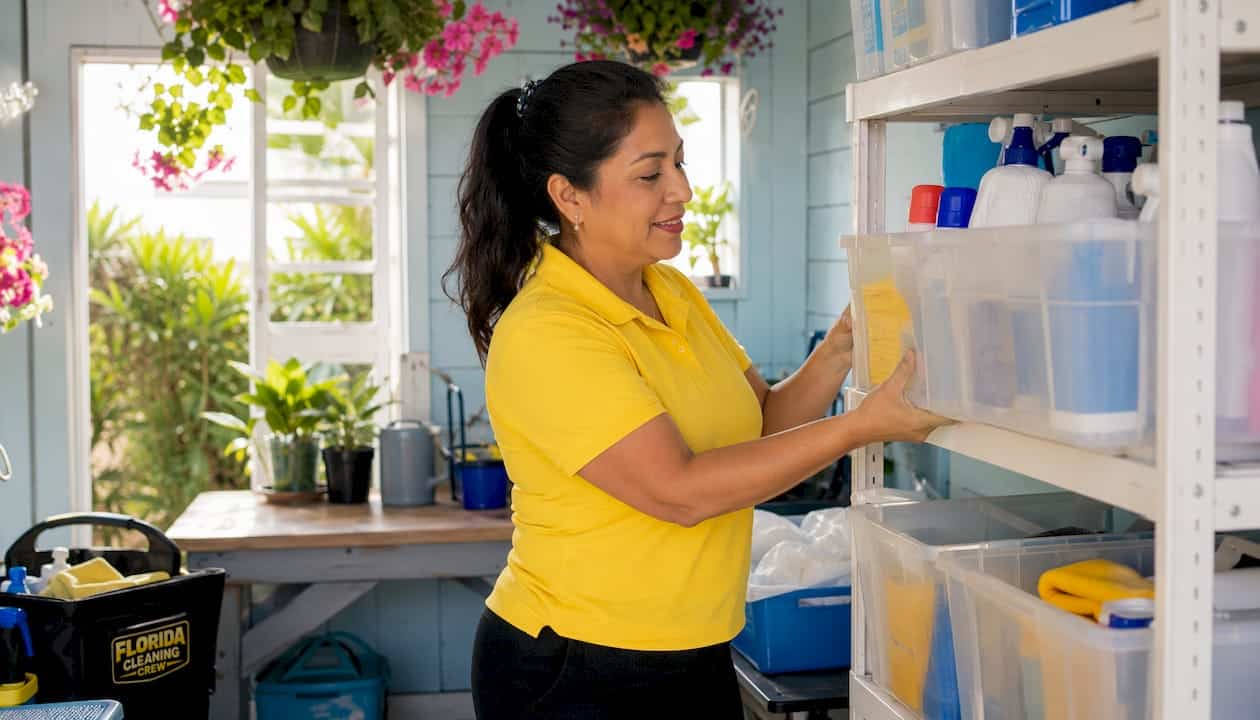
Good cleaning supplies organization is defined as a system that keeps products accessible, labeled, and stored by chemical compatibility to prevent accidents and reduce wasted time. Accidental poisonings from household chemicals remain a leading cause of injury in young children, making safe storage more than a tidiness preference. The right setup also cuts the time you spend hunting for the right product before every cleaning session. These cleaning supplies organization tips cover zone-based storage, safe containment, and long-term maintenance routines that work for real homes in Tampa, Clearwater, and St. Petersburg.
1. How to categorize and zone cleaning supplies for efficient home use
Zone-based storage is the single most effective method for organizing cleaning tools in a home. The principle is simple: store supplies as close as possible to where you use them. Kitchen cleaners go under the kitchen sink. Bathroom scrubs and disinfectants stay in the bathroom cabinet. Laundry products live in the laundry room. Floor cleaners and mops belong near the utility closet or wherever you store your vacuum.
Industry experts recommend a “hub-and-spoke” storage model that pairs a central hub for bulk and backup items with smaller, task-specific zones throughout the home. The hub holds your extras. The spokes hold what you actually reach for every week. This separation prevents the common problem of dragging a heavy caddy from room to room.
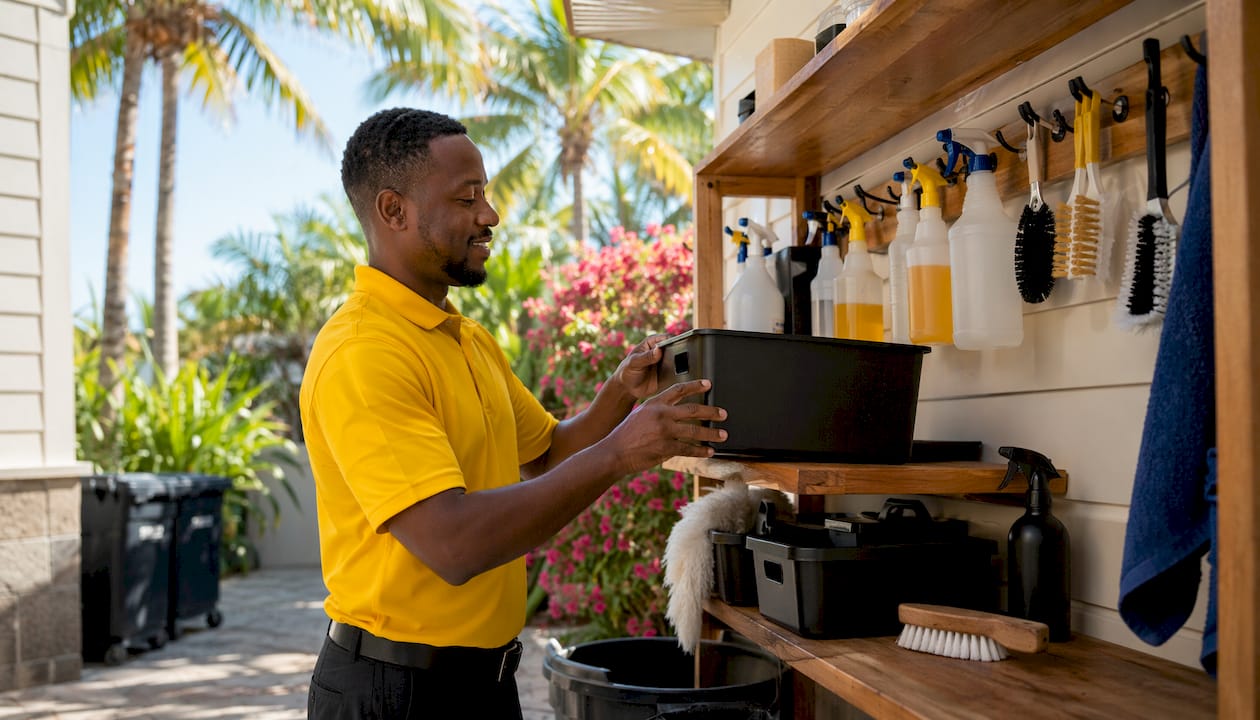
Chemical compatibility is the non-negotiable part of zoning. Acids must stay separate from bases, and bleach must never share a shelf with ammonia-based cleaners. Mixing these products, even accidentally through spills, can produce toxic gases. Organizing by hazard class rather than alphabetically or by brand is the standard recommended by chemical safety experts.
Labeling ties the whole zone system together. Labeled bins and shelf zones reduce disorder by making it obvious where every item belongs. When restocking is easy and intuitive, household members are far more likely to return items correctly.
- Kitchen zone: dish soap, surface spray, degreaser, garbage bags
- Bathroom zone: toilet cleaner, tile scrub, disinfectant wipes, glass cleaner
- Laundry zone: detergent, fabric softener, stain remover, dryer sheets
- Floor zone: mop solution, hardwood cleaner, vacuum bags or filters
- Central hub: backup stock, specialty products used less than monthly
Pro Tip: Label the front of every bin and shelf with both the product category and a simple color code. Color coding lets kids and other household members identify zones at a glance without reading every label.
2. Selecting storage solutions that maximize safety and accessibility
The storage container you choose matters as much as where you put it. Cleaning products must stay in their original containers with labels intact. Original labels carry first aid instructions, active ingredients, and hazard warnings that no handwritten tag can replicate. Removing a product from its original bottle eliminates critical safety information and increases the risk of accidental ingestion.
Under-sink cabinets are the most common storage location in American homes, but they come with real challenges. Plumbing takes up space, moisture builds up, and the area is often accessible to children. Measuring vertical clearance carefully before buying any organizer is the step most homeowners skip. The P-trap pipe under most sinks reduces usable height significantly, and a pull-out drawer or tiered shelf that looks perfect online may not fit around it.
Practical solutions for under-sink storage include:
- Pull-out drawers: Give full access to items at the back without reaching or crouching
- Tension rods: Mount horizontally to hang spray bottles by their triggers, freeing up floor space
- Waterproof trays or liners: Catch leaks and spills before they damage the cabinet base or allow chemicals to mix
- Clear bins: Let you see contents without pulling everything out
- Over-door organizers: Add storage on the inside of cabinet doors for small bottles and sponges
Vertical space is consistently underused. Hooks, wall-mounted racks, and pegboards work well in laundry rooms and utility closets. They keep mops, brooms, and dustpans off the floor and visible at a glance.
Ventilated cabinets with louvered doors or small gaps reduce fume buildup and prevent moisture damage to both products and cabinet surfaces. This matters most in bathrooms and under-sink areas where airflow is naturally limited.
Child safety requires a separate layer of protection beyond good organization. Child-resistant locks and high shelves are the two most reliable barriers between hazardous products and young children. In homes with toddlers or pets, every cabinet holding cleaning products needs a lock, regardless of how high the shelf sits.
Pro Tip: Never transfer cleaning products into decorative or unmarked containers, even for aesthetic reasons. The “store, not décor” principle exists because an unlabeled bottle of bleach looks identical to an unlabeled bottle of water.
3. Maintaining your system for long-term efficiency and safety
A well-built organization system degrades without regular upkeep. The most common failure is not the initial setup but the slow creep of clutter that happens when maintenance gets skipped. Routine inventory checks every six months remove expired products, catch leaking containers, and prevent the buildup of duplicates you forgot you already owned.
A practical maintenance routine looks like this:
- Set a calendar reminder for every six months to audit all cleaning supply zones and the central hub.
- Check expiration dates on disinfectants, drain cleaners, and specialty products. Expired products often lose effectiveness and can degrade in ways that make them less safe.
- Inspect containers for leaks or damage. A cracked spray bottle or a corroded cap is a spill waiting to happen.
- Re-label any bins or zones that have shifted from their original purpose. Zones drift when people grab the nearest available space.
- Dispose of unneeded products safely. Most municipalities in the Tampa Bay area offer household hazardous waste drop-off events for chemicals you no longer need.
- Restock the hub with any supplies running low in the zones before the next cleaning cycle begins.
Teaching every household member about chemical hazards is part of maintenance, not a one-time conversation. Children old enough to help with chores need to know which cabinets are off-limits and why. Older kids and teenagers benefit from understanding basic chemical incompatibilities, such as why bleach and vinegar should never be combined.
Emergency preparedness belongs in your maintenance plan. Post the Poison Control hotline (1-800-222-1222) inside a cabinet door or on the refrigerator. Keep a basic first aid reference nearby. A property maintenance checklist that includes cleaning supply audits alongside other home safety tasks makes it easier to stay consistent without relying on memory alone.
Pro Tip: Tape a simple checklist inside your supply hub cabinet door. A physical list takes ten seconds to scan and removes the mental effort of remembering what to check each time.
4. Common mistakes to avoid when organizing cleaning supplies
Most storage problems come from a handful of predictable errors. Recognizing them before they cause harm is the difference between a safe system and a dangerous one.
Mixing incompatible chemicals. Bleach combined with ammonia produces chloramine gas. Bleach mixed with acidic cleaners like vinegar releases chlorine gas. Both reactions can cause serious respiratory harm. Storing products by hazard class rather than by size or brand prevents accidental proximity on the same shelf.
Using unmarked or decanted containers. Transferring products to unlabeled bottles is one of the most common and most dangerous habits in home cleaning storage. Decanting into aesthetic containers eliminates the safety label, the first aid instructions, and the ingredient list. If a child or adult ingests the product, emergency responders need that label information immediately.
Overstuffing cabinets without ventilation. A packed cabinet with no airflow traps fumes and moisture. Over time, this degrades product quality and creates a low-level exposure risk every time you open the door. Louvered cabinet doors or leaving a small gap at the back of the shelf solves this without any renovation.
Skipping childproofing in homes with young children or pets. A high shelf is not enough on its own. Children climb. Pets knock things over. Child-resistant cabinet locks are the only reliable barrier for households with young children, and they cost less than $20 for a full set.
Ignoring the under-sink measurement problem. Buying a storage organizer without measuring the P-trap clearance is the most common reason organizers get returned or end up unused. Measure height, width, and depth before purchasing, and account for the plumbing before assuming any organizer will fit.
The fix for all of these mistakes is the same: build the system proactively rather than reactively. Waiting until a spill, a near-miss, or a cluttered cabinet forces the issue means the risk was already present. A routine home cleaning guide that incorporates supply organization as a regular task keeps the system from slipping.
Key Takeaways
The most effective cleaning supplies organization system uses zone-based storage, original labeled containers, chemical segregation, and a six-month maintenance audit to keep homes safe and efficient.
| Point | Details |
|---|---|
| Zone-based storage | Place supplies near their point of use to cut cleaning time and reduce friction. |
| Chemical segregation | Store acids away from bases and bleach away from ammonia to prevent toxic reactions. |
| Original containers only | Never decant products into unmarked bottles; original labels carry critical safety information. |
| Child safety measures | Use child-resistant locks and high shelves in every home with young children or pets. |
| Six-month audits | Check for expired products, leaks, and clutter every six months to keep the system functional. |
What I’ve learned from years of watching home cleaning systems succeed and fail
Most people approach cleaning supply organization as a one-time project. They buy the bins, label everything, and feel good about it for about three weeks. Then life happens. A new product gets shoved in wherever it fits. A label falls off and nobody replaces it. Six months later, the cabinet looks worse than before.
The systems that actually hold up share one trait: they are built for the way the household actually behaves, not the way the household wishes it behaved. If your family never returns items to the exact right spot, a rigid alphabetical system will fail. A color-coded zone system with wide, forgiving bins will survive.
The chemical safety piece is where I see the most dangerous complacency. Homeowners who would never leave a loaded firearm accessible will store bleach and ammonia on the same shelf without a second thought. The risk is just as real. Organizing cleaning tools by hazard class is not an advanced technique. It takes five minutes and a basic understanding of which products react with each other.
Small spaces are not an excuse for poor organization. A tension rod across an under-sink cabinet costs under $5 and doubles usable space. An over-door organizer adds storage without taking up any floor or shelf area. The tools that work best in Tampa Bay homes tend to be simple, moisture-resistant, and easy to wipe down given the humidity here.
The families I have seen maintain the cleanest, safest homes are not the ones with the most products. They are the ones with the fewest products, stored well, and checked regularly. Less clutter means fewer opportunities for something to go wrong.
— Matt
How Floridacc helps Tampa Bay homeowners stay on top of home cleanliness
A well-organized supply cabinet makes every cleaning session faster and safer. But even the best-organized home benefits from professional cleaning on a regular schedule.

Floridacc serves homeowners across Tampa, Clearwater, and St. Petersburg with residential cleaning services built around reliability and real results. Whether you need a deep clean to reset your home or a recurring service to maintain it, the residential cleaning service guide walks you through exactly what to expect and how to get started. You can also explore home cleaning services directly to request a free estimate. Good organization and professional cleaning work together. One keeps your supplies in order. The other handles the work those supplies are meant to do.
FAQ
What are the best cleaning supplies organization tips for small homes?
Zone-based storage and vertical space tools like tension rods, over-door organizers, and wall hooks give small homes the most storage per square foot. A central hub for backup stock prevents zones from becoming overcrowded.
How should I store cleaning products safely around children?
Child-resistant cabinet locks combined with high shelves are the most reliable protection. Always keep products in their original labeled containers and post the Poison Control number (1-800-222-1222) somewhere visible.
Which cleaning products should never be stored together?
Bleach must be stored away from ammonia cleaners and acidic products like vinegar. Mixing incompatible chemicals produces toxic gases that cause serious respiratory harm, even in small amounts.
How often should I audit my cleaning supply storage?
Every six months is the standard recommendation from professional organizers. Each audit should check for expired products, leaking containers, and any zones that have drifted from their original purpose.
Is it safe to transfer cleaning products into different bottles?
No. Decanting into unmarked containers removes the safety label, ingredient list, and first aid instructions. Always store cleaning products in their original bottles with the original label intact.