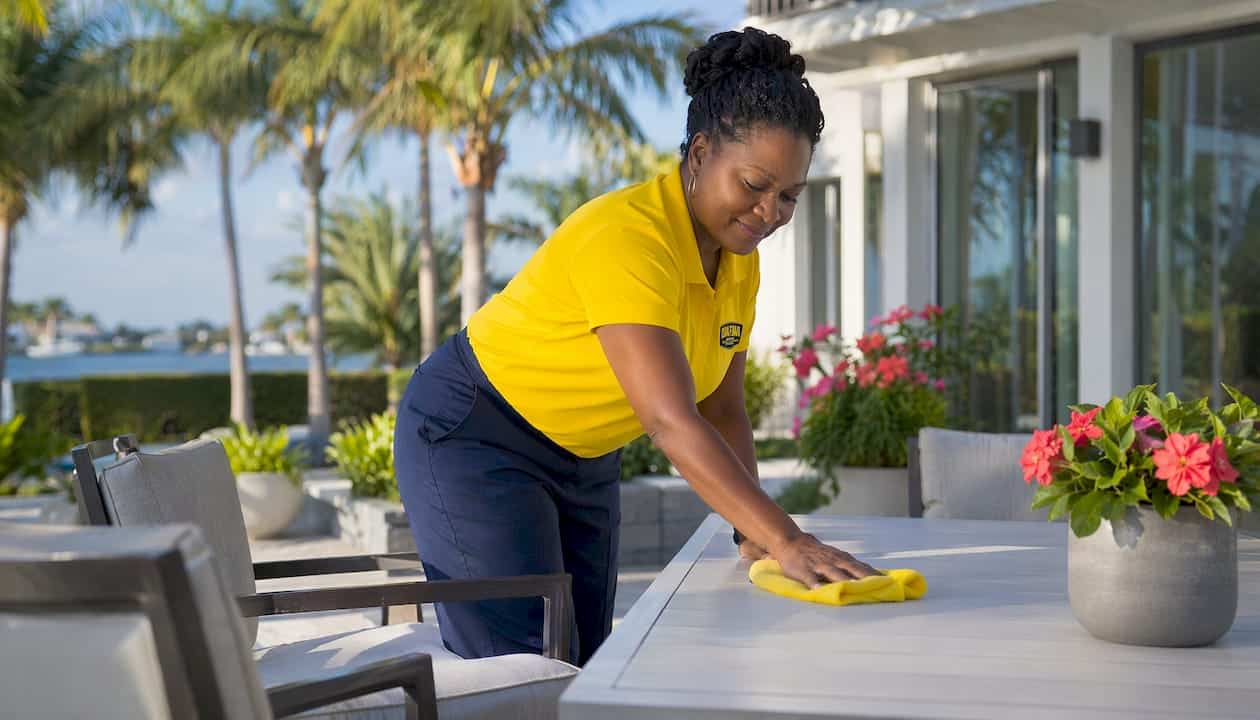
Housekeeping safety practices are the structured steps you take to keep a space clean, organized, and free of hazards that cause injuries. Slips, trips, chemical exposures, and fire risks are not random. They follow directly from poor housekeeping habits that accumulate over time. OSHA lists housekeeping failures among its most frequently cited violations, and the National Safety Council recognizes good housekeeping as a core safety control, not a cosmetic task. Whether you manage a Tampa Bay business or maintain a home in Clearwater or St. Petersburg, the same principle applies: a clean space is a safe space, and safety starts with a plan.
1. What are the top housekeeping safety practices everyone should follow?
Effective cleaning safety guidelines share one trait. They are specific, assigned, and repeated consistently. The list below covers the practices that prevent the most common hazards in homes and workplaces.
Keep walking surfaces clear and dry at all times
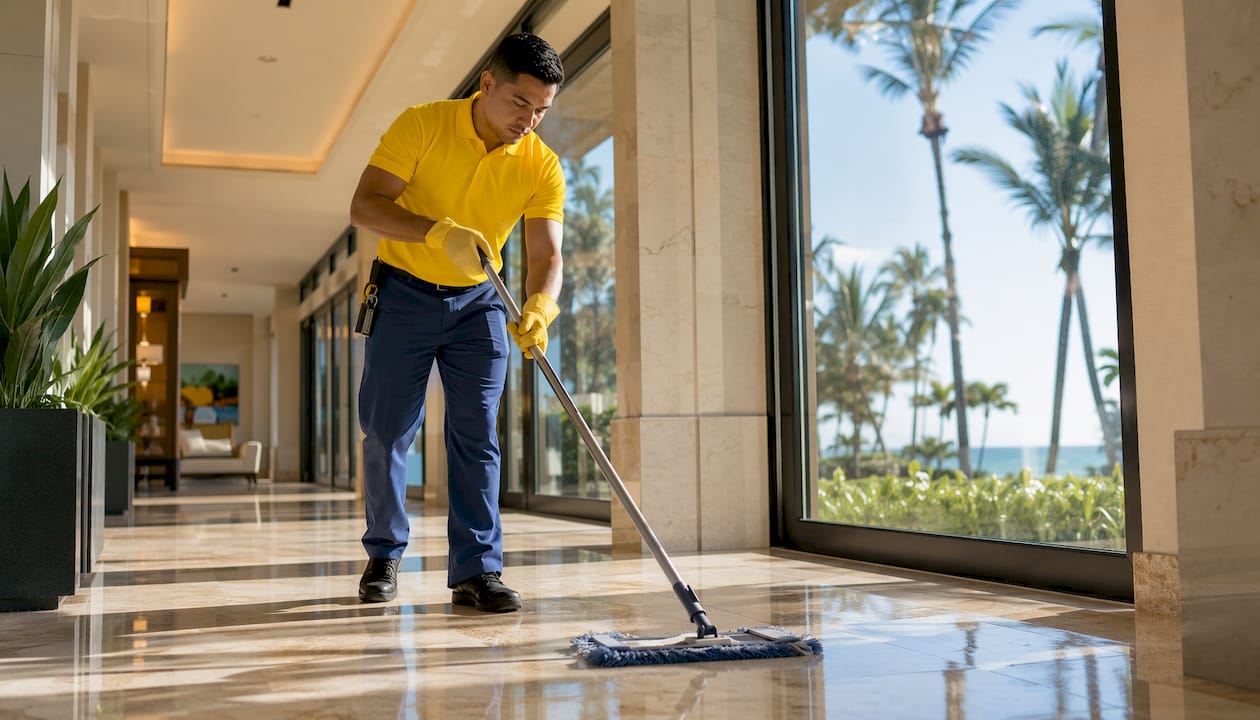
Wet or cluttered floors cause the majority of slip, trip, and fall injuries across all industries. Clean spills the moment they happen using the correct absorbent material for the liquid involved. Place wet floor signs immediately and remove them only after the surface is fully dry.
Store materials and waste properly
Improper storage creates two hazards at once: fire risk from flammable materials and fall risk from items left in walkways. Keep flammable products in labeled, approved containers away from heat sources. Dispose of waste daily rather than letting it accumulate near exits or work areas.
Maintain clear exits and passageways
Blocked exits are both a safety violation and a life-threatening hazard during emergencies. OSHA requires passageways to remain unobstructed at all times under 29 CFR 1910.22. Walk every exit route weekly to confirm nothing has been stored, stacked, or left in the path.
Inspect tools, cords, and surfaces regularly
Good housekeeping improves hazard visibility, such as spotting damaged cords and leaking containers before they cause accidents. Build a quick visual check into every cleaning session. A frayed cord or cracked floor tile spotted during routine cleaning costs far less to fix than the injury it would cause.
Use personal protective equipment when handling chemicals
PPE is not optional when you work with cleaning chemicals. Gloves, eye protection, and masks protect against chemical burns, respiratory irritation, and eye damage. Match the PPE to the specific product you are using by reading the Safety Data Sheet (SDS) before you start.
Follow chemical labeling and SDS protocols
Standardizing cleaning products and training avoids chemical safety lapses and keeps hazard control consistent. Every cleaning product must carry its original label or a clearly marked secondary label. SDS sheets must be accessible to anyone who handles the product, not locked in a back office.
Schedule cleaning based on traffic patterns
Effective cleaning schedules based on traffic patterns improve safety by focusing effort on high-use areas like restrooms, entryways, and break rooms. A restroom used by 50 people per day needs attention more than once per shift. Map your space, identify the highest-traffic zones, and build your schedule around them.
Pro Tip: Use a simple color-coded map of your home or workplace to mark high-traffic zones in red, medium-traffic in yellow, and low-traffic in green. Clean red zones daily, yellow zones every other day, and green zones weekly.
Assign cleaning responsibilities explicitly
Clear assignment of housekeeping responsibilities eliminates the bystander effect, the tendency for people to assume someone else will handle a hazard. Every zone, task, and time slot needs a named owner. In a home, that means agreeing on who handles which rooms. In a business, it means written assignments with accountability built in.
Embed cleaning into daily workflows
Embedding cleaning into daily workflows prevents hazard accumulation better than treating it as an end-of-shift task. A five-minute tidy at the end of each work block prevents the hour-long cleanup that follows a full day of neglect. Make cleaning part of the work, not a separate chore added at the end.
Promote a safety culture from the top down
Leadership behavior sets the standard for everyone else. When a manager stops to clean up a spill or points out a hazard without assigning blame, it signals that safety is a shared value. Training alone does not build a safety culture. Visible, consistent leadership action does.
How do OSHA regulations inform housekeeping safety practices?
OSHA does not give you a cleaning schedule. What it does give you is a clear legal standard: your workplace must be clean, orderly, and sanitary at all times. Understanding the specific regulations helps you build a program that meets the standard without guessing.
The core regulation is 29 CFR 1910.22, which covers walking and working surfaces. It requires floors, aisles, and passageways to be kept clean and free of hazards. OSHA mandates workplaces be clean and free of slip, trip, and fall hazards under this standard, making housekeeping one of the most frequently cited violation categories.
The Hazard Communication Standard (29 CFR 1910.1200) governs cleaning chemicals. It requires proper labeling, SDS access, and employee training on chemical hazards. Businesses that use multiple cleaning products without a written hazard communication program are out of compliance, even if no incident has occurred.
OSHA’s sanitation requirements cover waste disposal, hand-washing facilities, and potable water access. These apply to commercial spaces and are especially relevant for food service, healthcare, and hospitality businesses in Tampa Bay.
Key OSHA housekeeping compliance points:
- Walking surfaces must be free of debris, spills, and obstructions at all times
- Flammable and combustible materials must be stored in approved containers away from ignition sources
- Waste containers must be emptied regularly and not allowed to overflow
- SDS sheets must be accessible to all employees who handle cleaning chemicals
- Routine inspections and documentation support compliance and reduce liability
“Housekeeping is a key hazard control, not just cosmetic, and is an indicator of organizational safety culture.” — Mike Ezell, National Safety Council safety consultant
OSHA allows flexibility in how you achieve compliance. It does not prescribe a specific cleaning method or product. What it does require is a hazard-free result. That means you can build a program that fits your space, as long as the outcome meets the standard.
For Tampa Bay businesses navigating these requirements, the Tampa Bay business cleaning compliance guide covers local considerations in detail.
What practical steps ensure effective housekeeping safety in homes and businesses?
General guidelines become useful only when they translate into specific daily actions. The steps below work for Tampa Bay homeowners and small business owners alike.
Build a tailored cleaning checklist. A generic checklist misses the hazards specific to your space. A home with pets needs different attention than a commercial kitchen. Start with a room-by-room cleaning guide and customize it based on how each area is actually used.
Schedule inspections alongside cleaning. Cleaning and inspection are not the same task, but they work best together. During each cleaning session, check for damaged surfaces, leaking pipes, frayed cords, and blocked vents. Catching these issues early prevents them from becoming injuries or code violations.
Practical steps that make a measurable difference:
- Install smoke detectors on every level of your home and CO detectors near sleeping areas to catch hazards before they become emergencies
- Use floor markings and tool shadow boards in commercial spaces to make disorder immediately visible
- Standardize the cleaning products used throughout your space and keep SDS sheets in a single, accessible location
- Implement a waste management routine that separates trash, recycling, and hazardous materials at the point of disposal
- Encourage every occupant or employee to report hazards immediately rather than waiting for the next scheduled inspection
Pro Tip: Take a photo of each room or zone at the start of a cleaning session and compare it to the finished state. Over time, these photos reveal patterns, recurring clutter spots, or surfaces that need more frequent attention.
For Airbnb hosts and property managers in St. Petersburg and Clearwater, a vacation rental cleaning checklist provides a structured starting point that covers both safety and guest experience.
What common housekeeping safety mistakes put people at risk?
Most cleaning-related accidents are predictable. They follow from the same handful of mistakes, repeated across homes and businesses every day.
Poor housekeeping leads to higher incidence of slips, trips, and falls and related injuries across all industries. That pattern holds whether you are running a restaurant in Tampa or maintaining a rental property in Clearwater.
The most common mistakes:
- Delaying spill cleanup. Every minute a spill sits on the floor is a minute someone can slip on it. The fix is immediate response, not a note to clean it later.
- Allowing clutter to build in walkways. Allowing clutter and obstructed exits erodes safety standards and increases accident risk over time. What starts as one box in a hallway becomes a blocked exit within a week.
- Assuming someone else will handle it. Without clear ownership, hazards go unaddressed. The bystander effect is real and well-documented in workplace safety research.
- Inconsistent chemical handling. Using the wrong product for a surface, skipping PPE, or storing chemicals without labels creates risk every time. One unlabeled bottle in the wrong hands causes a serious incident.
- Skipping routine inspections. Minor damage, a cracked tile, a loose handrail, or a dripping pipe, becomes a major hazard when ignored. Inspections catch these before they escalate.
- Overlooking emergency exits. Exit routes get blocked gradually. A quarterly walk-through of every exit path takes 10 minutes and prevents a catastrophic failure during an actual emergency.
The pattern across all these mistakes is the same. A small lapse, tolerated once, becomes a habit. That habit creates the conditions for a serious accident.
For rental property owners, a rental inspection cleaning checklist helps catch these issues before a tenant or guest encounters them.
Key Takeaways
Consistent housekeeping safety practices, built on clear ownership, scheduled routines, and OSHA-aligned protocols, prevent the majority of preventable injuries in homes and workplaces.
| Point | Details |
|---|---|
| Assign clear ownership | Name a responsible person for every zone and task to eliminate the bystander effect. |
| Embed cleaning in daily work | Treat cleaning as part of the workflow, not an end-of-day afterthought, to prevent hazard buildup. |
| Follow OSHA standards | 29 CFR 1910.22 and 29 CFR 1910.1200 set the legal floor for workplace cleanliness and chemical safety. |
| Inspect during every clean | Use each cleaning session to spot damaged cords, leaks, and blocked exits before they cause injuries. |
| Standardize products and training | One approved product list with accessible SDS sheets keeps chemical handling consistent and safe. |
Why housekeeping safety is a leadership problem, not a cleaning problem
After working in and around professional cleaning for years, the pattern I see most often is this: the spaces with the worst safety records are not the ones with the worst cleaning products or the smallest budgets. They are the ones where leadership treats housekeeping as someone else’s job.
The National Safety Council’s position is clear. Housekeeping is a core safety measure, not a cosmetic one. When I walk through a commercial space and see a blocked exit, a mislabeled chemical, or a spill that has been there long enough to dry, I am not looking at a cleaning failure. I am looking at a culture failure.
The fix is not a longer checklist. It is a shift in how leadership communicates about cleanliness. When a manager in a Tampa restaurant stops to wipe down a surface or points out a hazard without making it someone’s fault, the team notices. That behavior, repeated consistently, changes what people consider normal.
For homeowners, the same principle applies at a smaller scale. If you set the standard in your own home by cleaning up immediately, storing chemicals properly, and checking smoke detectors regularly, everyone in the household follows. Safety is not a policy. It is a habit built by the people who set the tone.
The commercial cleaning maintenance guide offers a useful framework for businesses that want to build that habit into their operations systematically.
— Matt
Floridacc keeps Tampa Bay homes and businesses safe and clean
Knowing the right practices is one thing. Executing them consistently, especially across a busy home or commercial space, is another challenge entirely.

Floridacc provides professional residential and commercial cleaning services across Tampa Bay, including Tampa, Clearwater, and St. Petersburg. The team is licensed, insured, and trained to meet safety standards on every visit. Whether you need routine maintenance, a deep clean after a tenant moves out, or ongoing commercial service that keeps your space OSHA-ready, Floridacc handles it with attention to detail and no shortcuts. Request a free estimate at floridacc.com and get a cleaning plan built around your space and schedule.
FAQ
What are housekeeping safety practices?
Housekeeping safety practices are structured steps to keep spaces clean, organized, and free of hazards like spills, clutter, and improperly stored chemicals. They prevent slips, fires, and chemical exposures in both homes and workplaces.
What does OSHA require for workplace housekeeping?
OSHA’s 29 CFR 1910.22 requires workplaces to maintain clean, orderly, and sanitary walking and working surfaces at all times. The Hazard Communication Standard (29 CFR 1910.1200) also requires proper chemical labeling and SDS access for all cleaning products.
How often should cleaning and inspections happen?
OSHA does not mandate specific cleaning intervals, but requires a safe and sanitary environment at all times. High-traffic areas like restrooms and entryways typically need daily attention, while inspections for damage and hazards should happen during every cleaning session.
What is the bystander effect in housekeeping?
The bystander effect in housekeeping occurs when no one addresses a hazard because everyone assumes someone else will handle it. Assigning explicit cleaning responsibilities by zone and person eliminates this problem and keeps hazard control consistent.
How do I start building a housekeeping safety program?
Start by mapping your space, identifying high-traffic and high-hazard zones, and assigning cleaning responsibilities to specific people. Build a checklist tailored to your space, standardize your cleaning products, and schedule both cleaning and inspection tasks on a recurring calendar.