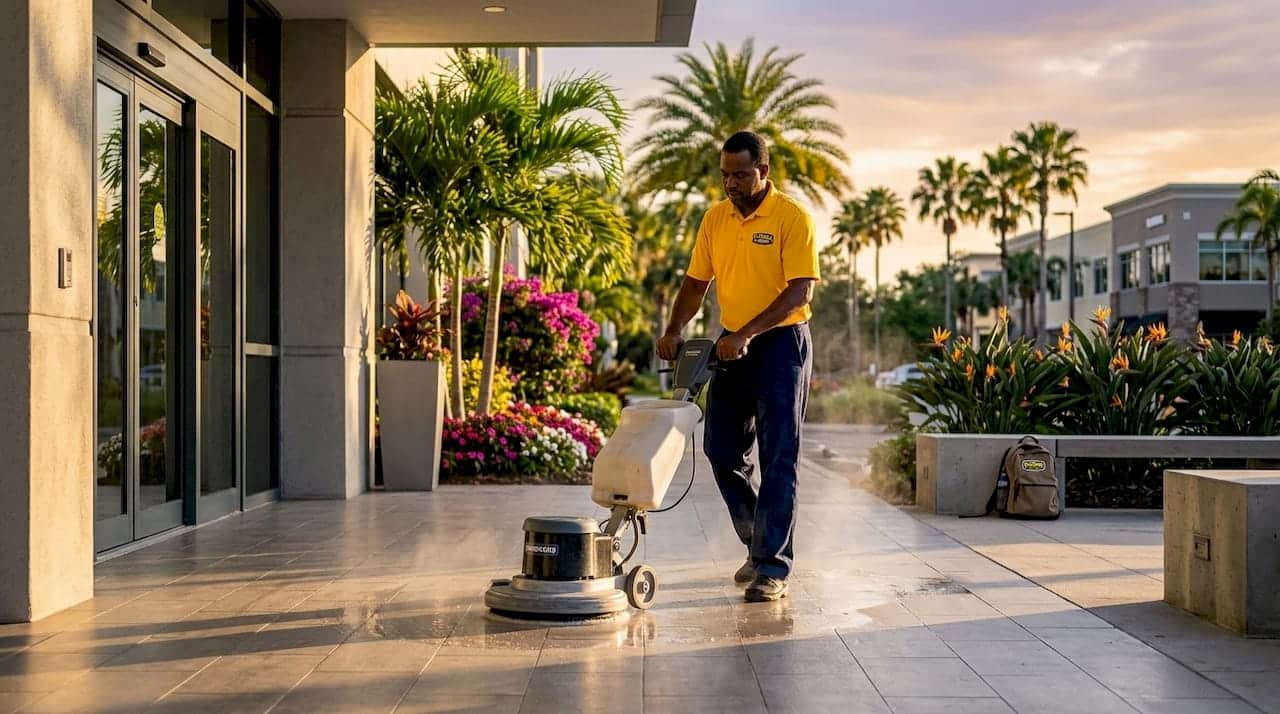
Entrance cleaning for commercial buildings is the systematic removal of dirt, moisture, contaminants, and hazards at a building’s entry points to protect safety, hygiene, and the long-term condition of the facility. Research shows that 80–90% of dirt and moisture entering a commercial building arrives through foot traffic at the entrance, making the entry zone the single most important control point in any facility hygiene program. Facility managers who treat entrance cleaning as a routine priority, rather than an afterthought, reduce slip incidents, lower maintenance costs, and protect the health of everyone inside. The industry term for this practice is “entry zone management,” and it combines matting systems, surface sanitization, and door maintenance into one coordinated program.
What is entrance cleaning for commercial buildings?
Entrance cleaning for commercial buildings covers every task required to keep the entry zone safe, clean, and functional. That includes maintaining floor mats, sanitizing door handles and glass panels, removing tracked-in debris, and servicing door hardware. The goal is to stop contamination before it spreads deeper into the building.
The entry zone is not just a floor area. It is the transition point between the outdoor environment and your controlled interior space. Every visitor, employee, and delivery worker who walks through your door carries dirt, moisture, allergens, and pathogens on their shoes and clothing. Without a structured cleaning program at that point, those contaminants travel freely through your entire facility.
Commercial entrance maintenance differs from general janitorial work in one key way: it targets the source of contamination rather than the symptoms. Mopping a lobby floor twice a day treats the symptom. A properly maintained matting system, combined with daily sanitization of high-touch surfaces, addresses the cause. That distinction drives measurable results in both hygiene and cost.
Why is entrance cleaning critical in commercial buildings?
The safety case for entrance cleaning is direct. 35–40% of all slip incidents occur at building entrances, and wet weather raises that risk by 300–400%. That concentration of incidents at a single location tells facility managers exactly where to focus prevention efforts first.
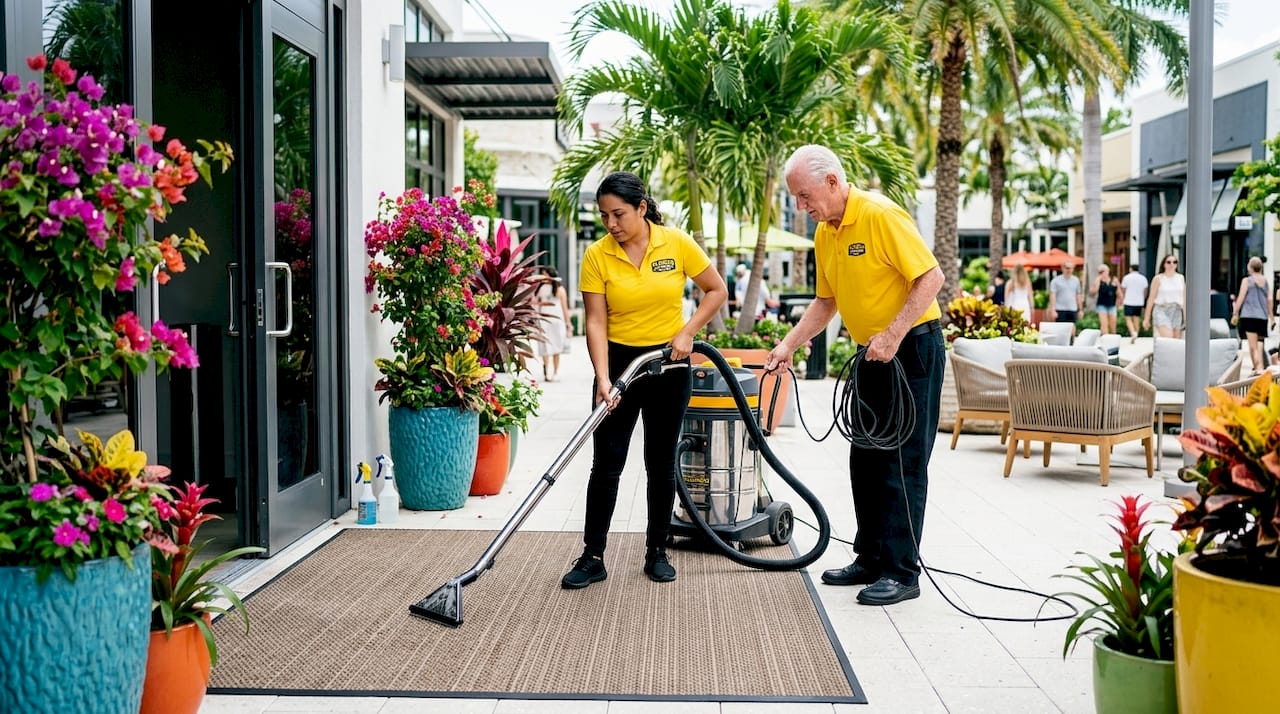
Beyond slips, entrances are the primary pathway for biological contamination. Germs, allergens, mold spores, and airborne particles attach to footwear and clothing outdoors, then transfer to interior surfaces the moment someone walks in. In high-traffic commercial spaces, including office buildings, retail stores, and medical facilities in Tampa and St. Petersburg, this transfer happens hundreds or thousands of times per day.
The health consequences are measurable. Businesses that implement professional entrance sanitization report a 30% reduction in employee sick days and 20% savings on health-associated costs. Those numbers reflect what happens when you stop contamination at the door instead of letting it circulate through the building.
Regulatory compliance adds another layer of urgency. Commercial buildings must meet accessibility and safety standards, and a poorly maintained entrance creates liability exposure. Wet floors without adequate matting, doors that require excessive force to open, and damaged thresholds all create conditions that invite complaints, citations, or lawsuits.
Key risks of neglecting commercial entrance maintenance:
- Slip and fall incidents concentrated at entry points
- Increased employee absenteeism from tracked-in pathogens
- Premature floor damage from abrasive grit
- ADA compliance violations from poorly maintained door hardware
- Negative first impressions that affect tenant retention and customer confidence
The operational and brand cost of ignoring entrance hygiene compounds over time. Facility managers who focus only on restrooms and common areas consistently miss the hygiene gap that starts at the front door.
What are the most effective methods for entrance cleaning?
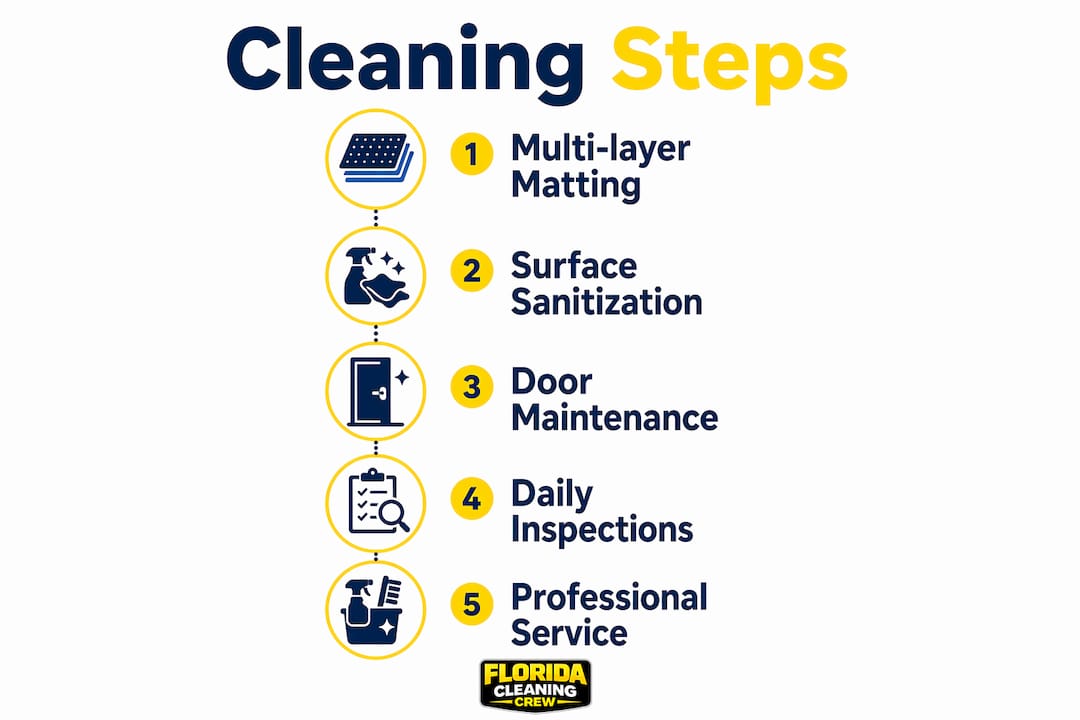
The most effective approach to how to clean commercial entrances combines three distinct systems: matting, surface sanitization, and door maintenance. Each addresses a different category of contamination and risk.
Multi-layer matting systems
Multi-layer entrance matting is the foundation of any serious entry zone program. A properly specified system traps up to 90% of dirt and moisture before it reaches interior flooring, and reduces cleaning labor by up to 50%. That labor reduction alone justifies the investment for most facility managers.
A standard multi-layer system uses three zones. The scraper mat sits outside the door and removes heavy debris from shoe soles. The wiper mat inside the vestibule absorbs moisture. The transition mat at the interior threshold captures fine particles that pass the first two layers. Each mat serves a specific function, and removing any one layer reduces the system’s overall effectiveness.
Mat maintenance follows a clear schedule:
- Daily visual inspection. Check for saturation, curling edges, or debris buildup that creates a trip hazard.
- Vacuum extraction. Perform this at least three times per week in high-traffic buildings. Vacuum extraction removes 85–90% of particles and restores mat performance faster than any other method.
- Shake-out or spot cleaning. Use this for light-traffic days or between vacuum cycles.
- Full washing. Schedule this monthly or when mats show visible soiling that vacuuming cannot address. Washing extends mat lifespan by 40–60%.
- Rotation. Keep a spare set of mats in reserve so you can swap them out during washing without leaving the entry zone unprotected.
Pro Tip: In Tampa Bay, humidity and afternoon rain showers saturate entrance mats faster than in drier climates. Check mat saturation levels after every rain event, not just on a fixed schedule. A saturated mat stops absorbing moisture and becomes a slip hazard itself.
Surface sanitization protocols
High-touch surfaces at building entrances, including door handles, push plates, glass panels, and intercom buttons, accumulate pathogenic bacteria at rates far higher than most interior surfaces. Professional sanitization of these points achieves a 99.9% reduction in surface bacteria. That level of reduction requires EPA-registered disinfectants applied with proper dwell times, not a quick wipe with a general-purpose cleaner.
Glass panels and door frames require a separate protocol from metal hardware. Glass needs a streak-free cleaner applied with a microfiber cloth or squeegee to maintain visibility and appearance. Metal hardware needs a disinfectant compatible with the finish to avoid corrosion. Frequency should match traffic volume: daily for high-traffic buildings, at minimum three times per week for lower-traffic facilities.
Door maintenance as part of entrance cleaning services
Most facility managers treat door maintenance as a separate category from cleaning. That separation is a mistake. A door that sticks, slams, or requires excessive force to open creates both safety risks and accessibility violations, and those problems originate from the same neglect that allows dirt and moisture to accumulate.
Best practice for commercial entry door maintenance includes daily visual inspections, monthly cleaning, and annual professional servicing. This schedule reduces total repair needs by approximately 85%. The math is straightforward: a $200 annual service visit prevents a $2,000 hardware replacement.
Door closers must be adjusted to meet ADA’s 5 lbf maximum opening force requirement. Incorrect lubrication accounts for about 40% of premature hardware failures in commercial doors. Using the wrong lubricant on a door closer or hinge accelerates wear and voids manufacturer warranties.
| Maintenance Task | Frequency | Purpose |
|---|---|---|
| Visual door inspection | Daily | Identify damage, misalignment, or debris |
| Mat vacuuming | 3x per week minimum | Restore dirt and moisture capture capacity |
| High-touch surface sanitization | Daily | Reduce pathogen transfer at entry points |
| Full mat washing | Monthly | Extend mat lifespan and deep-clean fibers |
| Door hardware lubrication and adjustment | Monthly | Prevent wear and maintain ADA compliance |
| Professional door servicing | Annually | Comprehensive inspection and repair |
How does entrance cleaning benefit commercial buildings financially?
The financial case for entrance cleaning is built on prevention. Every dollar spent maintaining the entry zone prevents multiple dollars in reactive costs elsewhere in the building.
Floor protection is the clearest example. Sand rates 6–7 on the Mohs hardness scale. Most commercial flooring materials rate only 3. When sand and grit track inside on shoe soles, they act as abrasive particles that scratch and dull floor surfaces with every footstep. This is the “Ugly-Out” phenomenon, where grit tracked inside causes premature and expensive floor replacement. A properly maintained matting system stops that grit at the door, extending the life of interior flooring by years.
The health cost savings are equally concrete. A 30% reduction in employee sick days translates directly to productivity gains and lower absenteeism costs. For a Tampa Bay business with 50 employees, that reduction represents a meaningful recovery of lost work hours each year. The role of professional cleaning in reducing these costs is well established across commercial property types.
Preventive entrance maintenance costs a fraction of what reactive repairs and floor replacement demand. The facility managers who understand this shift their budgets toward the entry zone first, not last.
Operational savings extend to cleaning labor throughout the building. When 80–90% of tracked-in dirt stops at the entrance, interior cleaning cycles take less time and require fewer resources. That efficiency compounds across every cleaning shift, every week, for the life of the building. Investing in commercial cleaning at the entry point pays dividends across the entire facility.
Financial benefits of a structured entrance cleaning program:
- Up to 50% reduction in interior cleaning labor through effective dirt capture at entry
- 30% fewer employee sick days from professional sanitization protocols
- 20% savings on health-associated operational costs
- Approximately 85% reduction in door repair needs through preventive maintenance
- Extended floor lifespan by stopping abrasive grit before it reaches interior surfaces
- Reduced liability exposure from slip incidents and ADA violations
What are best practices for Tampa Bay commercial entrance programs?
Tampa Bay’s climate creates entrance cleaning challenges that facilities in drier regions do not face. Humidity runs high year-round, afternoon thunderstorms are common from june through september, and coastal properties deal with sand intrusion that accelerates the Ugly-Out effect on interior floors. A generic entrance cleaning program built for a dry climate will underperform here.
Pro Tip: Schedule a mat inspection immediately after every rain event in Tampa Bay, not just at the start of each day. Florida’s afternoon storms can saturate entrance mats within an hour, turning a clean entry zone into a slip hazard before the afternoon shift ends.
A practical entrance cleaning program for Tampa Bay commercial properties includes these elements:
- Daily inspections. Assign a staff member to check mats, door hardware, and glass panels each morning before the building opens. This takes less than 10 minutes and catches problems before visitors arrive.
- Weather-responsive mat rotation. Keep a second set of mats available to swap in during heavy rain periods. Wet mats need time to dry before they can absorb effectively again.
- Staff training on visual checks. Facility staff do not need to perform deep cleaning, but they should know what a saturated mat looks like, how to identify a door that is not closing properly, and when to escalate to a professional service.
- Professional cleaning partnerships. Partner with entrance cleaning services for mat washing, door servicing, and surface sanitization on a scheduled basis. Internal staff handle daily checks; professionals handle the technical work.
- Integration with broader cleaning programs. Entrance cleaning works best when it connects to a broader office cleaning routine that covers the full facility. Isolated entrance cleaning without interior follow-through leaves contamination gaps.
- Sand-specific mat selection. For Clearwater and St. Petersburg properties near the coast, specify mats with coarser scraper surfaces designed to dislodge sand from shoe soles. Standard commercial mats are not always adequate for coastal grit loads.
Consistency matters more than intensity. A daily five-minute inspection and a weekly professional mat service outperform a monthly deep clean every time. Office sanitation best practices confirm that frequency and regularity drive better hygiene outcomes than periodic intensive efforts.
Key Takeaways
Effective entrance cleaning for commercial buildings requires daily inspections, multi-layer matting systems, professional surface sanitization, and preventive door maintenance working together as one coordinated program.
| Point | Details |
|---|---|
| Entrances are the primary contamination source | 80–90% of dirt and moisture enters through foot traffic, making the entry zone the top hygiene priority. |
| Matting systems are the first line of defense | Multi-layer mats trap up to 90% of tracked-in debris and cut interior cleaning labor by up to 50%. |
| Sanitization reduces measurable health costs | Professional entry point sanitization cuts employee sick days by 30% and health-related costs by 20%. |
| Door maintenance prevents expensive repairs | Preventive door servicing on a daily, monthly, and annual schedule reduces repair needs by approximately 85%. |
| Tampa Bay conditions require adjusted schedules | Humidity and frequent rain demand weather-responsive mat rotation and post-storm inspections, not fixed daily-only checks. |
The entrance is the one area most facilities get wrong
A clean entrance functions as a silent handshake with every visitor who walks through the door. I have seen that play out in real terms across commercial properties of every size. The buildings with the most consistent entrance programs are almost always the ones with the highest tenant retention and the fewest surprise repair bills.
The mistake I see most often is not neglect. It is misplaced focus. Facility managers spend real effort on restrooms, break rooms, and conference areas, then treat the entrance as a pass-through zone that gets attention only when something goes visibly wrong. By the time a mat is visibly saturated or a door is audibly grinding, the damage is already accumulating.
The second most common mistake is treating door maintenance as a separate department’s problem. Cleaning staff see the door every day. They are the first to notice when a closer is dragging or a threshold is collecting debris. When entrance cleaning and door maintenance are managed as one program, those observations turn into early interventions instead of emergency repairs.
Consistency in entrance cleaning earns long-term tenant trust in a way that occasional deep cleans never will. Tenants and customers do not remember the one time the entrance looked perfect after a professional service. They remember the three Tuesdays in a row when the mat was soaked and the door handle was grimy. That memory shapes their opinion of the building and the business running it.
My honest recommendation: treat the first 10 feet inside your front door as the most important square footage in the building. Budget for it accordingly, schedule it consistently, and partner with professionals for the technical work that internal staff cannot reliably perform.
— Matt
Professional entrance cleaning for Tampa Bay businesses
Tampa Bay commercial properties face a specific set of challenges at the entry zone, from coastal sand and daily humidity to heavy afternoon rain. Floridacc works with facility managers and business owners across Tampa, Clearwater, and St. Petersburg to address those challenges with professional-grade cleaning and pressure washing services.

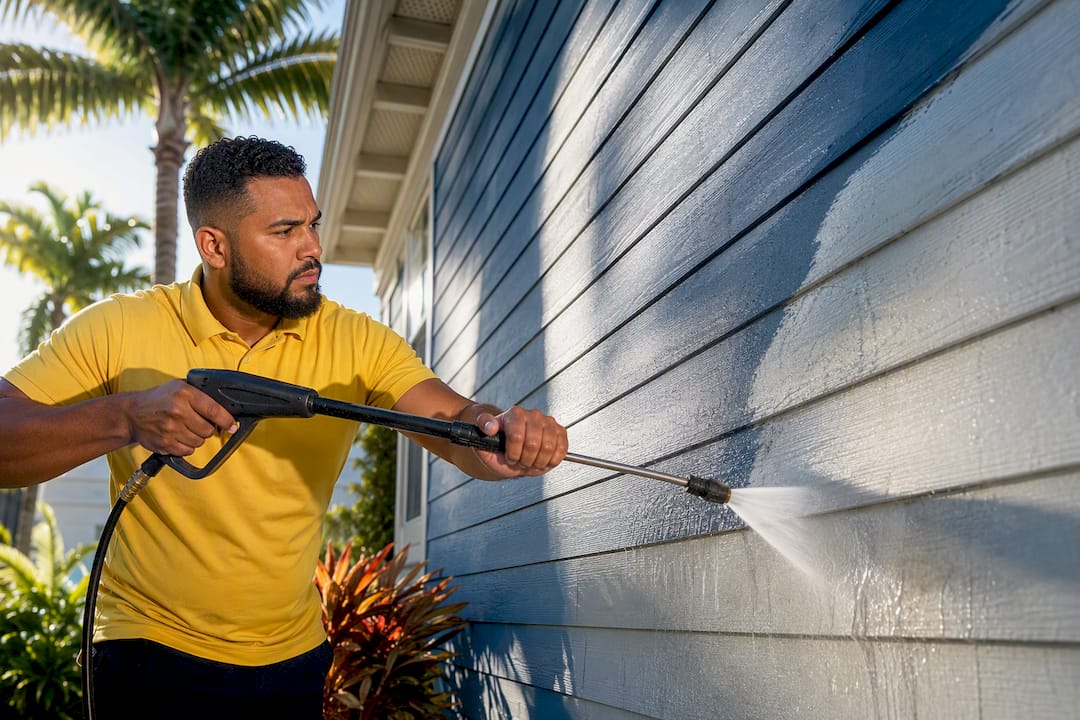
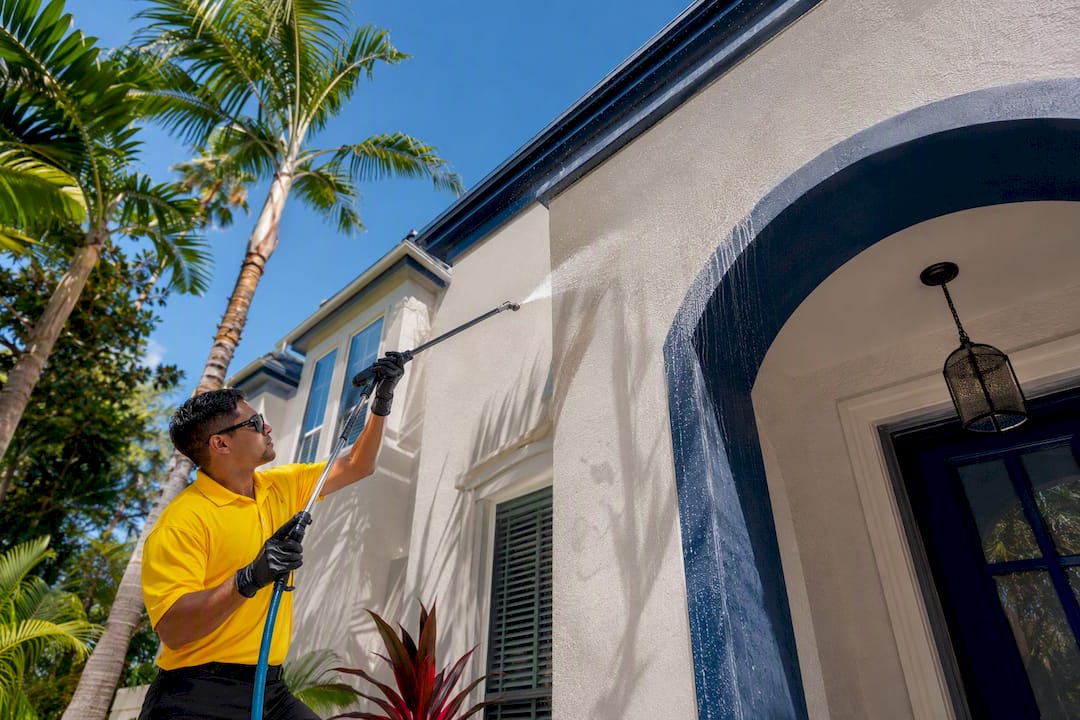
Floridacc’s commercial pressure washing removes the built-up grime, algae, and sand from exterior entrance areas that interior cleaning programs cannot reach. Trained technicians use equipment calibrated for commercial surfaces, protecting pavement, tile, and concrete while delivering results that restore curb appeal and reduce slip risk at the building perimeter. If you want to assess what your entrance zone actually needs, Floridacc offers free estimates with no obligation. Reach out through floridacc.com to get started.
FAQ
What does entrance cleaning include for commercial buildings?
Entrance cleaning covers mat maintenance, sanitization of high-touch surfaces like door handles and glass panels, floor debris removal, and preventive door hardware servicing. Together, these tasks form a complete entry zone management program.
How often should commercial entrance mats be cleaned?
Mats should be visually inspected daily, vacuumed at least three times per week, and fully washed monthly. In high-traffic or wet-weather conditions, such as Tampa Bay’s rainy season, increase vacuum frequency and check saturation after every rain event.
Why do 35–40% of slip incidents happen at building entrances?
Entrances concentrate moisture and debris from foot traffic, creating consistently wet and gritty floor surfaces. Wet weather raises slip risk at entrances by 300–400%, making this zone the highest-priority area for matting and cleaning intervention.
How does entrance cleaning reduce building maintenance costs?
Effective dirt capture at the entry point stops abrasive grit from scratching interior floors, extends flooring lifespan, and reduces interior cleaning labor by up to 50%. Preventive door maintenance within the same program cuts repair needs by approximately 85%.
What is the ADA requirement for commercial entry door force?
ADA standards set a maximum opening force of 5 lbf for commercial entry doors. Door closers must be adjusted and maintained to meet this threshold, and incorrect lubrication accounts for about 40% of premature hardware failures that push doors out of compliance.