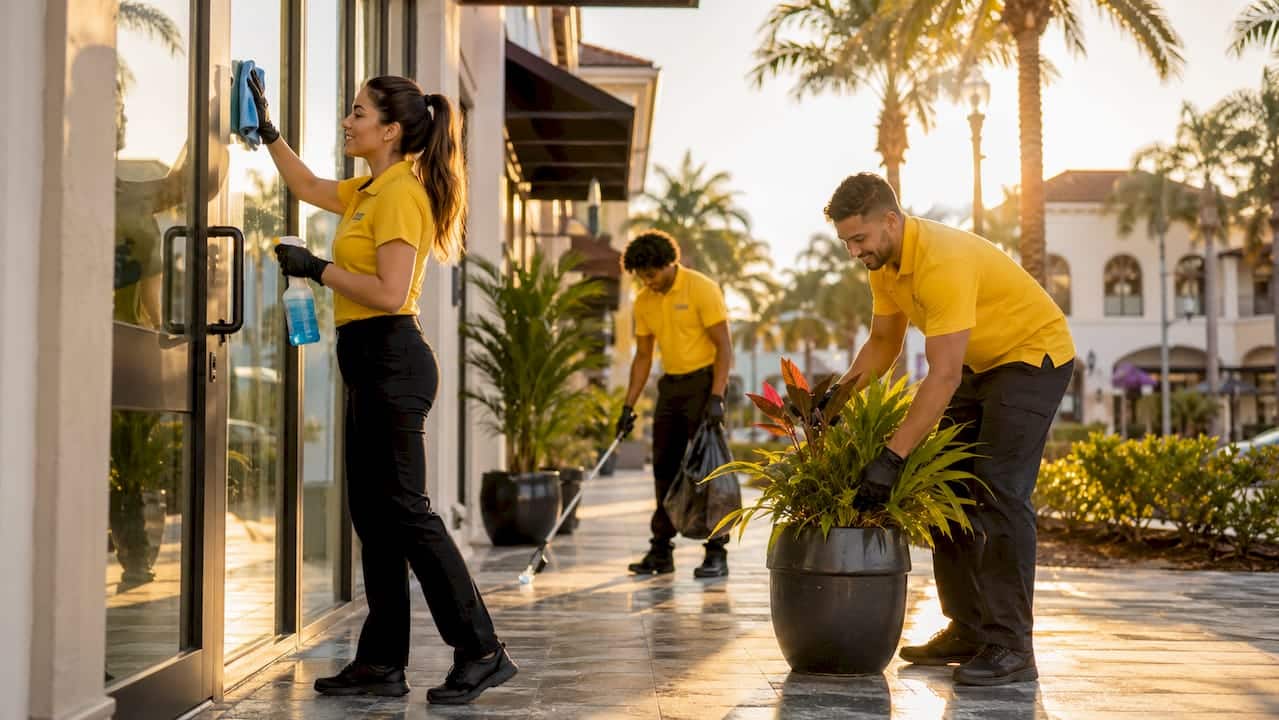
A retail store cleaning service is a commercial janitorial program designed specifically to keep customer-facing retail environments clean, safe, and welcoming through scheduled daily maintenance and specialized tasks. Unlike general office cleaning, retail cleaning accounts for foot traffic patterns, merchandise handling, and the direct link between store appearance and customer behavior. Retailers in Tampa, Clearwater, and St. Petersburg face a particular challenge: Florida’s humidity and high visitor volume accelerate grime buildup faster than in drier climates. Getting this right is not optional. A dirty store signals neglect, and customers notice within seconds of walking through the door.
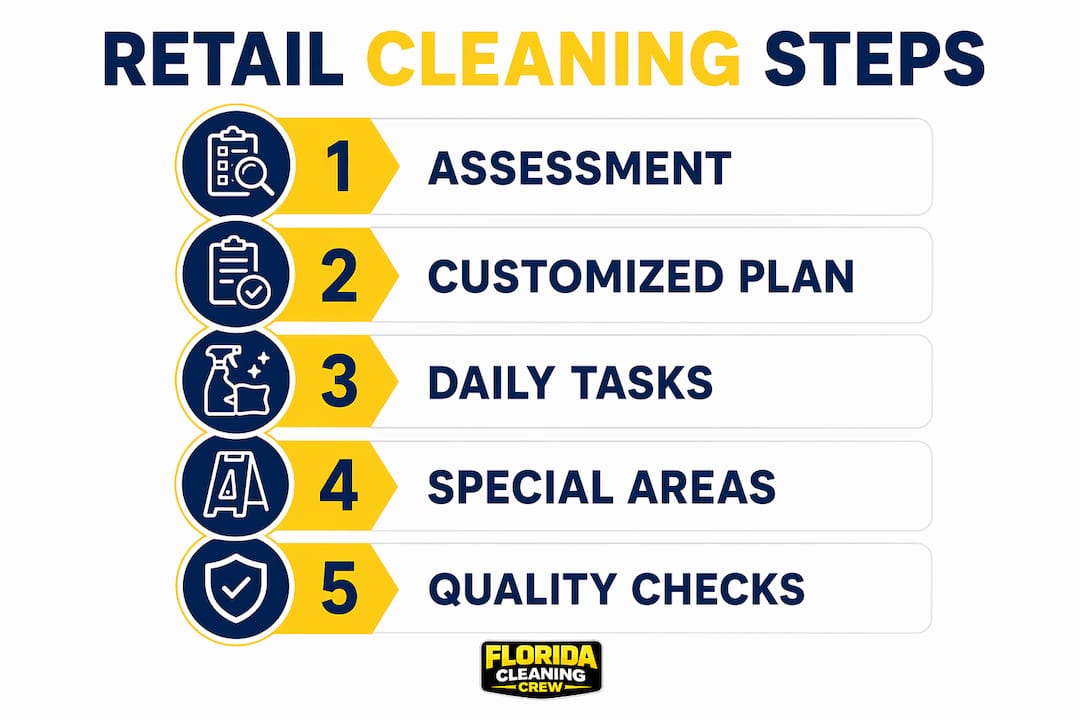
What tasks and areas does a retail store cleaning service cover?
A retail store cleaning service covers far more ground than a standard mop-and-trash routine. Retail cleaning services are a specialized subset of commercial janitorial work focused on public-facing environments, with flexible schedules and daily routines that scale with seasonal demand. That distinction matters because the tasks, the timing, and the standards are all calibrated around one goal: keeping customers comfortable and coming back.
Daily routine tasks
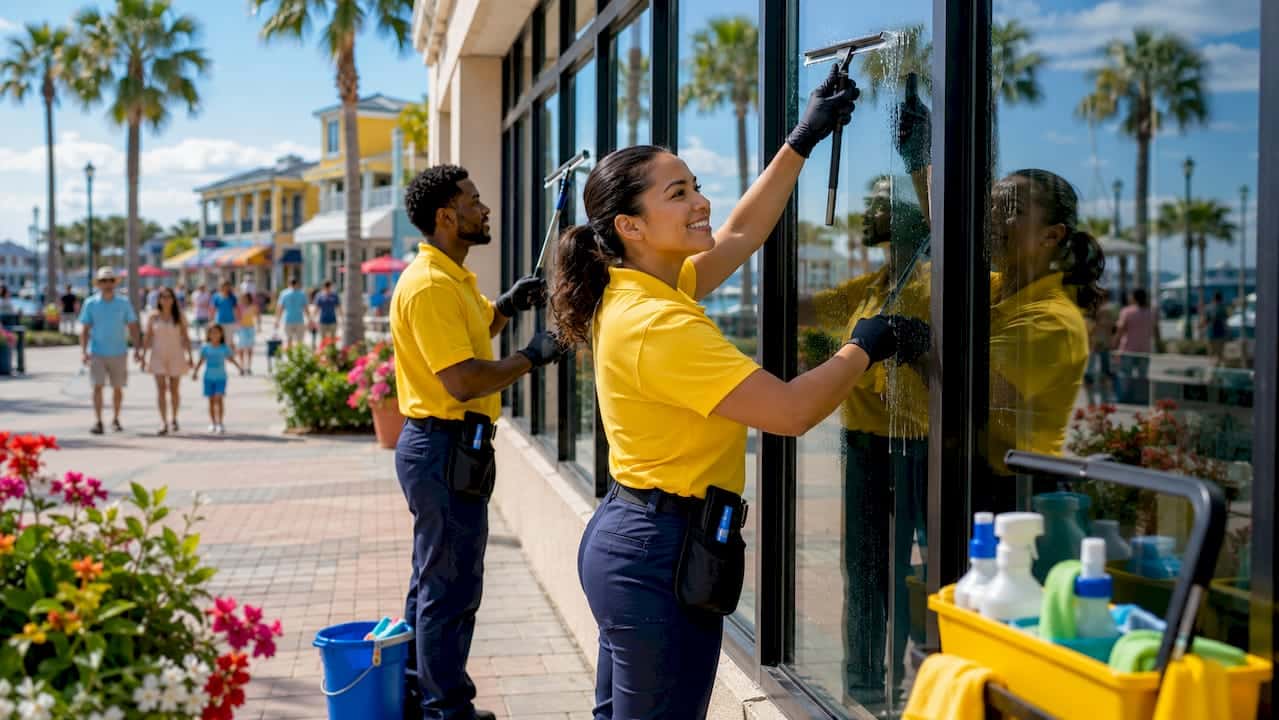
Daily retail cleaning covers sweeping and mopping hard floors, vacuuming carpeted areas, emptying trash bins, wiping down checkout counters, dusting shelving and display cases, and cleaning storefront glass. These tasks happen on a tight schedule, often before the store opens or after it closes, to avoid disrupting shoppers. Retail cleaning operates before opening or after closing to maintain a spotless environment throughout business hours.
Specialized areas requiring extra attention
Fitting rooms, restrooms, and the store entrance are the three zones that make or break a customer’s impression. High-impact zones like the entrance threshold and fitting rooms have an outsized influence on customer behavior and must be daily cleaning priorities. Fitting room cleaning includes sanitizing mirrors, wiping hooks, cleaning seating, and mopping floors. Restrooms require disinfection of all surfaces, restocking supplies, and odor control. Stockrooms and back-of-house areas also need regular attention to prevent pest issues and maintain inventory integrity.
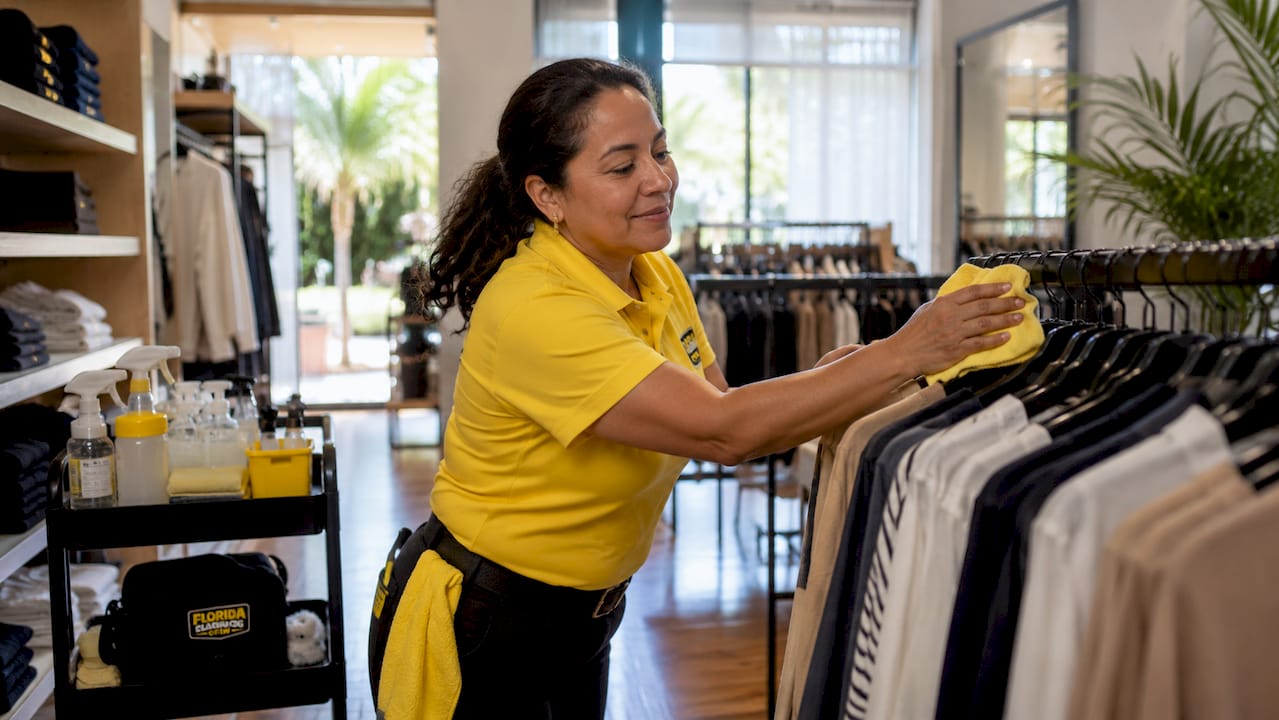
How retail cleaning compares to general commercial cleaning
| Task | Retail cleaning | General commercial cleaning |
|---|---|---|
| Fitting room sanitation | Daily, with privacy protocols | Rarely included |
| Entrance threshold cleaning | Daily priority | As needed |
| Display case and signage wiping | Routine | Not standard |
| Merchandise handling protocols | Defined SOPs required | Not applicable |
| Seasonal deep cleaning | Scheduled around traffic peaks | Typically annual |
| Floor buffing and polishing | Regular, traffic-based | Periodic |
| Compliance (BICSc, COSHH) | Required | Optional |
Pro Tip: Ask any prospective cleaning provider whether they use color-coded microfiber cloths. This simple system prevents cross-contamination between restrooms, food areas, and merchandise zones. It is a reliable indicator of professional-grade training.
How can retail store cleaning services boost sales and protect your investment?
Cleanliness is a direct revenue driver in retail, not a background function. Visible cleanliness correlates with increased customer dwell time, higher transaction values, and stronger brand perception. Customers who feel comfortable in a store stay longer. Customers who stay longer spend more.
The connection runs deeper than aesthetics. A viral social media post about a hygiene failure can undo years of brand building. Cleaning is a core pillar of customer experience, and a single bad moment captured on a phone can negate significant marketing investment. That is a business risk, not just a housekeeping issue.
Routine cleaning also protects your physical assets. Structured proactive maintenance extends the lifespan of floors, carpets, and fixtures, delaying costly store refits. Grime and foot traffic wear down flooring finishes faster than most owners realize. Regular buffing and polishing on high-traffic tile or hardwood can add years to the surface before a full replacement is needed.
The financial case for professional cleaning includes:
- Reduced floor replacement costs through regular maintenance
- Lower markdown rates on merchandise kept free of dust and humidity damage
- Fewer liability claims from slip-and-fall incidents on poorly maintained floors
- Stronger repeat customer rates tied to consistent store presentation
- Reduced pest control costs when stockrooms and break areas are cleaned routinely
Pro Tip: Request a customized cleaning plan that maps your store’s traffic zones before signing any contract. A plan built around your actual floor plan outperforms a generic checklist every time.
What makes retail cleaning different from office or general commercial cleaning?
Retail cleaning operates under constraints that office cleaning simply does not face. The work happens around customers, merchandise, and live transactions. That demands a different level of skill, discretion, and scheduling precision.
Operational stealth is the defining quality of elite retail cleaning providers. They clean around merchandise carefully, maintain fitting room privacy, and use low-noise equipment during open hours. They anticipate peak demand without waiting for store management to flag a problem. That kind of proactive awareness is what separates a professional retail cleaning crew from a general janitorial service.
The frequency and visibility standards are also higher. Restrooms in a busy retail store may need attention every two hours on a Saturday. A checkout counter accumulates fingerprints and debris continuously. These are not weekly tasks. They require a service model built around foot traffic, not a fixed calendar.
Scheduling flexibility is another key difference. Retail cleaning services typically operate 1 to 7 days per week, with response quotes available within two hours under current industry standards. That flexibility matters during holiday seasons, sales events, and inventory days when your store’s cleaning needs spike significantly.
The mindset shift retail owners need to make is this: cleaning is not a soft cost. Cleaning is often underestimated as a background expense, yet it profoundly influences customer perception and sales outcomes. Treating it as a strategic investment rather than a line item to cut produces measurably better results.
Key operational differences between retail and general commercial cleaning:
- Retail cleaning requires defined SOPs for merchandise handling to avoid damage or liability
- Fitting room protocols must address privacy, sanitation, and turnaround speed
- Touchpoint cleaning (door handles, card readers, shopping carts) happens multiple times daily
- Seasonal scaling is built into retail contracts to match holiday and promotional traffic
- Noise and disruption standards are stricter when customers are present
How to choose and manage retail store cleaning services effectively
Choosing the right cleaning provider for your retail store starts with one question: does this provider have documented experience in retail environments specifically? General commercial cleaning experience is not the same thing. A provider who has cleaned office buildings may not understand merchandise handling protocols, fitting room privacy requirements, or the operational rhythm of a retail floor.
What to look for in a retail cleaning contract
Customized retail cleaning plans define high-traffic zones, comply with BICSc and health and safety standards, and typically recommend $2M in liability insurance coverage. Contracts often include 30-day cancellation policies, which gives you performance-based leverage without locking into a long-term commitment. Review your cleaning contract terms carefully before signing, paying particular attention to what happens when standards slip.
Retail cleaning requires integration with your store’s traffic patterns and inventory cycles. Clarity on SOPs for spills, merchandise contact, and cleaning during trading hours is critical. Without that clarity, you risk damaged goods and liability exposure.
Checklist for hiring a retail cleaning provider
Use this list when evaluating providers:
- Verified experience in retail or customer-facing commercial environments
- Proof of liability insurance (minimum $2M recommended)
- Written SOPs for merchandise handling and fitting room protocols
- Flexible scheduling options including before-open and after-close shifts
- Auditable checklists or digital inspection reports for accountability
- References from retail clients in comparable store formats
- Clear escalation process for spills, complaints, or missed tasks
Building accountability into the relationship
Proactive hygiene programs use auditable checklists and digital inspection reports to hold cleaning providers accountable during high-traffic seasons. Without performance tracking, stores experience predictable drops in appearance during their busiest periods. That is exactly when you can least afford it.
Schedule a monthly review with your cleaning provider. Walk the store together, check the threshold zone, inspect the fitting rooms, and review the checklist completion rate. This simple habit catches problems before customers do.
Pro Tip: Pair your cleaning schedule with your POS traffic data. If your busiest hours are 11:00 AM to 2:00 PM on weekdays, schedule a mid-shift restroom and touchpoint check during that window. Data-driven scheduling prevents the appearance dips that reactive cleaning always misses.
What are the emerging trends shaping retail cleaning services?
Retail cleaning has changed significantly since 2020, and the expectations set during that period have become permanent. Customers now notice disinfection practices in a way they never did before. Visible cleaning activity during store hours, sanitizer stations, and posted hygiene protocols have shifted from reassurance measures to baseline expectations.
Technology is reshaping how cleaning quality gets tracked and verified. Digital inspection apps allow store managers to review completed tasks in real time, flag missed items, and generate reports for compliance purposes. This shift from paper checklists to digital audit trails gives retail owners far more visibility into what is actually getting done.
Sustainable cleaning practices are gaining traction across the industry. Retailers with environmental commitments are requesting eco-friendly cleaning products, microfiber systems that reduce chemical use, and biodegradable supplies. Beyond the environmental benefit, these products often perform better in enclosed retail spaces where ventilation is limited. Poor indoor air quality affects both staff and customers. Improving air quality in retail and office environments has measurable effects on how long customers stay and how staff perform.
Current trends shaping retail cleaning in 2026:
- Digital inspection platforms replacing paper checklists for real-time accountability
- Increased disinfection frequency at high-touch points as a permanent post-pandemic standard
- Eco-friendly product requirements written directly into cleaning contracts
- Hybrid store hours (including curbside and extended evening hours) driving more flexible cleaning windows
- Safety compliance documentation becoming a standard deliverable in cleaning contracts
Key Takeaways
A retail store cleaning service is a specialized commercial program that directly affects customer behavior, brand perception, and asset longevity. It requires defined SOPs, flexible scheduling, and proactive accountability to deliver consistent results.
| Point | Details |
|---|---|
| Retail cleaning is specialized | It covers fitting rooms, threshold zones, and touchpoints that general commercial cleaning does not address. |
| Cleanliness drives revenue | Visible store cleanliness increases customer dwell time and transaction value, making it a direct sales factor. |
| Proactive beats reactive | Auditable checklists and digital inspections prevent appearance drops during peak traffic periods. |
| Contracts need clear SOPs | Merchandise handling protocols and liability insurance requirements must be written into every cleaning agreement. |
| Asset protection matters | Routine floor maintenance and fixture cleaning extend store lifespan and delay costly refits. |
Why retail owners underestimate their cleaning program
Retail owners tend to treat cleaning as a fixed background cost, something to set up once and revisit only when a customer complains. That is the wrong frame entirely.
I have seen stores spend heavily on visual merchandising and signage while running a cleaning program that misses the fitting rooms three days out of five. The display looks great. The fitting room smells like the previous customer. That is the last impression a shopper takes with them, and it is the one that determines whether they come back.
The threshold zone is the single most important square footage in your store. It is where customers form their first impression, and it takes about three seconds. If that area is dusty, sticky, or cluttered, the rest of your store does not get a fair evaluation. Most cleaning contracts do not explicitly prioritize this zone. Most retail owners do not know to ask for it.
The other mistake I see consistently is confusing frequency with quality. A provider who shows up every day but skips the fitting rooms and restrooms during busy periods is delivering less value than one who comes three times a week with a documented checklist and a manager review. Accountability structures matter more than visit frequency.
The retailers who get this right treat their cleaning provider as an operational partner, not a vendor. They share their traffic data, their promotional calendar, and their seasonal plans. In return, they get a cleaning program that scales with their business instead of falling behind it.
— Matt
Floridacc commercial cleaning for Tampa Bay retail businesses
Retail stores in Tampa, Clearwater, and St. Petersburg operate in a high-humidity, high-traffic environment that demands consistent, professional cleaning. Floridacc provides commercial cleaning for small businesses across the Tampa Bay area, with scheduling built around your store hours, not ours.
Floridacc is licensed, insured, and experienced in customer-facing commercial environments. Services include before-open and after-close scheduling, eco-friendly product options, and flexible month-to-month agreements. Every plan is tailored to your store’s layout, traffic zones, and compliance requirements. Request a free quote and get a cleaning program that works with your operations from day one.
FAQ
What is a retail store cleaning service?
A retail store cleaning service is a specialized commercial janitorial program that maintains customer-facing retail environments through scheduled daily tasks, deep cleaning, and compliance with health and safety standards.
How often should a retail store be professionally cleaned?
Most retail stores require professional cleaning at least five days per week, with restroom and touchpoint checks multiple times daily during high-traffic periods.
What areas does retail cleaning cover that office cleaning does not?
Retail cleaning specifically covers fitting rooms, entrance threshold zones, display cases, checkout counters, and merchandise-adjacent surfaces, all with defined protocols for handling or avoiding stock.
How do I evaluate a retail cleaning provider before hiring?
Verify their retail-specific experience, confirm liability insurance of at least $2M, request written SOPs for merchandise handling, and ask for digital inspection reports or auditable checklists as part of the service.
Does store cleanliness actually affect sales?
Retailers using professional cleaning programs report measurable increases in customer dwell time and transaction value, with cleaner stores consistently outperforming comparable locations with inconsistent maintenance.