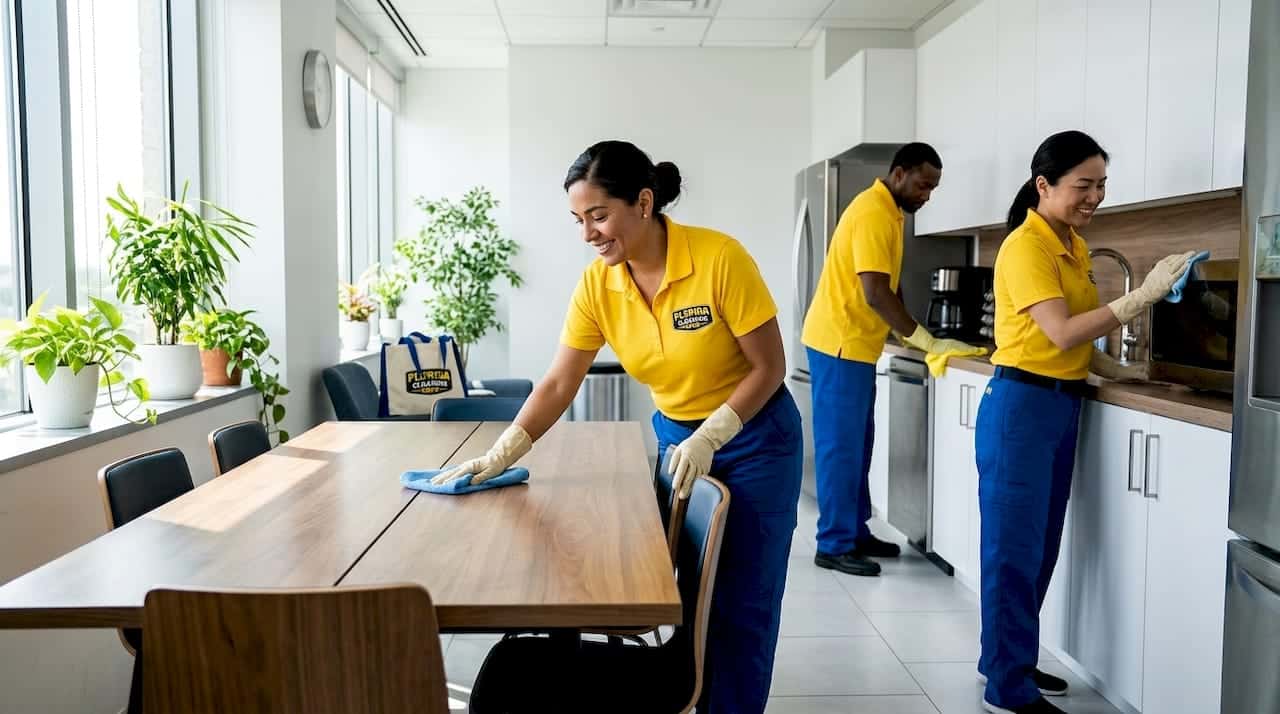
Medical office cleaning rules are a set of mandated protocols and standards designed to maintain sanitation, prevent infection spread, and ensure regulatory compliance in healthcare facilities. These rules draw from multiple federal agencies, including the CDC, OSHA, EPA, the Joint Commission, and CMS, each adding a distinct layer of obligation that facility managers must satisfy simultaneously. Getting this right protects patients, shields staff from exposure, and keeps your facility out of costly regulatory trouble. This guide breaks down each layer of those rules so you can build a cleaning program that holds up under scrutiny.
1. What regulatory frameworks govern medical office cleaning rules?
Medical facilities operate under a layered compliance structure. No single agency owns infection control. Instead, the CDC, OSHA, EPA, the Joint Commission, and CMS each impose distinct requirements that overlap and reinforce each other.
Here is what each body requires:
- CDC HICPAC guidelines: The CDC’s Healthcare Infection Control Practices Advisory Committee publishes environmental infection control guidelines that define surface risk categories, cleaning frequency standards, and disinfectant selection criteria. These guidelines form the scientific backbone of most facility cleaning programs.
- OSHA Bloodborne Pathogens Standard: OSHA requires every medical facility to maintain a written Exposure Control Plan that documents employee risk levels, vaccination status, and training completion. Sharps containers must be within arm’s reach of every clinical procedure point, not just in a back room.
- EPA-registered disinfectants: The EPA maintains specific product lists, including Lists K, P, S, G, H, N, and Q, for pathogens ranging from MRSA to C. difficile to Candida auris. Using a product not on the relevant list for a given pathogen is a compliance failure, not a technicality.
- Joint Commission Infection Control chapter: The Joint Commission rewrote its Infection Control chapter in 2024. Surveyors now conduct live staff interviews to verify that cleaning personnel can verbally confirm product contact times and isolation protocols.
- CMS Conditions of Participation: CMS requires documented evidence of cleaning activity. Facilities that cannot produce cleaning logs, training records, and disinfectant use documentation during a survey face seven-figure annual penalties in the most serious cases.
Understanding this framework tells you something critical: compliance is not a checklist you complete once. It is an ongoing, documented, and verifiable system.
2. Which cleaning protocols ensure effective infection control in clinics?
Cleaning and disinfecting are not the same task. Cleaning removes visible soil and organic matter. Disinfecting kills pathogens on a surface that has already been cleaned. Skipping the cleaning step before applying a disinfectant reduces that product’s effectiveness significantly. Both steps are required in clinical environments, in that order.
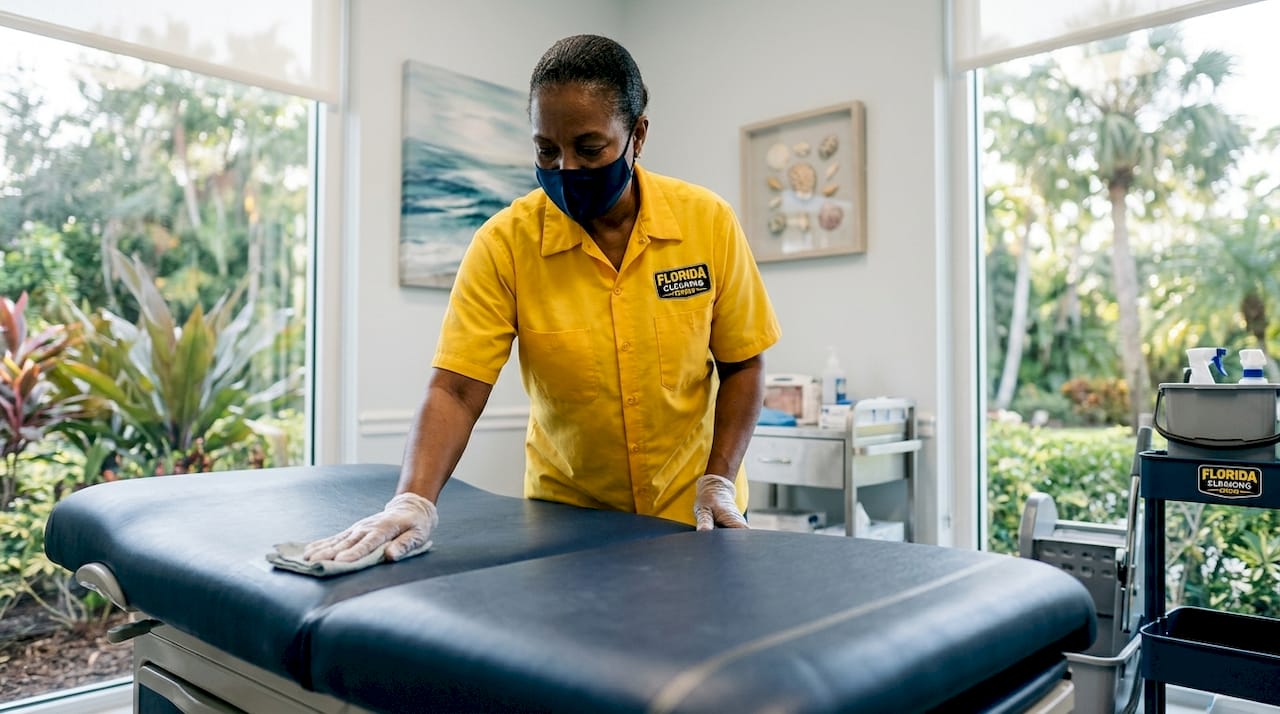
Disinfectant contact time, also called dwell time, is where most facilities fall short. Dwell times typically run 3–10 minutes depending on the product and target pathogen. Wiping a surface dry before that window closes voids the product’s efficacy and your compliance standing. Staff must apply the product, let it sit visibly wet for the required time, and only then wipe or allow it to air dry.
High-touch surfaces demand the most attention. Priority areas include door handles, exam tables, light switches, blood pressure cuffs, and payment terminals. These surfaces contact multiple patients and staff members throughout the day and carry the highest cross-contamination risk.
Workflow direction matters as much as product selection. Cleaning should always move from cleaner areas to dirtier ones, or from the least contaminated surfaces to the most contaminated. Tools and cloths must never move from a highly contaminated zone back into a clean area without being sanitized or replaced first.
Color-coded microfiber systems reduce cross-contamination between clinical zones and restrooms. A standard approach assigns one color to patient areas, another to restrooms, and a third to administrative spaces. Documented standard operating procedures for tool management are required for compliance, not optional.
Pro Tip: Laminate a color-code reference card and post it inside every supply closet. Staff who rotate shifts or cover for absent colleagues will follow the system consistently without needing verbal reminders.
3. How should medical offices document cleaning activities for audits?
Cleaning checklists are the primary proof of compliance during a Joint Commission or CMS inspection. They must record who cleaned a specific area, what product was used, the product’s lot number, and the time of application. A checklist that only shows a checkmark next to “exam room cleaned” will not satisfy a surveyor.
A complete documentation system includes three tiers:
- Daily logs: Signed by the cleaning staff member and a supervisor, covering every patient-contact area, restroom, and high-touch surface. Each entry should note the disinfectant used and the time the task was completed.
- Weekly records: Covering less frequent tasks such as wall spot-cleaning, vent wipe-downs, and deep cleaning of equipment surfaces. These records should reference the specific areas completed and the staff responsible.
- Periodic terminal cleaning records: Documenting full room disinfection events including the cleaning sequence, products used, and verification method. Where ATP testing is used, results should be logged alongside the cleaning record.
| Documentation Type | Frequency | Key Details to Record |
|---|---|---|
| Daily cleaning log | Every shift | Staff name, area, product, lot number, time |
| Weekly deep clean record | Weekly | Areas covered, equipment cleaned, supervisor sign-off |
| Terminal cleaning report | After isolation or discharge | Full sequence, ATP test result, disinfectant used |
| Training records | At hire and annually | Staff name, topics covered, competency verification |
| Disinfectant inventory log | Ongoing | Product name, EPA registration number, expiration date |
Supervisor inspections add a second layer of verification. A supervisor who spot-checks completed rooms and signs off on the log creates an audit trail that demonstrates accountability. ATP testing, which measures organic residue on surfaces, provides objective verification that cleaning was effective rather than just performed.
Pro Tip: Store all cleaning documentation in a single binder or digital folder organized by month. When a surveyor arrives unannounced, you want to hand over the last 12 months of records in under two minutes, not spend 20 minutes searching.
4. What staff training protocols improve cleaning compliance and safety?
Administrative staff often underestimate the complexity of medical office cleaning. Standard janitorial training does not prepare workers for bloodborne pathogen exposure, isolation room protocols, or disinfectant selection for specific organisms. Specialized training is not optional. It is an OSHA requirement.
OSHA mandates training at the time of hire and annually thereafter. Training must also occur whenever procedures change or new products are introduced. The Exposure Control Plan must be reviewed and updated at least annually, and staff must be able to demonstrate knowledge of its contents.
Key training elements include:
- Bloodborne pathogen precautions: Staff must understand how to handle blood and body fluid spills, including the correct sequence for donning and removing personal protective equipment.
- Disinfectant product knowledge: Workers must know the contact time for every product they use and which pathogens each product covers. Using quaternary ammonium compounds alone in a C. difficile contact precaution room is a documented compliance failure.
- Sharps disposal: Sharps containers must be replaced before they reach the fill line and must never be manually compressed or emptied by cleaning staff.
- Isolation room protocols: Staff must know how to clean an isolation room without contaminating adjacent areas, including proper gowning, tool selection, and disposal procedures.
- Zone discipline: Cleaning staff must understand which tools belong in which zones and must never carry equipment across zone boundaries without following decontamination steps.
Under the 2024 Joint Commission requirements, surveyors conduct live interviews with cleaning staff. A signed training record is not enough if the worker cannot verbally confirm the contact time for the disinfectant they used that morning. Training must produce real knowledge, not just completed paperwork.
Pro Tip: Run a short monthly quiz covering one product’s contact time and one protocol step. It takes five minutes, keeps knowledge current, and gives you a documented competency record that surveyors respond well to.
5. What are best practices for cleaning different areas in a medical office?
Different areas within a medical office carry different infection risks and require different cleaning frequencies and methods. A one-size-fits-all approach fails both patients and inspectors.
Patient exam rooms and clinical areas
Exam rooms require cleaning between every patient and a full disinfection at the end of each day. The patient zone, meaning every surface within arm’s reach of the patient, receives priority attention. This includes the exam table, armrests, the blood pressure cuff, and any equipment the clinician touched during the visit.
Terminal cleaning sequence
Terminal cleaning applies after a patient with a known infection leaves a room or at the end of a clinical day. The sequence runs top to bottom: ceiling vents and light fixtures first, then walls and vertical surfaces, then horizontal surfaces and equipment, and finally the floor. This sequence prevents contaminants from settling on already-cleaned lower surfaces.
Restrooms
Restrooms require color-coded equipment that never leaves the restroom zone. High-touch points, including flush handles, faucet handles, door handles, and soap dispensers, need disinfection at least twice per shift in a busy practice. Floors and toilet bowls follow each disinfection cycle.
Waiting rooms and administrative areas
Waiting rooms carry a lower clinical risk than exam rooms but still require frequent attention. Seating surfaces, reception counters, and shared pens or tablets need disinfection between patient contacts. Administrative areas follow standard commercial cleaning protocols with added attention to shared equipment such as keyboards and phones.
| Area | Cleaning Frequency | Special Requirements |
|---|---|---|
| Exam rooms | Between patients and end of day | Full patient zone disinfection, documented |
| Isolation rooms | Terminal clean after each use | ATP verification, top-to-bottom sequence |
| Restrooms | Minimum twice per shift | Color-coded tools, touchpoint focus |
| Waiting rooms | Hourly high-touch disinfection | Shared surface and seating focus |
| Administrative areas | Daily | Keyboard, phone, and shared equipment |
Risk-stratified cleaning, which concentrates resources on patient zones and high-touch surfaces, is the most effective way to allocate cleaning time in a busy practice. It also aligns directly with CDC and Joint Commission expectations.
Key Takeaways
Effective medical office cleaning requires documented, area-specific protocols built on EPA-registered disinfectants, correct dwell times, trained staff, and an auditable record system that satisfies CDC, OSHA, Joint Commission, and CMS requirements simultaneously.
| Point | Details |
|---|---|
| Regulatory compliance is layered | CDC, OSHA, EPA, Joint Commission, and CMS each impose distinct requirements that must be met together. |
| Dwell time determines efficacy | Disinfectants require 3–10 minutes of contact time; wiping early voids both compliance and pathogen kill. |
| Documentation is proof | Cleaning logs must record the staff member, product, lot number, and time for every task. |
| Training must produce real knowledge | Staff must verbally confirm protocols during surveyor interviews, not just hold a signed training record. |
| Area-specific protocols reduce risk | Exam rooms, isolation rooms, restrooms, and waiting areas each require different frequencies and methods. |
What I’ve learned from watching medical offices get this wrong
The most common mistake I see is treating medical office cleaning as a slightly more serious version of standard office cleaning. It is not. The gap between the two is significant, and it shows up immediately during a Joint Commission survey.
Facilities that invest in training but skip documentation fail just as often as those that do neither. Surveyors are not impressed by verbal assurances. They want to see the log from last Tuesday showing which product was used in exam room three, who applied it, and at what time. If that record does not exist, the cleaning might as well not have happened from a compliance standpoint.
The second pattern I see is single-product disinfection programs. A facility buys one EPA-registered product, applies it everywhere, and assumes they are covered. That assumption collapses the moment a patient with C. difficile or Candida auris is treated on-site. Those organisms require specific products from specific EPA lists, and using the wrong one is a citation waiting to happen.
ATP testing is underused in outpatient settings. Hospitals adopted it years ago. Many smaller clinics still rely on visual inspection alone, which tells you almost nothing about actual surface contamination. A surface can look clean and still carry enough organic residue to transfer pathogens. ATP testing closes that gap and gives you objective data to include in your documentation.
The facilities that consistently pass surveys share one trait: they treat their cleaning compliance program as a living system, not a binder that sits on a shelf. They update protocols when products change, retrain staff when procedures shift, and review documentation monthly rather than scrambling before an inspection.
— Matt
Professional cleaning support for Tampa Bay medical offices
Medical offices in Tampa, Clearwater, and St. Petersburg operate under the same federal standards as any facility in the country, but local compliance support is not always easy to find.
Floridacc provides commercial cleaning services designed for healthcare environments, with teams trained on EPA-registered disinfectant protocols, proper dwell times, and area-specific cleaning sequences. Every service includes documentation support so your facility has the audit-ready records it needs. Whether you manage a single-provider practice or a multi-room clinic, Floridacc brings the structure and accountability that medical office cleaning demands. Request a free estimate and see how a compliant cleaning program fits your facility’s schedule and budget.
FAQ
What are the core medical office cleaning rules?
Medical office cleaning rules require using EPA-registered disinfectants with correct dwell times, following CDC HICPAC guidelines, maintaining OSHA-compliant training records, and documenting every cleaning event with product details and staff identification.
How often should high-touch surfaces be cleaned in a clinic?
High-touch surfaces in patient areas, including exam tables, door handles, and light switches, require disinfection between every patient contact and again at the end of each clinical day.
What disinfectants are required for C. difficile in a medical office?
C. difficile requires an EPA List K-registered sporicidal disinfectant, typically a bleach-based product. Quaternary ammonium compounds alone do not meet CDC or EPA requirements for this pathogen.
What does the Joint Commission look for during a cleaning inspection?
Joint Commission surveyors conduct live interviews with cleaning staff to verify knowledge of disinfectant contact times and isolation protocols. Signed training records alone are not sufficient if staff cannot verbally confirm procedures.
How does ATP testing support cleaning compliance?
ATP testing measures organic residue on surfaces and provides objective verification that cleaning was effective. Facilities that document ATP results alongside cleaning logs create a stronger audit trail than those relying on visual inspection alone.