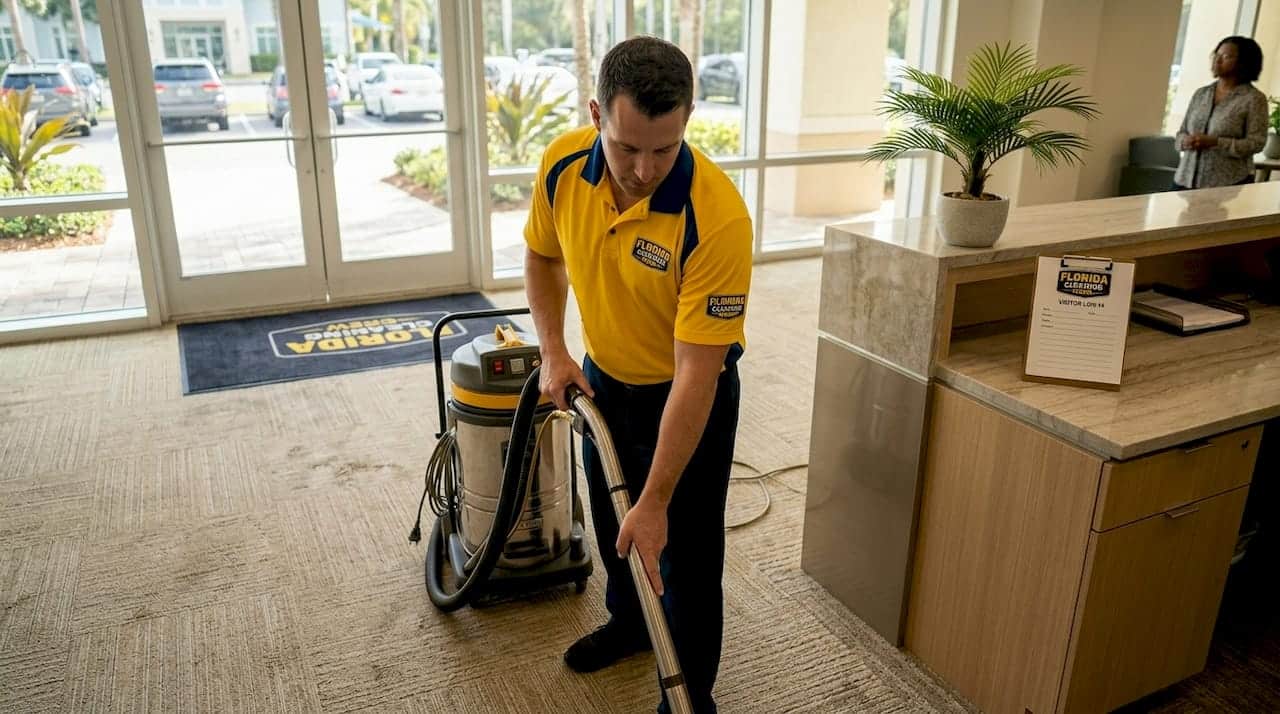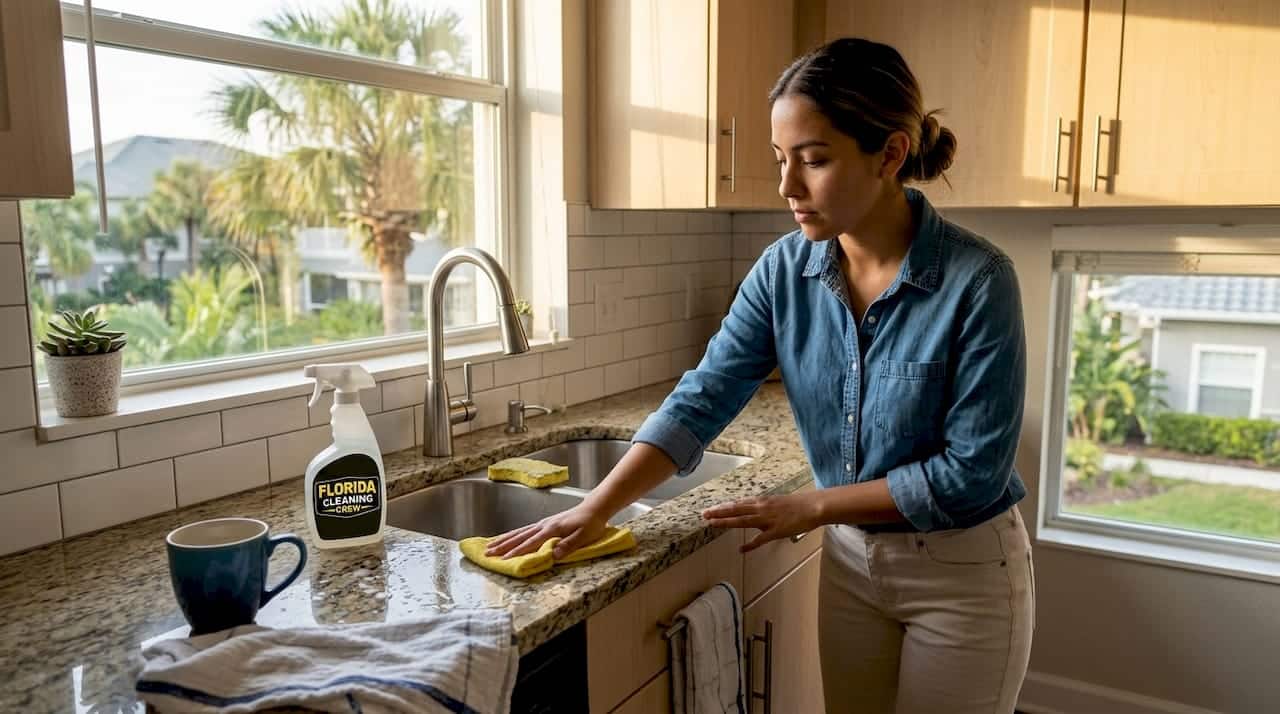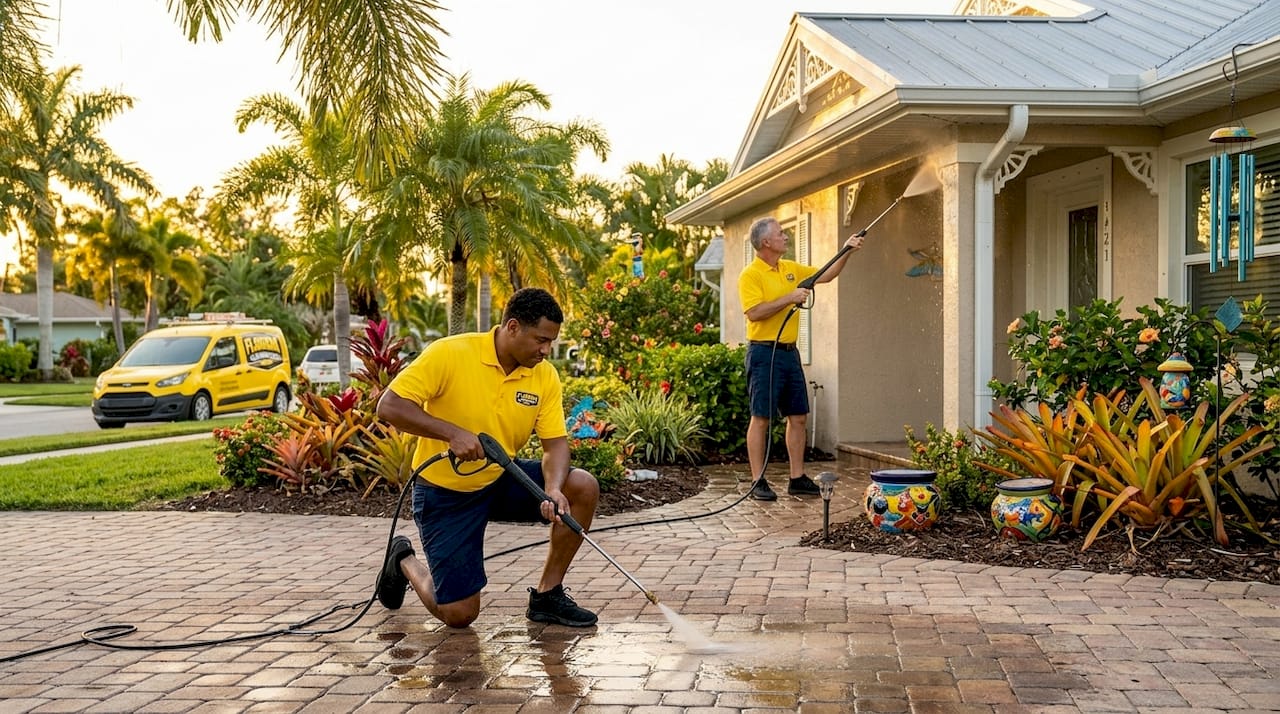
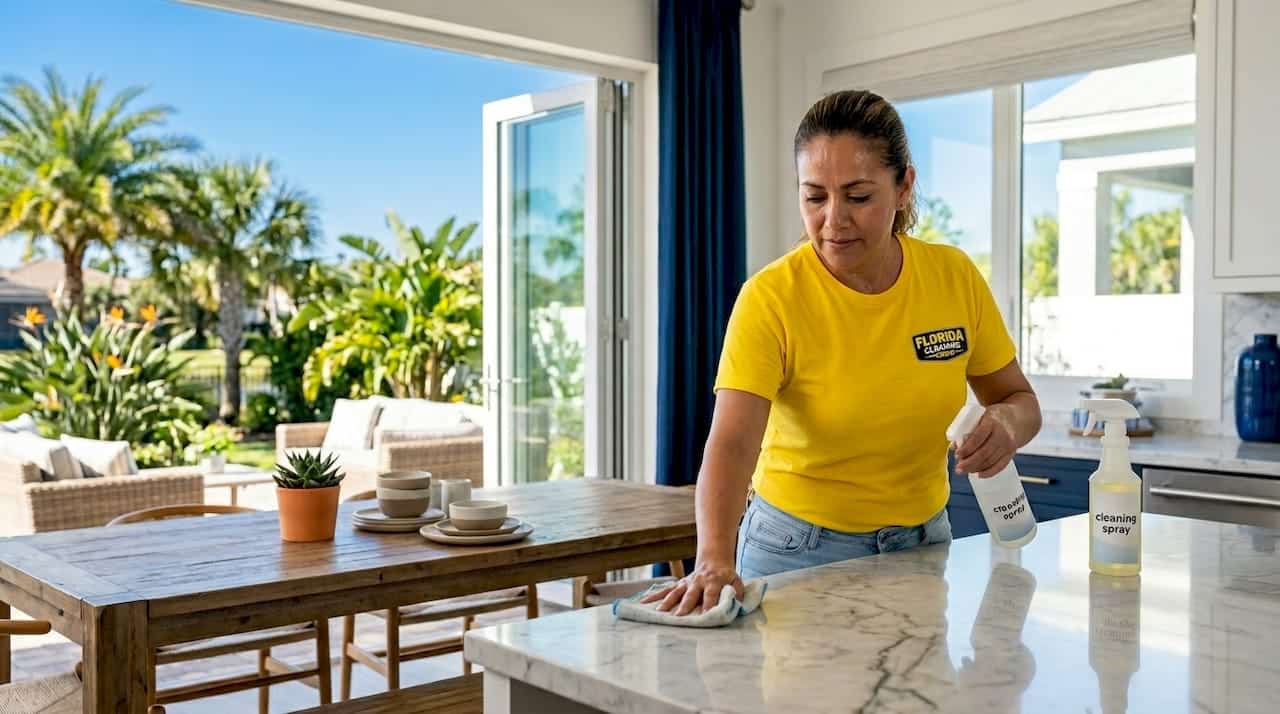
Cleaning is defined as the physical removal of dirt, organic matter, and pathogens from surfaces and hands, and it is the single most direct intervention humans have for interrupting disease transmission. The role of cleaning in health extends far beyond appearances. Americans are sick over 4 billion days annually, and a significant portion of those illnesses trace back to preventable germ exposure in homes, workplaces, and shared spaces. The CDC, the WHO, and peer-reviewed research all confirm that consistent cleaning routines reduce respiratory infections, gastrointestinal illness, and healthcare-associated infections. Whether you are a Tampa Bay homeowner, an Airbnb host in St. Petersburg, or a small business owner in Clearwater, understanding how cleaning protects health gives you a real advantage.
How does cleaning reduce disease and infection risk?
Cleaning reduces disease risk by physically removing bacteria, viruses, and fungi from surfaces before they can transfer to hands, food, or airways. This is not a passive benefit. It is a direct interruption of the transmission chain that causes illness. When pathogens are removed from high-touch surfaces like doorknobs, light switches, and countertops, the probability of person-to-person spread drops measurably.
The evidence from healthcare settings is particularly compelling. Improved cleaning of shared medical equipment reduces healthcare-associated infections by 34.5% on a relative basis, with a 5.2% absolute reduction. That scale of impact in a controlled clinical environment confirms that cleaning is not supplementary to infection control. It is the mechanism.
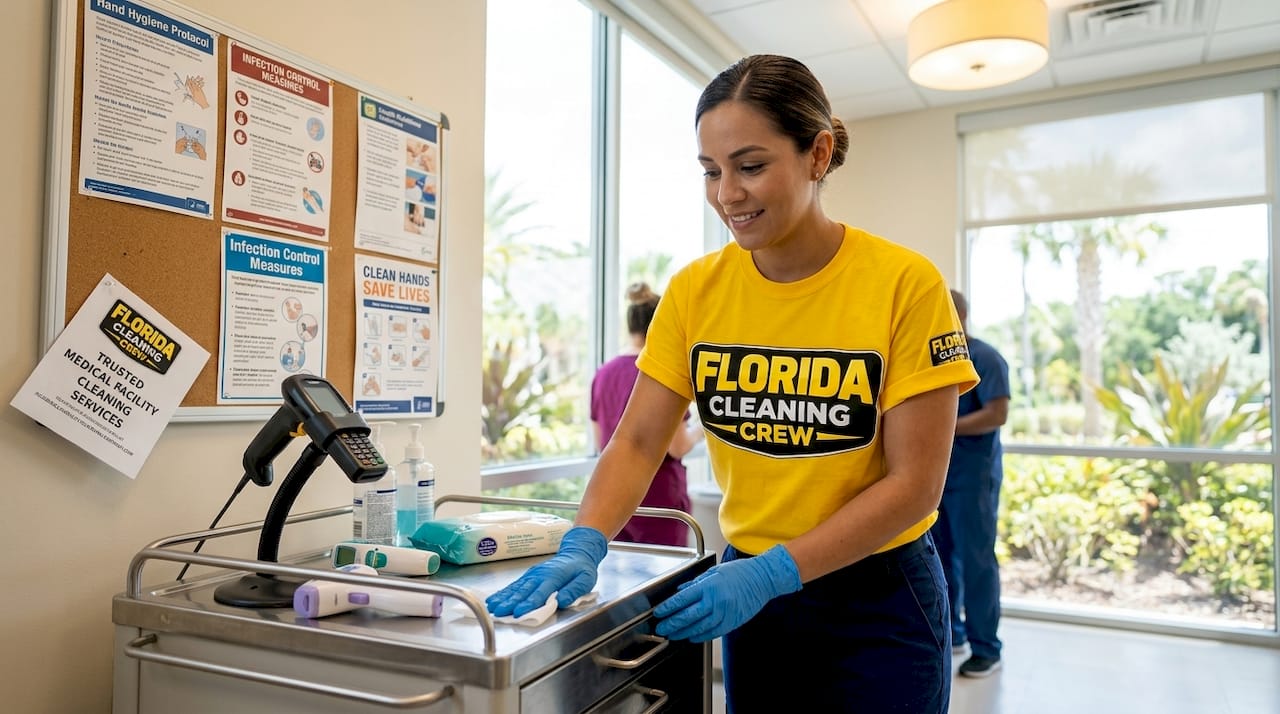
At home, the same principle applies. Respiratory viruses like influenza and rhinovirus survive on hard surfaces for hours. Gastrointestinal pathogens like norovirus can persist even longer. Targeting the surfaces where these pathogens concentrate, rather than cleaning every surface uniformly, is what makes a routine genuinely protective. Research consistently shows that room-by-room cleaning lowers infection risk more effectively than sporadic whole-home efforts.
Key high-risk surfaces and practices that reduce infection transmission include:
- Doorknobs, faucet handles, and light switches: These are touched dozens of times daily and rarely cleaned. They are among the highest-risk surfaces in any home or office.
- Kitchen counters and cutting boards: Cross-contamination from raw proteins to ready-to-eat foods is a leading cause of foodborne illness.
- Bathroom surfaces: Toilets, sinks, and floor areas near toilets harbor fecal bacteria and viruses that spread through aerosol and contact.
- Shared electronics: Phones, keyboards, and remote controls carry more bacteria per square inch than most bathroom surfaces.
- Hands: The CDC identifies hand hygiene as the single most effective measure for preventing the spread of infection in both clinical and community settings.
Pro Tip: When a household member is sick, increase cleaning frequency on shared surfaces to twice daily and prioritize hand washing after any contact with the sick person or their belongings.
What are the key cleaning principles and best practices for health?
Effective cleaning for health follows five core principles: the right time, the right equipment, the right method, surface compatibility, and verification that cleaning actually occurred. Skipping any one of these steps reduces the health benefit, sometimes dramatically. This framework comes from healthcare environmental hygiene, but it applies directly to homes and small businesses.
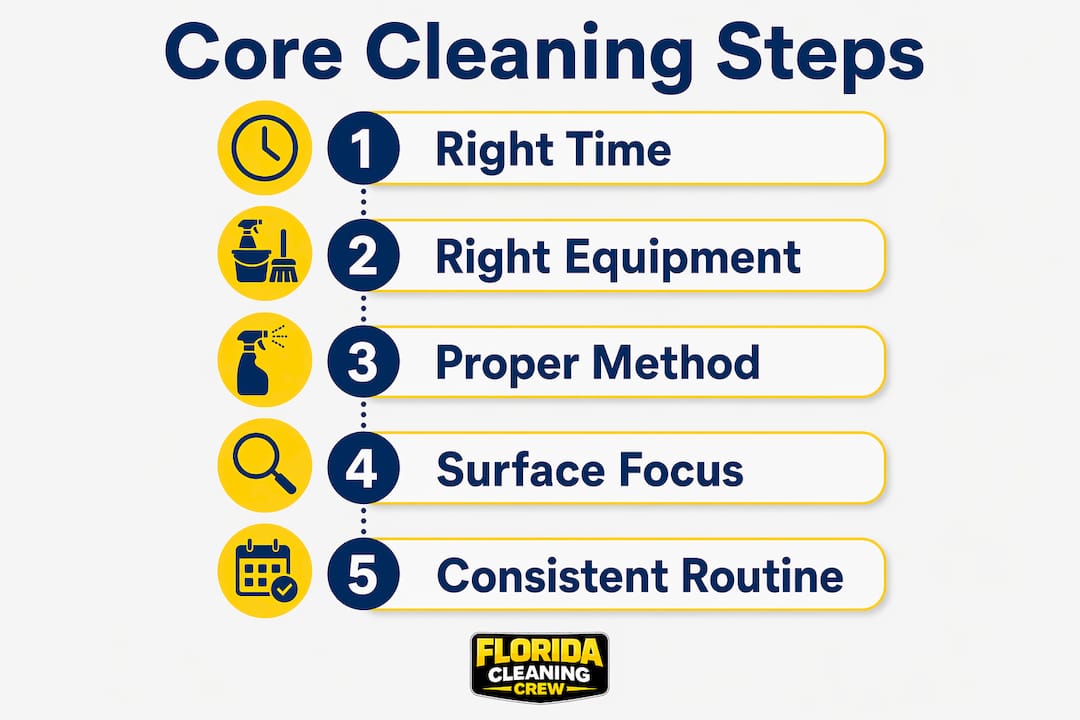
One insight that most general cleaning advice misses is the sequence requirement. Disinfection without prior soil removal leaves residual bioburden on surfaces, which means the disinfectant cannot reach the pathogens underneath. You must clean before you disinfect. Spraying a disinfectant on a visibly dirty surface is not effective infection control. It is a false sense of security.
Here is a practical, health-focused cleaning sequence for residential and small commercial spaces:
- Remove visible debris first. Wipe away crumbs, dust, and organic matter with a dry or damp cloth before applying any cleaning product.
- Apply a general cleaner and agitate. Use a product appropriate for the surface material. Agitation, meaning actual scrubbing or wiping with friction, is what physically dislodges pathogens.
- Rinse if required. Some surfaces and products require rinsing to avoid residue buildup that can harbor bacteria over time.
- Apply disinfectant to high-risk surfaces only. Disinfecting every surface in a home is unnecessary and wasteful. Focus on bathrooms, kitchen prep areas, and high-touch points.
- Allow contact time. Most EPA-registered disinfectants require 30 seconds to 4 minutes of wet contact time to be effective. Wiping immediately after application negates the benefit.
- Wash hands after cleaning. Cleaning transfers pathogens to your hands. Washing with soap and water for at least 20 seconds after the task completes the cycle.
For weekly routines, bathroom surfaces should be cleaned and disinfected weekly, and bed linens should be washed in warm or hot water on the same schedule. This cadence is not arbitrary. It reflects how quickly microbial loads rebuild on frequently used surfaces.
Pro Tip: Keep a dedicated set of microfiber cloths color-coded by room. Using the same cloth in the bathroom and kitchen is one of the most common ways households spread pathogens between high-risk areas.
How do environmental and resource factors influence cleaning’s role in health?
Cleaning does not happen in a vacuum. The ability to maintain hygiene depends heavily on access to clean water, functional infrastructure, and stable supply chains for cleaning products. This is a dimension of the role of hygiene in health that most wellness articles ignore entirely.
Water scarcity reduces handwashing and bathing frequency, which directly increases rates of enteric infections and skin conditions. When freshwater is limited, households sometimes rely on contaminated sources for cleaning, which introduces new pathogens rather than removing them. This is not a problem confined to developing regions. Drought conditions, infrastructure failures, and storm events in Florida can temporarily disrupt water quality and availability, affecting the hygiene practices of Tampa Bay residents.
The WHO’s IPC and WASH HERO CAPE checklist provides a standardized readiness assessment for infection prevention and control across different resource environments. The framework identifies gaps in water, sanitation, and hygiene infrastructure before an outbreak occurs, rather than reacting after. The lesson for households and small businesses is the same: assess your cleaning readiness before you need it.
| Hygiene domain | Environmental constraint | Health consequence |
|---|---|---|
| Hand hygiene | Limited clean water access | Increased enteric and respiratory infections |
| Domestic surface cleaning | Contaminated water sources | Pathogen reintroduction during cleaning |
| Food hygiene | Water quality variability | Higher foodborne illness risk |
| Facility sanitation | Infrastructure disruption | Rapid pathogen buildup in shared spaces |
Hygiene behaviors are constrained by environmental resources, which means that telling people to simply clean more is insufficient advice without addressing the conditions that make cleaning possible. For Tampa Bay homeowners, this means keeping a small emergency supply of bottled water and no-rinse hand sanitizer available for periods when water service is disrupted after storms. It also means choosing cleaning products that work effectively with lower water volumes when conservation is necessary.
What advances in healthcare cleaning demonstrate the impact of effective cleaning on health?
Healthcare settings provide the clearest evidence of what happens when cleaning is treated as a precision activity rather than a routine chore. The results are measurable, reproducible, and directly applicable to any environment where people share space.
Cleaning quality traceability systems that use barcodes and digital records to monitor each cleaning step increased compliance and reduced hospital-acquired infections by 42.6%. That number represents real patients who did not get sick because a system verified that cleaning happened correctly and in the right sequence. The technology enforces the process rather than relying on individual memory or motivation.
Cleaning in healthcare is about interrupting microbial transmission in real time, not maintaining appearances. This distinction matters because it shifts the goal from “the room looks clean” to “the room is safe.” Those two outcomes are not the same thing, and the gap between them is where most infections originate.
Here is what healthcare cleaning evidence teaches homeowners and small businesses directly:
- Prioritize by risk, not by visibility. A surface that looks clean can carry a significant pathogen load. Focus cleaning effort on high-touch, high-traffic areas rather than surfaces that simply look dirty.
- Sequence matters more than product choice. The most expensive disinfectant on the market will not work if applied to an uncleaned surface. The order of operations is the most critical variable.
- Verification closes the loop. In healthcare, traceability systems confirm that cleaning occurred. At home or in a business, a simple checklist serves the same function. Without verification, compliance drifts over time.
- Consistency beats intensity. A moderate cleaning routine performed reliably every week outperforms an intensive deep clean done once a month. Pathogens rebuild quickly on high-touch surfaces.
| Approach | Healthcare outcome | Home or business equivalent |
|---|---|---|
| Risk-based surface targeting | 34.5% relative reduction in HAIs | Fewer respiratory and GI illnesses per household |
| Traceability and compliance systems | 42.6% reduction in hospital-acquired infections | Checklist-based routines that prevent missed steps |
| Cleaning before disinfecting | Eliminates residual bioburden | Disinfectants actually reach and kill pathogens |
| Consistent scheduled cleaning | Sustained low infection rates | Reduced sick days and medical visits |
How can individuals and small businesses in Tampa Bay optimize cleaning for health?
Tampa Bay’s climate creates specific cleaning challenges that generic advice does not address. High humidity accelerates mold growth on bathroom grout, window seals, and HVAC vents. Salt air in coastal areas like St. Petersburg and Clearwater increases corrosion and residue buildup on exterior surfaces. Heat drives pest activity indoors, which introduces additional contamination risks. A cleaning strategy that works in Minnesota does not automatically work here.
For Tampa Bay residents and businesses, improving cleaning routines means accounting for these local factors directly. The following practices address both health outcomes and the specific conditions of the region:
- Clean HVAC vents and filters monthly during summer. Florida’s air conditioning systems run almost year-round, and dirty filters recirculate dust, mold spores, and allergens throughout the home or office continuously.
- Address bathroom mold proactively, not reactively. In high-humidity environments, weekly cleaning of grout and caulk lines prevents mold colonies from establishing. Once mold is visible, it has already been present for days or weeks.
- Prioritize kitchen cleaning after outdoor cooking or events. Tampa Bay’s outdoor lifestyle means kitchens and patios see heavy use. Food residue left overnight in warm, humid conditions creates rapid bacterial growth.
- Use microfiber tools rather than traditional mops and sponges. Microfiber captures and holds pathogens rather than spreading them across surfaces, which is particularly important in shared spaces like Airbnb rentals and small offices.
- Follow OSHA-aligned cleaning protocols for commercial spaces. The role of cleaning in OSHA compliance is direct: employers are required to maintain sanitary workplaces, and documented cleaning schedules support that obligation. The Tampa Bay business compliance guide outlines what that looks like in practice for local businesses.
For Airbnb hosts and short-term rental operators, the stakes are higher than for private homeowners. Guest turnover means surfaces are touched by different people in rapid succession, which amplifies transmission risk. A structured, room-by-room protocol between every stay is not optional. It is the baseline for operating safely and maintaining positive reviews.
Key takeaways
Cleaning is the primary mechanism for interrupting pathogen transmission, and consistent, sequenced routines reduce illness across residential, commercial, and clinical environments.
| Point | Details |
|---|---|
| Cleaning before disinfecting | Disinfectants only work after soil removal; skipping this step leaves pathogens protected under organic matter. |
| Target high-touch surfaces | Doorknobs, faucet handles, and shared electronics carry the highest pathogen loads and need priority attention. |
| Environmental factors matter | Water availability and climate conditions directly affect cleaning effectiveness and must be planned for. |
| Healthcare evidence scales down | A 42.6% reduction in hospital infections from traceability systems shows that consistency and verification work at any scale. |
| Local climate requires local strategy | Tampa Bay’s humidity and heat demand more frequent mold prevention and HVAC maintenance than national averages suggest. |
Why I think most people are cleaning in the wrong order
Most households clean when things look dirty. That instinct is understandable, but it is the wrong trigger. Pathogens do not announce themselves visually. A kitchen counter can look spotless and still carry enough norovirus to make three people sick. I have seen this pattern repeatedly: people invest in expensive cleaning products and then apply them incorrectly, skipping the mechanical removal step that makes everything else work.
The other mistake I see constantly is treating all surfaces as equal. Spending twenty minutes scrubbing a baseboard while leaving a phone screen untouched for a week is a misallocation of effort. The research from hospital environments is unambiguous on this point. Targeting high-touch shared equipment is more impactful than indiscriminate cleaning of every surface. That principle applies in your kitchen just as much as in a hospital ward.
What actually works is a short, consistent routine built around the surfaces that matter most, performed in the right sequence, and verified with a simple checklist. It does not require expensive products or hours of labor. It requires understanding why the sequence exists and respecting it every time. The weekly cleaning benefits are not theoretical. They show up as fewer sick days, fewer doctor visits, and a home that actually protects the people living in it.
— Matt
Professional cleaning that supports your health in Tampa Bay
Floridacc provides residential and commercial cleaning services across Tampa Bay, including Tampa, Clearwater, and St. Petersburg, with protocols built around health outcomes rather than just appearances. Every service uses eco-friendly products, follows a verified room-by-room process, and is performed by licensed, insured professionals who understand the local climate conditions that affect hygiene. Whether you need a recurring home cleaning schedule, a turnover clean for your Airbnb, or a compliant commercial cleaning program, Floridacc delivers consistent results you can count on. The residential cleaning service guide is a good starting point if you want to understand what a health-focused cleaning plan looks like for your home.
FAQ
How does cleaning directly prevent illness?
Cleaning physically removes bacteria, viruses, and fungi from surfaces before they transfer to hands or airways. The CDC identifies surface cleaning and hand hygiene as the two most effective community-level measures for reducing infection transmission.
What surfaces carry the highest infection risk at home?
Doorknobs, faucet handles, light switches, shared electronics, and bathroom surfaces near toilets carry the highest pathogen loads. Targeting these areas during every cleaning session delivers the greatest health benefit per minute of effort.
Does cleaning before disinfecting really matter?
Disinfecting without cleaning first leaves organic matter on the surface that physically shields pathogens from the disinfectant. Research from hospital sterilization centers confirms that skipping soil removal undermines disinfection effectiveness entirely.
How does Tampa Bay’s climate affect cleaning frequency?
High humidity accelerates mold growth and bacterial activity, which means surfaces in Tampa Bay homes rebuild microbial loads faster than in drier climates. Bathroom grout, HVAC vents, and kitchen surfaces benefit from more frequent attention than national cleaning guidelines typically recommend.
What is the role of cleaning in OSHA compliance for small businesses?
OSHA requires employers to maintain sanitary workplaces, and documented cleaning schedules are a core part of demonstrating compliance. Consistent, recorded cleaning routines protect both employees and businesses from health violations and liability.