Eco-friendly products for rental properties are defined as non-toxic, sustainably sourced, or low-waste alternatives to conventional cleaning supplies, amenities, and household goods that reduce environmental impact while cutting operating costs. The case for switching is financial as much as ethical. Eco-friendly measures reduce vacation rental operating costs by 15% to 35%, saving $1,500 to $5,000 annually. At the same time, 78% of travelers prioritize sustainability when choosing accommodations. For Tampa Bay rental hosts managing properties in competitive markets like St. Petersburg, Clearwater, and South Tampa, that combination of lower costs and higher guest demand makes green products one of the most practical upgrades available. Brands like Branch Basics and Seventh Generation have made the transition easier than ever.
Why eco products for rentals make financial sense
The most direct reason to switch is cost reduction. Conventional cleaning and amenity products carry hidden expenses that compound across dozens of turnovers each year. Eco alternatives attack those costs from multiple angles at once.
Cleaning supply savings add up fast
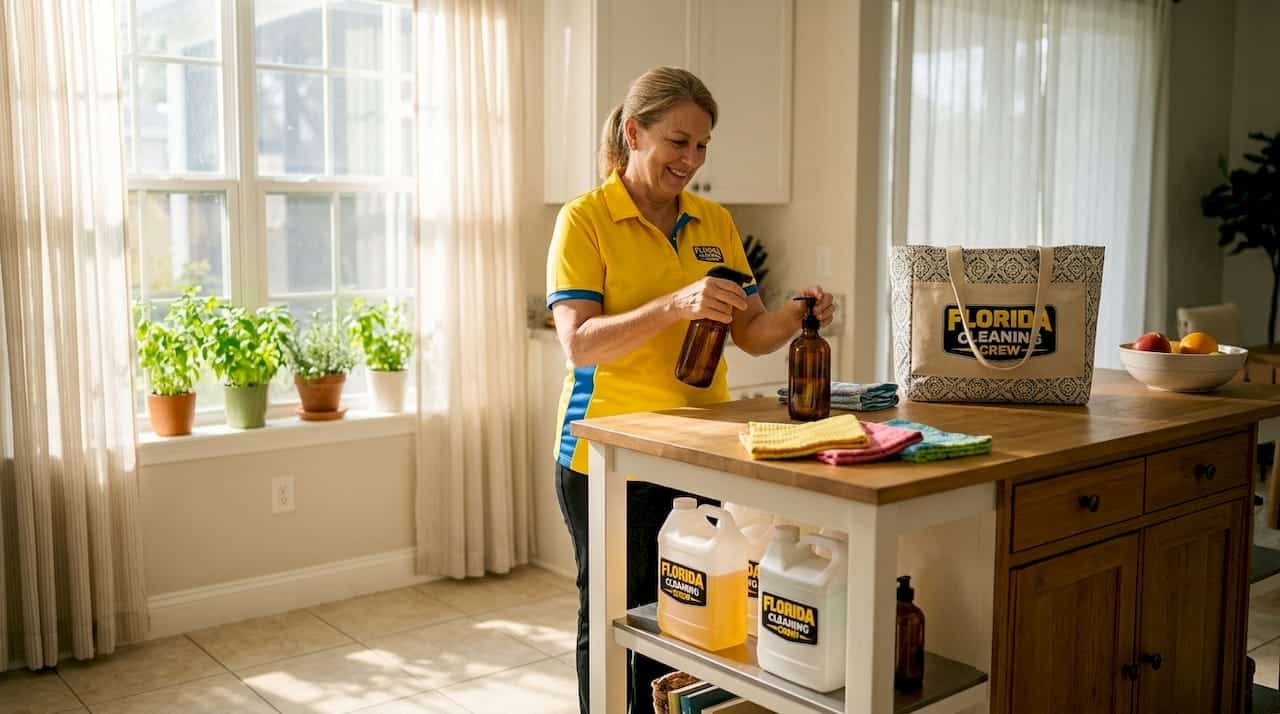
Switching to concentrated cleaners drops per-turnover supply costs from $3 to $8 down to $0.75 to $2.00, saving $338 to $1,500 annually. That shift alone can cover the cost of several professional cleaning sessions. Concentrated formulas from brands like Branch Basics or Seventh Generation also reduce how often you reorder. One bottle replaces five to ten ready-to-use bottles, saving an additional $100 to $400 per year on supply frequency.
Utilities and fixtures deliver ongoing returns
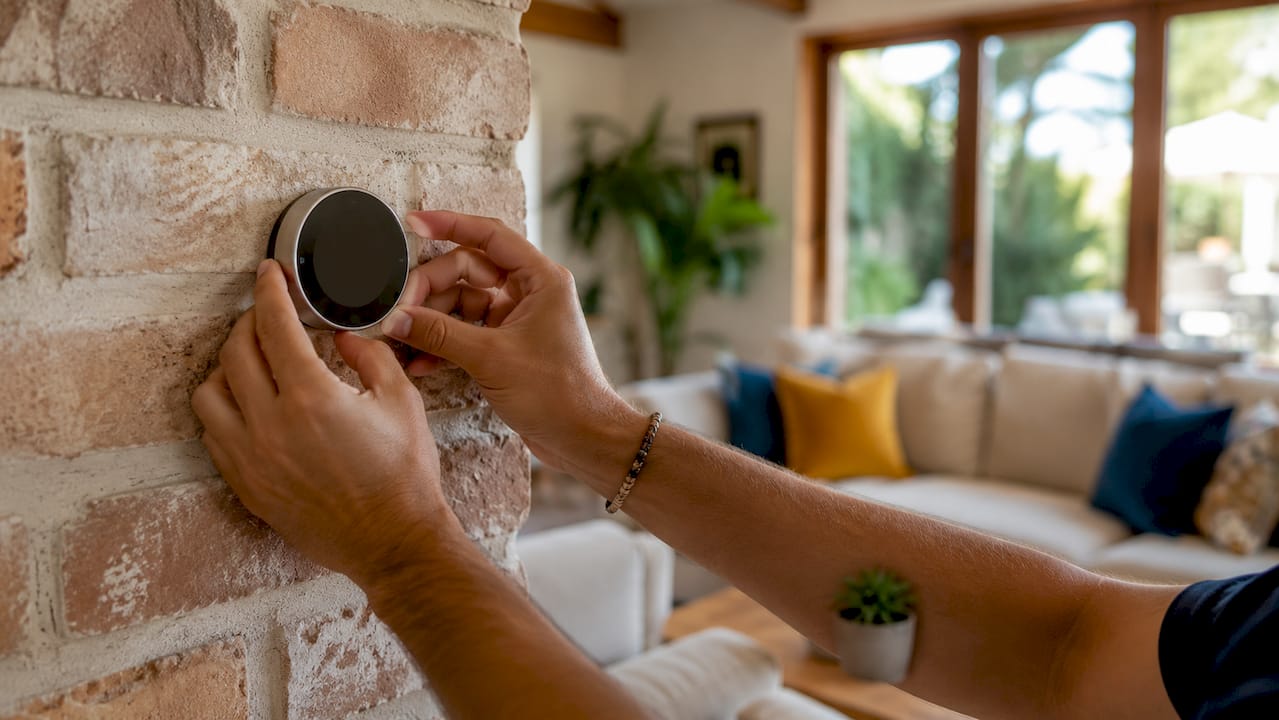
Smart thermostats save 10% to 23% on heating and cooling costs, with payback periods in rental properties typically landing between six and twelve months. On a $1,800 annual HVAC bill, that translates to $180 to $414 back in your pocket every year. LED lighting, low-flow showerheads, and WaterSense-labeled faucets compound those savings further. These are not luxury upgrades. They are infrastructure changes that pay for themselves within a single rental season in most Tampa Bay properties.
Refillable amenities cut waste and replacement costs
Refillable dispensers for toiletries save $300 to $600 annually by replacing hundreds of individual bottles across 150 to 250 stays. That math is straightforward. A property hosting 200 guests per year and providing individual shampoo, conditioner, and body wash bottles at $0.50 to $1.00 each spends $300 to $600 on single-use plastics alone. One set of wall-mounted refillable dispensers eliminates that cost almost entirely after the first year.
Pro Tip: Start with refillable dispensers and concentrated cleaners before investing in appliances or fixtures. These two swaps deliver the fastest payback and require no installation.
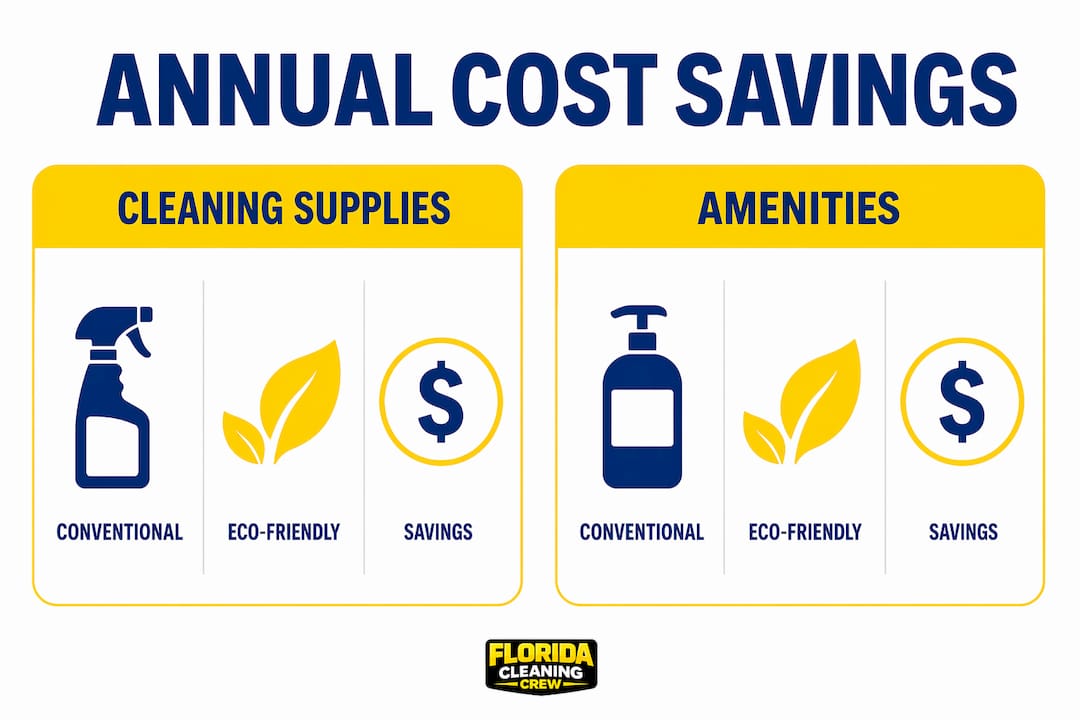
Here is a summary of where eco products deliver the clearest savings:
| Category | Conventional annual cost | Eco annual cost | Estimated savings |
|---|---|---|---|
| Cleaning supplies | $450 to $2,000 | $112 to $500 | $338 to $1,500 |
| HVAC (smart thermostat) | $1,800 | $1,386 to $1,620 | $180 to $414 |
| Toiletry amenities | $300 to $600 | $50 to $100 | $250 to $500 |
| Paper and printed materials | $100 to $200 | $10 to $30 | $90 to $170 |
Why guests prefer eco-friendly rentals and how it impacts bookings
Guest preference for sustainable stays is not a niche trend. It is now a mainstream booking filter, and Tampa Bay hosts who ignore it are leaving revenue on the table.
The numbers are clear. Over 70% of travelers favor eco stays, and listings that feature specific green amenities consistently earn higher booking values and longer average stays. Guests are not just choosing eco properties out of principle. They are paying more for them and staying longer when they find them.
“Sustainability should be viewed as a revenue strategy. Clear communication of green features increases bookings and justifies higher nightly rates.” — Redawning Sustainability ROI Report
The eco features that move the needle most with guests include:
- EV charging stations: A growing priority for travelers driving electric vehicles, especially in Florida where EV adoption is accelerating.
- Refillable toiletry dispensers: Guests notice and appreciate the absence of single-use plastic bottles. Many mention it in reviews.
- LED lighting and energy-efficient appliances: Subtle but recognized by eco-conscious guests as a signal of host values.
- Digital guest guides via QR codes: QR-coded digital guides eliminate paper waste and improve the check-in experience simultaneously.
- Non-toxic cleaning products: Guests with chemical sensitivities or young children actively seek properties that use EPA Safer Choice certified products.
The review connection matters too. Guests are more engaged reviewers when they see hosts using environmentally safe products. A guest who notices your Branch Basics spray bottles or your refillable Molton Brown dispensers is more likely to mention it in a five-star review. That social proof compounds over time, improving your listing’s search ranking on Airbnb and Vrbo.
For Tampa Bay hosts specifically, listing eco features in your Airbnb or Vrbo description with specific language matters. “Non-toxic cleaning products,” “refillable amenities,” and “smart thermostat” are searchable terms that attract the right guests. Pair those descriptions with photos of your dispensers, your LED fixtures, and your recycling setup. Guests who care about sustainability want to see evidence, not just claims.
How do eco products compare to conventional options in quality and cost?
The honest answer is that eco products cost more upfront and perform better over time. That tradeoff is worth understanding before you make purchasing decisions.
The higher upfront price of eco products reflects fair labor practices, ethical supply chains, and durable materials. A conventional plastic spray bottle from a big-box store costs $3 and lasts six months. A refillable glass or stainless steel dispenser costs $15 to $25 and lasts years. The lifecycle cost of the eco option is lower by a significant margin.
Certifications are your quality filter when evaluating products. Look for these three:
- USDA Organic: Confirms plant-based ingredients without synthetic pesticides or chemicals.
- Fair Trade Certified: Verifies ethical labor and sourcing practices in the supply chain.
- EPA Safer Choice: Confirms that every ingredient in a cleaning product meets safety standards for human health and aquatic life.
Consumers value eco products not only for environmental reasons but also for their longer lifespan and consistent performance, which reduce overall consumption. That is the key insight most hosts miss. You are not paying more for the same result. You are paying more for a product that lasts longer, performs consistently, and reduces how often you reorder.
Pro Tip: When comparing eco versus conventional products, calculate cost per use rather than cost per unit. A $20 concentrated cleaner that makes 40 bottles costs $0.50 per bottle. A $4 conventional cleaner used once costs $4.00 per use.
Here is a direct comparison across the categories most relevant to rental hosts:
| Product category | Conventional option | Eco alternative | Long-term cost advantage |
|---|---|---|---|
| Cleaning spray | Single-use, $3 to $5 per bottle | Concentrated refill, $0.50 per bottle | Eco wins by 80% per use |
| Toiletry amenities | Individual bottles, $300 to $600/year | Refillable dispensers, $50 to $100/year | Eco wins by 75% annually |
| Lighting | Incandescent bulbs, frequent replacement | LED bulbs, 15,000 to 25,000 hour lifespan | Eco wins by 10x lifespan |
| Kitchen storage | Single-use plastic bags | Silicone storage bags, reusable for years | Eco wins after 20 to 30 uses |
One common misconception is that eco products require more effort to use or deliver weaker results. Brands like Seventh Generation and Method have closed the performance gap entirely in categories like dish soap, laundry detergent, and all-purpose cleaners. The cleaning crews Floridacc works with in Tampa Bay report no performance difference when switching from conventional to eco-certified products in rental turnovers.
Practical steps to implement eco products in your rental
Switching to green products does not require a full property overhaul. The most effective approach starts with high-frequency, high-cost items and builds from there.
-
Replace cleaning supplies first. Swap your current spray cleaners and disinfectants for concentrated formulas from Branch Basics, Seventh Generation, or EPA Safer Choice certified alternatives. Order refillable spray bottles in bulk. This single change cuts your per-turnover supply cost immediately and sets the tone for the rest of your eco transition. Check out eco-friendly product options suited specifically for Tampa Bay properties.
-
Install refillable dispensers in bathrooms. Wall-mounted dispensers for shampoo, conditioner, and body wash eliminate single-use plastic bottles entirely. Choose dispensers with lockable mechanisms to prevent tampering. Brands like Simplehuman and Umbra offer durable options that hold up across hundreds of guest stays.
-
Switch to LED lighting throughout the property. LED bulbs use 75% less energy than incandescent bulbs and last 15 to 25 times longer. A full property swap costs $50 to $150 in bulbs and requires no professional installation. The energy savings appear on your utility bill within the first billing cycle.
-
Set up a QR code digital guest guide. Digital guest manuals via QR codes reduce printed materials, answer common guest questions automatically, and improve the check-in experience. Tools like Hostfully, Touch Stay, or a simple Google Doc linked via QR code work well. Place the QR code on the refrigerator or welcome card where guests will see it immediately.
-
Brief your cleaning crew on eco product protocols. Concentrated cleaners require different dilution ratios than conventional products. Silicone bags need prompt washing after storing strong-smelling foods to prevent odor absorption. A five-minute briefing with your cleaning team prevents product misuse and extends the life of every eco item in the property. For hosts working with professional services, Floridacc’s rental turnover cleaning approach in Tampa Bay already incorporates eco product handling as standard practice.
-
Highlight eco features in your listing. Add a dedicated section to your Airbnb or Vrbo listing that names specific eco features. “Non-toxic EPA Safer Choice cleaning products,” “refillable amenity dispensers,” and “smart thermostat for energy efficiency” are specific enough to attract eco-conscious guests and differentiate your listing from competitors in Clearwater, St. Petersburg, and Tampa proper.
Key takeaways
Eco products for rental properties deliver measurable financial savings, stronger guest reviews, and a competitive booking advantage that compounds over time.
| Point | Details |
|---|---|
| Cost savings are immediate | Concentrated cleaners and refillable dispensers cut annual supply costs by $338 to $2,000 combined. |
| Guest demand is real and growing | 78% of travelers prioritize sustainability, directly affecting booking rates and nightly pricing power. |
| Eco products cost more upfront but less over time | Calculate cost per use, not cost per unit, to see the true financial advantage of eco alternatives. |
| Implementation starts with three swaps | Concentrated cleaners, LED bulbs, and refillable dispensers deliver the fastest payback with the least disruption. |
| Visibility drives bookings | Listing eco features with specific product names and photos attracts higher-value guests and improves review quality. |
Why I think most hosts underestimate the revenue angle
I have worked with rental hosts across Tampa Bay for years, and the pattern I see most often is this: hosts treat eco products as a feel-good add-on rather than a revenue lever. They swap one or two items, mention it vaguely in their listing, and wonder why it does not move the needle on bookings or reviews.
The hosts who see real results treat sustainability the same way they treat photography or pricing strategy. They are specific, consistent, and transparent about it. They name the products they use. They photograph the dispensers. They write “EPA Safer Choice certified cleaning products” in their listing description, not just “eco-friendly cleaning.”
The cost concern I hear most often is that eco products are too expensive for a rental that gets heavy use. That concern disappears when you run the actual numbers. A set of refillable dispensers at $60 to $80 pays for itself within the first three months of stays. Concentrated cleaners from Seventh Generation cost less per turnover than the conventional alternatives most hosts are already buying.
The harder challenge is authenticity. Guests who care about sustainability are also good at detecting greenwashing. If you put a recycling bin in the kitchen but still stock the bathroom with single-use plastic bottles, eco-conscious guests will notice. The properties that earn the best eco-related reviews are the ones where the commitment shows up in every room, not just in the listing copy.
My honest advice: start with the bathroom and the cleaning closet. Get those two areas right, document them with photos, and update your listing. Then measure your review quality and booking rate over the next 90 days. The data will tell you whether to keep going, and in my experience, it always does.
— Matt
How Floridacc helps Tampa Bay rental hosts go green
Floridacc works with Airbnb hosts and rental property owners across Tampa, Clearwater, and St. Petersburg to deliver professional cleaning using eco-conscious products that protect guests and the property.

Every turnover handled by Floridacc uses non-toxic, EPA Safer Choice aligned cleaning products as standard. The team is trained on concentrated cleaner dilution ratios, refillable dispenser maintenance, and eco product handling protocols that extend the life of your amenities. Whether you manage one vacation rental or a portfolio of properties, Floridacc’s vacation rental cleaning services are built around the same green standards this article covers. Explore the full residential cleaning service guide to see how eco-focused cleaning fits into a complete property maintenance plan, or request a free estimate directly through the site.
FAQ
What are the biggest cost savings from eco products in rentals?
Concentrated cleaning supplies and refillable toiletry dispensers deliver the largest savings, cutting annual costs by $338 to $2,100 combined. Smart thermostats add another $180 to $414 per year in HVAC savings.
Do eco-friendly cleaning products actually clean as well as conventional ones?
Yes. Brands like Seventh Generation and Method perform comparably to conventional cleaners in independent tests, and EPA Safer Choice certification confirms safety without sacrificing effectiveness.
How do I highlight eco features to attract more bookings?
List specific product names and certifications in your Airbnb or Vrbo description, such as “EPA Safer Choice certified cleaners” and “refillable amenity dispensers,” and include photos of those features in your listing gallery.
Are there tax or insurance benefits for eco upgrades in rental properties?
Some energy-efficient upgrades, including smart thermostats and LED lighting, qualify for federal tax credits under the Inflation Reduction Act. Check with your tax advisor for property-specific eligibility.
How do I get my cleaning crew to use eco products correctly?
Brief your team on dilution ratios for concentrated cleaners and proper care for reusable items like silicone bags. A short written protocol sheet posted in the cleaning supply area prevents misuse and extends product life.