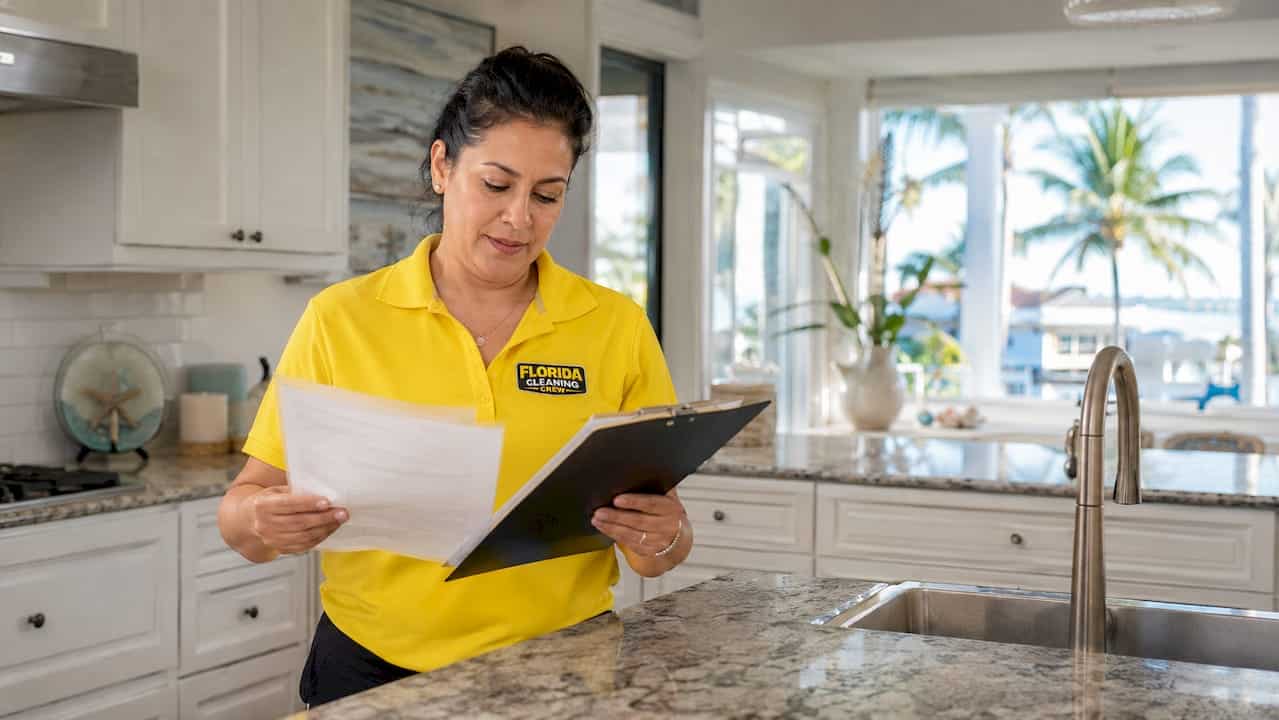

Cleaning routines that take twice as long as they should are not just frustrating — they are a sign that your process, not your effort, needs fixing. For Tampa Bay homeowners dealing with Florida’s humidity, sand, and year-round foot traffic, or for property managers juggling tenant turnovers and Airbnb resets, finding practical ways to improve cleaning routines is not optional. It is the difference between a home that stays fresh with minimal effort and one that always feels one step behind. This article breaks down the methods that actually work, in order of how you can apply them starting today.
Table of Contents
- Optimize your cleaning sequence for efficiency
- Use the 15-minute daily cleaning routine to build consistency
- Master the move-out and turnover cleaning process with checklists
- Prioritize preparation and focus during deep cleaning days
- Implement team cleaning tactics for managed properties
- How to choose the right improvements for your Tampa Bay home
- The uncomfortable truth about cleaning routines
- Ready to take your Tampa Bay cleaning routine further?
- Frequently asked questions
Optimize your cleaning sequence for efficiency
Most people clean the way they feel like cleaning, which means they wipe counters, then dust the shelves above them, and watch the dust settle right back down. That is not a cleaning problem. That is a sequencing problem. Sequencing cleaning top-to-bottom, doing dry tasks before wet, and grouping by task type reduces backtracking and rework in every session.
The fix is simple once you see it. Always start at the highest surfaces in a room — ceiling fans, shelves, the tops of cabinets — and work your way down. Dust and debris fall downward, so you want the floors to be the last thing you clean, not the first. In Tampa homes, ceiling fans run almost year-round, which means they collect more dust and grime than in cooler climates. If you skip them or clean them last, you are creating double work.
Here is how an efficient cleaning sequence looks in practice:
- Dust overhead surfaces first: Ceiling fans, light fixtures, shelves, and crown molding before anything else
- Declutter before you wipe: Clear surfaces of objects so you are not picking things up and putting them down repeatedly
- Apply cleaning products early: Spray bathroom tiles and kitchen surfaces, then let products sit and work while you dust elsewhere, this is called dwell time and it dramatically reduces scrubbing effort
- Complete all dry tasks together: Dust, vacuum, and dry-wipe every room before introducing any wet cleaning
- Mop or wet-wipe last: Work across all rooms in one pass to finish floors and wet surfaces together
Grouping tasks across rooms, rather than completing one full room before moving to the next, is one of the most underused time-saving strategies in household cleaning. Carry your vacuum through every carpeted area in one trip. Wipe all mirrors in one pass. This reduces the time spent picking up and putting down tools.
Pro Tip: Keep a caddy stocked with your most-used supplies in each zone of your home. In a two-story Tampa house, that means one caddy upstairs and one down. The two or three minutes you save not hunting for supplies adds up to nearly an hour per month.
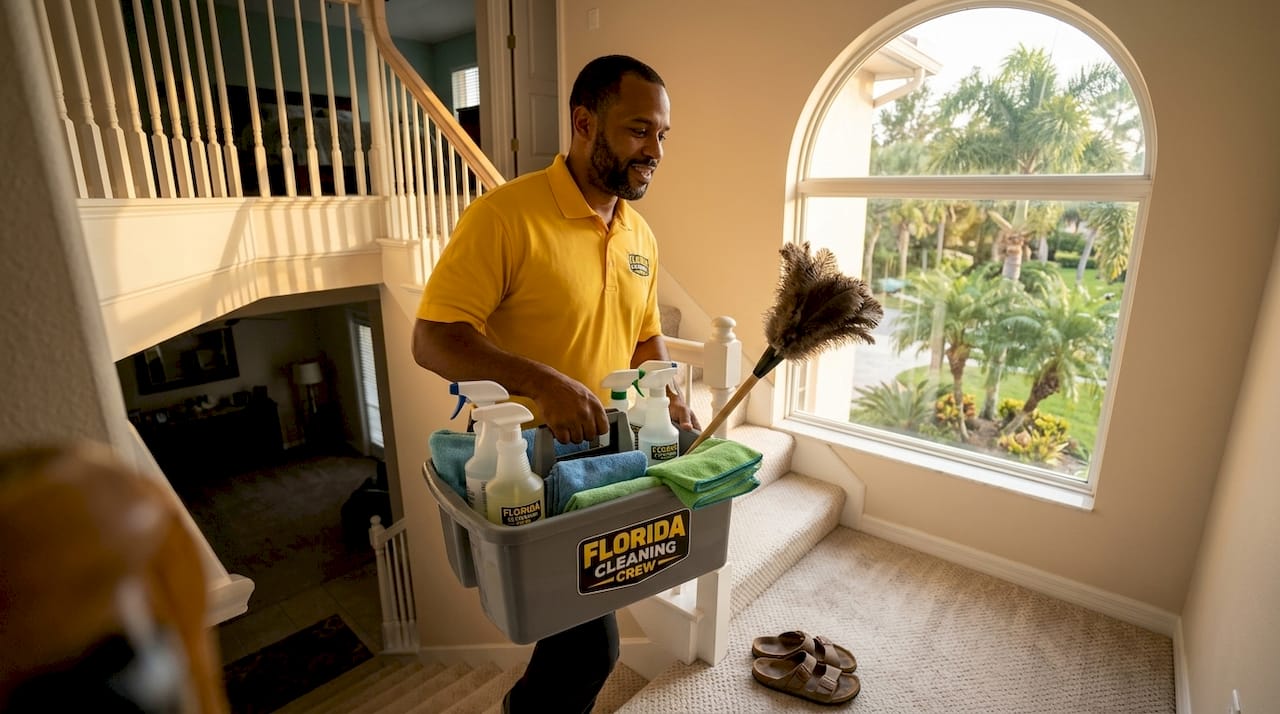
Pair this approach with eco friendly cleaning tips to reduce chemical exposure while keeping the sequence just as effective.
Use the 15-minute daily cleaning routine to build consistency
If efficient sequencing speeds your work on designated cleaning days, short daily sessions ensure your home never builds up to the point where a full clean takes hours. A 15-minute timed routine focusing on one zone builds sustainable habits and compound consistency, meaning the more you do it, the less you ever need to do.
The idea is straightforward. Rather than setting aside a Saturday morning to clean everything at once, you pick one area each day and give it exactly 15 minutes of focused attention. Over a week, you have touched every zone in your home. Over a month, nothing has been neglected long enough to become a serious cleaning project.
Here is a simple daily structure that works for Tampa Bay homeowners:
- Choose one zone for the day: Kitchen, bathrooms, living room, entryway, bedrooms, or outdoor areas like patios or lanais
- Set a visible timer for 15 minutes: A kitchen timer on the counter works better than a phone because it is harder to ignore
- Combine decluttering with cleaning: Before wiping or scrubbing, spend the first two minutes picking up and returning items to their proper place, this multiplies the visible impact of the session
- Tackle the highest-impact task in that zone first: In a bathroom, that is the toilet and sink. In the kitchen, that is the counters and stovetop
- Stop when the timer goes off: This is the rule that makes the habit stick. Knowing there is a hard stop removes the psychological resistance to starting
Tracking your daily sessions on a simple whiteboard or printable chart creates a visual streak that is genuinely motivating. It sounds minor, but crossing off five consecutive days of 15-minute cleans changes how people think about their routines.
Pro Tip: Tampa’s humidity means mold and mildew can establish in bathrooms faster than in drier climates. A 15-minute bathroom session twice a week, not just once, pays off significantly if your home has poor ventilation.
For households that need more flexible cleaning approaches, this daily method can also be adapted around professional cleaning visits to keep things tidy between scheduled sessions.
Master the move-out and turnover cleaning process with checklists
For rental property owners and managers across the Tampa Bay area, routine cleaning takes on a different dimension at tenant transitions. A disorganized move-out clean can cost you a deposit dispute, a failed inspection, or a week of lost rental income. Starting 2 to 3 weeks before move-out with a focused checklist on kitchens and bathrooms aligns your process with inspection standards and deposit protections.
A well-run turnover clean is not just about making the unit look presentable. It is about documentation, repairs, and creating a provable record that the property was returned in good condition. Here is what the process should include:
- Notify tenants of move-out expectations in writing: Send the checklist and cleaning standards at least 2 to 3 weeks before their departure date
- Schedule your inspection proactively: Book your walkthrough for the day after tenant move-out, not a week later
- Clean all rooms systematically: Every appliance inside and out, all window tracks and sills, baseboards, closet interiors, and ceiling fans
- Address minor repairs before the inspection: Patch small nail holes, replace burned-out bulbs, and fix any loose hardware that could be flagged
- Document everything with photos and video: Walk through each room before and after cleaning, with timestamps, this protects you in any deposit dispute
- Confirm all personal belongings are removed: Any items left behind can complicate your timeline and create liability
Using a detailed move-out cleaning checklist specific to each property type keeps your team consistent across units. For managers handling multiple properties, building this process into your tenant turnover management workflow reduces surprises and speeds every transition.
Prioritize preparation and focus during deep cleaning days
Regular routines handle surface-level cleanliness. But every home in Tampa — especially those with kids, pets, or high traffic from the beach or yard — needs periodic deep cleaning that goes into grout lines, behind appliances, and under furniture. The common mistake is diving straight into scrubbing without any preparation. Prepping first by tidying and dusting dry surfaces, then working top-to-bottom and prioritizing kitchens and bathrooms when time is short, is the approach that actually gets results in a single day.
Think of preparation as the multiplier for your deep clean effort. If you spend the first 20 minutes clearing surfaces, returning items to their spots, and doing a full dry pass on dust and debris, everything that follows is faster and more effective. Wet cleaning on a dusty surface is wasted motion.
Here is a structured approach to a full deep cleaning day:
- Start with a full declutter pass: Move through every room and clear surfaces, counters, and floors of anything that does not belong there
- Dust and vacuum all dry surfaces: Work top-to-bottom through every room before any water or cleaning product touches a surface
- Tackle the kitchen first: Oven interior, refrigerator coils and shelves, stovetop grates, hood filters, and all cabinet fronts
- Move directly to bathrooms: Grout lines, toilet base and tank, shower tracks, exhaust fans, and mirror edges
- Create a maintenance task list before you finish: Write down what you noticed during the deep clean that needs attention before the next one, loose caulk, a dripping faucet, a stained grout line you need to re-seal
Pro Tip: In Florida’s climate, deep cleaning should include a dedicated check of areas prone to mold, specifically bathroom caulk lines, window seals, and the area under kitchen sinks. These are the spots that cause expensive problems when overlooked for too long.
For a thorough overview of what a professional-level deep clean covers, reviewing deep cleaning essentials before scheduling your own can save you from missing critical areas.
Implement team cleaning tactics for managed properties
If you manage multiple rental units, an Airbnb property, or a larger home with regular cleaning staff, the single-biggest efficiency gain does not come from better products. It comes from task division, which increases operational efficiency, consistency, and accountability compared to one person cleaning an entire unit from start to finish.
The traditional approach is assigning a cleaner to a room and expecting them to handle everything in it. The problem is that every person has different standards for different tasks, and every room therefore comes out at a different level of cleanliness. Task division flips this. You assign tasks, not rooms. One person handles all bathroom scrubbing across every unit. Another handles all kitchen work. A third handles floors and finishing.
Here is how to apply this method to property management cleaning:
- Assign by task, not by room: Bathroom specialist, kitchen specialist, floors and surfaces specialist, this creates expertise and consistency
- Standardize the sequence for each task: Every bathroom clean follows the same 12-step order, every time, this makes training fast and quality checks simple
- Use task-specific checklists: Rather than a general room checklist, each specialist has a detailed task checklist they sign off on
- Train on repeatable methods: Show the exact product, tool, motion, and sequence for each task. Remove ambiguity entirely
| Cleaning method | Time per unit | Consistency | Training ease | Quality control |
|---|---|---|---|---|
| Individual room-by-room | Slower | Variable | Harder | Difficult |
| Team task division | Faster | High | Easier | Simple |
| Mixed approach | Moderate | Moderate | Moderate | Moderate |
For deeper context on what separates this level of process from standard cleaning, our overview of professional cleaning insights covers the systems and training behind consistent results.
How to choose the right improvements for your Tampa Bay home
Not every method in this article applies equally to every situation. A single homeowner in South Tampa has different needs than a property manager running five Airbnb units in St. Pete Beach. Matching the right approach to your actual context is what turns general cleaning advice into a routine that holds up.
Here is a direct breakdown of which methods fit which situations:
- Busy homeowners who want low daily effort: The 15-minute daily routine is your entry point. It builds the habit without demanding large blocks of time
- Homeowners doing weekly cleans: Apply the optimized sequencing method on every cleaning day. Top-to-bottom, dry before wet, task grouping across rooms
- Landlords preparing tenant transitions: Build your move-out checklist process and start it 2 to 3 weeks before move-out without exception
- Anyone needing a quarterly refresh: Schedule a structured deep clean day using the prep-first, kitchen-and-bathrooms-first framework
- Property managers overseeing multiple units: Implement team task division with standardized sequences and sign-off checklists
| Your situation | Best method to start with | Frequency |
|---|---|---|
| Busy homeowner | 15-minute daily routine | Daily |
| Weekly cleaner | Optimized sequencing | Weekly |
| Landlord, tenant turnover | Move-out checklist process | Each turnover |
| Quarterly deep clean | Prep-first deep clean structure | Quarterly |
| Multi-unit property manager | Team task division | Every turnover |
The key insight across all of these is that the best cleaning improvement is the one that matches your actual schedule and situation. Choosing the wrong framework, like trying to do a full deep clean weekly when you are already stretched, creates the kind of friction that causes people to abandon routines entirely.
For homeowners and managers who want to explore what choosing cleaning services looks like alongside a self-managed routine, the two approaches are not mutually exclusive. A professional deep clean quarterly paired with a consistent daily or weekly routine often produces far better results than either approach alone.
The uncomfortable truth about cleaning routines
Here is something most cleaning advice will not tell you: the reason most routines fail is not laziness. It is decision fatigue. Every time you have to decide what to clean next, or where you left the supplies, or whether the bathroom or kitchen should come first, you are burning mental energy that could go into actually cleaning.
The methods in this article work not primarily because they are physically more efficient, though they are. They work because they eliminate the decisions. A fixed sequence means you never wonder what comes next. A task-based team structure means no one is duplicating work or skipping steps. A 15-minute timer means the duration is never in question.
We have worked with Tampa Bay homeowners and property managers long enough to know that the people with the cleanest homes are almost never the ones who clean the most. They are the ones who have removed the friction from their process. Their supplies are in place. Their sequence is fixed. Their habit is small enough to be non-negotiable.
The other thing conventional cleaning advice gets wrong is treating every home as if it exists in a neutral climate. Tampa Bay homes face real challenges that homes in drier, cooler regions do not. Humidity accelerates mold growth in grout and caulk. Gulf Coast sand and soil track in daily. Year-round outdoor living means outdoor shoes, pets, and guests creating consistent indoor soiling. Any cleaning routine that does not account for these factors will always underperform, no matter how well-organized it is.
Building Florida-specific habits, like a twice-weekly bathroom wipe-down, a weekly floor pass in high-traffic areas, and a quarterly seal check on windows and caulk, is what separates a routine that works in Tampa from a routine that would work anywhere.
Ready to take your Tampa Bay cleaning routine further?
Improving your cleaning routine pays off whether you manage one home or ten. But some cleaning jobs demand more than an optimized personal routine can deliver.

Florida Cleaning Company serves homeowners and property managers throughout the Tampa Bay area with residential cleaning, move-out cleaning, deep cleaning, Airbnb and short-term rental turnovers, and more. Our team uses task-based methods and eco-friendly products to deliver consistent, high-quality results every visit. Whether you need a one-time deep clean to reset your home or a recurring service that fits around your own daily habits, we make it easy to get a free estimate and get started. Licensed, insured, and built around your schedule.
Frequently asked questions
What is the best order to clean rooms to save time?
Cleaning top-to-bottom and dry before wet reduces unnecessary backtracking. Start with ceiling fans and shelves, then counters, and finish with floors after all dry tasks are done.
How does the 15-minute cleaning routine improve daily habits?
A 15-minute timed routine focusing on one zone builds sustainable habits through small, consistent sessions that prevent disorder from compounding over time.
When should I schedule deep cleaning for my home?
Schedule a deep clean quarterly or when regular routines leave visible buildup. Prioritize kitchen and bathrooms during deep cleaning if time is limited, as these rooms have the highest impact on overall home cleanliness.
What are key steps to ensure a smooth tenant move-out cleaning?
Use checklists and early scheduling to prepare for move-out inspections and protect deposits. Begin at least 2 to 3 weeks before the move-out date, covering all rooms, appliances, repairs, documentation, and removal of personal belongings.
How can team cleaning improve property management cleaning?
Team cleaning with task division improves efficiency and quality control versus whole-area individual cleaning. Assigning specialized tasks to individuals reduces variability and makes training and oversight far more manageable across multiple units.