Selling or renting a property in Tampa Bay is competitive, and a listing that smells stale or shows grime in corners loses buyers before the price even comes up. The deep cleaning process for listings goes far beyond a quick sweep and surface wipe. It targets the areas that buyers and guests actually notice: grout lines, cabinet interiors, baseboards, and the kind of buildup that accumulates over months. Buyers notice cleanliness immediately, and consistent prep before every showing builds trust and speeds up offers. This guide walks Tampa Bay homeowners and property managers through every step of an effective, eco-friendly deep clean that protects property value and guest satisfaction.
Table of Contents
- Preparing for your deep cleaning: what you need and planning steps
- Step-by-step deep cleaning process for Tampa Bay listings
- Common mistakes and how to avoid them in deep cleaning
- Verifying your deep clean: checks and follow-up
- Why treating your Tampa Bay listing like a model home pays off long-term
- Trust Florida Cleaning Crew for your deep cleaning needs in Tampa Bay
- Frequently asked questions
Key Takeaways
| Point | Details |
|---|---|
| Schedule regular deep cleans | A thorough deep clean every 3–6 months maintains property condition and guest appeal. |
| Use eco-friendly products | EPA Safer Choice-certified cleaners safely and effectively target dirt without harsh chemicals. |
| Focus on hidden areas | Clean behind furniture, inside cabinets, and grout to prevent buildup and deterioration. |
| Follow disinfectant instructions | Allow disinfectants to remain wet for their full contact time for proper sanitization. |
| Verify with checklists | Use detailed cleaning checklists and inspections to ensure thoroughness and consistency. |
Preparing for your deep cleaning: what you need and planning steps
Planning is what separates a real deep clean from a rushed wipe-down that looks fine until someone opens a cabinet door. Before you touch a single surface, you need a clear schedule, the right supplies, and an understanding of what Tampa Bay’s climate does to your home.
Tampa’s heat and humidity create specific problems that other markets don’t face to the same degree. Mold spores thrive in humid bathrooms and under kitchen sinks. Salt air from the coast accelerates grease buildup on window tracks and exterior-facing surfaces. Dust mixes with moisture and sticks to baseboards instead of sitting loosely. Your cleaning approach needs to account for these conditions, not just follow a generic checklist.
When to schedule it
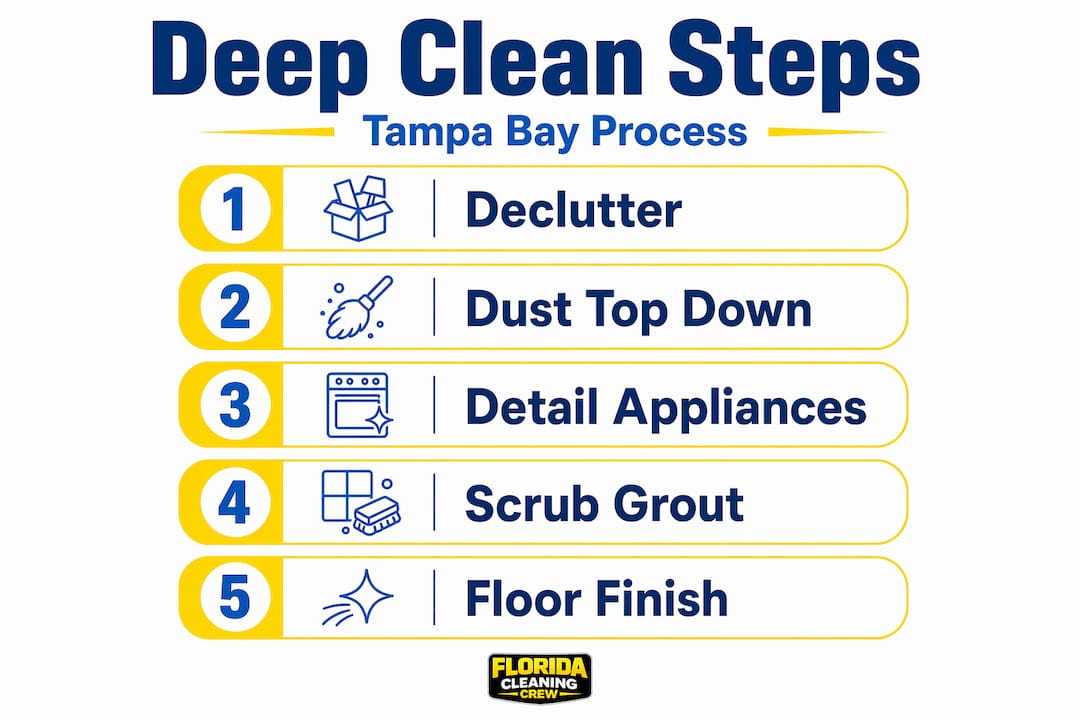
Deep cleaning should happen every 3 to 6 months depending on household size, lifestyle, and booking frequency for rental properties. For active short-term rentals in Tampa Bay, the higher end of that range is rarely enough. Plan your scheduling deep cleaning in Tampa Bay during low-occupancy windows, ideally with at least a full day buffer before the next guest or showing.
What to gather before you start
Here is what you need on hand before you begin:
- Microfiber cloths in multiple colors (color-code by room to avoid cross-contamination)
- Stiff-bristle grout brush and detail brushes for tight corners
- EPA Safer Choice certified all-purpose cleaner for general surfaces
- Separate EPA-registered disinfectant for bathrooms and kitchens
- Degreaser rated for kitchen use
- Steam cleaner for carpets, upholstery, and grout
- Extension dusters for ceiling fans and high corners
- Vacuum with HEPA filter
- Plastic bags and bins for decluttering before cleaning begins
Pro Tip: Never mix a cleaner with a disinfectant and assume you get both functions. They are different products with different chemistry. Use the cleaner first to remove visible soil, then apply the disinfectant separately.
| Cleaning product type | Best use in Tampa Bay homes | Eco-friendly option available? |
|---|---|---|
| All-purpose cleaner | Counters, walls, general surfaces | Yes, EPA Safer Choice certified |
| Degreaser | Kitchen surfaces, range hoods | Yes, plant-based formulas available |
| Disinfectant | Bathrooms, kitchens, high-touch areas | Check label for Safer Choice status |
| Grout cleaner | Tile floors, shower surrounds | Some enzyme-based options work well |
| Steam cleaner | Carpets, upholstery, tile grout | Water only, no chemicals needed |
Using eco-friendly certified products is not just better for the environment. In a rental context, it protects guests who have sensitivities or allergies, and it signals to buyers that the home has been maintained responsibly. That matters in a market like Tampa Bay, where health-conscious renters and buyers are increasingly the norm.
Step-by-step deep cleaning process for Tampa Bay listings
With preparation set, let’s walk through the deep cleaning steps that transform your property. A room-by-room approach keeps you from skipping areas or doubling back inefficiently.
Deep cleaning focuses on hidden buildup areas like behind and beneath furniture, inside cabinets and appliances, baseboards, windows, and grout to ensure a complete property refresh. This is what separates a deep clean from the kind of tidying that turnover crews do between guests.
The order matters
Always work top to bottom, back to front. Dust falls down. Debris moves toward exits. If you mop before you dust ceiling fans, you clean the floor twice.
-
Dust all high surfaces first. Ceiling fans, light fixtures, crown molding, tops of cabinets, and vents. Use an extension duster and work your way down systematically.
-
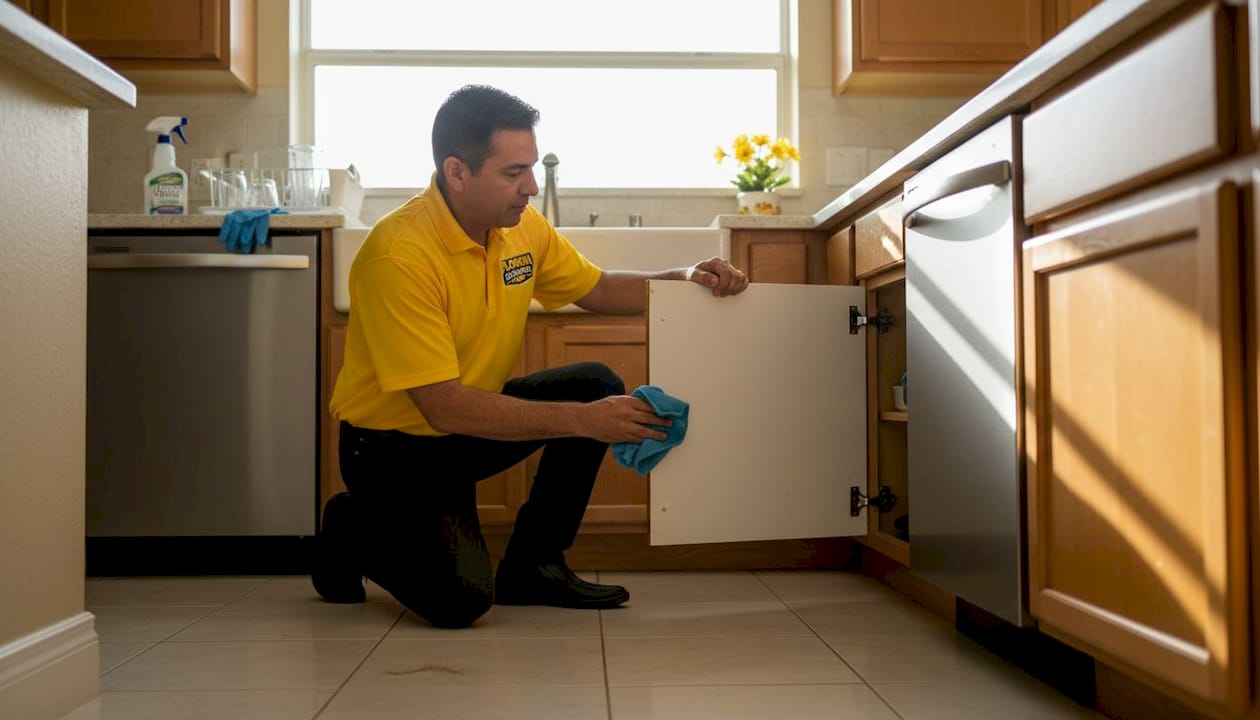
Clean inside all cabinets and drawers. Remove everything, wipe the interior with your all-purpose cleaner, and let it dry before replacing items. In Tampa Bay kitchens, pay close attention to under-sink areas where humidity encourages mold.
-
Pull out and clean behind appliances. Refrigerators and stoves accumulate dust, grease, and food debris on the floor and walls behind them. This is one of the most skipped areas in any pre-listing cleaning process and one of the first places an experienced buyer’s agent will check.
-
Deep clean kitchen surfaces. Degrease range hoods, burner grates, and the inside of the oven. Wipe down all cabinet fronts with an appropriate cleaner for the material.
-
Address bathrooms thoroughly. Scrub grout with a stiff brush and an appropriate cleaner. Descale showerheads by soaking them in white vinegar. Check caulking for mold or deterioration and replace if needed. Disinfect all surfaces after cleaning.
-
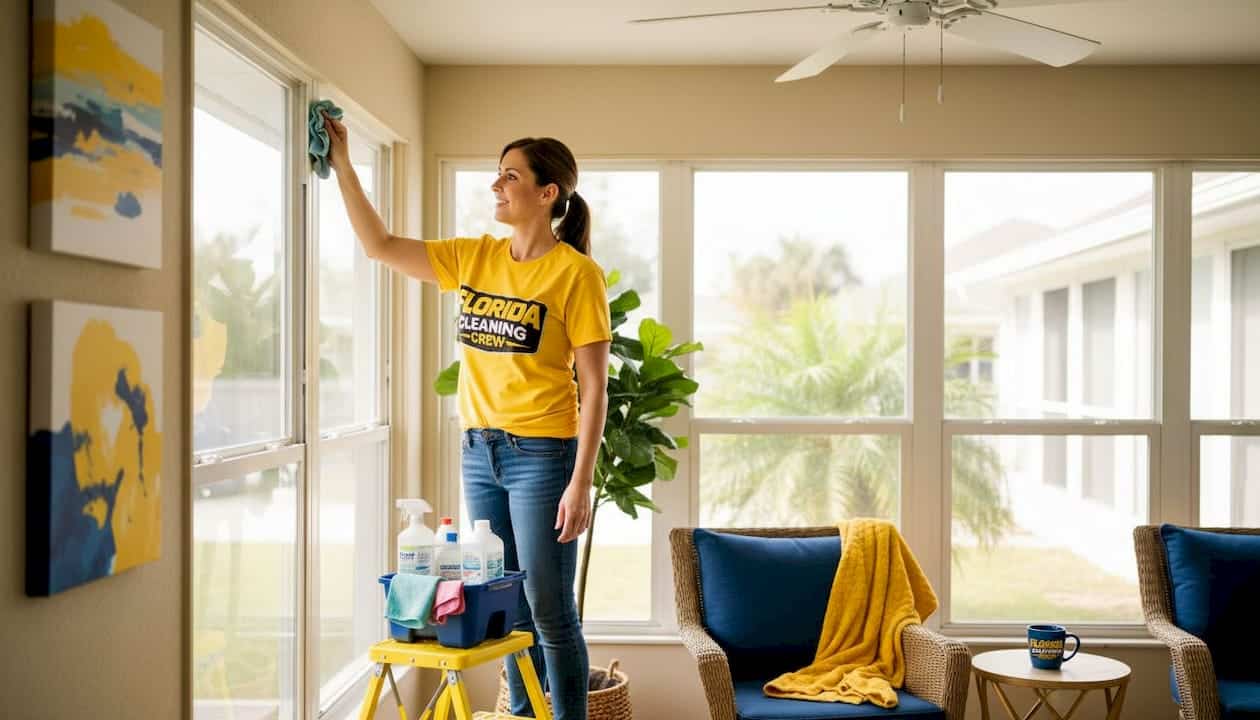
Clean windows, tracks, and sills. Tampa’s humidity means window tracks collect a surprising amount of debris and mold. Use a detail brush and vacuum to clear tracks before wiping.
-
Steam-clean carpets and upholstery. High humidity in Florida accelerates odor development in fabric. Steam cleaning kills dust mites and bacteria while lifting stains. For listings, this step alone can significantly change how a room smells and feels to a visitor.
-
Clean baseboards, door frames, and switch plates. These are the details that signal whether a home has been genuinely maintained or just surface-cleaned for photos.
-
Vacuum and mop all hard floors. Work toward the exit so you don’t walk over what you just cleaned.
-
Final disinfection pass on high-touch surfaces. Door handles, light switches, faucet handles, remote controls, and cabinet pulls all need a proper disinfectant application with the correct dwell time.
Deep cleaning targets grime missed in turnover cleans and should be scheduled every 3 to 6 months, or more frequently in high-volume vacation rentals. If you manage several Tampa Bay short-term rentals, a vacation rental cleaning checklist Tampa Bay helps your team stay consistent across properties.
Pro Tip: For Tampa Bay homes with tile throughout (which is most of them), a steam cleaner on grout lines will do more in 20 minutes than 2 hours of hand scrubbing. The heat breaks down biological matter that cleaners alone can’t reach.
| Task | Frequency for listings | Frequency for active rentals |
|---|---|---|
| Wipe counters and visible surfaces | Before every showing | After every checkout |
| Clean inside cabinets and appliances | Every deep clean cycle | Every 3 months minimum |
| Steam-clean carpets and upholstery | Before listing, every 6 months | Every 3 months |
| Descale showerheads and fixtures | Every deep clean cycle | Every 3 months |
| Regrout or recaulk bathrooms | When needed | Inspect every 6 months |
| Clean behind and under appliances | Every deep clean cycle | Every 6 months |
If you want a detailed room-by-room breakdown with timing estimates, the deep cleaning steps guide covers each area in full.
Common mistakes and how to avoid them in deep cleaning
Understanding these common mistakes will help you avoid costly errors as you clean. Most of them come down to misunderstanding what deep cleaning actually is, or rushing through steps that require patience.
Mistake 1: Treating turnover cleaning like deep cleaning
This is the single most common error property managers make. Treating turnover cleans like deep cleans wastes time and budget, while skipping true deep cleans allows hidden buildup to degrade the property over time. Turnover cleaning is about speed and visible presentation. Deep cleaning is about structural cleanliness. They are not interchangeable, and trying to combine them on a checkout day timeline means neither gets done properly.
Understanding the difference between turnover cleaning vs deep cleaning saves you from the slow decline of a property that always looks presentable but never truly gets clean.
Mistake 2: Skipping hidden areas because “no one will see them”
Buyers and home inspectors absolutely look in cabinets, behind doors, and under sinks. Guests leave reviews mentioning smells, and that mildew smell coming from a neglected area under the bathroom vanity will generate a one-star comment faster than a broken appliance. Clean hidden areas systematically. If your checklist does not specifically name it, it probably gets skipped.
Mistake 3: Not following disinfectant dwell time
This one is a health issue, not just a cleanliness issue. Disinfectants only work if the surface stays visibly wet for the full label dwell time, typically 1 to 10 minutes. Wiping too soon reduces effectiveness by up to 90%. Most people spray and wipe immediately out of habit. In a rental property context, you are potentially leaving infectious agents on surfaces that guests will touch.
Spray your disinfectant, set a timer on your phone, and move to a different task in the same room. Come back when the timer goes off and then wipe. This one habit change makes your disinfection actually work.
Mistake 4: Using the wrong product for the surface
Acidic cleaners damage natural stone. Bleach-based products discolor grout sealers and degrade caulking over time. Ammonia-based cleaners should never be used on hardwood floors. Know what your surfaces are made of and match the product accordingly. In Tampa Bay homes with a mix of tile, luxury vinyl, quartz counters, and natural stone, this matters.
Mistake 5: Cleaning in the wrong order
If you mop before dusting, scrub counters before cleaning above them, or disinfect before removing visible soil, you undo your own work. Disinfectants are significantly less effective when applied to a surface that still has organic matter on it. Clean first, disinfect second. Always.
Pro Tip: Create a one-page laminated checklist for each room in your property and require sign-off after each deep cleaning session. Accountability structures catch errors that memory misses.
Verifying your deep clean: checks and follow-up
With your cleaning done, this verification step seals the quality and reliability of your effort. A deep clean that no one verifies is just a cleaning session with good intentions.
Use detailed checklists and photographs to define “done” for each room, ensuring no hidden areas are missed. This is especially important if you are working with a cleaning team rather than doing it yourself. Photos taken immediately after cleaning serve as documentation for disputes, proof for property owners, and a reference point for your next deep clean.
What to check in your final walkthrough
- Run your finger along baseboards and the tops of door frames. If it comes back with residue, those areas need attention.
- Open every cabinet and drawer. Check the corners for debris or moisture.
- Inspect grout lines in bathrooms and kitchens under direct light.
- Check window tracks and sills for missed debris.
- Test all faucets and showerheads for mineral buildup or reduced flow.
- Smell every room with the door closed for a few minutes. Odor hides until you’re still.
- Check under all furniture and along wall edges where vacuuming often misses.
- Verify that all disinfected high-touch surfaces had their proper dwell time applied.
Pro Tip: Walk through the property as if you are the buyer or guest seeing it for the first time. Start at the front door and move through the home in the order a visitor would. This perspective reveals things you miss when you’re in cleaning mode.
Building a maintenance calendar
Deep cleaning is not a one-time event before listing. It is a scheduled practice that protects your asset. Your cleaning checklists for Tampa Bay rentals should include dates and sign-off fields so you can track when each task was last completed.
| Verification check | How to do it | What to look for |
|---|---|---|
| Baseboard inspection | Run a white cloth along the surface | Dust, moisture, or sticky residue |
| Grout inspection | Examine under direct light or flashlight | Staining, mold, or incomplete cleaning |
| Odor check | Close room door, stand still, breathe | Musty, chemical, or stale air |
| Cabinet interior check | Open fully, inspect corners | Debris, moisture, or forgotten items |
| High-touch surface check | Inspect under light for smudges | Fingerprints or visible soil post-disinfection |
| Floor edge inspection | Check where wall meets floor | Missed debris or streaking |
Scheduling the next deep clean before you close out the current one is the most effective way to prevent gaps. Set a recurring calendar event and treat it like a property insurance payment. It is not optional, and missing it costs more than keeping it.
Why treating your Tampa Bay listing like a model home pays off long-term
Most homeowners think about deep cleaning as a pre-sale sprint. Clean it once, get it on the market, move on. That mindset costs money.
Deep cleaning and decluttering before going to market is not a single weekend task. It is a multi-week process to achieve true listing readiness. The homes that sit on the market longest in Tampa Bay are rarely the ones with the highest price points. They are the ones that smell like the previous owner, have grout that suggests years of neglect, and have cabinet interiors that tell a story buyers don’t want to buy into.
For rental managers, the stakes are even clearer. A guest who checks into a spotless property with no odors and gleaming tile leaves a five-star review almost reflexively. A guest who notices a ring around the toilet they didn’t put there leaves a review that costs you twenty future bookings. The math on deep cleaning is straightforward once you frame it as reputation protection rather than labor cost.
There is also the hidden damage argument. Grout that never gets properly cleaned develops mold that eventually penetrates the substrate. Caulking that is never replaced lets moisture into walls. Mineral buildup in showerheads reduces water pressure and eventually corrodes fixtures. A property that gets deep-cleaned on schedule is a property where these problems are caught early, before they become expensive repairs.
Eco-friendly cleaning methods matter here too. Tampa Bay has a genuinely environmentally aware culture, and buyers and guests increasingly notice whether a property smells like it was sanitized with industrial chemicals or maintained responsibly. Choosing eco-friendly cleaning benefits that come with EPA Safer Choice certified products is not just better for the local waterways. It is a signal to discerning buyers and guests that this property is managed with care.
The homes and rentals that hold their value in Tampa Bay, that attract repeat guests and strong offers, are the ones where someone is paying attention. Deep cleaning on a consistent schedule is one of the clearest expressions of that attention. It is also one of the few things a property owner controls entirely.
Trust Florida Cleaning Crew for your deep cleaning needs in Tampa Bay
Knowing the process is valuable. Not having to do it yourself is better.

Florida Cleaning Crew brings trained, licensed, and insured cleaning professionals to Tampa Bay homeowners and property managers who want the deep cleaning process done right, on schedule, and with EPA-certified, eco-friendly products that are safe for families and guests. Whether you are preparing a listing for sale, maintaining a short-term rental between seasons, or simply want your home in model-home condition, our team follows detailed room-by-room checklists and delivers results you can verify. Our reliable home cleaning services Tampa Bay are built around your timeline and property type. If you are ready to make eco friendly house cleaning part of your regular maintenance plan, request a free estimate and let us show you what a properly deep-cleaned property actually looks like.
Frequently asked questions
How often should I schedule a deep cleaning for my Tampa Bay rental?
Typically, every 3 to 6 months depending on booking frequency and property usage ensures thorough maintenance and guest satisfaction. High booking volumes may call for more frequent cycles.
What is the difference between deep cleaning and turnover cleaning?
Turnover cleaning happens after each guest stay and focuses on visible areas, while deep cleaning targets hidden grime and structural dirt every few months. Confusing the two degrades property condition over time without the owner realizing it.
Can eco-friendly cleaners be as effective for deep cleaning?
Yes, EPA Safer Choice-certified products provide powerful cleaning and sanitation without harmful chemicals, and they are suitable for most surfaces found in Tampa Bay homes.
What are common hidden areas that need focus during deep cleaning?
Focus on baseboards, grout, inside cabinets and appliances, window tracks, and behind large furniture. These are the areas most commonly missed in standard cleaning routines.
How can I ensure disinfectants work effectively during cleaning?
Follow label instructions closely and keep surfaces visibly wet for the full contact time, usually 1 to 10 minutes. Wiping too soon can reduce disinfectant effectiveness by up to 90%.