TL;DR:
- Deep cleaning targets hidden bacteria, allergens, and grime often missed by regular cleaning.
- A systematic top-to-bottom, room-by-room approach ensures thoroughness and efficiency.
- Combining DIY routines with annual professional services maintains high hygiene standards effectively.
Surfaces can look spotless after a quick wipe-down, yet harbor bacteria, allergens, and grime in every corner you did not touch. That gap between “looks clean” and “actually clean” is exactly what frustrates homeowners and costs property managers repeat bookings. A structured deep cleaning routine closes that gap by targeting the spots a regular tidy-up skips entirely. In Tampa Bay’s humid climate, mold, dust mites, and grease build up faster than in drier regions, making thorough cleaning even more critical. This guide walks you through every stage: gathering the right supplies, working the proven top-to-bottom sequence, tackling kitchens and bathrooms with precision, troubleshooting stubborn problems, and knowing when to call in a professional team for guaranteed results.
Table of Contents
- Gathering supplies and prepping your space
- The top-to-bottom, room-by-room method
- Deep cleaning steps for key areas: kitchen, bath, and living spaces
- Troubleshooting, expert tips, and common mistakes
- Our perspective: When DIY is enough, and when to call the pros
- Need extra help? Tampa Bay’s deep cleaning specialists
- Frequently asked questions
Key Takeaways
| Point | Details |
|---|---|
| Prep is everything | Declutter and gather all supplies first for a smoother cleaning process. |
| Method beats effort | A top-to-bottom, room-by-room approach ensures complete, efficient results. |
| Target key spaces | Kitchens and bathrooms impact hygiene most and deserve special attention. |
| Troubleshoot tough spots | Use expert tips and special tools for neglected or stubborn grime. |
| Know when to go pro | For large or high-turnover properties, professional cleaning brings extra value and saves time. |
Gathering supplies and prepping your space
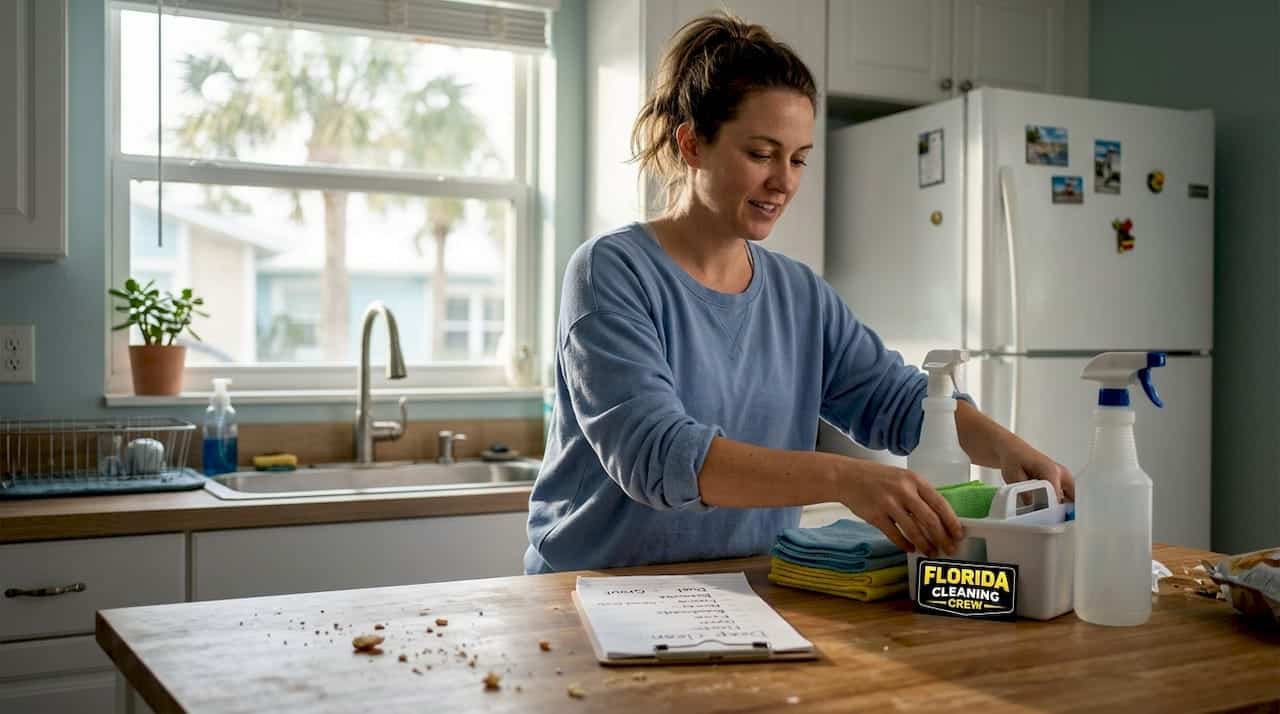
Before you spray a single surface, having the right tools assembled saves you from stopping mid-task to hunt for a scrub brush. Disorganized prep is the number one reason deep cleans take twice as long as they should. Spend 15 minutes upfront pulling everything together and you will move through each room with real momentum.
Essential supplies include microfiber cloths, all-purpose cleaners, disinfectants, scrub brushes, vacuums with HEPA filters, and eco-friendly options like vinegar and baking soda. Microfiber cloths trap particles instead of pushing them around, which matters on glass and sealed surfaces. A HEPA vacuum captures fine allergens that standard vacuums recirculate back into the air, a real advantage in Florida homes where dust mites thrive year-round.
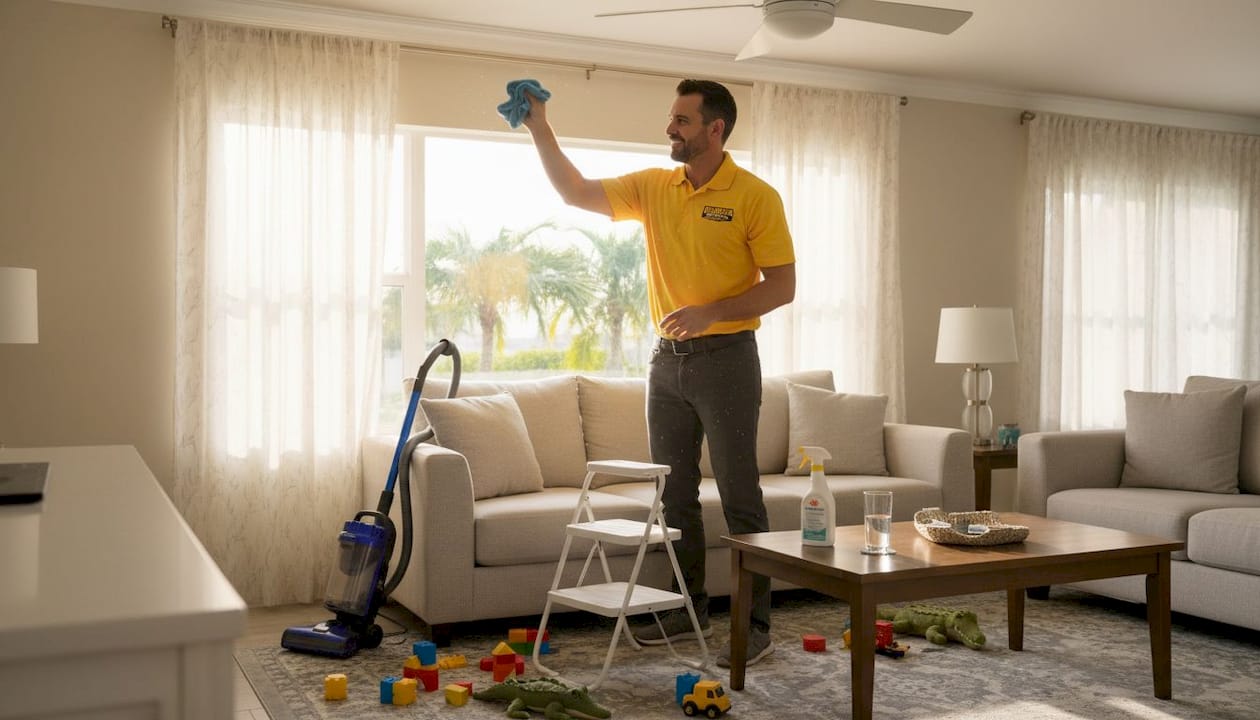
If you have pets or young children at home, choosing eco-friendly cleaning products removes the risk of chemical residue on floors and low surfaces where kids and animals spend most of their time. Plant-based cleaners have improved dramatically and now handle grease and soap scum as effectively as harsher alternatives.
Supply checklist before you start:
- Microfiber cloths (at least 10, color-coded by room)
- All-purpose cleaner and a separate disinfectant spray
- Baking soda and white vinegar for natural scrubbing
- Scrub brushes in two sizes: one for grout, one for larger surfaces
- HEPA filter vacuum with attachments
- Mop with a washable microfiber head
- Rubber gloves, trash bags, and a caddy to carry supplies room to room
| Supply | Purpose | Eco-friendly swap |
|---|---|---|
| All-purpose cleaner | General surfaces | Diluted white vinegar |
| Disinfectant spray | High-touch areas | Tea tree oil solution |
| Scrub brush | Grout and tile | Same, no swap needed |
| HEPA vacuum | Floors and upholstery | Same, no swap needed |
| Microfiber cloths | Dusting and wiping | Same, washable and reusable |
Room prep matters just as much as the supplies themselves. Remove clutter from counters and floors before you begin. Secure valuables and fragile items. Check that your vacuum is empty, your mop head is clean, and your spray bottles are filled. Referencing a thorough deep cleaning checklist before you start ensures nothing gets skipped.
For rental properties, use the pre-move cleaning checklist to confirm the unit meets tenant or guest standards before handover.
Pro Tip: Fill a cleaning caddy the night before a deep clean session. Carrying everything room to room in one trip eliminates the back-and-forth that quietly adds 30 to 45 minutes to your total cleaning time.
The top-to-bottom, room-by-room method
With supplies gathered and the space prepped, it is time to dive into the actual cleaning sequence. The order you clean in is not arbitrary. Working randomly through a home means dust and debris from higher surfaces fall onto areas you already cleaned, forcing you to redo work. A systematic approach prevents that entirely.
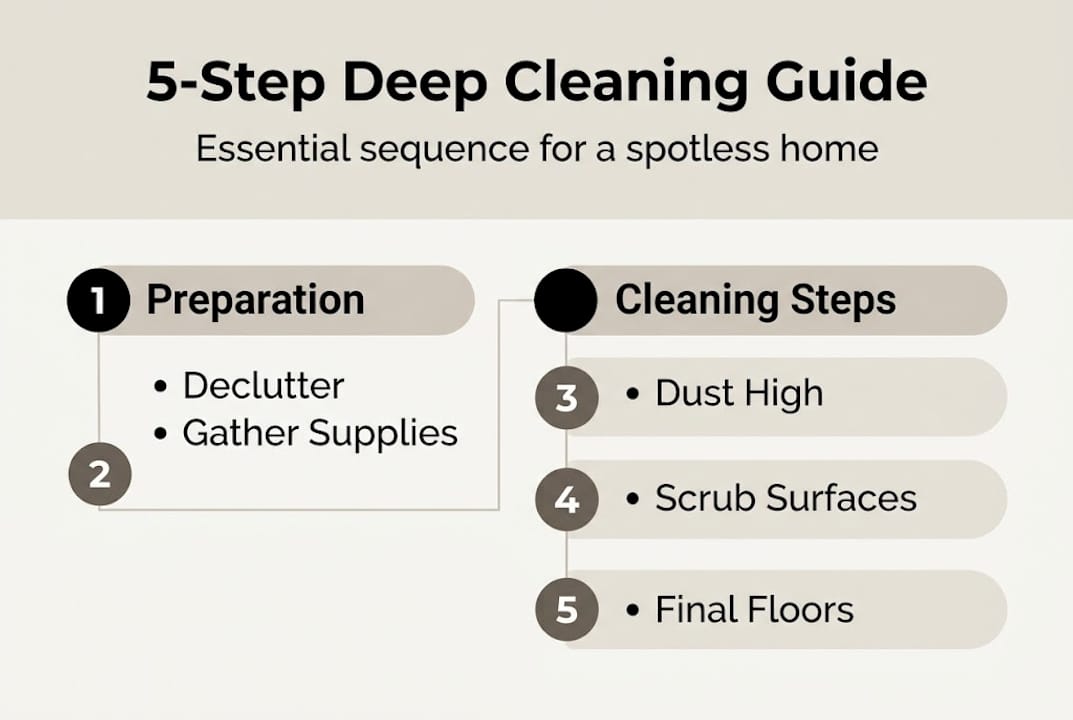
Deep cleaning should follow a top-to-bottom, room-by-room methodology: declutter first, dust ceilings, vents, and fans, clean surfaces and appliances, then finish with floors. This sequence ensures that anything falling from above gets picked up in the final floor pass, not left behind on a surface you already wiped.
Understanding deep cleaning basics helps you see why the order matters as much as the effort. Ad hoc cleaning, where you jump between tasks based on what catches your eye, consistently produces uneven results and leaves high areas untouched.
| Approach | Efficiency | Missed areas | Time to complete |
|---|---|---|---|
| Ad hoc (random) | Low | High | Longer, unpredictable |
| Top-to-bottom systematic | High | Minimal | Consistent and faster |
Step-by-step sequence for each room:
- Remove all clutter and relocate items that do not belong in the room.
- Dust ceiling corners, light fixtures, ceiling fans, and air vents using an extendable duster.
- Wipe down walls, door frames, and switch plates with a damp microfiber cloth.
- Clean windows, mirrors, and glass surfaces from top to bottom.
- Scrub and disinfect all surfaces: counters, shelves, and furniture tops.
- Clean appliances, fixtures, and built-in features specific to the room.
- Vacuum upholstered furniture, rugs, and baseboards.
- Mop or vacuum the floor as the final step.
For a move-in deep clean, run through this sequence in every room before a tenant or guest arrives. Skipping even one step in the order breaks the system and typically results in a floor you need to clean twice.
Pro Tip: Apply your cleaning solution to tough surfaces like stovetops and grout before you start dusting the rest of the room. By the time you work your way down to those surfaces, the product has had 10 to 15 minutes to break down grease and buildup, cutting your scrubbing effort in half.
Deep cleaning steps for key areas: kitchen, bath, and living spaces
Now let’s break down each room, with specifics for kitchens, bathrooms, and living areas. These spaces carry the heaviest hygiene load and are where shortcuts show up most clearly, especially in rental properties where guests notice everything.
Kitchens and bathrooms are where deep germ buildup concentrates most heavily, making them the right starting point in any serious cleaning session. Grease and food residue in kitchens create ideal conditions for bacteria. Moisture and soap scum in bathrooms breed mold and mildew, both of which are accelerated by Tampa Bay’s humidity.
“A deep clean is not just about appearance. It is about removing the invisible layer of bacteria, allergens, and residue that builds up in the spaces we use most.”
Kitchen deep clean steps:
- Degrease the range hood filter and wipe down the exterior of all cabinets.
- Clean inside the oven using a baking soda paste left overnight, then wipe clean.
- Wipe the inside of the microwave with a steam method: heat a bowl of water and vinegar for 3 minutes, then wipe.
- Empty and sanitize the refrigerator, including door seals and the drip tray.
- Scrub the sink and faucet, paying attention to the base where grime collects.
- Mop under the refrigerator and stove, areas missed in routine cleaning.
Bathroom deep clean steps:
- Apply toilet bowl cleaner first and let it sit while you clean other surfaces.
- Scrub tile grout with a stiff brush and a baking soda paste.
- Clean the exhaust fan cover by removing it and washing it in warm soapy water.
- Wipe behind the toilet, including the base and the wall behind it.
- Clean mirrors, then polish faucets and fixtures to remove water spots.
For scheduling regular bathroom deep cleaning, building it into a quarterly calendar prevents the kind of buildup that requires hours of extra scrubbing.
Bedroom and living area tasks:
- Wash curtains and any removable fabric covers.
- Vacuum under beds, sofas, and all upholstered furniture.
- Dust baseboards, light fixtures, and ceiling fan blades.
- Clean window tracks with a small brush or old toothbrush.
- Wipe down all door handles and light switches with disinfectant.
For vacation rental owners, the rental property cleaning checklist provides a room-by-room breakdown built specifically for guest turnover. The room-by-room checklist from Martha Stewart also serves as a reliable cross-reference for thoroughness.
Troubleshooting, expert tips, and common mistakes
Even with a good routine, deep cleaning presents stubborn challenges and potential pitfalls. Knowing how to handle them separates a truly clean property from one that just looks clean on the surface.
The most common mistake is skipping the prep phase. Jumping straight into scrubbing without decluttering or dusting high surfaces first means you are constantly working against yourself. The second most common mistake is using the wrong product on the wrong surface, which can damage finishes, leave streaks, or simply fail to disinfect.
Mistakes to avoid during a deep clean:
- Spraying cleaner and immediately wiping it off before it has time to work.
- Using abrasive scrubbers on stainless steel or sealed stone, which cause permanent scratches.
- Mixing bleach and ammonia-based cleaners, which creates toxic fumes.
- Neglecting to rinse surfaces after using strong disinfectants, leaving chemical residue.
- Rushing through baseboards, window tracks, and vents because they seem minor.
For neglected spots like vents, window tracks, and behind toilets, a small detailing brush or a repurposed toothbrush reaches into tight spaces that standard cloths cannot. These areas accumulate years of dust and grime that affect air quality and guest impressions alike.
“The spots guests notice most are the ones cleaners skip most often: baseboards, exhaust fans, and the edges of tile grout.”
When standard tools are not enough, specialized equipment makes a real difference. A steam cleaner penetrates grout lines and kills mold spores without chemical residue, which is ideal for Tampa Bay bathrooms where moisture is constant. HEPA vacuums with upholstery attachments pull allergens from mattresses and sofas that regular vacuums leave behind.
When to bring in professional help:
- The property has not had a deep clean in over six months.
- You are managing multiple rental units with back-to-back turnover.
- Mold or heavy grout staining is present in bathrooms.
- The scope of the clean exceeds what one person can complete in a day.
Understanding the benefits of hiring pros goes beyond convenience. Professional teams bring equipment and technique that consistently catch what solo cleaning misses. Knowing deep cleaning frequency for your specific property type also helps you plan ahead rather than react to visible buildup.
For expert troubleshooting tips on tackling the toughest spots, The Spruce offers a practical room-by-room breakdown that complements this guide well.
Pro Tip: Always high-dust first, meaning ceilings, fans, and vents before anything else. Every particle that falls gets captured in your floor pass at the end. Skipping this step means vacuuming twice, which adds significant time to every session.
Our perspective: When DIY is enough, and when to call the pros
With all the steps and troubleshooting covered, it is worth considering what actually works best in the field. We have seen both approaches up close, and the honest answer is more nuanced than most cleaning guides admit.
A motivated homeowner with a full day, the right supplies, and this guide can absolutely achieve results that rival a professional clean for a single-family home. The process works. The issue is not knowledge. It is energy, time, and the diminishing attention to detail that sets in after hour three of scrubbing.
For property managers handling multiple units, that fatigue factor becomes a real liability. Professionals use specialized equipment like steam cleaners and extendable dusters for better results and time savings, which is especially valuable when managing several units with tight turnaround windows. A missed exhaust fan or a grout line that did not get scrubbed can mean a negative review that costs far more than the cleaning fee.
The other factor people underestimate is consistency. A professional team follows a fixed checklist every single time, without the variability that comes from doing it yourself on a busy weekend. That consistency is what keeps rental ratings high and tenant satisfaction steady.
Our honest recommendation: use this guide for your regular quarterly deep cleans, and bring in professional cleaning for seasonal resets, post-tenant turnovers, or any time the property needs to be guest-ready within a tight window. The combination approach gives you control over routine maintenance while ensuring the high-stakes cleans are handled with the right tools and experience.
Pro Tip: Schedule one professional deep clean per year as your baseline reset, then maintain with structured DIY sessions in between. This hybrid approach consistently outperforms either method used alone.
Need extra help? Tampa Bay’s deep cleaning specialists
If managing it all yourself feels overwhelming or you simply want a guaranteed result, professional services are available right here in Tampa Bay. At Florida Coastal Cleaning, we handle everything covered in this guide and more, so you do not have to spend your weekend on your hands and knees scrubbing grout.

Our residential cleaning services are built for Tampa Bay homeowners who want a thorough, reliable clean without the guesswork. Whether you need a one-time deep clean before a move, a seasonal reset, or ongoing maintenance, our licensed and insured team shows up with the right equipment and a proven checklist every time. We also specialize in vacation rental turnovers, and our vacation rental cleaning checklist is designed to get your property guest-ready fast. Browse our full cleaning service menu and request a free estimate today.
Frequently asked questions
How often should deep cleaning be done in a home?
Most homes benefit from deep cleaning every 3 to 6 months, while rentals or homes with pets and children may require more frequent service.
What supplies do I need for a proper deep clean?
Essential supplies are microfiber cloths, an all-purpose cleaner, disinfectant, scrub brushes, a HEPA filter vacuum, and eco-friendly options like baking soda and white vinegar.
What areas of the home are most commonly missed during deep cleaning?
Ceiling fans, exhaust vents, window tracks, under furniture, and behind toilets are most often overlooked, even during otherwise thorough cleaning sessions.
Is steam cleaning effective for grout and mold?
Yes, steam cleaning is highly effective for tough grout and mold, particularly in bathrooms and tile areas where chemical cleaners alone often fall short.