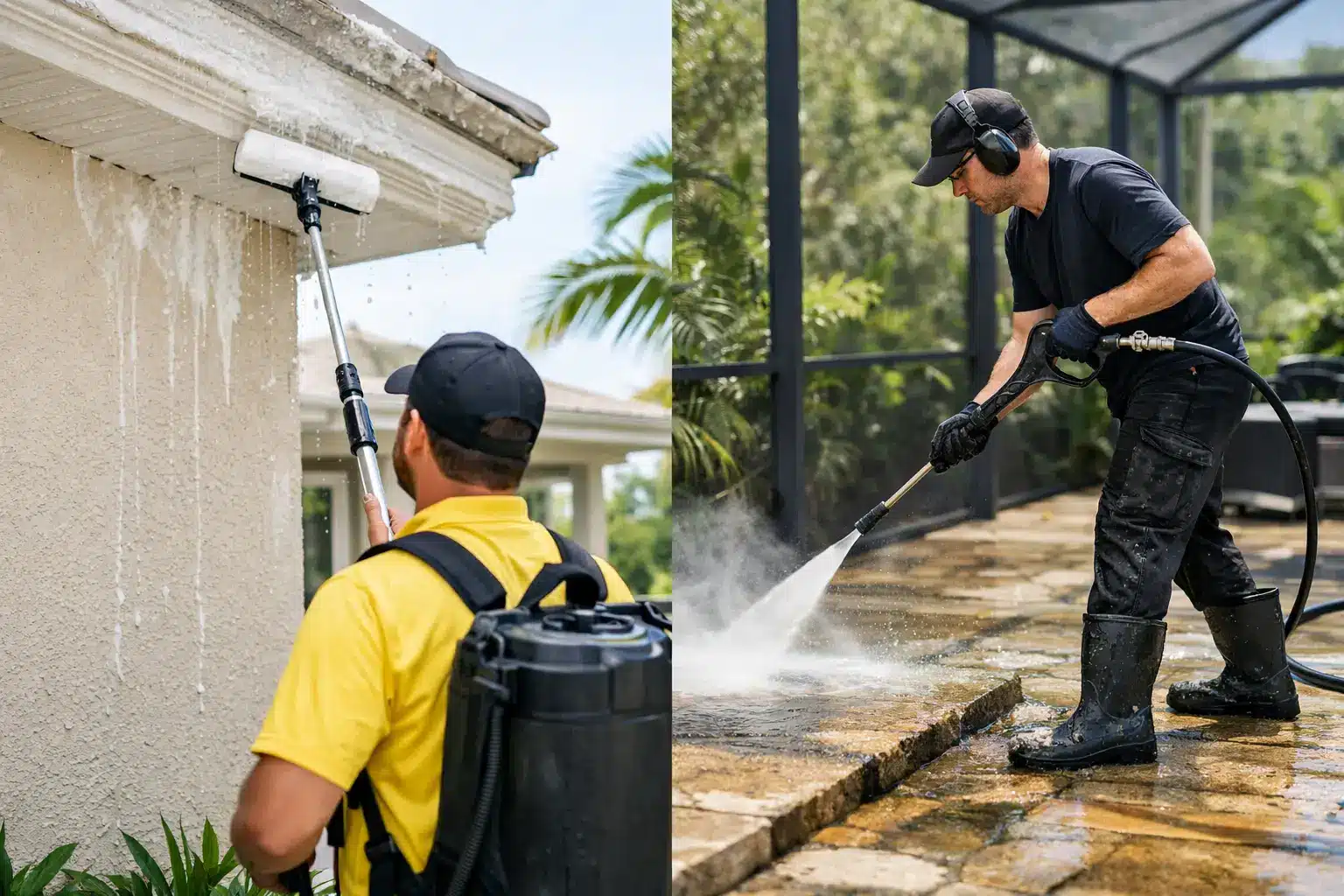
If your siding is streaked green, your roof has dark algae lines, or your driveway looks years older than it should, the real question is not whether to clean it. It is whether soft washing vs pressure washing is the right method for the surface you need cleaned.
That choice matters more than most property owners realize. The wrong method can leave organic growth behind, damage paint, force water behind siding, or wear down roofing materials. The right method removes buildup safely, improves curb appeal, and helps protect the life of the surface.
Soft washing vs pressure washing: what is the difference?
Soft washing uses low-pressure water combined with cleaning solutions designed to break down algae, mildew, mold, bacteria, and surface grime. Instead of blasting contamination off with force alone, it treats the growth at the source and then rinses it away with a much gentler stream.
Pressure washing relies on high-pressure water to remove dirt, stains, mud, and surface buildup. It is effective on durable materials that can handle force, especially hardscapes like concrete, brick, some stone, and certain commercial exterior surfaces.
The biggest difference is simple. Soft washing cleans with chemistry and low pressure. Pressure washing cleans with water force. Both have their place, but they are not interchangeable.
When soft washing is the better choice
Soft washing is usually the safer option for more delicate or finished exterior surfaces. That includes asphalt shingle roofs, painted siding, stucco, vinyl siding, screened enclosures, fences with aging stain or paint, and exterior surfaces where organic growth is the main problem.
In Florida, that comes up often. Heat, humidity, shade, and regular rain create ideal conditions for algae and mildew. If you only use pressure on those surfaces, you may remove some visible staining without fully addressing the root cause. The surface can look cleaner for a while, but the growth often returns faster because the spores were not properly treated.
Soft washing is also the preferred approach when preserving the surface matters as much as appearance. A roof is the best example. High pressure on shingles can strip protective granules, loosen materials, and shorten roof life. A soft wash removes the black streaks caused by algae while reducing the risk of damage.
For homeowners preparing to sell, hosts getting a vacation rental guest-ready, or managers trying to keep a commercial property looking cared for, soft washing often gives a more complete clean on visible exterior areas without putting those surfaces under unnecessary stress.
Best surfaces for soft washing
Soft washing is commonly the right fit for roofs, painted wood, stucco, vinyl siding, lanais, pool cages, soffits, fascia, and exterior trim. It is also useful when the issue is biological staining rather than heavy embedded grime.
That last point is important. Green film, black streaking, mold spots, and mildew are different from oil stains on concrete. The cleaning method should match the problem, not just the location.
When pressure washing makes more sense
Pressure washing is a strong option for surfaces built to take impact. Driveways, sidewalks, concrete patios, pavers in some cases, loading areas, dumpster pads, retaining walls, and certain commercial exteriors can respond well to higher pressure when handled correctly.
This is where force is useful. Concrete holds dirt in pores. Walkways collect mud, tire marks, and general traffic buildup. On these hard surfaces, pressure can strip away layers of grime quickly and restore a cleaner appearance.
That does not mean more pressure is always better. Even on durable surfaces, too much force can etch concrete, leave visible wand marks, disturb joint sand in pavers, splinter wood, or damage mortar lines. Professional cleaning is not just about equipment power. It is about using the right nozzles, the right distance, and the right level of pressure for the material.
Best surfaces for pressure washing
Pressure washing is usually best for concrete driveways, sidewalks, masonry, brick, some stone, parking areas, and other hard exterior surfaces where deep surface grime is the main concern.
For business owners, this can be especially useful in high-traffic areas where appearance affects customer perception. A clean entry walkway or storefront pad can make the property look maintained before anyone even opens the door.
Soft washing vs pressure washing for common property surfaces
Some decisions are straightforward, and some depend on condition, age, and material.
Roofs should almost always be soft washed. Pressure can damage shingles and create bigger problems than the stains you started with.
Siding depends on material and condition. Vinyl, painted siding, and stucco are generally better candidates for soft washing. Older siding or areas with cracks, loose panels, or aging seals need extra caution because pressure can drive water where it does not belong.
Concrete driveways and sidewalks are usually pressure washed. If there is mold or algae present, a cleaning solution may still be part of the process, but the surface itself can handle more force.
Wood decks and fences are more nuanced. Pressure washing can be effective, but wood is easy to scar if the pressure is too high or the operator gets too close. In many cases, a lower-pressure approach with the proper cleaner is safer and gives a better finish, especially on older wood.
Pavers can go either way. Pressure washing may clean the surface well, but it can also remove joint sand if done aggressively. That is one of those it-depends surfaces where method, pressure level, and aftercare all matter.
What property owners often get wrong
A common mistake is assuming visible force equals a better clean. It is easy to watch dirt fly off a surface and think pressure is always the more effective option. But a surface can look cleaner while still carrying live organic growth that comes back quickly.
Another mistake is using consumer equipment on sensitive materials. Rental machines and big-box pressure washers can do real damage when used on roofs, painted exteriors, and soft woods. Water intrusion is another risk. Once water gets behind siding or into vulnerable areas around trim and seals, the cleanup problem can turn into a repair problem.
The third issue is treating every stain the same way. Rust, algae, grease, mildew, dirt, and oxidation do not respond to the same process. A good exterior cleaning plan starts with identifying what is actually on the surface.
Which method lasts longer?
If organic growth is the main issue, soft washing often delivers longer-lasting results because it targets the organisms causing the staining. Pressure washing may remove the visible layer, but if the spores remain, regrowth can happen sooner.
If the issue is surface dirt on concrete or hardscape, pressure washing may be the more practical and durable solution. Longevity depends on the material, the surrounding environment, drainage, shade, tree cover, and how much traffic the area gets.
In humid coastal areas like Tampa Bay, no exterior cleaning is permanent. Algae and mildew have ideal growing conditions for much of the year. What matters is using a method that cleans thoroughly without shortening the life of the material you are trying to protect.
Cost should not be the only factor
Property owners often compare methods by price first, but the better question is value. A lower-cost cleaning that damages siding, strips roof granules, or leaves growth behind is not a savings.
The right service should match the surface, the condition, and the result you want. For a homeowner, that may mean soft washing the house and pressure washing the driveway in the same visit. For a property manager, it may mean scheduling different methods for building exteriors, entryways, and shared walk paths. For an Airbnb host, it may mean focusing on the surfaces guests notice first, then building a maintenance schedule around weather and occupancy.
That is one reason full-service providers are often the better fit. They can assess the property as a whole instead of pushing one method for every job.
How to choose the right cleaning method
Start with the surface. If it is delicate, painted, sealed, or part of the roofing system, soft washing is usually the safer choice. If it is a hard, durable surface like concrete, pressure washing may be appropriate.
Then look at the stain itself. Organic growth points toward soft washing. Embedded dirt, mud, and surface grime on hardscape usually point toward pressure washing.
Finally, consider condition and age. Older materials, loose finishes, damaged caulking, and weathered surfaces require a more careful approach. A dependable contractor will not just show up with one machine and use the same process everywhere. They should explain what they are cleaning, why they are using that method, and what kind of result you can reasonably expect.
Florida Cleaning Crew handles both soft washing and pressure washing because different properties need different solutions. The goal is simple: clean the surface properly, protect the material, and get the job done right the first time.
If you are looking at stains, streaks, algae, or years of buildup on your property, the best next step is not guessing which machine to rent. It is figuring out what your surface can safely handle so the clean you pay for actually lasts.