
TL;DR:
- Tampa Bay’s high humidity accelerates mold, pests, and damage, requiring more frequent cleaning.
- Routine cleaning should be weekly, with deep cleaning quarterly to prevent costly issues.
- Customizing schedules based on occupancy, pets, and property conditions ensures better maintenance results.
Most Tampa Bay homeowners and property managers borrow cleaning schedules from national home improvement blogs written for people living in dry, temperate climates. That’s a mistake that costs real money. Tampa’s humidity averages above 74% year-round, which means mold, allergens, and pests move faster here than in Chicago or Denver. A seasonal deep clean that works fine in Minnesota can leave a Tampa rental with mildew in the grout, roaches behind the fridge, and a one-star review by Tuesday. This guide cuts through the generic advice and gives you a practical, Tampa-specific framework for deciding how often to clean, what to prioritize, and how to stop wasting time or money on the wrong schedule.
Table of Contents
- Why cleaning frequency matters in Tampa Bay
- Standard cleaning tasks and schedules for Tampa homes and rentals
- How to customize cleaning frequency: Decision factors for optimal results
- Common mistakes and expert tips for maintaining the right cleaning schedule
- The uncomfortable truth: There’s no perfect one-size-fits-all schedule
- Better cleaning results with Tampa’s local experts
- Frequently asked questions
Key Takeaways
| Point | Details |
|---|---|
| Tampa needs more frequent cleaning | Florida’s climate demands quarterly deep cleaning and more routine maintenance than the national average. |
| Customize schedules for best results | Tailored cleaning plans based on occupancy and property type improve ROI and reduce long-term costs. |
| Mistakes cost time and money | Ignoring local needs or skipping proper reviews often leads to bigger maintenance or rental losses. |
| Expert help simplifies the process | Professional services can optimize cleaning frequency and deliver consistent, hassle-free results. |
Why cleaning frequency matters in Tampa Bay
Tampa Bay’s climate is genuinely different from most of the country, and that difference has direct consequences for how you maintain a home or rental property. The combination of heat, humidity, and heavy rainfall creates conditions where mold spores can colonize a bathroom in days, not weeks. Dust mites thrive in humid air. Cockroaches and ants find moisture-rich environments irresistible. What this means practically is that a cleaning routine designed for a four-season climate will fall short here, sometimes dangerously so.
National sources like Martha Stewart’s cleaning checklists suggest seasonal or annual deep cleans as a reasonable baseline for most homes. For Tampa Bay, that frequency is simply not enough. Florida’s climate demands more attention, more often, especially in high-traffic areas like kitchens and bathrooms where moisture builds quickly.
“In Florida’s climate, what would be a once-a-year problem in a temperate region can become a monthly issue if left unchecked.”
For property managers, the financial stakes are especially clear. Turnover deep cleaning runs $300 to $600 per unit in Florida, as part of a total turnover cost that can reach $2,500 to $5,000. Routine maintenance budgets should also include monthly pest and moisture checks, plus quarterly HVAC and vent cleaning. Skipping these tasks doesn’t save money. It delays and multiplies costs.
Here’s what under-cleaning actually risks in Tampa Bay:
- Mold and mildew growth that requires professional remediation, not just a wipe-down
- Pest infestations that spread between units in multi-family properties
- HVAC damage from clogged filters and dirty vents running in constant heat
- Lost security deposits or tenant disputes over property condition
- Negative rental reviews that reduce occupancy rates and income
On the other side, over-cleaning is a real problem too. Some property managers schedule professional cleaners after every single guest stay, regardless of length, which drives up costs without proportional benefit. A two-night guest in a well-maintained unit rarely needs the same level of attention as a month-long tenant moving out.
Understanding deep cleaning frequency as a separate layer from routine maintenance is the first step toward a smarter schedule. Routine cleaning handles surface-level upkeep. Deep cleaning addresses the buildup that routine work misses. Both are necessary, but they serve different purposes and should happen on different timelines.
Standard cleaning tasks and schedules for Tampa homes and rentals
With climate and occupancy as key drivers, knowing the what and when of each task becomes essential. Not all cleaning tasks carry equal weight in Tampa Bay. Some need weekly attention. Others can wait a month. A few require quarterly focus regardless of how clean the property looks on the surface.
Here’s a breakdown of the highest-priority areas and their recommended frequencies:
| Task | Routine frequency | Deep clean frequency |
|---|---|---|
| Kitchen surfaces and appliances | Weekly | Monthly |
| Bathroom scrubbing and grout | Weekly | Quarterly |
| HVAC filter replacement | Monthly | Quarterly inspection |
| Floor mopping and vacuuming | Weekly | Monthly |
| Pest control check | Monthly | Quarterly treatment |
| Window tracks and sills | Monthly | Quarterly |
| Baseboards and vents | Monthly | Quarterly |
For property managers specifically, the turnover cleaning checklist becomes the core operational document between tenants. A solid turnover process protects your investment and your reviews. Here’s a practical step-by-step sequence:
- Remove all trash and leftover items from the previous tenant
- Degrease the kitchen, including inside the oven, microwave, and refrigerator
- Scrub bathroom tile, grout, and fixtures thoroughly
- Clean and sanitize all high-touch surfaces: doorknobs, light switches, remotes
- Vacuum and mop all floors, including under furniture
- Wipe down baseboards, window sills, and ceiling fans
- Check vents and replace HVAC filters if needed
- Inspect for any signs of pest activity or moisture damage
For homeowners, the move-in cleaning checklist follows a similar logic. Starting fresh in a new home means addressing areas the previous occupants may have ignored for months.
According to ISSA residential cleaning guidance, supplementing lower-frequency routine cleaning with quarterly deep cleans delivers better return on investment than relying on high-frequency light cleaning alone. The reason is simple: light cleaning maintains appearance, but deep cleaning addresses the underlying buildup that causes long-term damage. Understanding what deep cleaning actually involves helps you allocate your budget more effectively.
For a $400,000 rental home in Tampa, a reasonable monthly maintenance budget is around $450, which includes approximately $150 for routine cleaning and pest control combined. That number shifts based on occupancy and property age, but it’s a useful starting point.
Pro Tip: Group similar tasks together by zone rather than by type. Clean the entire bathroom in one session instead of wiping counters one day and scrubbing the tub another. Zoned cleaning reduces the total time spent and makes it easier to spot areas you’ve missed.
How to customize cleaning frequency: Decision factors for optimal results
Once you’ve got the basics, the smartest property managers and homeowners tweak their approach based on real life. A rigid schedule applied without context is almost as ineffective as no schedule at all. The goal is a living system that responds to actual conditions.
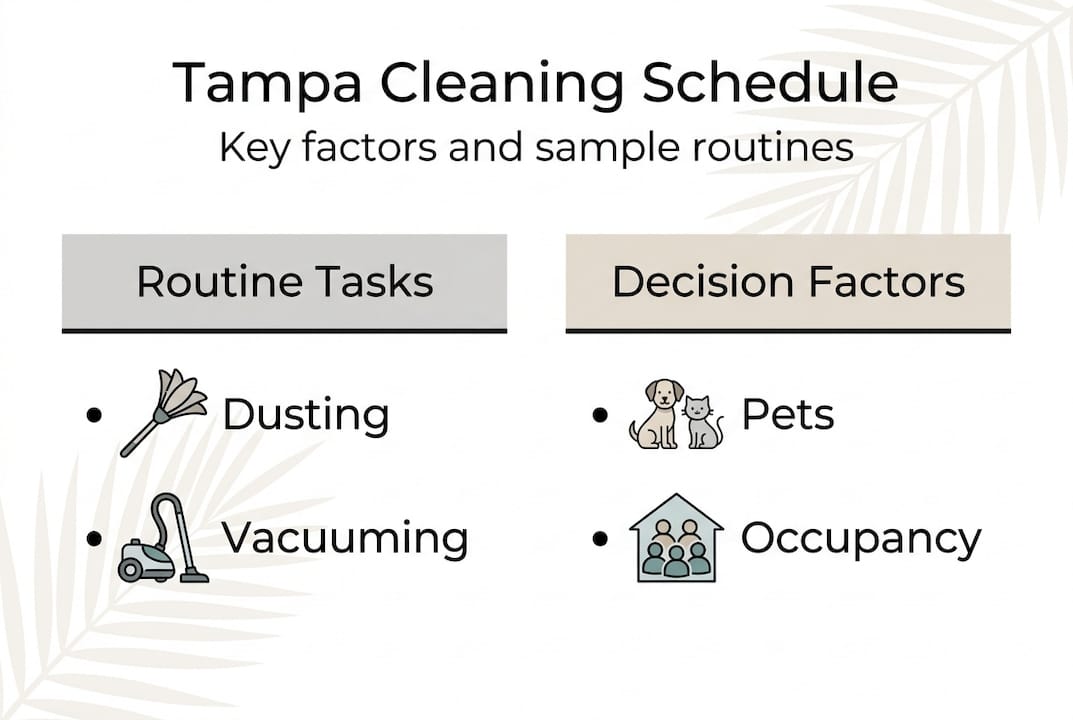
The core variables that should shape your cleaning frequency include:
- Occupancy rate: Higher turnover means more frequent deep cleaning between stays
- Pets: Pet dander, fur, and odors require more frequent floor and upholstery attention
- Children: Sticky surfaces, spills, and high-touch areas need more frequent sanitizing
- Proximity to water: Homes near Tampa Bay or with pools face more humidity and salt air exposure
- HVAC age and condition: Older systems need more frequent filter changes and vent cleaning
- Property age: Older homes have more porous surfaces that trap moisture and allergens
Here’s a comparison table that shows how schedules shift based on property type and usage:
| Property type | Routine cleaning | Deep cleaning | Pest check |
|---|---|---|---|
| Owner-occupied home, no pets | Biweekly | Twice per year | Quarterly |
| Owner-occupied home, pets or kids | Weekly | Quarterly | Monthly |
| Long-term rental, low turnover | Biweekly | Quarterly | Monthly |
| Short-term vacation rental | After every stay | Monthly | Monthly |
| Vacant property | Monthly | Before listing | Before listing |
For vacation rental properties, the schedule is almost entirely driven by booking frequency. A property booked 20 nights per month needs a fundamentally different approach than one rented for a single extended stay.
ISSA’s residential cleaning research reinforces this point: there is no single correct cleaning frequency for residential properties. The right answer depends on occupancy, exposure, and the specific conditions of each property. The most effective approach uses decision variables to adjust the baseline schedule rather than applying a fixed national standard.
Signs that your current schedule needs adjustment include rising HVAC repair costs, recurring pest sightings, tenant complaints about odors, or visible mold in bathrooms between cleanings. Any of these signals means your routine isn’t keeping pace with the property’s actual needs. Increasing deep cleaning frequency or adding targeted treatments is almost always more cost-effective than waiting for a larger problem to develop.
Common mistakes and expert tips for maintaining the right cleaning schedule
After dialing in your frequency, it pays to learn from the mistakes and best practices of seasoned pros. Even well-intentioned homeowners and experienced property managers fall into patterns that undermine their cleaning investment.
The most common mistake is treating the cleaning schedule as a calendar obligation rather than a condition-based system. Checking off tasks on a fixed date feels productive, but it ignores what’s actually happening in the property. A bathroom that gets heavy use needs attention sooner than the calendar says. A guest bedroom that sat empty for three weeks doesn’t need the same deep scrub as one that hosted a family of five.
“The best cleaning schedule is the one you actually review and adjust, not the one you set once and forget.”
Here are the tasks most commonly skipped, even by otherwise diligent owners:
- Air vents and returns: Dust and mold accumulate fast in Tampa’s humid air
- Baseboards: Ignored for months, they become a visible sign of neglect during inspections
- Behind and under appliances: Pest activity often starts in these hidden zones
- Window tracks: Moisture collects here and creates mold without any visible warning
- Grout lines: Discoloration signals deeper moisture issues that routine cleaning won’t fix
ISSA’s guidance on cleaning labor focuses on efficiency and optimization rather than prescribing fixed residential frequencies. That’s a useful reminder: the goal is results, not ritual.
For property managers, linking your cleaning review to tenant turnover is one of the highest-ROI habits you can build. Every time a tenant moves out, treat it as an audit of your maintenance system. What did the cleaning crew find? What needed extra attention? Use that information to adjust your routine schedule for the next occupancy.
Pro Tip: After every professional cleaning, do a five-minute walkthrough with a checklist that includes vents, baseboards, and under-sink areas. This takes almost no time and catches the issues that become expensive if left alone.
For detailed guidance on what to expect at the end of a tenancy, reviewing move-out cleaning expectations helps you set clear standards for both tenants and cleaning crews. And if you’re budgeting for professional help, getting accurate cleaning cost estimates upfront prevents surprises.
Auditing your current schedule is straightforward. List every cleaning task you currently do and how often. Then compare that list to your actual property conditions and any recurring problems. Gaps between those two things are where your money is leaking.
The uncomfortable truth: There’s no perfect one-size-fits-all schedule
After covering the data, the frameworks, and the common mistakes, here’s the perspective that most cleaning guides skip entirely: no published schedule will ever be exactly right for your property. Not ours. Not Martha Stewart’s. Not the one your property management software generates automatically.
Cleaning schedules are tools. Like any tool, their value depends entirely on how thoughtfully you use them. A homeowner who reviews their routine every quarter and adjusts based on what they find will always outperform someone rigidly following a national chart, regardless of which chart they chose.
The ROI from cleaning comes from consistent attention and willingness to adapt, not from following instructions perfectly. Tampa Bay’s climate means the stakes for getting this wrong are higher than in most parts of the country. Mold doesn’t wait for your quarterly deep clean. Pests don’t respect your biweekly schedule. The properties that stay in great shape long-term are the ones where the owner treats cleaning as an ongoing investment decision, not a chore to check off.
Understanding why deep cleans matter beyond surface appearance is what separates reactive maintenance from proactive property management. The difference in long-term costs is significant. The difference in tenant satisfaction and property value is even more so. Start with a solid baseline, review it regularly, and trust what you observe over what any generic schedule tells you.
Better cleaning results with Tampa’s local experts
Putting together the right cleaning schedule is one thing. Executing it consistently, especially across multiple properties or during high-turnover periods, is where most owners run into trouble.

At Florida Cleaning Company, we work with Tampa Bay homeowners and property managers who need reliable, flexible cleaning solutions built around their actual schedules and property conditions. Whether you need residential cleaning services on a recurring schedule, a one-time deep clean before a new tenant moves in, or specialized vacation rental cleaning between every booking, we customize our approach to match your property’s real needs. Explore the full range of Tampa cleaning solutions we offer, and get a free quote to see how professional cleaning fits into your maintenance budget without guesswork.
Frequently asked questions
What is the best cleaning frequency for a Tampa Bay rental property?
A Tampa rental typically needs routine cleaning every one to two weeks, with deep cleaning at least quarterly to address the humidity and occupancy conditions specific to this region. Turnover costs in Florida make proactive maintenance far cheaper than reactive repairs.
How often should deep cleaning be scheduled for Tampa homes?
Most Tampa-area experts recommend quarterly deep cleans, which is more frequent than the seasonal or annual schedule that national sources suggest for temperate climates. Florida’s heat and humidity accelerate buildup significantly.
How does the cost of frequent cleaning compare to occasional deep cleans?
Quarterly deep cleaning paired with lighter routine maintenance delivers better long-term results than high-frequency light cleaning alone, according to ISSA residential research. The combination protects surfaces and catches problems before they become costly.
What are the risks of following a one-size-fits-all cleaning schedule?
Standardized plans routinely miss Tampa-specific problem areas like vents, grout, and pest entry points, leading to either wasted spending or overlooked damage. Local adjustments based on occupancy and climate conditions consistently outperform generic national schedules.
Recommended
- Recurring Cleaning Service: Benefits For Tampa Bay Homes
- How Often Should House Be Deep Cleaned? ✨ Florida Cleaning Crew
- What is turnover cleaning? Guide for Tampa Bay rentals
- What Does A Cleaning Estimate Include? Tampa Bay Guide
- How Often Should You Service Your AC in Florida? The Ultimate Guide for Tampa Bay Homeowners | Home Therapist
- Gutter Cleaning Frequency – Protecting Florida Homes