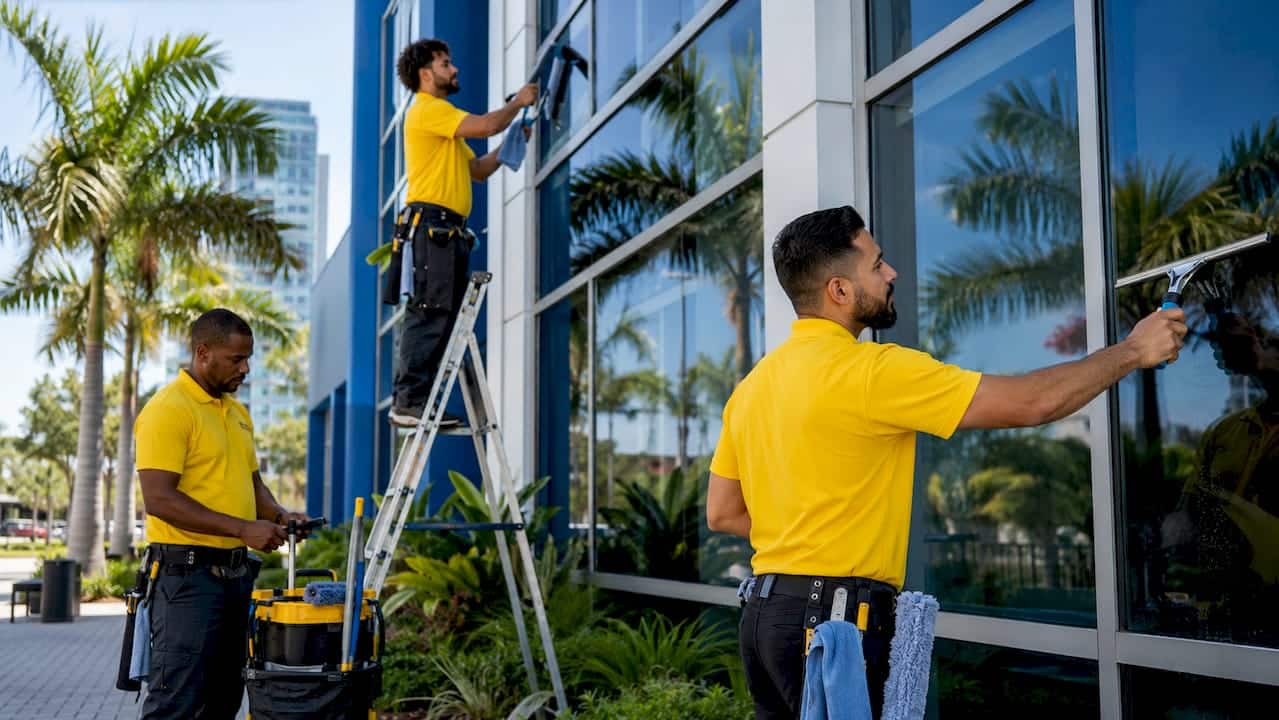
Scheduling window cleaning for offices is one of the most overlooked decisions in facility management, yet it directly affects client perception, employee performance, and long-term property value. Clean windows are not a cosmetic luxury. They are a measurable business asset. 73% of customers judge business professionalism by exterior cleanliness, and retail foot traffic increases up to 28% when storefronts are well maintained. That number tells you exactly what dirty windows cost you before a single conversation happens. Office managers who treat window cleaning as a scheduled maintenance task, not a reactive chore, protect their brand and their building at the same time.
What are the main benefits of regular office window cleaning?
Clean office windows produce three measurable outcomes: stronger client impressions, better employee performance, and lower long-term maintenance costs. Each one is worth understanding on its own terms.
First impressions and client trust
Clean windows signal operational excellence and reliability before a client walks through the door. A streaked or grimy facade tells visitors that details get missed inside too. For professional services firms, medical offices, and retail businesses in Tampa and St. Petersburg, that silent judgment happens every single day.
The connection between exterior cleanliness and client trust is not theoretical. A 2026 study found that consumer preferences for businesses are strongly tied to storefront presentation. Businesses that maintain clean windows consistently report stronger foot traffic and higher perceived credibility.
Employee productivity and wellness
Natural light boosts productivity by 8–12% and reduces annual sick days by 2.1 per employee. Dirty windows block and diffuse natural light, which means your team works in a dimmer, less comfortable environment without realizing why. The impact on employee wellness is real: reduced visual fatigue, better mood, and fewer headaches from screen glare in poorly lit spaces.

Natural light is one of the most under-used productivity tools in office design. Clean windows are the simplest way to maximize it without any renovation or added cost.
Protecting your glass investment
Salt spray, mineral deposits, and pollution chemically bond to glass over time, causing etching. Etching is permanent. Once it sets in, the only fix is costly restoration or full glass replacement. Regular cleaning removes these contaminants before they bond, which makes professional window cleaning a form of preventive maintenance, not just appearance management.
Pro Tip: Ask your window cleaning provider to inspect glass for early etching signs during each visit. Catching surface buildup early costs far less than replacing a panel.
Commercial windows also accumulate grime from HVAC circulation and outdoor pollution significantly faster than residential windows. A residential window might stay presentable for months. A commercial window near a busy road in Tampa can develop visible haze within weeks.
How often should office windows be cleaned?
Cleaning frequency depends on building type, location, and environmental exposure. There is no single answer, but there are clear industry standards that give office managers a reliable starting point.
Industry standards recommend exterior window cleaning every 1–6 months and interior cleaning every 2–8 months. Those ranges exist because a downtown Tampa high-rise faces very different conditions than a suburban office park in Clearwater.
| Building type | Exterior frequency | Interior frequency | Key driver |
|---|---|---|---|
| High-rise office tower | Every 6 months | Every 3–6 months | Access cost, wind exposure |
| Low-rise suburban office | Every 2–3 months | Every 2–4 months | Pollen, dust, HVAC output |
| Ground-floor retail or lobby | Every 4–6 weeks | Every 4–8 weeks | Foot traffic, fingerprints |
| Coastal or waterfront office | Every 4–6 weeks | Every 2–3 months | Salt spray, humidity |
| Urban office near highway | Every 4–8 weeks | Every 2–3 months | Exhaust, particulate buildup |
Businesses near highways, construction zones, or coastal areas need more frequent cleaning because grime and pollutants accumulate faster. A Clearwater office facing the Gulf deals with salt spray year-round. A Tampa office near I-275 collects exhaust particulates constantly. Both situations accelerate glass degradation if cleaning is skipped.
High-rise buildings present a separate challenge. Rope access or scaffolding is required for upper floors, which raises cost and limits how often cleaning is practical. Most high-rise properties settle on a semi-annual exterior schedule and supplement with interior cleaning every quarter. Ground-floor windows and lobby glass, which clients see up close, warrant much more frequent attention.
In high-traffic urban settings, commercial windows may need cleaning as often as every 3–4 weeks. That frequency sounds aggressive until you consider what dirty lobby glass communicates to every visitor who walks past it.
Seasonal timing also matters. Spring pollen season in Tampa Bay is intense. Scheduling a cleaning in late february or early march, before peak pollen hits, keeps windows clearer longer. Post-hurricane season cleanings in november address salt residue and storm debris before the busy winter business period.
What factors influence your office window cleaning schedule?
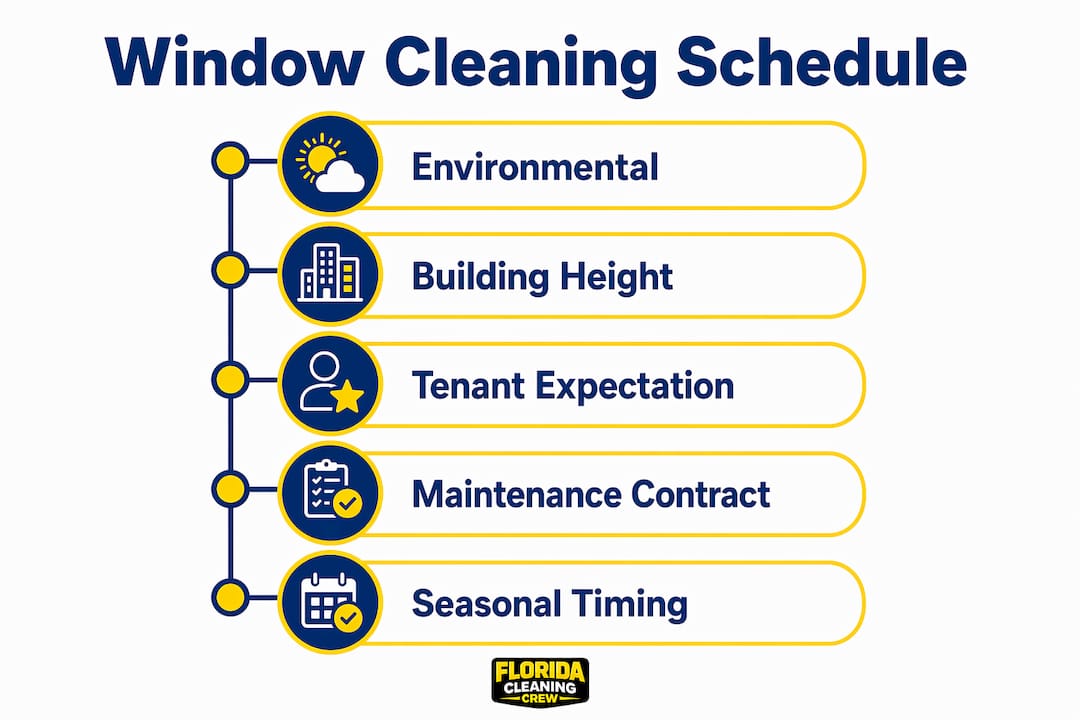
Every office building has a unique combination of environmental stressors, access constraints, and business standards that shape the right cleaning frequency. Understanding these factors helps office managers build a schedule that fits their specific situation rather than copying a generic template.
Environmental stressors
Proximity to pollution sources is the single biggest driver of cleaning frequency. Offices near industrial areas, major highways, or construction sites accumulate grime much faster than those in quieter locations. Coastal offices in St. Petersburg or Clearwater face salt spray that bonds to glass quickly and accelerates etching if left untreated.
Pollen is a seasonal factor that many office managers underestimate. Tampa Bay’s spring pollen counts are among the highest in Florida. A building surrounded by oak trees may need an extra cleaning cycle in march and april that a downtown high-rise does not.
Building height and access
High-rise cleaning requires specialized equipment and certified technicians, which increases cost per visit. That cost reality means high-rise managers typically clean less frequently but on a firm schedule. Low-rise buildings have easier access, lower per-visit costs, and can afford more frequent cleaning without budget strain.
Tenant expectations and business type
A law firm or financial advisory office holds itself to a different standard than a warehouse operation. Client-facing businesses in professional services, healthcare, or hospitality need cleaner windows more often because their clients notice. Tenant mix in multi-tenant buildings also matters: a building with a ground-floor restaurant and upper-floor offices has two very different cleaning needs in the same structure.
Maintenance contracts versus one-off cleaning
Maintenance contracts deliver 15–25% cost savings compared to ad hoc bookings, along with guaranteed scheduling and priority service. That cost advantage compounds over time. A building that cleans reactively, only when windows look bad, pays more per visit and lets damage accumulate between cleanings.
The commercial cleaning contract approach also removes the administrative burden of rebooking. Scheduling is set, reminders are automatic, and the building stays consistently presentable without anyone having to remember to call.
Pro Tip: Bundle window cleaning with your existing janitorial contract when possible. Coordinated scheduling reduces service gaps and often lowers the combined cost.
- Offices near pollution sources: clean exterior every 4–6 weeks
- Suburban low-rise offices: clean exterior every 2–3 months
- High-rise towers: semi-annual exterior, quarterly interior
- Coastal properties: clean exterior every 4–6 weeks year-round
- Post-storm or post-construction: schedule an unplanned cleaning immediately
How can office managers implement an effective window cleaning schedule?
A written plan is the difference between consistent results and reactive scrambling. Office managers who document their window cleaning schedule, tie it to a service agreement, and coordinate it with other facility tasks get better outcomes at lower cost.
-
Assess your building’s exposure. Walk the perimeter and note pollution sources, prevailing wind direction, and which elevations get the most grime. Ground-floor windows facing a parking lot need different attention than upper-floor glass facing open sky.
-
Set a written cleaning frequency for each zone. Lobby glass, exterior facades, interior partitions, and skylights each have different exposure levels. A single blanket schedule misses these differences. Document each zone’s frequency separately.
-
Choose a provider with the right equipment and safety credentials. For any window above the first floor, verify that the provider carries liability insurance and uses certified rope access or water-fed pole systems. For Tampa Bay offices, Floridacc offers licensed and insured commercial window cleaning with the equipment to handle both low-rise and multi-story buildings safely.
-
Coordinate with janitorial services. Window cleaning and interior cleaning should happen on complementary schedules. Cleaning interior glass after the janitorial team has stirred up dust defeats the purpose. Sequence them so window cleaning follows a general cleaning day, not precedes it. The recurring office cleaning model works best when all services are coordinated under one plan.
-
Track outcomes and adjust. After each cleaning cycle, note how quickly windows return to a visibly dirty state. If grime reappears within two weeks, your interval is too long. If windows still look clean at the next scheduled visit, you may be able to extend the cycle and reduce cost.
-
Communicate the value to stakeholders. Facility budgets get cut when decision-makers do not understand what they are paying for. Present window cleaning as preventive maintenance with a clear cost-avoidance argument: regular cleaning prevents glass etching, which avoids panel replacement costs that run into thousands of dollars per window.
Pro Tip: Schedule a window inspection alongside the first professional cleaning of the year. Early detection of seal failures, frame corrosion, or surface etching saves significant repair costs later.
The office cleaning routines that actually hold up over time are the ones built into the facility calendar, not left to individual memory. Treat window cleaning the same way you treat HVAC filter changes: scheduled, documented, and non-negotiable.
Key Takeaways
Scheduled office window cleaning protects brand image, extends glass life, and directly improves employee productivity through better natural light.
| Point | Details |
|---|---|
| Client perception is immediate | 73% of customers judge professionalism by exterior cleanliness before entering a building. |
| Productivity gains are measurable | Clean windows boost natural light, raising employee productivity by 8–12% and cutting sick days. |
| Frequency depends on location | Coastal and urban offices need cleaning every 4–6 weeks; suburban low-rise offices every 2–3 months. |
| Contracts reduce cost and risk | Maintenance contracts save 15–25% versus ad hoc bookings and prevent scheduling gaps. |
| Prevention beats replacement | Regular cleaning stops chemical etching before it causes permanent, costly glass damage. |
Why window cleaning is the most overlooked line in your facility budget
Office managers spend real money on HVAC maintenance, carpet cleaning, and lobby furniture, yet window cleaning often gets pushed to “when it looks bad.” That reactive approach is the most expensive way to manage glass.
I have seen it play out the same way across commercial properties in Tampa Bay. A building goes six months without a professional cleaning. The glass develops a gray film that natural light cannot cut through. Employees start closing blinds because the view looks depressing. Then a prospective client visits, and the first thing they see is a streaked, hazy facade. The damage to that first impression cannot be undone by a good meeting inside.
The benefits of professional window cleaning go well beyond aesthetics. Clean glass is a health asset, a productivity tool, and a property protection measure. When you frame it that way to a CFO or property owner, the budget conversation changes. You are not asking for money to make windows look nice. You are asking for money to protect a glass asset that costs thousands to replace and to maintain a workspace that performs better.
The offices that get this right treat window cleaning the same way they treat any other preventive maintenance task. They schedule it, document it, and do not wait for complaints. That proactive mindset is what separates well-run facilities from ones that always seem to be catching up.
Regular office cleaning and window maintenance work together. Neither one substitutes for the other. The best facility managers I have worked with coordinate both under a single service plan so nothing falls through the cracks.
— Matt
Floridacc commercial window cleaning for Tampa Bay offices
Office managers in Tampa, Clearwater, and St. Petersburg trust Floridacc for scheduled commercial window cleaning that keeps their buildings looking sharp year-round. Floridacc is licensed, insured, and equipped to handle everything from ground-floor retail glass to multi-story office facades.

A consistent cleaning schedule protects your glass, supports your team’s work environment, and tells every client who walks up to your building that you run a tight operation. Floridacc builds commercial cleaning plans around your building’s specific exposure, access needs, and budget so you get the right frequency without overpaying. Request a free quote and get a written schedule that takes window maintenance off your to-do list for good.
FAQ
Why should offices schedule window cleaning regularly?
Regular window cleaning protects glass from permanent etching caused by salt, minerals, and pollution, while maintaining the professional appearance clients expect. Scheduled cleaning also costs less per visit than reactive, ad hoc bookings.
How often should commercial office windows be cleaned?
Industry standards recommend exterior cleaning every 1–6 months and interior cleaning every 2–8 months, adjusted for location. Coastal and urban offices near pollution sources need cleaning every 4–6 weeks.
Does window cleanliness affect employee productivity?
Clean windows increase natural light exposure, which boosts employee productivity by 8–12% and reduces annual sick days by 2.1 per employee. Dirty glass blocks and diffuses light, creating a dimmer, less comfortable workspace.
What is the cost benefit of a window cleaning maintenance contract?
Maintenance contracts typically save 15–25% compared to one-off bookings and include guaranteed scheduling and priority service. That consistency prevents the glass damage that accumulates when cleaning is skipped.
What factors make Tampa Bay offices need more frequent cleaning?
Coastal salt spray, high pollen counts in spring, and proximity to major highways like I-275 all accelerate grime buildup on Tampa Bay office windows. These conditions often push the recommended exterior cleaning interval to every 4–6 weeks rather than the standard 1–3 months.