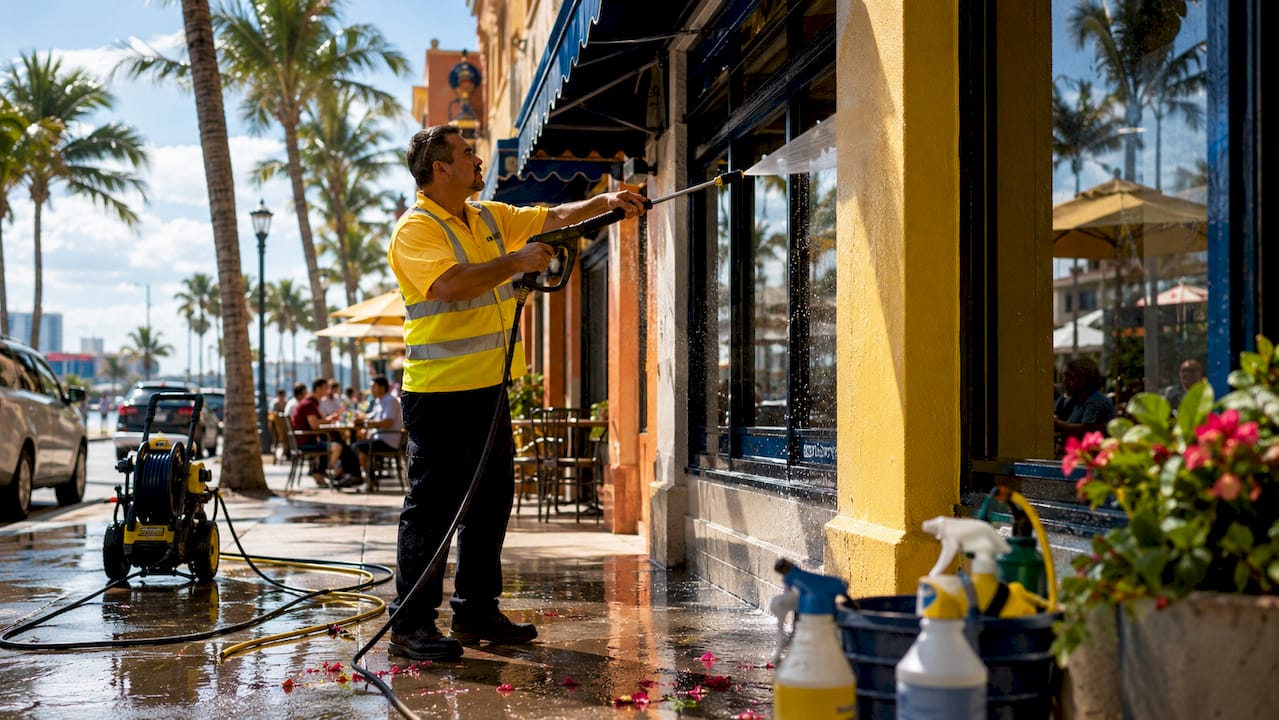
Pressure washing commercial storefronts is the process of using high-powered water jets and cleaning solutions to strip dirt, grime, mold, oil, and biological buildup from a building’s exterior surfaces. In the industry, this practice falls under the broader category of commercial exterior cleaning, which covers everything from concrete sidewalks and brick facades to awnings, windows, and entryways. The reason to pressure wash commercial storefronts goes well beyond appearances. 95% of shoppers evaluate a business’s exterior before deciding whether to walk in. That single fact makes storefront cleanliness a direct driver of revenue, not just a maintenance checkbox.
Why pressure wash commercial storefronts: the curb appeal case
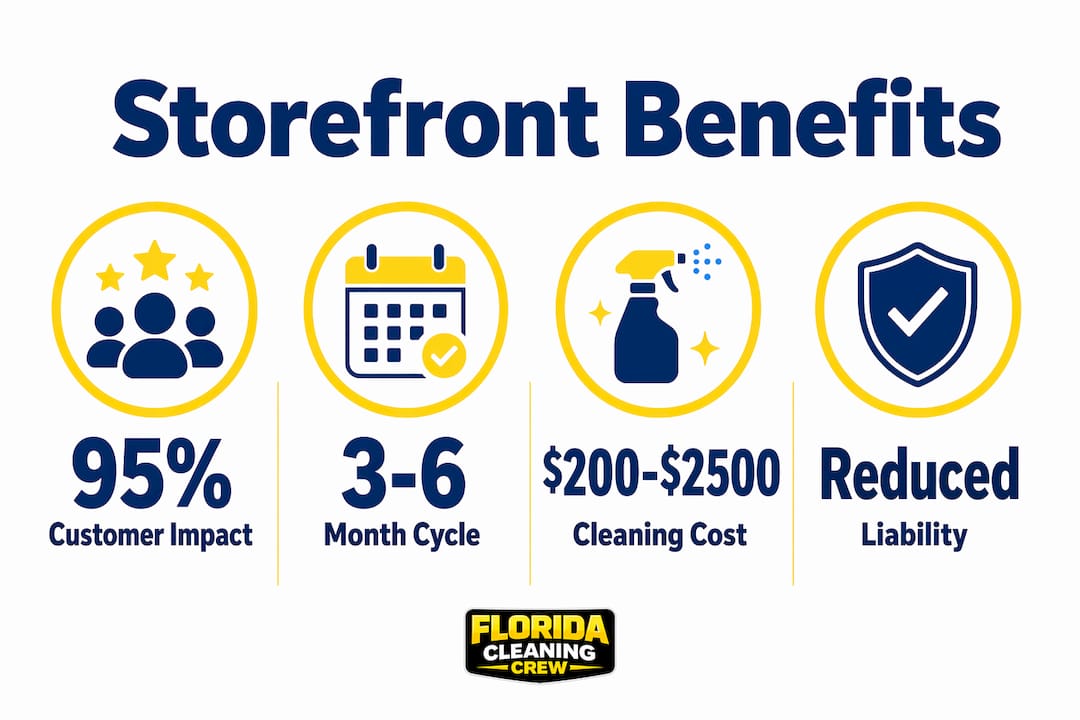
A clean storefront is your first sales tool. Customers form impressions within 7 seconds of seeing a business exterior, and nearly 40% avoid businesses that look poorly maintained. That means a grimy facade is actively turning away paying customers before they ever reach your door.

Dirt, algae stains, and oil streaks on sidewalks and entryways signal neglect. Customers associate a dirty exterior with poor management inside. In an era where Google Maps photos and Yelp reviews include street-level images, a stained storefront can hurt your online reputation just as much as a bad review.
Storefront cleanliness is a proven driver of customer behavior, affecting walk-in rates and online reputation. The surfaces that matter most are the ones customers interact with directly: sidewalks, entry doors, window frames, and awnings. Each of these collects grime at different rates, and each contributes to the overall impression a visitor forms.
“A business that looks clean on the outside tells customers it takes care of the details. That trust starts at the curb, not at the counter.”
The benefits of pressure washing extend to the full visual package of your property:
- Sidewalks and walkways: Remove embedded oil, gum, and biological stains that make entry paths look neglected and feel unsafe.
- Awnings and canopies: Strip mold, bird droppings, and weathering that fade colors and make signage hard to read.
- Window frames and sills: Clear away dirt buildup that makes even clean glass look dingy from a distance.
- Brick and stucco facades: Restore original color and texture by removing years of atmospheric pollution and biological growth.
- Parking areas and curbs: Clean curb lines and parking surfaces signal that the entire property is well managed.
In Tampa, Clearwater, and St. Petersburg, the humid subtropical climate accelerates mold and algae growth on exterior surfaces. Businesses in these markets need to clean more frequently than properties in drier climates. Pressure washing storefronts on a regular schedule keeps that growth from becoming a permanent stain problem.
Does pressure washing actually protect your building long-term?
Exterior contaminants do not just look bad. They actively destroy building materials. Mold, algae, and oil degrade concrete, paint, sealants, and masonry over time, causing premature surface failure that costs far more to repair than to prevent.
Concrete is porous. When oil or biological matter sits on a concrete surface for months, it penetrates the pores and begins breaking down the material from within. The same applies to brick mortar joints, painted metal surfaces, and caulked window seams. Preventive cleaning stops this cycle before it reaches the point of structural concern.
Scheduled pressure washing is a maintenance investment, not a cosmetic expense. Here is how the damage progression typically works without regular cleaning:
- Atmospheric dust and pollution settle on surfaces within weeks of the last cleaning.
- Moisture activates biological growth. Mold and algae spores germinate in the dirt layer, especially in Florida’s humidity.
- Biological acids begin etching surfaces. Mold and algae produce organic acids that slowly break down paint, sealants, and even concrete.
- Oil and grease penetrate porous materials. Parking lot runoff and cooking exhaust deposit oils that resist standard cleaning and accelerate surface degradation.
- Surface failure becomes visible. Paint peels, concrete spalls, and mortar crumbles. At this stage, repair costs dwarf what routine cleaning would have cost.
- Structural integrity becomes a concern. In severe cases, water infiltration through damaged surfaces reaches interior walls and foundations.
Preventive cleaning extends surface life and reduces costly repairs. A property manager who schedules cleaning every 3–6 months spends a fraction of what a reactive repair program costs over a five-year period.
Pro Tip: Schedule a visual inspection of your storefront’s caulking, paint, and masonry every time you book a pressure wash. Catching a failing sealant joint early costs under $50 to fix. Ignoring it until water infiltrates the wall can cost thousands.
Scheduled storefront cleaning also enhances tenant satisfaction and reduces vacancy rates in multi-tenant commercial buildings. Property managers who maintain clean exteriors consistently report fewer tenant complaints and stronger lease renewals. The exterior condition of a building communicates how seriously ownership takes the property.
What are the safety and health benefits of pressure washing?
Slip-and-fall accidents are one of the most common liability claims against commercial property owners. Grease, mold, algae, and wet organic debris on sidewalks and entryways create genuinely dangerous walking surfaces. Pressure washing removes these hazards directly.
Professional pressure washing can remove up to 99.9% of surface-level bacteria with appropriate detergents and methods. That level of sanitation matters for businesses in food service, healthcare, and retail, where public health standards are tied to licensing and inspection outcomes.
The health benefits extend beyond slip prevention:
- Allergen removal: Mold spores, pollen, and dust accumulate on exterior surfaces and get tracked indoors. Regular exterior cleaning reduces the allergen load entering your building.
- Bacteria elimination: High-temperature pressure washing with detergent kills surface pathogens that standard hosing leaves behind.
- Air quality near entryways: Clean exterior surfaces near HVAC intake vents reduce the volume of biological contaminants pulled into the building’s air supply.
- Pest deterrence: Organic buildup on surfaces attracts insects and rodents. Removing that buildup removes a food source and nesting material.
Reducing slip-and-fall liability is a financial argument as much as a safety one. A single premises liability claim can cost a business owner tens of thousands of dollars in legal fees and settlements, far exceeding years of professional cleaning costs. Maintaining clean, dry, non-slip entry surfaces is one of the most cost-effective risk management steps a property owner can take.
For Tampa Bay businesses that serve high foot traffic, especially restaurants, retail shops, and medical offices, health and safety compliance is not optional. Regular exterior cleaning supports the standards inspectors look for and protects the business from liability exposure.
How much does storefront pressure washing cost, and how often should you do it?
Professional storefront cleaning typically costs $200–$600 per visit for small retail units and $800–$2,500 for multi-tenant strips. Those ranges reflect differences in square footage, surface complexity, and the degree of contamination. A single-unit coffee shop with a clean concrete facade sits at the low end. A strip mall with multiple storefronts, varied surface materials, and heavy grease buildup sits at the high end.
The recommended cleaning frequency is every 3–6 months. In Tampa Bay’s climate, the lower end of that range applies to most businesses. High-humidity environments accelerate mold and algae growth, meaning a storefront that looks clean in month two can show visible biological staining by month four.
| Factor | Pressure washing | Soft washing |
|---|---|---|
| Water pressure | 2,500–3,500 PSI | Under 500 PSI |
| Best surfaces | Concrete, brick, masonry | Painted wood, stucco, glass |
| Cleaning agents | Water-based detergents | Chemical solutions |
| Risk of surface damage | Higher on delicate materials | Low |
| Effectiveness on mold | High | High with correct chemicals |
| Cost | Generally lower | Slightly higher per visit |
Wrong pressure levels can cause irreversible damage to delicate storefront surfaces such as glass and painted facades. This is the most common mistake property owners make when attempting DIY pressure washing. Glass panels, painted aluminum trim, and older brick mortar joints require soft washing or controlled low-pressure techniques. Concrete and uncoated masonry can handle higher PSI without risk.
Pro Tip: Ask your pressure washing provider to specify the PSI they plan to use on each surface type before work begins. A professional who cannot answer that question is not the right hire for your storefront.
Sidewalk surface cleaners with rotating attachments at 2,500–3,500 PSI deliver superior, even cleaning compared to handheld wands. They also reduce cleaning time and eliminate the streaking pattern that handheld wands leave on flat concrete. For most commercial storefronts, this equipment is the right tool for walkways and parking areas.
Scheduling matters as much as frequency. Book cleaning during off-hours, early morning or late evening, to avoid disrupting customers and staff. Most professional cleaning jobs use the building’s water supply, so confirm that exterior spigots are accessible and unlocked before the crew arrives. A locked or missing spigot can delay or cancel the job entirely.
Pressure washing vs. other commercial storefront cleaning methods
Pressure washing is not the only option for cleaning commercial facades, but it is the most effective for heavy contamination. Understanding where it fits against alternatives helps you make the right call for your specific surfaces.
| Method | Best use case | Limitations |
|---|---|---|
| High-pressure washing | Concrete, brick, heavy grease | Can damage glass, painted surfaces, soft materials |
| Soft washing | Painted wood, stucco, awnings | Requires chemical dwell time; slower process |
| Manual scrubbing | Spot cleaning, small areas | Labor intensive; ineffective on embedded stains |
| Chemical cleaning only | Graffiti, specific stains | Requires neutralization; environmental disposal concerns |
| Steam cleaning | Food service areas, sanitization | High equipment cost; limited reach on large facades |
Manual scrubbing and chemical cleaning alone rarely remove embedded biological growth or oil stains from porous surfaces. They work for surface-level dirt but fall short on the kind of contamination that builds up over months on a commercial exterior. Pressure washing reaches into the pores of concrete and masonry in a way that scrubbing cannot.
Soft washing for delicate surfaces is the professional standard when painted facades, EIFS stucco, or older brick are involved. Professionals reserve higher PSI for concrete and masonry and drop to soft washing techniques for anything that could be etched or stripped. You can read more about choosing between methods based on your specific surface types before booking a service.
The practical answer for most Tampa Bay storefronts is a combination approach. Concrete sidewalks and masonry walls get high-pressure treatment. Window frames, painted surfaces, and awnings get soft washing. A provider who uses only one method for every surface is cutting corners.
Key takeaways
Pressure washing commercial storefronts protects building materials, reduces liability, and directly influences how many customers walk through your door.
| Point | Details |
|---|---|
| Customer perception starts outside | 95% of shoppers judge a business by its exterior before entering. |
| Contaminants cause structural damage | Mold, algae, and oil degrade concrete, paint, and sealants over time. |
| Cleaning reduces liability risk | Removing slippery surfaces cuts slip-and-fall exposure significantly. |
| Frequency matters in humid climates | Tampa Bay businesses need cleaning every 3–4 months due to accelerated biological growth. |
| Method must match the surface | High-pressure washing suits concrete; soft washing protects painted and delicate facades. |
What most business owners get wrong about storefront cleaning
I have seen the same mistake repeated across small businesses in Tampa, Clearwater, and St. Petersburg. Owners treat exterior cleaning as something they do when the building looks bad enough to embarrass them. By that point, the mold has already etched into the concrete, the paint is starting to lift, and the repair bill is quietly growing.
The mindset shift that actually protects your investment is treating pressure washing the way you treat an oil change. You do not wait for the engine to fail. You schedule it because you know what happens when you do not. A storefront that gets cleaned every 3–4 months in Florida’s climate stays in genuinely good condition. One that gets cleaned once a year is in a slow deterioration cycle that most owners do not notice until it becomes expensive.
The other misconception I hear often is that pressure washing is a DIY job. Renting a machine and pointing it at your building is not the same as knowing which PSI to use on painted stucco versus bare concrete. I have seen glass panels cracked, painted facades stripped, and mortar joints blown out by well-intentioned owners who grabbed the highest-pressure setting available. The cost of that damage exceeds years of professional service fees.
The businesses that maintain the best-looking storefronts in any commercial district are almost always on a scheduled maintenance plan with a professional provider. That is not a coincidence. It reflects a decision to treat the building as an asset worth protecting, not just a backdrop for the business inside.
— Matt
Floridacc serves Tampa Bay storefronts with professional pressure washing
Tampa Bay business owners and property managers trust Floridacc for exterior cleaning that is scheduled around your hours, not ours. Whether you manage a single retail unit in St. Petersburg or a multi-tenant strip in Clearwater, the right cleaning approach depends on your surfaces, your traffic, and your maintenance history.

Floridacc’s commercial cleaning services cover storefronts, sidewalks, facades, and parking areas across the Tampa Bay area. The team uses surface-appropriate methods, from high-pressure concrete cleaning to soft washing for painted and delicate materials, with transparent pricing and flexible scheduling. Request a free estimate and get a cleaning plan built around your property’s actual needs, not a one-size-fits-all package.
FAQ
Why should businesses pressure wash their storefronts regularly?
Regular pressure washing removes mold, oil, and biological growth that degrade surfaces and deter customers. 95% of shoppers judge a business by its exterior, making cleanliness a direct factor in foot traffic and revenue.
How often should a commercial storefront be pressure washed?
Most commercial storefronts benefit from cleaning every 3–6 months. In humid markets like Tampa Bay, every 3–4 months is more appropriate due to accelerated mold and algae growth.
What is the difference between pressure washing and soft washing for storefronts?
Pressure washing uses 2,500–3,500 PSI and suits concrete and masonry. Soft washing uses under 500 PSI with chemical solutions and is the correct method for painted surfaces, stucco, awnings, and glass frames.
Can pressure washing damage my storefront?
Yes, if the wrong pressure level is used on the wrong surface. Incorrect PSI can crack glass, strip paint, and blow out mortar joints. A qualified professional assesses each surface before selecting the appropriate method.
How much does commercial storefront pressure washing cost?
Professional cleaning costs $200–$600 for a small retail unit and $800–$2,500 for multi-tenant commercial strips, depending on size, surface type, and contamination level.