TL;DR:
- Tampa Bay’s waste has increased 25% since 2020, stressing landfill capacities.
- Junk removal involves handling bulky, non-standard items like furniture, appliances, and storm debris.
- Eco-friendly practices include sorting recyclables, donating usable items, and choosing responsible providers.
Tampa Bay’s waste output has jumped 25% since 2020, and if you’ve ever stared at a garage full of broken furniture or a yard buried in storm debris, you already know the pressure is real. But junk removal is widely misunderstood. Most homeowners think it’s just a bigger version of trash day. It isn’t. Done right, junk removal is a strategic process that keeps usable materials out of landfills, protects your property before and after hurricane season, and saves you serious time. This guide walks Tampa Bay homeowners and property managers through exactly what junk removal covers, which options work best locally, and how to do it in a way that’s genuinely good for the environment.
Table of Contents
- What junk removal really means
- Junk removal options in Tampa Bay
- Eco-friendly junk removal practices
- How to plan and execute your junk removal
- The overlooked keys to Tampa Bay junk removal success
- Connect with Tampa Bay junk removal experts
- Frequently asked questions
Key Takeaways
| Point | Details |
|---|---|
| Tampa waste up sharply | Tampa Bay has seen a 25 percent increase in city waste since 2020, making efficient junk removal more critical. |
| Bulk items need special care | Furniture, appliances, and storm debris require services beyond regular city trash pickup. |
| Eco-friendly solutions matter | Recycling, landfill diversion, and storm prep are key to responsible junk removal in Tampa Bay. |
| Choose locally-smart providers | Expert junk removal services in Tampa Bay handle bulk, storm debris, and eco-friendly disposal for both homes and businesses. |
What junk removal really means
After learning why junk removal matters, let’s clarify exactly what it includes and how it differs from regular waste disposal.
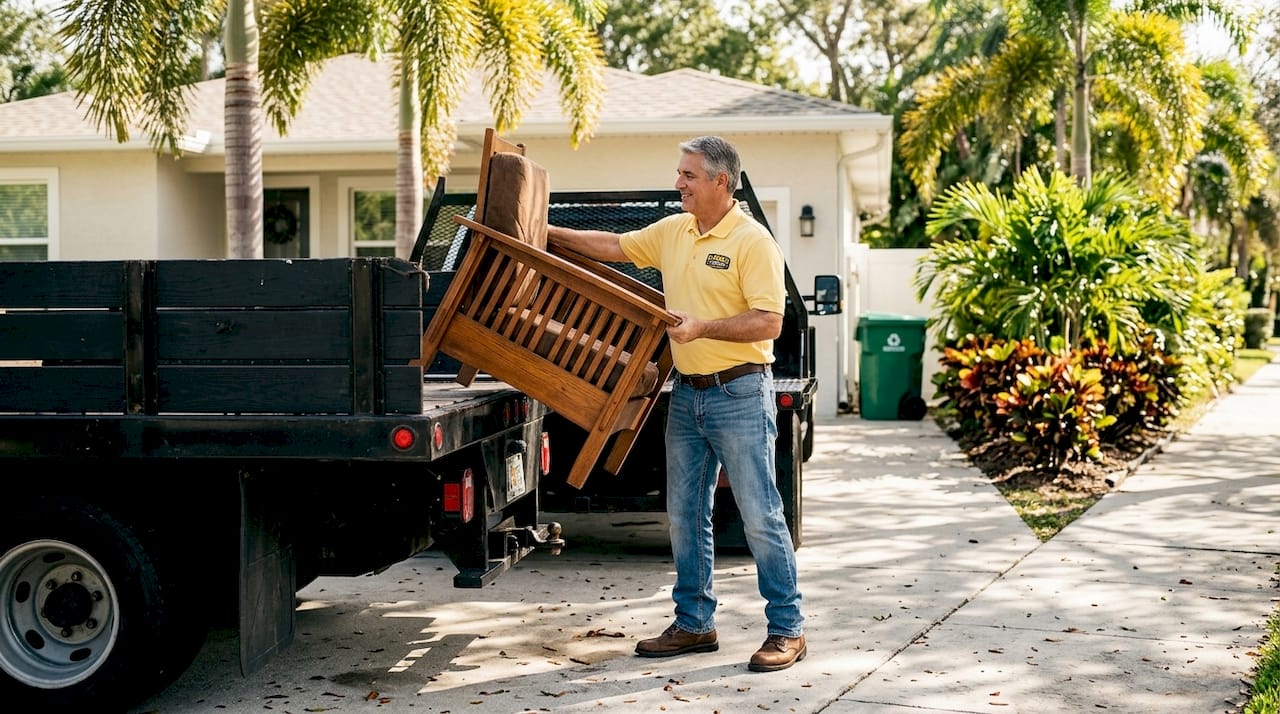
Regular trash pickup handles your weekly household garbage. Junk removal is something else entirely. It’s designed for large, bulky, or non-standard items that your city’s curbside service simply won’t touch. Think old sofas, broken refrigerators, water-damaged drywall, or a pile of yard debris left behind by a tropical storm. These items require specialized hauling, and in many cases, careful sorting before they ever leave your property.
Here’s a breakdown of what junk removal typically covers:
- Furniture: Sofas, mattresses, bed frames, desks, and cabinets
- Appliances: Washers, dryers, refrigerators, air conditioning units
- Yard waste: Tree branches, palm fronds, sod, landscaping debris
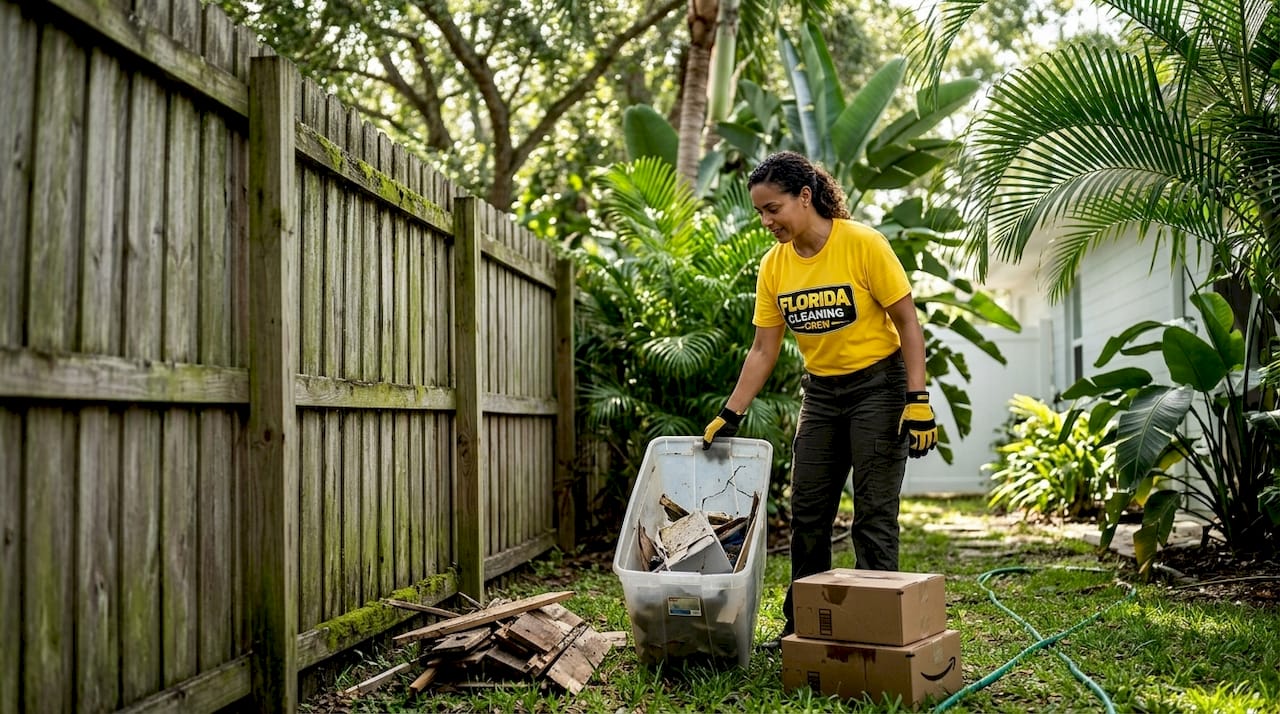
- Storm debris: Damaged fencing, roofing material, waterlogged wood
- Electronics: Old TVs, computers, monitors (handled separately due to hazardous components)
- Construction debris: Tile, drywall scraps, lumber from renovation projects
- General clutter: Boxes, old clothing, broken tools, garage overflow
For Tampa Bay residents, storm debris is a category that deserves special attention. After a major hurricane or tropical storm, the volume of waste on a single property can overwhelm any standard service. Florida’s Class I landfills hold 470 million tons of capacity statewide, but with Tampa Bay’s waste increasing sharply, that capacity is under growing pressure. Sending everything to a landfill isn’t sustainable or always practical.
Junk removal also plays a direct role in residential and commercial cleaning workflows. Before a deep clean, renovation, or property turnover, clearing out accumulated junk is often the first necessary step. Property managers especially find that combining junk removal with professional cleaning saves time and reduces the number of vendors they need to coordinate.
The key distinction: Junk removal is proactive and customizable. You decide what goes, when it goes, and ideally, where it goes. That last part, choosing providers who prioritize recycling and donation over landfill dumping, is what separates responsible junk removal from just hauling stuff away.
Pro Tip: Before calling a junk removal service, walk your property and photograph everything you want removed. This speeds up the quoting process and helps providers bring the right equipment, especially for heavy appliances or large furniture pieces.
Local conditions in Tampa Bay add another layer of complexity. The region’s humidity accelerates material breakdown, meaning items left outside too long can become hazardous. Mold grows fast on upholstered furniture, and electronics exposed to rain can leach chemicals into soil. Scheduling junk removal in Tampa Bay promptly after a storm or renovation isn’t just convenient. It’s a practical health and safety decision.
Junk removal options in Tampa Bay
Now that you know what junk removal covers, let’s explore your options in the Tampa Bay area.
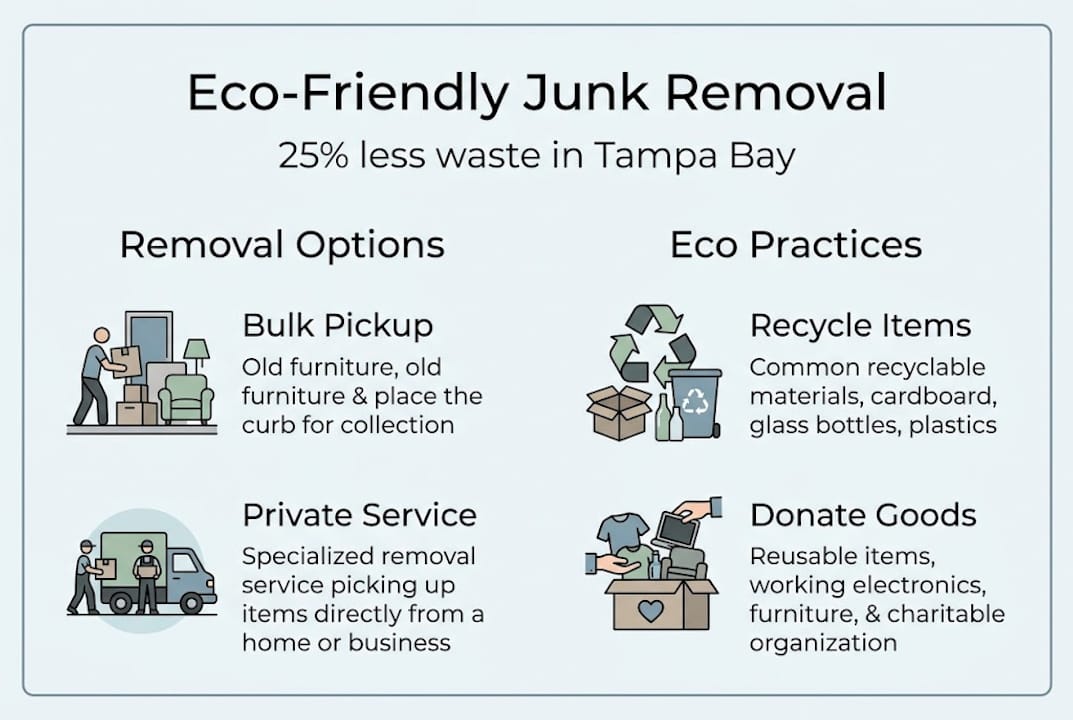
You have more choices than most people realize, and picking the right one depends on your volume, timeline, and how much you care about where your junk ends up. Here’s a clear comparison:
| Option | Best for | Accepts bulk items | Eco-friendly | Cost range |
|---|---|---|---|---|
| Municipal bulk pickup | Small volumes, scheduled items | Limited | Moderate | Free or low cost |
| Private junk removal | Large volumes, fast turnaround | Yes | Varies by provider | Moderate to high |
| Recycling drop-off centers | Electronics, metals, specific materials | No | High | Free to low cost |
| Donation pickup services | Usable furniture, appliances | Sometimes | High | Free |
| Dumpster rental | Ongoing projects, renovations | Yes | Low | Moderate |
Hillsborough County’s curbside recycling program processes 426,000 tons annually with 77% participation, which sounds impressive until you realize that most bulk junk items still aren’t eligible for curbside pickup. Sofas, mattresses, and appliances require separate scheduling or a private hauler.
Here’s how to choose the right option based on your situation:
- Small, manageable loads: Start with your municipality’s bulk pickup schedule. Hillsborough, Pinellas, and Pasco counties each have specific days and item limits.
- Large post-storm or renovation cleanouts: Private junk removal services are your best bet. They bring the crew, the truck, and the sorting knowledge.
- Electronics and hazardous items: Use dedicated e-waste drop-off events or certified recycling centers. Never put these in a dumpster.
- Usable items in good condition: Contact local charities or furniture banks before calling a hauler. Many will pick up for free.
- Ongoing construction projects: Dumpster rental gives you flexibility, but confirm the provider’s disposal practices before committing.
If you’re managing multiple properties across the region, check out the local service areas covered by professional providers to confirm availability before scheduling.
Pro Tip: Tampa Bay’s storm season runs June through November. Schedule a pre-season junk removal pass in May to clear yard debris, old patio furniture, and anything that could become a projectile. You’ll thank yourself when the first named storm forms in the Gulf.
For homeowners wondering how often to schedule services beyond a one-time cleanout, understanding Tampa Bay cleaning frequency can help you build a smarter long-term maintenance plan that includes regular junk removal checkpoints.
Eco-friendly junk removal practices
With your options clear, it’s time to focus on eco-friendly junk removal that meets Tampa Bay’s distinct challenges.
Being eco-friendly with junk removal isn’t just about feeling good. It has real financial and environmental consequences for the Tampa Bay region. Florida’s material recovery facilities (MRFs) have a combined processing capacity of 7 million tons, but they’re consistently underutilized because too many recyclable materials end up in the wrong stream. Meanwhile, Tampa’s food waste recycling rate sits at just 22%, a number that highlights how much room for improvement exists across the board.
Here’s a practical breakdown of how different junk categories should be handled:
| Item type | Best disposal method | Landfill diversion potential |
|---|---|---|
| Metal appliances | Scrap metal recycler or MRF | High |
| Furniture in good condition | Donate or sell | Very high |
| Damaged upholstered furniture | Landfill or specialty disposal | Low |
| Yard debris | Composting or green waste facility | High |
| Electronics | Certified e-waste recycler | High |
| Construction debris | Concrete/wood recyclers | Moderate to high |
| Food waste | Composting program | High |
For storm debris specifically, the eco-friendly approach requires planning ahead. After a hurricane, the mix of materials, wood, metal, insulation, and electronics, makes sorting difficult if you haven’t prepared. Keeping separate bins or tarps designated for different material types during a cleanout dramatically increases what gets recycled versus landfilled.
Some key strategies for eco-friendly Tampa Bay junk hauling include:
- Ask your provider directly what percentage of collected materials they divert from landfills. Reputable companies track this.
- Separate metals early. Aluminum, copper, and steel have strong recycling markets and are almost always accepted.
- Don’t overlook yard waste. Palm fronds and tree trimmings can go to green waste composting facilities rather than landfills.
- Electronics need certified handling. Improper disposal of TVs and computers can release lead and mercury into local soil and water.
- Donate before you discard. A functional appliance or piece of furniture that you no longer want still has value to someone else.
Local reality check: Tampa Bay’s humidity means that items left outside even briefly can degrade quickly. If you’re planning a large cleanout after a storm, move quickly. Waterlogged materials are harder to recycle and more likely to end up in a landfill simply because they’ve deteriorated beyond usable condition.
The environmental benefit of responsible junk removal compounds over time. Every ton diverted from a landfill reduces methane emissions, extends landfill life, and conserves the raw materials needed to manufacture new products.
How to plan and execute your junk removal
Understanding eco-friendly practices, you’re ready to organize and carry out efficient junk removal for your property.
A good junk removal plan doesn’t start with calling a truck. It starts with a walk-through. Here’s a step-by-step process that works for both homeowners and property managers:
- Do a full property inventory. Walk every room, closet, garage, and outdoor space. List everything you want removed and note any items that are heavy, hazardous, or potentially recyclable.
- Sort into four categories: Recycle, donate, trash, and keep. Be honest. If you haven’t used something in two years and it’s not sentimental, it probably goes.
- Identify what your municipality won’t take. Check your county’s bulk pickup guidelines. Anything outside those limits needs a private hauler or drop-off.
- Research providers. Look for companies that are licensed, insured, and transparent about their disposal practices. Ask specifically about landfill diversion rates.
- Schedule around Tampa Bay’s storm season. The best time for a major cleanout is April or May, before hurricane season begins. A secondary pass in December, after the season ends, catches any storm-related debris.
- Prepare your space. Move items to a central location if possible. This reduces labor time and often lowers your quote.
- Confirm the quote in writing. Reputable providers give itemized estimates. Avoid anyone who quotes a flat rate without seeing your load.
For storm debris prep specifically, expert guidance consistently emphasizes the value of using services that handle bulk waste without city volume limits. Municipal services often cap what they’ll take after a storm, leaving homeowners with piles of debris and no clear path forward.
Here are a few additional tips that make a real difference:
- Label hazardous items clearly before a crew arrives. This protects workers and ensures proper handling.
- Take photos before and after. This is especially useful for property managers documenting unit turnovers.
- Bundle yard debris into manageable piles. Loose branches scattered across a lawn take longer to collect and cost more.
- Ask about same-day or next-day availability during storm recovery periods. Fast response matters when debris is creating safety hazards.
Pro Tip: If you’re managing a rental property, build junk removal into your standard turnover checklist. Tenants leave behind more than you’d expect, and clearing it out before a deep clean makes the whole process faster and cheaper.
When you’re ready to move forward, request a junk removal quote online to get a fast, accurate estimate without the back-and-forth.
The overlooked keys to Tampa Bay junk removal success
Most junk removal guides stop at the basics: call a company, load a truck, done. But in our experience working with Tampa Bay homeowners and property managers, the projects that go smoothly are the ones where someone thought ahead. The ones that turn into expensive, frustrating messes almost always share the same avoidable mistakes.
The biggest one? Treating junk removal as a single event rather than a seasonal habit. Tampa Bay’s climate creates a constant cycle of accumulation. Storm debris, humidity-damaged furniture, and outdoor equipment that deteriorates faster than in drier climates all add up. Waiting until things are overwhelming means you’re always playing catch-up.
The second overlooked factor is sorting discipline. Most people know they should recycle, but under pressure, especially after a storm, everything ends up in the same pile. That’s how recyclable metal, functional electronics, and reusable furniture all end up in a landfill. The fix is simple: set up designated areas before the cleanout begins, not during.
Finally, there’s the storm readiness angle that almost nobody talks about. Clearing your yard of loose debris and securing or removing vulnerable outdoor items before a storm is a form of junk removal too. It protects your property, reduces post-storm cleanup costs, and keeps your neighbors safe. Expert junk removal tips consistently point to pre-storm preparation as one of the highest-value actions a Tampa Bay homeowner can take. The goal isn’t just a cleaner property. It’s a safer, more resilient one.
Connect with Tampa Bay junk removal experts
Ready to take the next step? Here’s how to connect with trusted Tampa Bay junk removal pros.
Knowing the right approach to junk removal is one thing. Having a reliable local team to execute it is another. At Florida CC, we work with Tampa Bay homeowners and property managers to make junk removal fast, responsible, and stress-free. Whether you’re dealing with post-storm debris, a full property cleanout, or ongoing clutter from a rental turnover, we handle the heavy lifting so you don’t have to.

Our Tampa Bay junk removal service prioritizes landfill diversion, proper e-waste handling, and efficient scheduling around storm season. We also offer full Tampa Bay cleaning services so you can bundle your cleanout with a professional deep clean in one visit. For rental property owners, our house cleaning in Tampa Bay packages are designed to work seamlessly with junk removal for faster, smoother turnovers. Contact us today for a free quote and see why Tampa Bay property owners trust Florida CC to get the job done right.
Frequently asked questions
What types of items can junk removal services handle in Tampa Bay?
Junk removal providers typically accept furniture, appliances, yard debris, storm waste, and some electronics, covering bulk items that city curbside pickup won’t touch. Private services fill the gap left by municipal limits, especially after major storms.
How can I make junk removal eco-friendly?
Sort items before your pickup day, set aside anything recyclable or donatable, and choose companies with clear landfill diversion policies. Local recycling capacity exists but only works when materials are properly separated at the source.
Does junk removal include storm debris in Tampa Bay?
Yes, many private junk removal services handle storm debris including yard waste, damaged electronics, and structural materials. Storm debris prep is especially critical in hurricane-prone areas like Tampa Bay where volume can quickly exceed municipal limits.
What’s the difference between junk removal and regular trash pickup?
Regular trash pickup runs on a fixed schedule and handles standard household garbage. Junk removal covers large bulk items like appliances, furniture, and construction debris that require specialized hauling and sorting.
How do I schedule junk removal in Tampa Bay?
Contact a local junk removal provider, describe your items and estimated volume, and request an online or in-person quote. Many Tampa Bay services offer flexible scheduling and can accommodate bulk loads that municipal programs won’t accept.