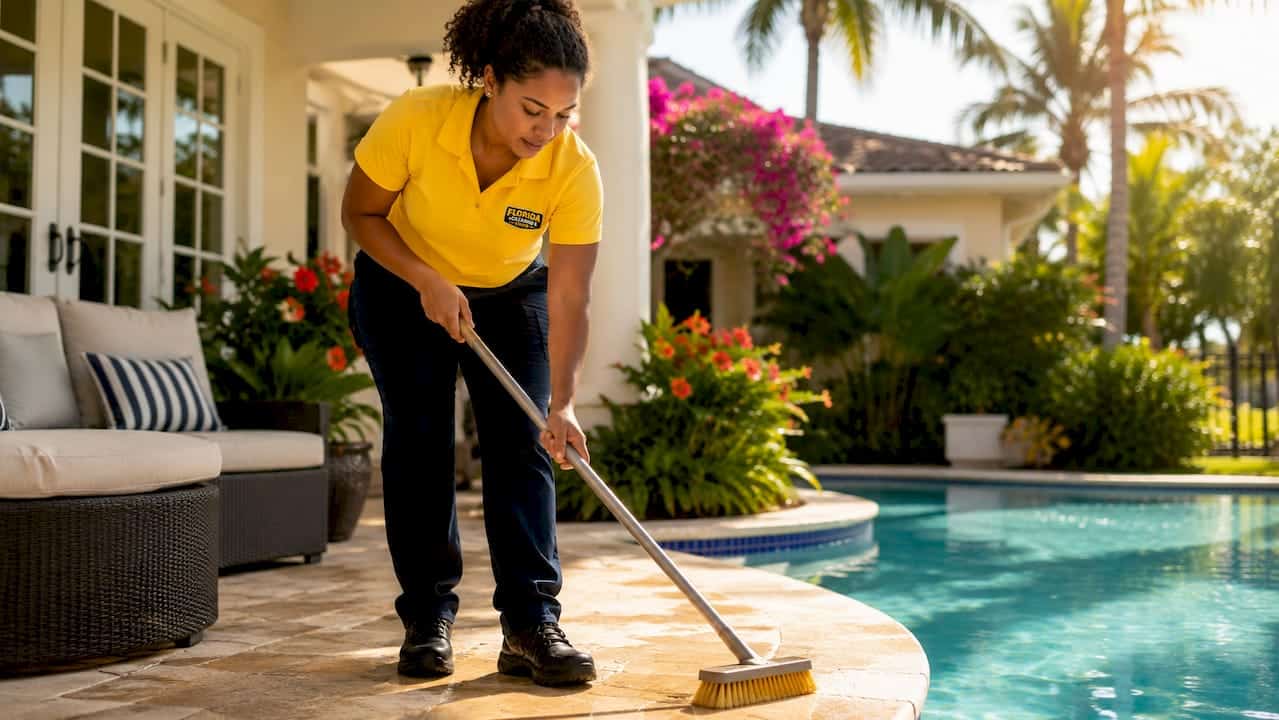
Pool area cleaning for vacation homes is the systematic upkeep of water chemistry, pool surfaces, surrounding decks, and outdoor furniture to maintain guest safety, legal compliance, and property appeal. For rental hosts in Tampa, Clearwater, and St. Petersburg, this process goes well beyond skimming leaves. It covers chemical testing, pressure washing, equipment inspection, and coordinated handoffs between your pool service and turnover crew. Get it right, and guests leave five-star reviews. Get it wrong, and you face negative feedback, liability exposure, and potential regulatory violations. This guide covers every component vacation rental hosts need to manage pool areas with confidence.
What is pool area cleaning for vacation homes?
Pool area cleaning for vacation homes is the industry term “pool area maintenance” applied to short-term rental properties. It combines two distinct disciplines: water quality management and physical surface cleaning. Most hosts only think about one of them.
Water quality management covers chemical balancing, which includes free chlorine, pH, and total alkalinity. Physical surface cleaning covers the pool bowl, deck, outdoor furniture, and equipment housing. Both must meet a standard before guests arrive. Free chlorine levels must reach 3–4 ppm within 24 hours of check-in to satisfy safety regulations and reduce liability exposure.
Rental pools face higher usage intensity than residential pools. That intensity demands more frequent service visits, often twice weekly during peak season, to keep water safe and surfaces presentable. A pool that passes a chemical test but has a stained deck and algae-streaked walls still generates complaints.
The scope also includes outdoor furniture arrangement, towel restocking, and a visual walk-through before every guest arrival. Hosts who treat pool area cleaning as a single task rather than a coordinated process consistently underperform on guest satisfaction scores.
What are the essential components of pool area cleaning for vacation rentals?
Pool area cleaning breaks into four core components: water chemistry, debris removal, surface cleaning, and equipment inspection. Each one affects guest safety and perception in a different way.
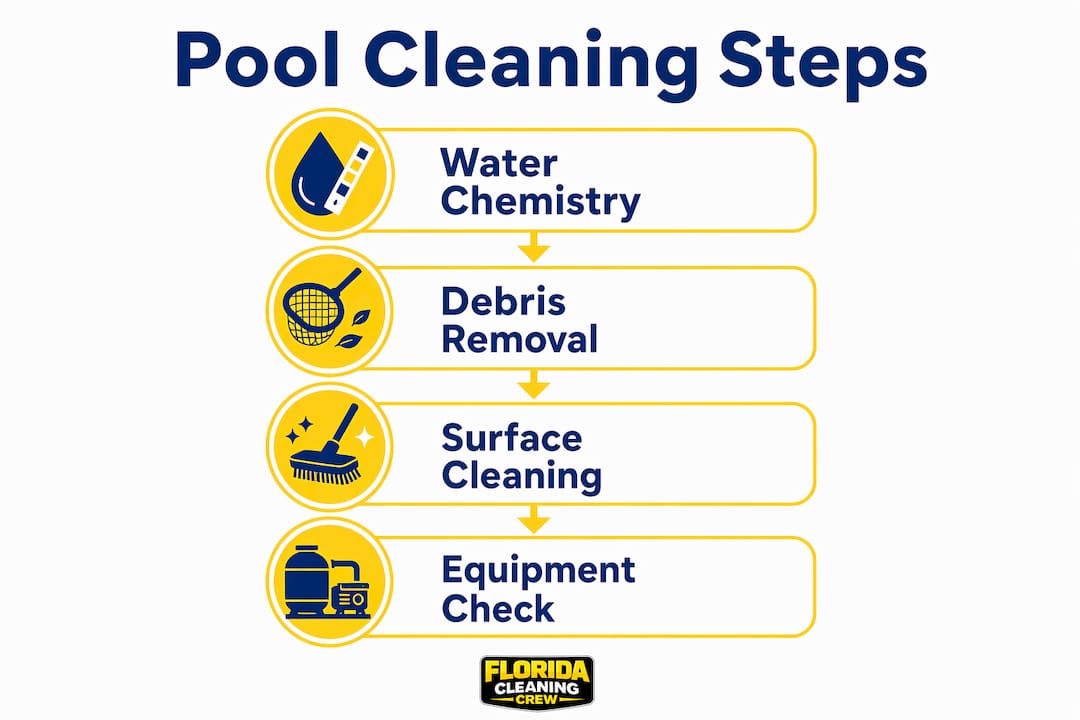
Water chemistry maintenance
Chemical balance is the foundation of safe pool operation. The three numbers every host must track are free chlorine (target 3–4 ppm), pH (target 7.4–7.6), and total alkalinity (target 80–120 ppm). Test these at every service visit and log the results with a timestamp. Imbalanced chemistry causes skin irritation, cloudy water, and accelerated equipment wear.
Debris removal: skimming, vacuuming, and brushing
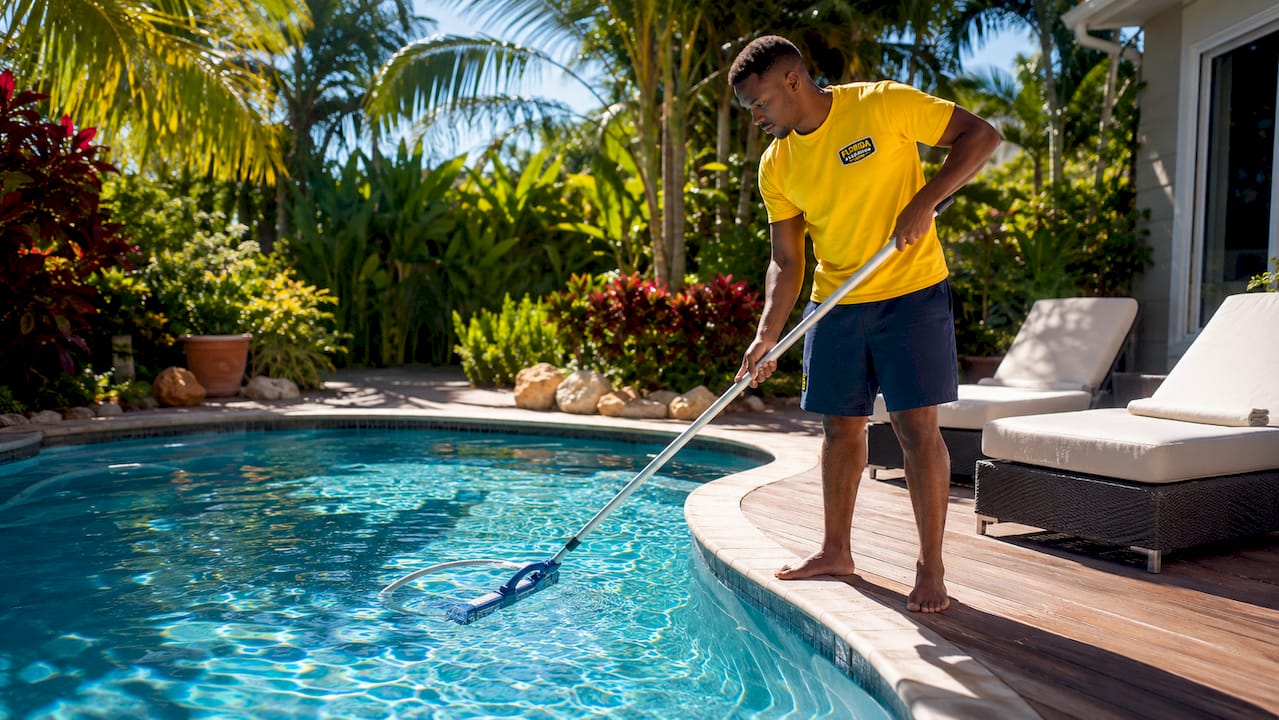
Skimming the surface removes floating debris before it sinks and stains. Vacuuming the pool floor removes settled dirt and organic matter that feeds algae. Brushing the walls and steps prevents biofilm buildup, which is the thin layer of bacteria and algae that makes surfaces slippery and discolored. All three steps belong in every service visit.
Deck and furniture cleaning
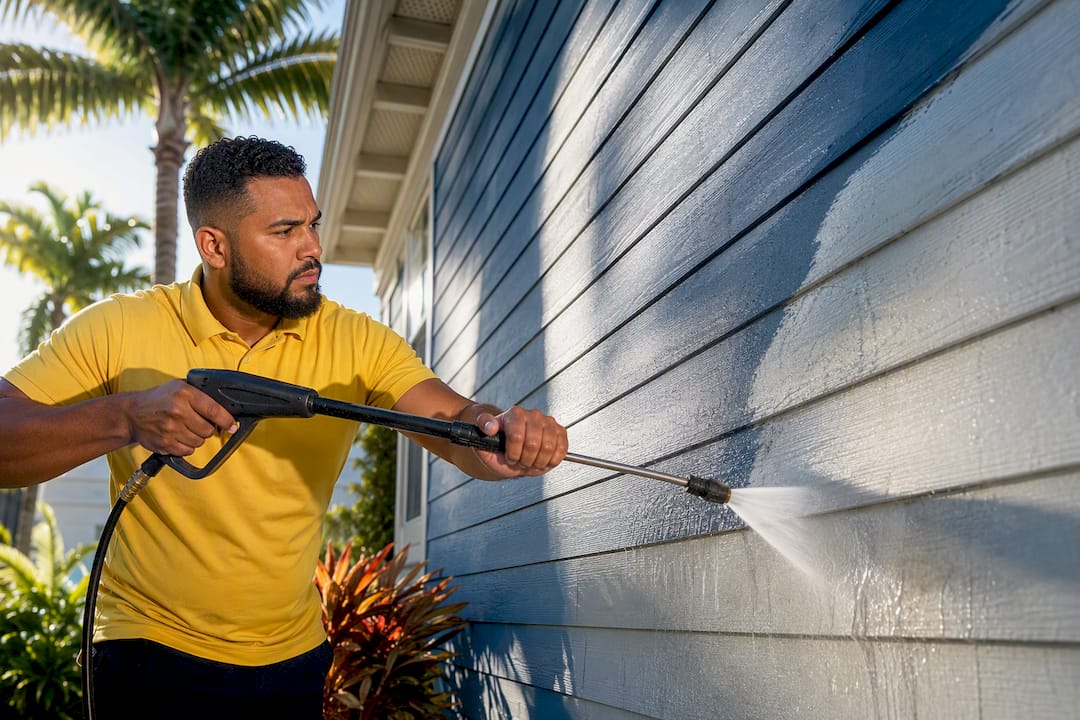
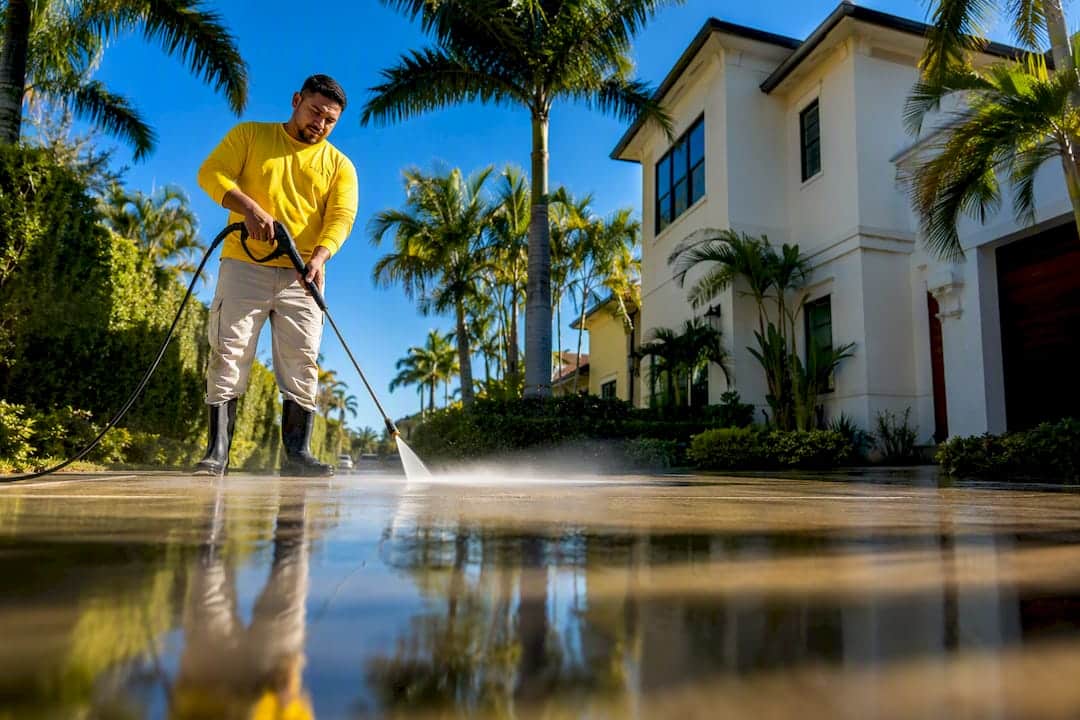
Pressure washing pool decks at 1,500–2,000 PSI removes grime without damaging concrete, pavers, or tile surfaces. Using too much pressure causes surface pitting and creates uneven texture that traps dirt faster. For outdoor furniture, a 1:10 vinegar-to-water solution cleans plastic and resin surfaces without leaving slippery residue. Arrange furniture symmetrically after cleaning. Guests notice asymmetry and interpret it as neglect.
Equipment inspection
Check the pump, filter, and heater at every visit. Confirm that timers are set correctly and that the filter pressure gauge reads within the normal operating range. Guests frequently alter equipment settings during their stay, which can disrupt water circulation and chemistry between visits.
Here is a baseline checklist for every pool area service visit:
- Test and log free chlorine, pH, and total alkalinity
- Skim surface and empty skimmer baskets
- Vacuum pool floor and brush walls and steps
- Inspect and backwash filter if pressure is elevated
- Pressure wash deck at 1,500–2,000 PSI
- Wipe down and arrange outdoor furniture
- Check pump, heater, and timer settings
- Photograph pool and deck condition before departure
Pro Tip: Assign each checklist item to either the pool service technician or the turnover crew in writing. Verbal agreements create gaps. A written scope prevents both parties from assuming the other handled deck cleaning or furniture arrangement.
How do safety regulations and industry standards impact pool area cleaning for vacation homes?
Vacation rental pools carry a higher legal burden than private residential pools. Most municipalities classify them as semi-public facilities, which triggers stricter standards for chemical levels, physical barriers, and drain safety.
Federal and state compliance requirements
The Virginia Graeme Baker Pool & Spa Safety Act requires anti-entrapment drain covers on all public and semi-public pools. Non-compliance is a federal violation. Many hosts are unaware their rental pool falls under this classification until an inspector or insurance adjuster raises the issue.
- Confirm all drain covers meet Virginia Graeme Baker Act specifications.
- Install four-sided isolation fencing with self-closing, self-latching gates on every access point.
- Test and document free chlorine levels within 24 hours of every guest check-in.
- Maintain a service log with timestamped chemical readings and photographs.
- Carry a minimum of $1 million in umbrella liability coverage.
Four-sided isolation fencing with self-latching gates is the most defensible physical safety barrier available to rental hosts. It reduces liability exposure significantly in the event of an incident.
“Rental pools classified as semi-public facilities must meet the same anti-entrapment and chemical safety standards as commercial pools. Hosts who treat their pool as a private amenity and skip compliance steps carry full legal exposure if a guest is injured.”
Insurance and documentation
Professional maintenance budgets for rental pools in high-demand markets run $150–$350 per month, not counting umbrella liability coverage. That cost is the price of operating a pool legally and safely as a rental amenity. Hosts who cut this budget typically face larger costs when a claim arises.
Timestamped digital photos stored in a shared, edit-protected log are the primary liability shield for rental hosts. They prove due diligence at a specific date and time. Without them, a host’s word against a guest’s claim carries little weight.
What best practices ensure a guest-ready pool area in vacation rentals?
Guest perception of pool quality forms within the first 30 minutes of arrival. Visible debris, cloudy water, or a stained deck triggers a negative review even when the water chemistry is technically safe. Visual standards and chemical standards must both be met before every check-in.
Timing your cleaning visits
Schedule pool area cleaning as close to guest arrival as possible. A pool serviced two days before check-in can accumulate debris, especially during Florida’s summer storm season in Tampa and Clearwater. For back-to-back bookings with short turnaround windows, coordinate the pool service visit and the turnover crew visit on the same day.
Rental pools in peak season require service twice weekly to maintain both safety and appearance standards. Single-weekly visits work for low-occupancy periods, but they leave too much margin for error during high-turnover months.
Pre-arrival inspection checklist
Walk the pool area before every guest arrival using a written checklist. The following items cover the visual standards guests notice first:
- Water clarity: no cloudiness, green tint, or visible algae
- Surface: no floating debris, leaves, or insects
- Deck: dry, clean, and free of stains or standing water
- Furniture: clean, arranged, and free of mildew or bird droppings
- Equipment housing: closed and secured
- Safety equipment: life ring and reaching pole present and accessible
- Towels or pool toys: restocked if your listing includes them
Pro Tip: Take a photo of the pool and deck from the same angle before every guest arrival. This creates a consistent visual record that shows the property’s condition at check-in. Store photos in a shared folder with your property manager and insurance contact.
Handling post-stay restoration
After a guest departs, restore all equipment settings before the next service visit. Guests commonly adjust heater temperature, lighting timers, and jet settings. Leaving these altered affects water circulation and chemistry recovery time. Check the pool equipment panel as part of every post-stay walkthrough, not just during scheduled service visits.
A vacation rental cleaning checklist that includes pool area tasks alongside interior cleaning reduces the chance of any item being missed during a fast turnaround.
How to organize pool service and turnover cleaning teams for vacation home pool maintenance?
The most common source of “dirty pool” complaints is not negligence. It is a gap between two teams who each assumed the other handled a specific task. Pool service technicians focus on water chemistry and the pool bowl. Deck cleaning, furniture wiping, and surface skimming must be explicitly assigned to the turnover crew or they will not get done.
Defining each team’s scope
- Assign water chemistry testing, vacuuming, brushing, and equipment inspection to the pool service provider.
- Assign deck sweeping, pressure washing, furniture cleaning, and surface skimming to the turnover cleaning crew.
- Put both scopes in writing and share them with both parties.
- Create a shared digital log where each team records completed tasks and flags issues.
- Require photo documentation from both teams at the end of every visit.
Coordinated communication between pool service and turnover crews prevents service gaps and protects hosts from liability and negative reviews. A shared log also creates accountability. When a guest reports a dirty deck, you can check the log and identify exactly where the process broke down.
Scope and budget reference
| Task | Responsible party | Frequency |
|---|---|---|
| Chemical testing and balancing | Pool service technician | Every visit (2x weekly in peak season) |
| Vacuuming and brushing | Pool service technician | Every visit |
| Equipment inspection | Pool service technician | Every visit |
| Deck pressure washing | Turnover cleaning crew | Between guest stays |
| Furniture cleaning and arrangement | Turnover cleaning crew | Between guest stays |
| Surface skimming and basket emptying | Turnover cleaning crew | Between guest stays |
| Photo documentation | Both teams | Every visit |
Budget $150–$350 per month for professional pool service alone. Turnover cleaning costs vary by property size, but combining both services under a coordinated schedule is more cost-effective than managing reactive fixes after a guest complaint.
For hosts in the Tampa Bay area, finding a weekly pool service provider who communicates directly with your turnover crew is the single biggest operational upgrade you can make. The alternative is playing phone tag between two vendors while a guest waits at check-in.
Key takeaways
Pool area cleaning for vacation homes requires coordinated chemical maintenance, surface cleaning, and documented compliance to protect guests, hosts, and the property itself.
| Point | Details |
|---|---|
| Chemical standards are non-negotiable | Free chlorine must reach 3–4 ppm within 24 hours of every guest check-in. |
| Visual cleanliness drives reviews | Guests judge pool quality within 30 minutes of arrival based on deck and water appearance. |
| Scope gaps cause complaints | Assign deck and furniture cleaning explicitly to the turnover crew in writing. |
| Documentation reduces liability | Timestamped photos and chemical logs are the primary defense in liability disputes. |
| Budget reflects real operating costs | Professional pool maintenance for rentals runs $150–$350 per month, plus umbrella insurance. |
What I’ve learned managing rental pools in Tampa Bay
The hosts who get the fewest pool complaints are not the ones with the fanciest pools. They are the ones who treat pool area maintenance as a system, not a task.
The most common mistake I see is treating the pool service invoice as proof that the pool is guest-ready. A pool technician who balanced the chemistry on Tuesday does not guarantee a clean deck and arranged furniture on Friday when guests arrive. Those are two different jobs, and they require two different people with two different checklists.
Photo documentation is the habit that separates prepared hosts from reactive ones. I have seen hosts lose security deposit disputes because they had no timestamped record of the pool condition at check-in. A shared digital folder with photos from every service visit costs nothing and protects everything.
The Virginia Graeme Baker Act compliance issue catches hosts off guard more than any other. Most people buy a vacation rental, list it on a platform, and never think about federal drain cover requirements. That is a real liability gap, and it is worth a one-time inspection by a licensed pool contractor to confirm compliance before your next booking.
Preventive maintenance is always cheaper than reactive repairs. A pool filter that gets backwashed on schedule lasts years longer than one that gets ignored until it fails mid-stay. The same logic applies to deck surfaces. Pressure washing on a regular schedule prevents the kind of deep staining that requires resurfacing.
If you are evaluating pool service providers, ask specifically how they handle communication with your turnover crew. A provider who has no protocol for that handoff will create gaps. The best providers use shared logs, flag issues in writing, and confirm task completion before leaving the property.
— Matt
Floridacc handles pool area and turnover cleaning for Tampa Bay hosts
Vacation rental hosts in Tampa, Clearwater, and St. Petersburg deal with fast guest turnovers, high humidity, and outdoor conditions that make pool area upkeep genuinely demanding. Floridacc provides professional cleaning services built around the specific needs of short-term rental properties, including pool deck cleaning, outdoor furniture care, and full turnover cleaning that coordinates with your pool service schedule.

The team at Floridacc understands that a missed detail in the pool area shows up in your reviews. Their residential cleaning service guide outlines exactly how they approach vacation rental properties, from pre-arrival walkthroughs to post-stay restoration. If you manage one property or a portfolio across the Tampa Bay area, Floridacc offers free estimates and flexible scheduling to fit your booking calendar. Reach out to get a quote and see how professional turnover cleaning protects your ratings and your property.
FAQ
What does pool area cleaning include for vacation rentals?
Pool area cleaning for vacation rentals includes water chemistry testing, debris removal, pool surface brushing, deck pressure washing, and outdoor furniture cleaning. It also covers equipment inspection and photo documentation before every guest check-in.
How often should a vacation rental pool be cleaned?
Rental pools require service at least twice weekly during peak season due to higher usage intensity. Single-weekly visits are acceptable during low-occupancy periods but leave too much margin for chemistry and debris issues.
What chlorine level is required before guest check-in?
Free chlorine must reach 3–4 ppm within 24 hours of guest check-in to meet safety regulations and reduce liability exposure for rental hosts.
Who is responsible for cleaning the pool deck in a vacation rental?
Pool service technicians handle water chemistry and the pool bowl. Deck cleaning, furniture arrangement, and surface skimming must be explicitly assigned to the turnover cleaning crew in a written scope of work.
What safety equipment does a vacation rental pool legally require?
Rental pools classified as semi-public facilities must have anti-entrapment drain covers compliant with the Virginia Graeme Baker Pool & Spa Safety Act, four-sided isolation fencing with self-latching gates, and accessible safety equipment including a life ring and reaching pole.