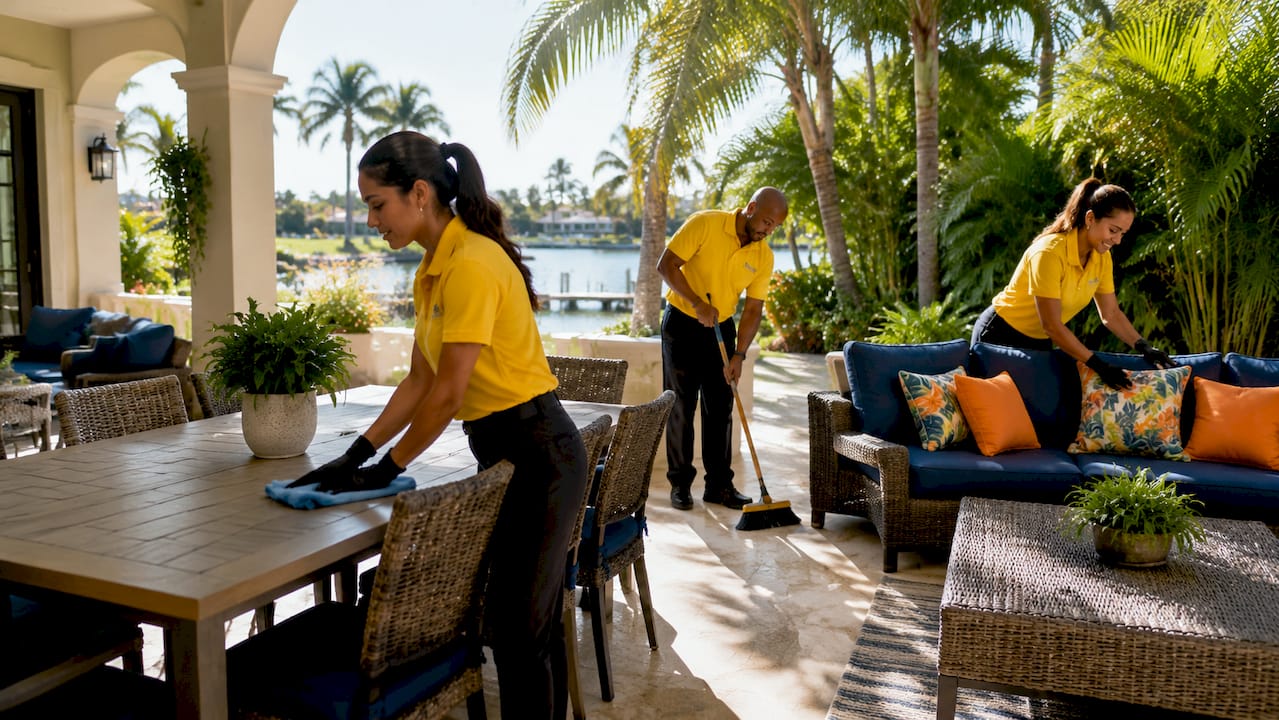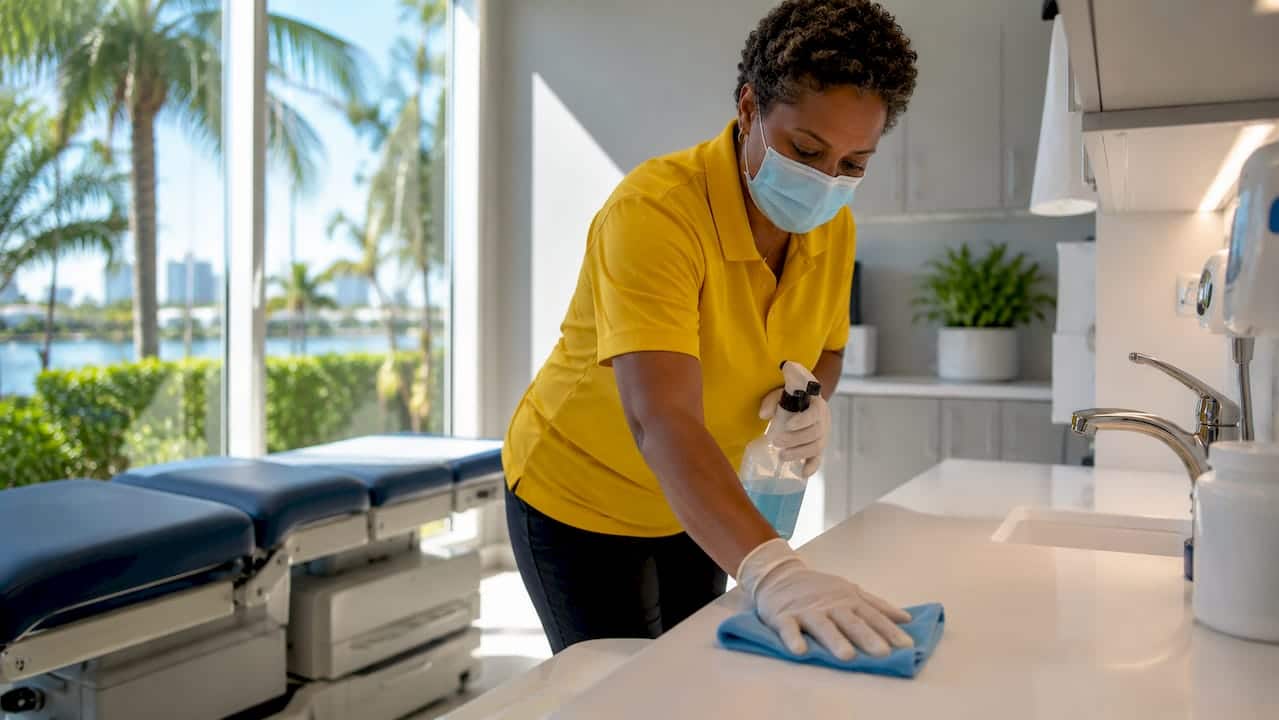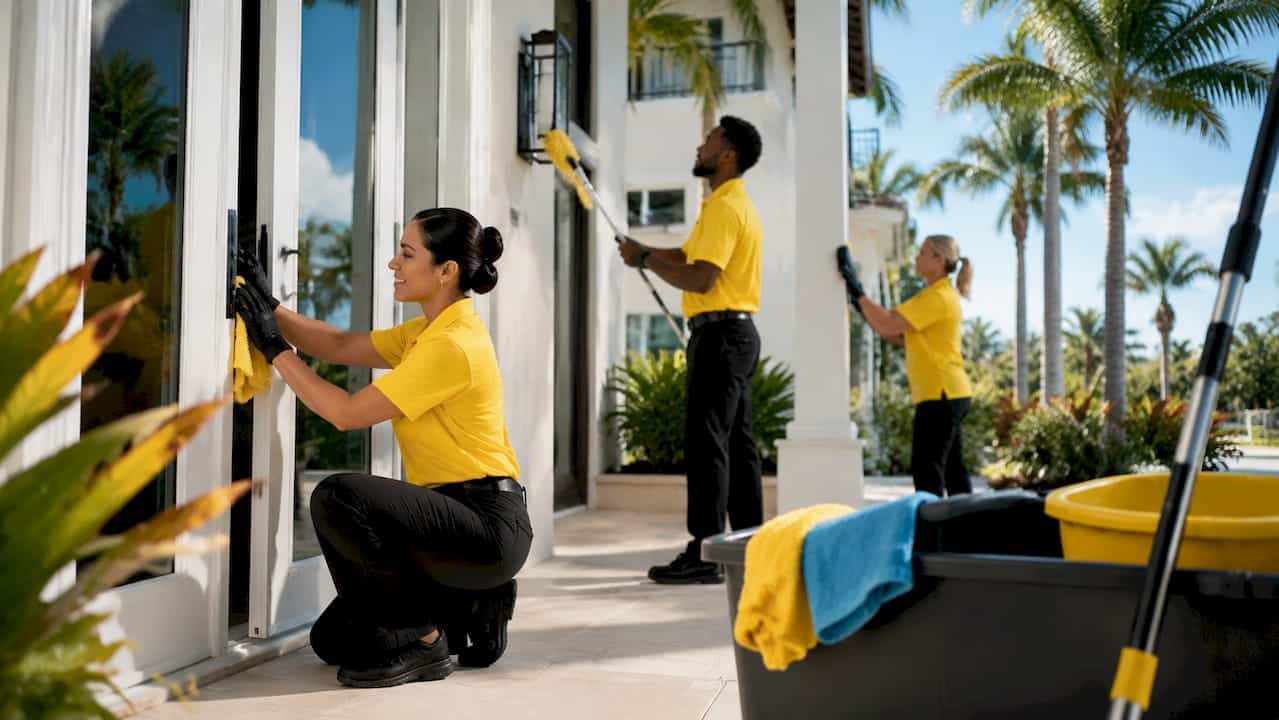
Post-guest cleaning is the structured process of fully restoring a vacation rental to guest-ready condition after checkout, covering everything from linen changes and surface disinfection to trash removal and damage inspection. Known in the hospitality industry as turnover cleaning, it is the operational backbone of any successful short-term rental. Without a consistent post-guest cleaning protocol, hosts in Tampa, Clearwater, and St. Petersburg risk negative reviews, property damage disputes, and declining booking rates. This article breaks down exactly what the process includes, how it differs from other cleaning types, and the best practices that separate high-rated hosts from the rest.
What is post-guest cleaning and what does it include?
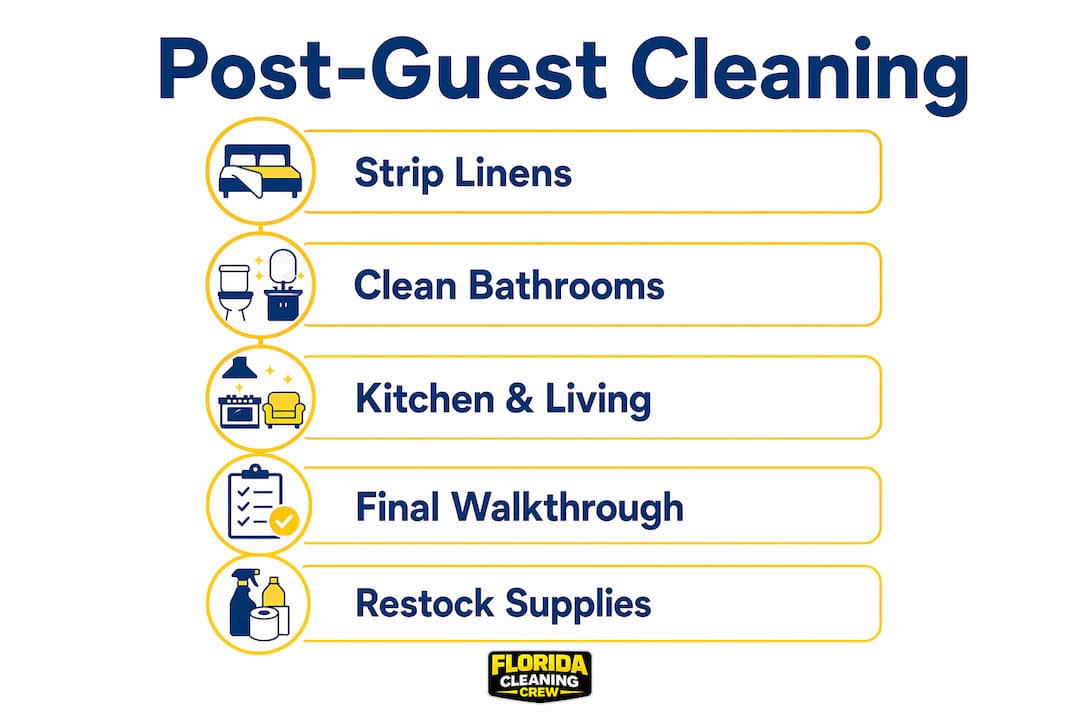
Post-guest cleaning is defined as the full property reset between guest stays, covering four primary zones: bedrooms, bathrooms, the kitchen, and living areas. Each zone has specific tasks, and the order in which you tackle them matters more than most hosts realize.
Bedrooms and linens
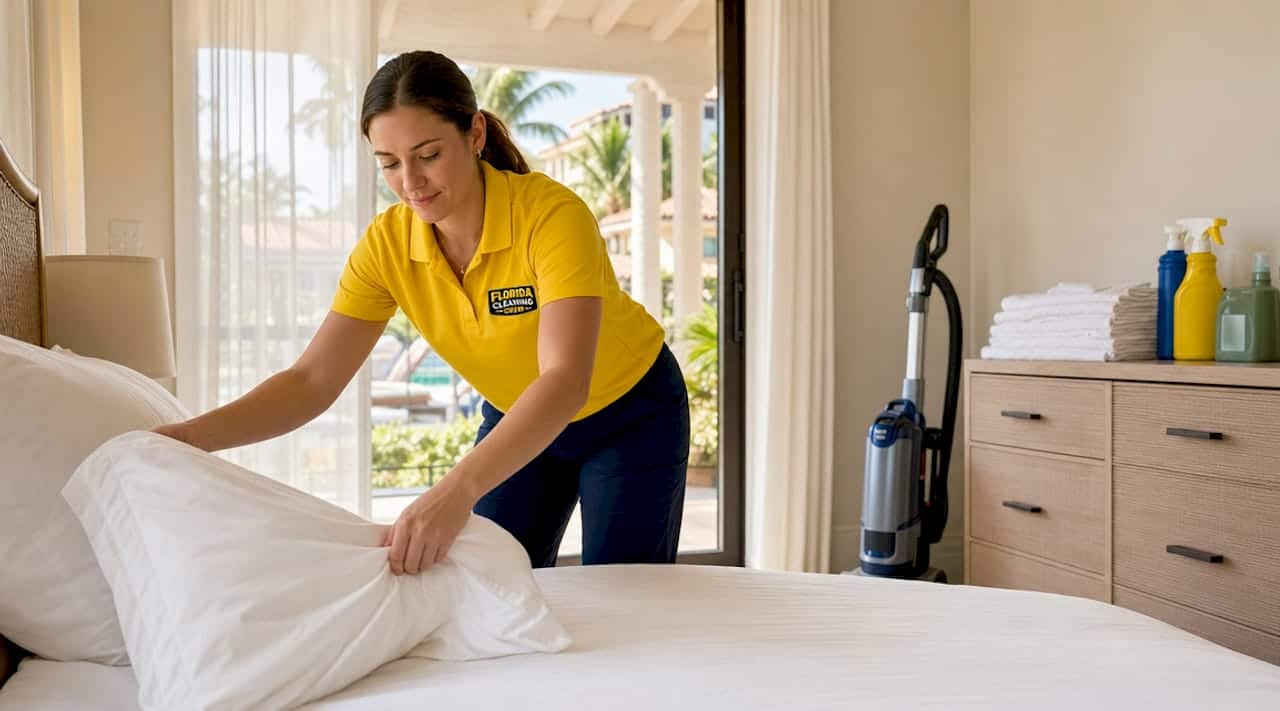
Stripping and washing all linens is the first task most experienced hosts complete after checkout. Linen removal starts immediately so laundry runs while other zones are cleaned, cutting total turnover time significantly. Beds are remade with fresh sheets, pillowcases, and duvet covers. Surfaces like nightstands, lamps, and headboards are wiped down, and floors are vacuumed or mopped.
Bathrooms
Bathrooms are the zone guests notice most at check-in. Spotless bathrooms and fresh linens are the two factors that most directly influence a guest’s first impression of your property. Tubs, showers, toilets, and sinks are scrubbed and sanitized. Mirrors are cleaned streak-free, floors are mopped, and all used towels are removed for washing.
Kitchen and living areas
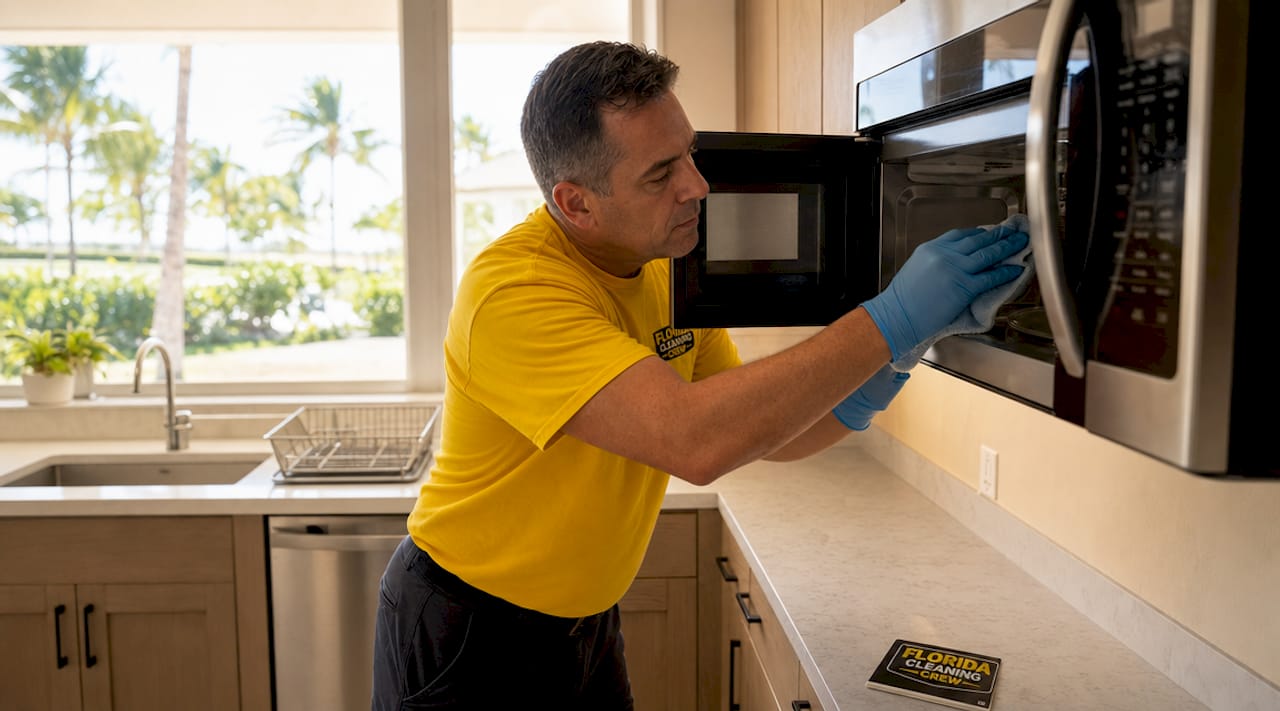
The kitchen requires attention to appliances, countertops, the sink, and the inside of the microwave. Dishes left behind are washed or placed in the dishwasher. Trash is removed from every room, not just the kitchen. Living areas are vacuumed, surfaces wiped, and throw pillows or blankets are straightened or replaced.
Final walkthrough
The turnover ends with a final walkthrough to confirm nothing was missed. This step also serves as the damage inspection, where hosts or cleaners check for broken items, stains, or missing property before the next guest arrives. Sequencing by zones prevents recontamination and saves time by moving from high to low surfaces and from least-used to most-used rooms.
Pro Tip: Set your laundry running within the first five minutes of entering the property. By the time you finish cleaning the rest of the unit, the first load will be ready to transfer, and you will cut your total turnover window by 20 to 30 minutes.
How does post-guest cleaning differ from stayover and deep cleaning?
Understanding the difference between these three cleaning types is what separates operationally efficient hosts from those constantly scrambling between bookings.
Stayover cleaning is lighter in scope and works around a guest’s belongings. It typically involves refreshing towels, emptying trash, and tidying surfaces without moving or replacing anything significant. Post-guest turnover cleaning, by contrast, is a full reset. Every linen is changed, every surface is disinfected, and the property is returned to the exact condition shown in your listing photos.
| Cleaning type | Scope | Frequency | Key tasks |
|---|---|---|---|
| Stayover cleaning | Light maintenance | During a multi-night stay | Towel refresh, trash removal, surface tidy |
| Post-guest turnover | Full property reset | After every checkout | Linen change, disinfection, damage check |
| Deep cleaning | Buildup removal | Quarterly or seasonally | Oven interiors, grout scrubbing, baseboards |
Deep cleaning is a separate category entirely. Deep cleaning tasks like oven interiors, grout lines, and baseboards are excluded from routine turnovers and scheduled quarterly to address accumulated buildup. Trying to include deep cleaning tasks in every turnover is a common mistake that slows down your operation without improving the guest experience between stays.
Mixing turnover and deep cleaning creates inconsistent results and operational inefficiencies. The fix is simple: schedule deep cleans on a quarterly calendar, keep them separate from turnovers, and use your turnover time exclusively for the reset tasks that directly affect the next guest’s experience. For Tampa Bay hosts managing back-to-back summer bookings, this distinction is not optional. It is the difference between a smooth operation and a chaotic one.
A useful reference for understanding how turnover cleaning differs from other cleaning types can help hosts build a more realistic maintenance schedule from the start.
What are the best practices for an effective post-guest cleaning?
The most effective post-guest cleaning protocols share three characteristics: they are checklist-driven, they follow a defined sequence, and they include a documented final inspection.
Use a checklist every single time
Hosts using documented cleaning sequences and final walkthroughs see fewer guest complaints and better reviews than those relying on memory or habit. A checklist removes the guesswork and creates accountability, whether you are cleaning yourself or delegating to a team. Your vacation rental cleaning checklist should be zone-specific, task-specific, and reviewed after every turnover to catch recurring misses.
Follow a defined cleaning sequence
- Strip all linens and start laundry immediately upon entry.
- Remove all trash from every room, including under beds and in closets.
- Clean from top to bottom in each zone: dust ceiling fans and light fixtures before wiping surfaces and mopping floors.
- Disinfect all high-touch surfaces: door handles, light switches, remote controls, and countertops.
- Clean bathrooms thoroughly, including tub, shower, toilet, sink, and mirror.
- Clean the kitchen, including appliances, countertops, sink, and inside the microwave.
- Restock all consumables to par levels.
- Make beds with fresh linens.
- Vacuum and mop all floors.
- Complete the final walkthrough and damage inspection.
Get disinfection right
Effective disinfection requires the correct product, the correct concentration, and the correct contact time on the surface. Spraying a disinfectant and immediately wiping it off does not meet infection prevention standards. Most EPA-registered disinfectants require a contact time of one to four minutes on hard surfaces to be effective. Disinfectant contact time and surface compatibility are the two most commonly ignored variables in vacation rental cleaning, and they directly affect how safe your property is for incoming guests.
Avoid the most common pitfalls
Hosts most often miss the following areas during turnovers: the inside of the microwave, TV remotes and game controllers, light switches and door handles, under couch cushions, and the space behind and under the toilet. Building these into your checklist by name, not just by category, is what catches them consistently.
Pro Tip: Use your phone to photograph any damage or wear you find during the final walkthrough. Timestamped photos taken before the next guest checks in are your strongest protection in any Airbnb or Vrbo dispute resolution process.
How to manage restocking and damage reporting during turnover
Restocking and damage reporting are the two operational tasks most hosts treat as afterthoughts. Both directly affect your guest ratings and your ability to protect your property.
Restocking to par levels
Consistent restocking of consumables like toilet paper, hand soap, dish soap, paper towels, and extra towels reduces guest complaints and maintains hygiene standards between stays. The key is defining par levels before you start, meaning the exact quantity of each item that should be present at the start of every stay. Without defined par levels, restocking becomes inconsistent and guests notice.
A practical restocking checklist for each turnover should cover:
- Toilet paper (minimum two rolls per bathroom, plus backup under the sink)
- Hand soap and body wash in every bathroom
- Dish soap, sponge, and paper towels in the kitchen
- Extra towels and washcloths in the linen closet
- Coffee, tea, and any welcome amenities specified in your listing
- Trash bags in every bin
Setting property conditions
Post-guest cleaning includes adjusting the HVAC and lighting to the preferred check-in conditions listed in your property description. In Tampa Bay, where summer temperatures regularly exceed 90 degrees Fahrenheit, arriving to a property that has not been pre-cooled is a fast way to earn a one-star review. Set the thermostat to the temperature shown in your listing before you leave. Turn on any accent lighting that appears in your listing photos.
Damage reporting and photo documentation
Damage walkthroughs with photo documentation before the next guest checks in protect hosts from disputes and improve maintenance scheduling. The process is straightforward: walk every room, check every surface, and photograph anything that was not there before the last guest arrived. Report damage through your platform’s resolution center within the window specified in your host agreement. Hosts who skip this step regularly lose disputes simply because they have no timestamped evidence.
The post-stay cleaning process for vacation rentals is most effective when restocking and damage reporting are treated as non-negotiable steps in the turnover sequence, not optional extras.
Key takeaways
Post-guest cleaning is the single most important operational process a vacation rental host controls, and checklist-driven turnover protocols are the most reliable way to protect both guest satisfaction and property condition.
| Point | Details |
|---|---|
| Define the scope clearly | Post-guest turnover covers four zones: bedrooms, bathrooms, kitchen, and living areas, finished with a damage walkthrough. |
| Separate deep cleans from turnovers | Schedule deep cleaning quarterly so it never slows down your between-stay turnover window. |
| Sequence your cleaning by zone | Working top to bottom and room by room prevents recontamination and cuts total cleaning time. |
| Restock to defined par levels | Set exact quantities for every consumable before your first turnover so restocking is consistent every time. |
| Document damage with photos | Timestamped photos taken before check-in are the most effective protection in platform dispute resolution. |
What I have learned from watching Tampa Bay hosts get this wrong
After years of working with vacation rental hosts across Tampa, St. Petersburg, and Clearwater, the pattern I see most often is this: hosts treat post-guest cleaning as a chore to finish quickly rather than a process to execute correctly. The result is a property that looks clean at a glance but fails the closer inspection guests do when they actually settle in.
The hosts with the strongest ratings are not necessarily the ones with the nicest properties. They are the ones with the most consistent turnover protocols. A checklist does not just catch missed spots. It creates a standard that any cleaner, including a substitute on short notice, can follow without a briefing. That consistency is what guests feel, even when they cannot articulate why one rental felt more welcoming than another.
One thing I would push back on is the assumption that professional cleaning is only worth it for large properties. I have seen one-bedroom condos in St. Pete Beach generate significantly better reviews after switching to a professional turnover service, simply because the cleaning was no longer dependent on the host’s schedule or energy level after a long checkout day.
Tampa Bay’s humidity also creates a specific challenge that most generic cleaning guides ignore. Mold and mildew can develop in bathrooms and around window seals faster here than in drier climates. A turnover cleaning that does not include checking grout lines and window tracks every few turns is going to miss early signs of mold growth until it becomes a much larger problem.
The distinction between turnover cleaning and deep cleaning matters more than hosts expect. Hosts who try to deep clean between every stay burn out quickly and still end up with inconsistent results. The smarter approach is a tight, repeatable turnover protocol and a quarterly deep clean scheduled around your lowest-occupancy period.
— Matt
How Floridacc helps Tampa Bay hosts with every turnover
Floridacc provides professional turnover cleaning services built specifically for vacation rental hosts in the Tampa Bay area, including Tampa, Clearwater, and St. Petersburg.

Every turnover includes checklist-driven cleaning across all zones, restocking to your defined par levels, and a final walkthrough with damage documentation. Floridacc’s team is licensed, insured, and trained to meet the hygiene standards guests expect from a well-run short-term rental. If you want consistent, reliable turnovers without managing the process yourself, the residential cleaning service guide explains exactly how Floridacc supports hosts from first booking to ongoing property care. Request a free estimate and get your next turnover handled right.
FAQ
What is post-guest cleaning in a vacation rental?
Post-guest cleaning, also called turnover cleaning, is the full property reset completed after each guest checkout. It covers linen changes, surface disinfection, trash removal, restocking, and a damage inspection before the next guest arrives.
How long does a post-guest cleaning typically take?
Turnover time depends on property size, but most one to two bedroom rentals take between two and four hours when following a structured zone-by-zone checklist. Starting laundry immediately after entry is the single most effective way to reduce total turnover time.
What is the difference between turnover cleaning and deep cleaning?
Turnover cleaning resets the property for the next guest after every checkout. Deep cleaning addresses accumulated buildup in areas like oven interiors, grout, and baseboards, and is typically scheduled quarterly rather than after every stay.
What should a post-guest cleaning checklist include?
A post-guest cleaning checklist should cover linen stripping and replacement, trash removal from all rooms, bathroom sanitization, kitchen cleaning, high-touch surface disinfection, floor care, consumable restocking, and a final damage walkthrough with photo documentation.
Why does post-guest cleaning matter for guest ratings?
Guest satisfaction is most directly tied to visible hygiene at check-in, particularly fresh linens and clean bathrooms. Hosts who use documented turnover protocols consistently earn better reviews and face fewer disputes than those relying on informal cleaning routines.