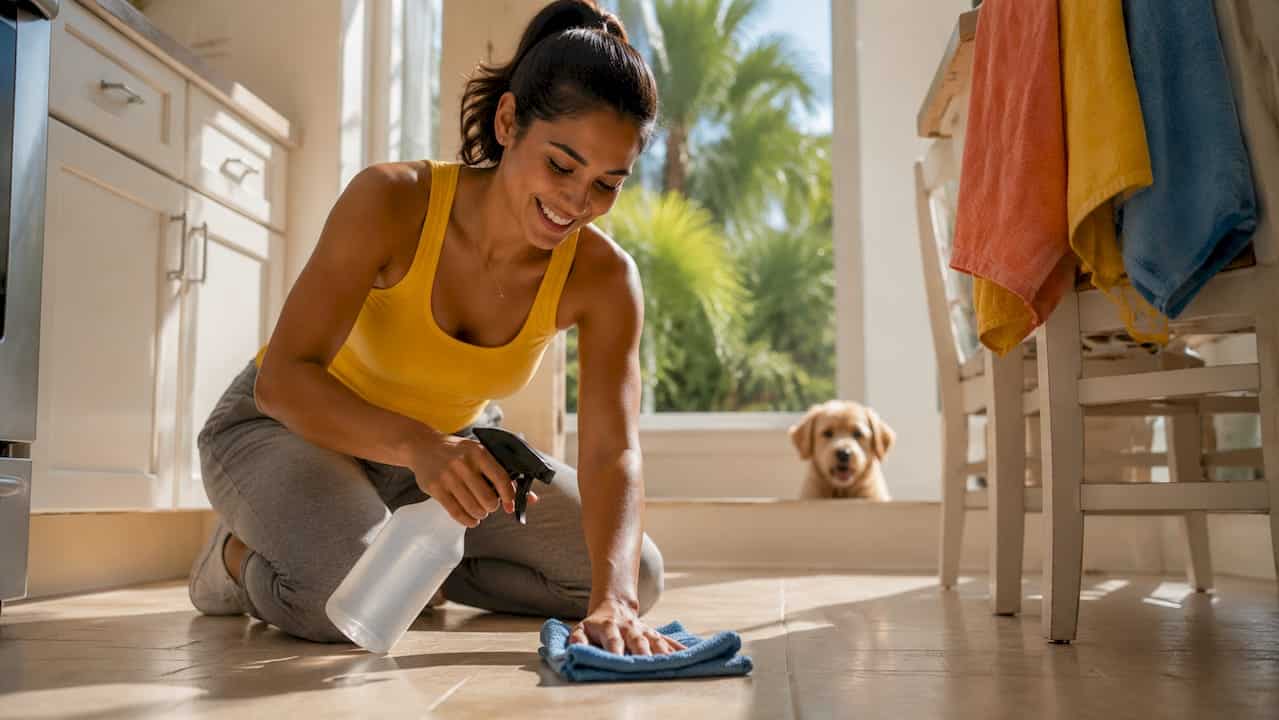
Pet-safe cleaning products are specially formulated to clean effectively without exposing your animals to toxic chemicals or residues that can harm their health. Conventional household cleaners commonly contain ammonia, bleach, phenols, and synthetic fragrances that pose real dangers to dogs, cats, and birds. The ASPCA and the EPA Safer Choice program both recognize that pets face unique chemical exposure risks that most homeowners never consider. If you share your home in Tampa, Clearwater, or St. Petersburg with a four-legged family member, understanding why pet-safe cleaning products matter is the first step toward a genuinely healthier home.
What are the real risks of conventional cleaning products to pets?
Conventional cleaners are formulated for human environments, and that distinction matters more than most people realize. Pets interact with floors, baseboards, and furniture at a much closer range than adults do. Pets are “first responders” to chemical buildup because of their respiratory sensitivity and their proximity to treated surfaces. Birds and cats are especially vulnerable because their respiratory systems process airborne compounds far more intensely than ours do.
The exposure routes are also more varied than most pet owners expect. Pets absorb chemicals through three main pathways: inhalation of airborne residues, direct skin contact with treated floors, and ingestion through grooming. That last route is the most insidious. When your cat walks across a freshly mopped floor and then licks her paws, she is directly ingesting whatever residue your cleaner left behind. Residue ingestion via grooming is a silent exposure pathway that most pet owners never connect to the symptoms they later see in their animals.
The numbers confirm this is not a minor concern. 8.3% of pet poison control calls involve household cleaning products, making cleaners one of the most common sources of pet poisoning. That figure represents thousands of preventable incidents every year. The most dangerous ingredients found in standard household cleaners include:
- Ammonia: Found in glass and multi-surface sprays; causes respiratory irritation and chemical burns
- Bleach (sodium hypochlorite): Toxic to cats and dogs even in diluted form; damages mucous membranes
- Phenols: Common in disinfectant sprays and pine-based cleaners; especially dangerous to cats, who cannot metabolize them
- Quaternary ammonium compounds (quats): Found in many “antibacterial” sprays; linked to respiratory issues and fertility problems in animals
- Synthetic fragrances: Mask chemical odors but introduce additional volatile organic compounds (VOCs) that irritate airways
- Essential oils: Widely used in “natural” products but toxic to many pets, particularly cats and birds
The combination of these ingredients with pets’ grooming habits and low-to-the-ground living creates a compounding risk that conventional cleaners simply were not designed to address.
How do pet-safe cleaning products work?
Pet-safe cleaners, more formally called non-toxic or low-VOC biodegradable cleaners in the professional cleaning industry, achieve effective cleaning through fundamentally different chemistry. Instead of relying on harsh solvents or synthetic disinfectants, they use plant-based surfactants, enzyme formulations, and probiotic cultures to break down dirt, bacteria, and odors at a molecular level.
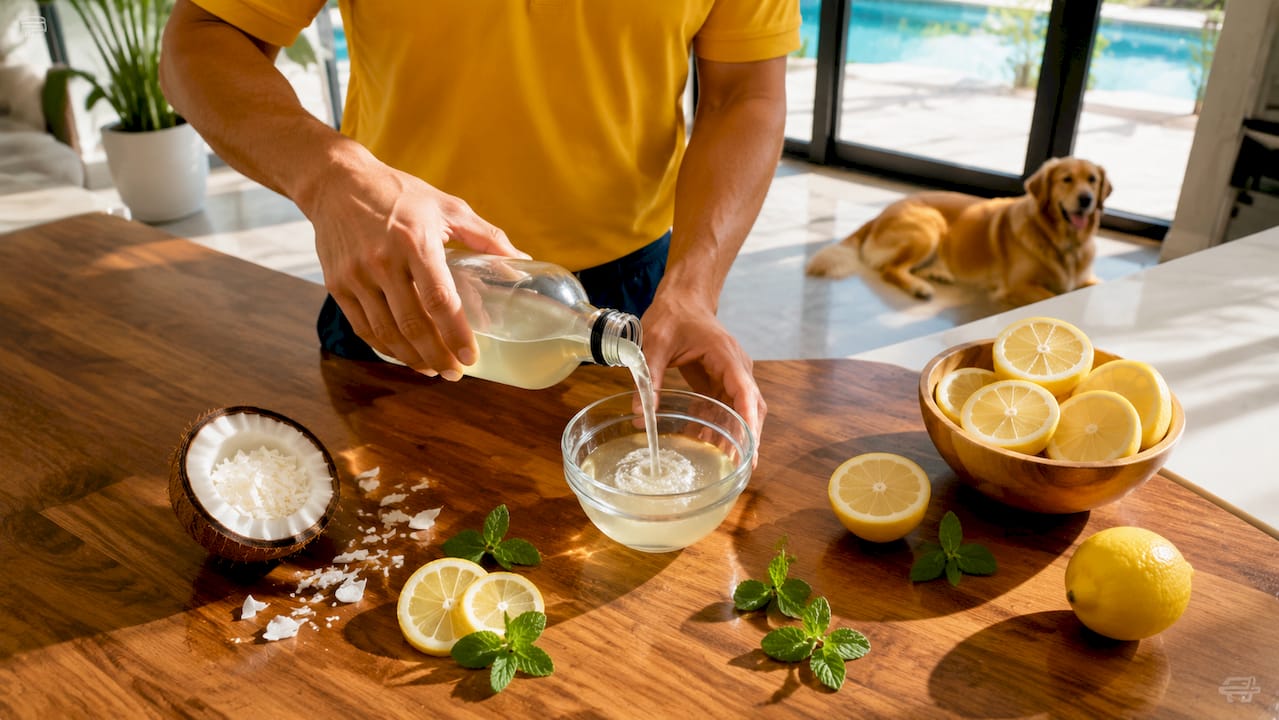
Plant-based surfactants like castile soap and coconut-derived cleaning agents lift grease and grime from surfaces without leaving behind toxic residues. These ingredients biodegrade quickly, which means they do not accumulate on floors or in the air your pets breathe. The EPA Safer Choice program and the Environmental Working Group (EWG) both maintain ingredient databases that rate cleaning product components for human and animal safety. Products carrying the EPA Safer Choice label have been reviewed against strict toxicological standards.
Enzyme and probiotic cleaners take this a step further. Enzyme cleaners use biological catalysts to break down organic matter like urine, feces, and vomit at the molecular level rather than simply masking the odor. Probiotic cleaners go even further by introducing beneficial bacteria that continue working after application. Probiotic action lasts up to 7 days after a single application, which means surfaces stay cleaner for longer without repeated chemical exposure. Traditional disinfectants kill everything on contact, including beneficial microbes, and then leave a chemical residue with no ongoing protective effect.
| Cleaner type | Active mechanism | Residue risk | Ongoing effect |
|---|---|---|---|
| Bleach-based disinfectant | Oxidation kills bacteria | High; toxic residue on surfaces | None after drying |
| Quaternary ammonium spray | Chemical disruption of cell membranes | Moderate to high | None after drying |
| Enzyme cleaner | Biological breakdown of organic matter | Very low | Short-term (hours) |
| Probiotic cleaner | Beneficial bacteria outcompete pathogens | Minimal | Up to 7 days |
| Plant-based surfactant | Lifts and suspends dirt for rinsing | Very low | None; rinse-clean |
Pro Tip: When shopping for pet-friendly cleaning solutions, look for the EPA Safer Choice seal or an EWG “A” rating on the product label. These certifications mean the formula has been independently reviewed for safety, not just marketed as “natural.”
Eco-friendly cleaners with low VOCs reduce respiratory irritation and skin sensitivity, supporting long-term pet health in ways that standard products simply cannot match. For Tampa Bay homes where humidity keeps windows closed and air circulates less freely, this matters even more.
Are “natural” and DIY cleaners actually safe for pets?
The word “natural” on a cleaning product label means almost nothing from a pet safety standpoint. This is one of the most widespread and genuinely dangerous misconceptions among pet owners. Natural ingredients can be highly toxic to animals, and the cleaning aisle is full of products that exploit this misunderstanding.
Essential oils are highly toxic to pets, particularly cats, and they appear in dozens of products marketed as natural, plant-based, or aromatherapy-friendly. Tea tree oil, peppermint oil, eucalyptus, and citrus oils are among the most common offenders. Cats lack the liver enzyme needed to metabolize many of these compounds, so even small amounts can cause neurological symptoms, vomiting, or liver failure. Birds are even more sensitive, and a diffuser running in the same room as a bird can cause serious harm within minutes.
DIY cleaning solutions carry their own risks that deserve a clear breakdown:
- Undiluted white vinegar: The acidity can irritate paws and mucous membranes; safe only when properly diluted (1 part vinegar to 10 parts water)
- Citrus-based cleaners: Limonene and linalool, compounds found in lemon and orange, are toxic to cats even in commercial “natural” cleaners
- Hydrogen peroxide: Effective as a disinfectant but can cause vomiting and esophageal damage if ingested by pets
- Tea tree oil mixtures: No safe dilution exists for cats; even 0.1% concentrations have caused toxicity cases
The genuinely safer DIY options are far simpler. Baking soda neutralizes odors without chemical risk and is safe for most pets in normal household use. Properly diluted white vinegar (well below 10% concentration) works as a mild surface cleaner. Neither is as effective as a commercial enzyme or probiotic cleaner, but both are far safer than essential-oil-based alternatives.
Pro Tip: If you use any essential oil diffuser in your home, run it only in rooms your pets cannot access, and ventilate the space thoroughly before allowing pets back in. This applies even to diffusers marketed as pet-safe.
The core principle here is that “natural” describes origin, not safety. Arsenic is natural. The relevant question is always whether a specific ingredient at a specific concentration is safe for your specific pet species.
How to select and use pet-safe cleaning products effectively
Choosing the right product is only half the equation. How you use it matters just as much for keeping your pets safe during and after cleaning.
-
Read the ingredient list, not the marketing copy. Look for products that list every ingredient. Avoid any formula containing phenol, benzalkonium chloride, formaldehyde, or synthetic fragrance. Seek EPA Safer Choice certification or EWG verification as a shortcut when ingredient lists are unclear.
-
Rinse all hard surfaces after cleaning. Even pet-safe formulas can concentrate on floors if left to dry without rinsing. A clean water wipe-down after mopping removes any remaining surfactant residue and is especially important for cats and dogs who spend time on bare floors.
-
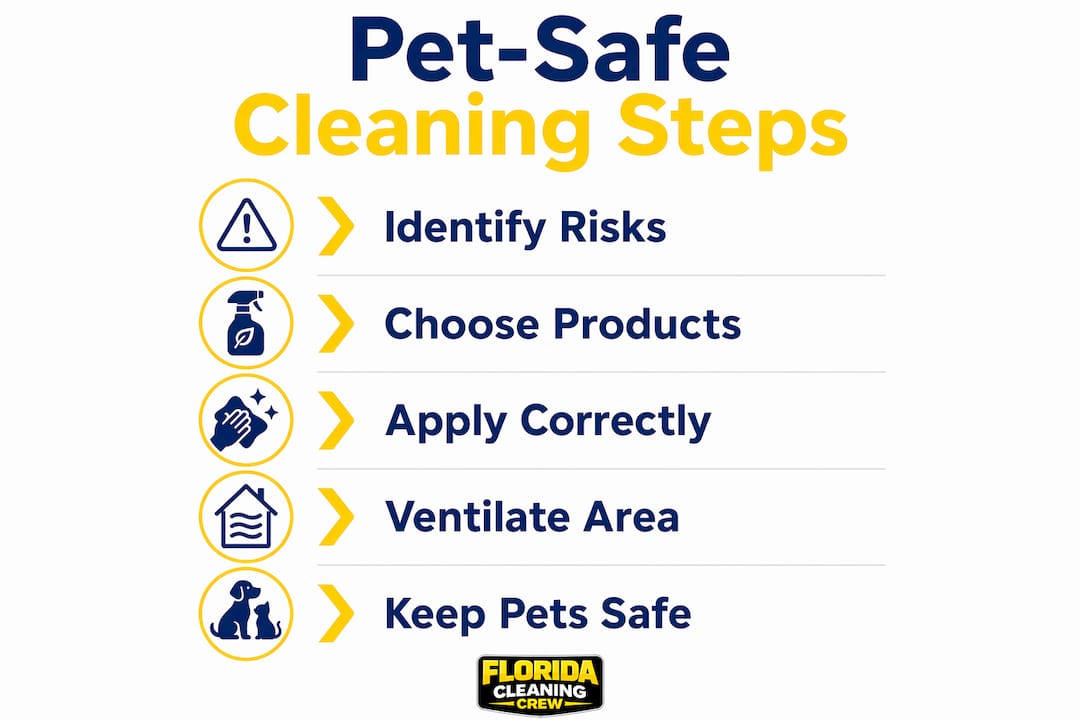
Ventilate during and after cleaning. Open windows and run fans while cleaning, and keep pets out of freshly cleaned rooms for at least 15 to 30 minutes. In Tampa Bay’s humid climate, surfaces take longer to dry, which extends the window of potential contact exposure.
-
Separate pets during the cleaning process. Put dogs in the yard and cats in a room you have already finished cleaning. This eliminates inhalation exposure to spray mist and prevents paw contact with wet surfaces.
-
Store concentrated products securely. Concentrated probiotic pearls can be dangerous if ingested directly by pets. Keep all cleaning products, including those labeled pet-safe, in locked cabinets or on high shelves out of reach.
-
Prioritize high-contact zones. Focus your safest formulas on floors, pet bedding areas, and any surface your pet regularly touches. Reserve stronger products for areas pets cannot access, like the inside of an oven or a high bathroom shelf.
Pro Tip: Ask your veterinarian for a short list of ingredients to avoid based on your specific pet species. A cat owner and a bird owner face different risk profiles, and a vet can give you a targeted list in under two minutes.
For homeowners in St. Petersburg and Clearwater managing multiple pets or older animals with respiratory conditions, these steps are not optional precautions. They are the baseline for responsible pet care.
Comparing pet-safe cleaning product types for different household uses
Not every pet-safe product works equally well across all surfaces and soil types. Matching the right formula to the right job produces better results and avoids the frustration that leads many pet owners to reach back for conventional cleaners.
Specialized pet-safe cleaners remove over 80% of tough pet malodors like cat urine and drool, which traditional all-purpose cleaners consistently fail to neutralize. That performance gap exists because urine odor comes from uric acid crystals that standard surfactants cannot break down. Only enzyme or probiotic formulas dissolve those crystals at the source.
Here is how the main categories compare across common household cleaning tasks:
| Product type | Best for | Pet contact safety | Odor control |
|---|---|---|---|
| Enzyme cleaner | Urine, feces, vomit stains | High | Excellent |
| Probiotic multi-surface spray | Daily floor and surface cleaning | High | Very good (lasting) |
| Plant-based multi-purpose cleaner | Counters, sinks, general surfaces | High | Moderate |
| Non-toxic scrub (baking soda base) | Tubs, tiles, grout | High | Moderate |
| Diluted white vinegar solution | Glass, light surface cleaning | Moderate (avoid cats’ paws) | Low |
A few additional considerations worth knowing before you buy:
- Enzyme cleaners work best when applied generously and left to sit for 10 to 15 minutes before blotting. Wiping immediately reduces effectiveness significantly.
- Probiotic sprays are most cost-effective for daily maintenance cleaning because their lasting action reduces how often you need to re-clean.
- Plant-based multi-purpose cleaners from brands verified by EWG are widely available at Target, Whole Foods, and local Tampa Bay grocery stores, making them the most accessible starting point for most households.
- For pet bedding, look for fragrance-free enzyme formulas specifically labeled safe for fabric. Many general enzyme cleaners are designed for hard floors only.
The eco-friendly cleaning approach used by professional services in Tampa Bay combines these product categories strategically, applying the right formula to each surface type rather than defaulting to one product for everything.
Key takeaways
Pet-safe cleaning products protect animals from toxic chemical exposure through grooming, inhalation, and skin contact, making them the only responsible choice for homes with pets.
| Point | Details |
|---|---|
| Grooming is a hidden exposure route | Pets ingest floor residues when they groom, making residue-free formulas critical for daily cleaning. |
| “Natural” does not mean safe | Essential oils like tea tree and peppermint are toxic to cats and birds regardless of their natural origin. |
| Probiotic cleaners outperform traditional disinfectants | Probiotic action continues for up to 7 days, reducing re-cleaning frequency and ongoing chemical exposure. |
| Ventilation and rinsing are non-negotiable | Even pet-safe products require proper rinsing and airflow to eliminate any residual contact risk. |
| Certification matters | EPA Safer Choice and EWG verification provide independent confirmation of ingredient safety beyond marketing claims. |
What I’ve learned from cleaning Tampa Bay homes with pets
I have been in enough Tampa Bay homes to know that most pet owners are doing their best with incomplete information. They buy a product labeled “natural” or “gentle” and assume their pets are protected. That assumption costs some of them a vet visit they never connected to the mop they used the day before.
The shift I have seen make the biggest difference is not switching to the most expensive pet-safe brand on the market. It is understanding that pets live closer to the floor than we do, groom themselves constantly, and cannot tell you when something is making them feel off. That awareness changes how you clean more than any single product swap.
What I find genuinely underappreciated is the role of ventilation in Tampa Bay specifically. Our humidity keeps homes sealed up more than in drier climates, which means chemical residues linger in the air longer. A conventional cleaner used in a well-ventilated Minnesota home in July is a different risk profile than the same product used in a closed-up St. Petersburg home in August. Local context matters.
The pet owners I have seen make the most progress are the ones who treat cleaning product selection the same way they treat food selection for their animals. They read labels, ask questions, and do not assume that what is safe for humans is safe for their cat or bird. That mindset, more than any specific product, is what actually protects pets over the long term.
The residential cleaning services that get this right are the ones worth trusting with your home.
— Matt
How Floridacc keeps Tampa Bay pets safe during home cleaning

Floridacc serves homeowners across Tampa, Clearwater, and St. Petersburg with residential cleaning built around pet safety and indoor air quality. Every cleaning visit uses EPA Safer Choice certified and low-VOC products selected specifically for homes with dogs, cats, birds, and other animals. There are no hidden ingredients and no synthetic fragrances that linger after the team leaves. For multi-pet households or homes with animals that have respiratory sensitivities, Floridacc offers customized cleaning packages that prioritize the safest available formulas for every surface. If you want a clean home without the chemical risk to your pets, the homeowner cleaning guide is a good place to start, or you can request a free estimate directly through the site.
FAQ
What makes a cleaning product safe for pets?
A pet-safe cleaning product contains no phenols, quaternary ammonium compounds, synthetic fragrances, or essential oils toxic to animals. Look for EPA Safer Choice certification or EWG verification as independent confirmation of ingredient safety.
Can I use bleach if I rinse the surface thoroughly?
Bleach residue is difficult to fully remove from porous surfaces, and cats and dogs with sensitive respiratory systems can still react to trace amounts. Enzyme or plant-based cleaners achieve comparable disinfection without the residue risk.
Are essential oil cleaners safe for cats?
Essential oils are toxic to cats regardless of dilution level, because cats lack the liver enzyme needed to metabolize many of these compounds. Tea tree, peppermint, eucalyptus, and citrus oils are among the most dangerous.
How long should I keep pets out of a cleaned room?
Keep pets out of freshly cleaned rooms for at least 15 to 30 minutes, or until all surfaces are fully dry and the space has been ventilated. In humid Tampa Bay conditions, allow extra time for floors to dry completely.
Do pet-safe cleaners actually work on urine odors?
Enzyme-based pet-safe cleaners remove over 80% of tough pet malodors like cat urine by breaking down uric acid crystals at the molecular level, which standard all-purpose cleaners cannot do. Apply generously and allow 10 to 15 minutes of contact time before blotting for best results.