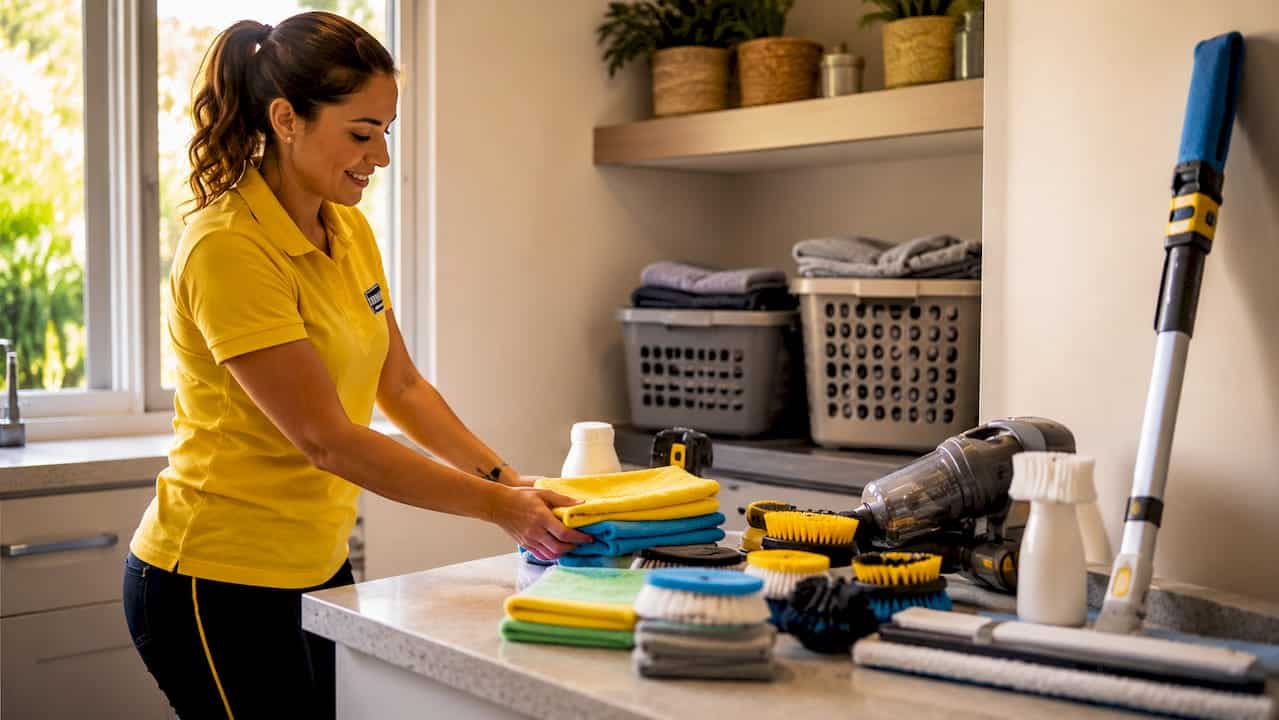
Must-have cleaning tools are durable, versatile, and effective items that help homeowners and renters maintain spotless living spaces without overcomplicating the process. The right kit does not require dozens of products. Classic tools like microfiber cloths, scrub brushes, and spray bottles do 90% of the cleaning heavy lifting in most homes. Pair those with one or two practical gadgets, and you have everything you need. Basic cleaning supplies cost between $140 and $200 to get started, with vacuum prices ranging from $60 to $400 depending on features. That is a modest investment for a genuinely clean home.
1. What are the top must-have cleaning tools for every home?
The best essential cleaning supplies share three traits: they work on multiple surfaces, they last through heavy use, and they are easy to maintain. Before buying anything, it helps to understand which categories of tools cover the most ground. The sections below break down manual tools, high-tech gadgets, and cleaning solutions so you can build a kit that fits your home and budget.
2. Microfiber cloths
Microfiber cloths are the single most useful item in any cleaning kit. One cloth replaces paper towels, dusting rags, and glass wipes. A quality pack of 12 costs under $20 and lasts for hundreds of washes without losing effectiveness.
The key advantage is the fiber structure. Microfiber grabs and holds dust, bacteria, and grease rather than pushing it around. On hardwood floors in Tampa homes, where humidity can leave surfaces sticky, a dry microfiber cloth picks up fine debris without scratching the finish.
- Use damp for countertops, appliances, and bathroom surfaces
- Use dry for dusting shelves, blinds, and electronics
- Wash separately from cotton towels to preserve the fiber structure
Pro Tip: Color code your cloths by room. Use blue for bathrooms, yellow for kitchens, and green for general surfaces. This prevents cross-contamination and makes your routine faster.
3. Scrub brushes and sponges
A good scrub brush reaches grout lines, tile edges, and corners that cloths cannot touch. Stiff-bristle brushes work on bathroom tile and outdoor furniture. Softer brushes handle dishes and delicate surfaces without scratching.
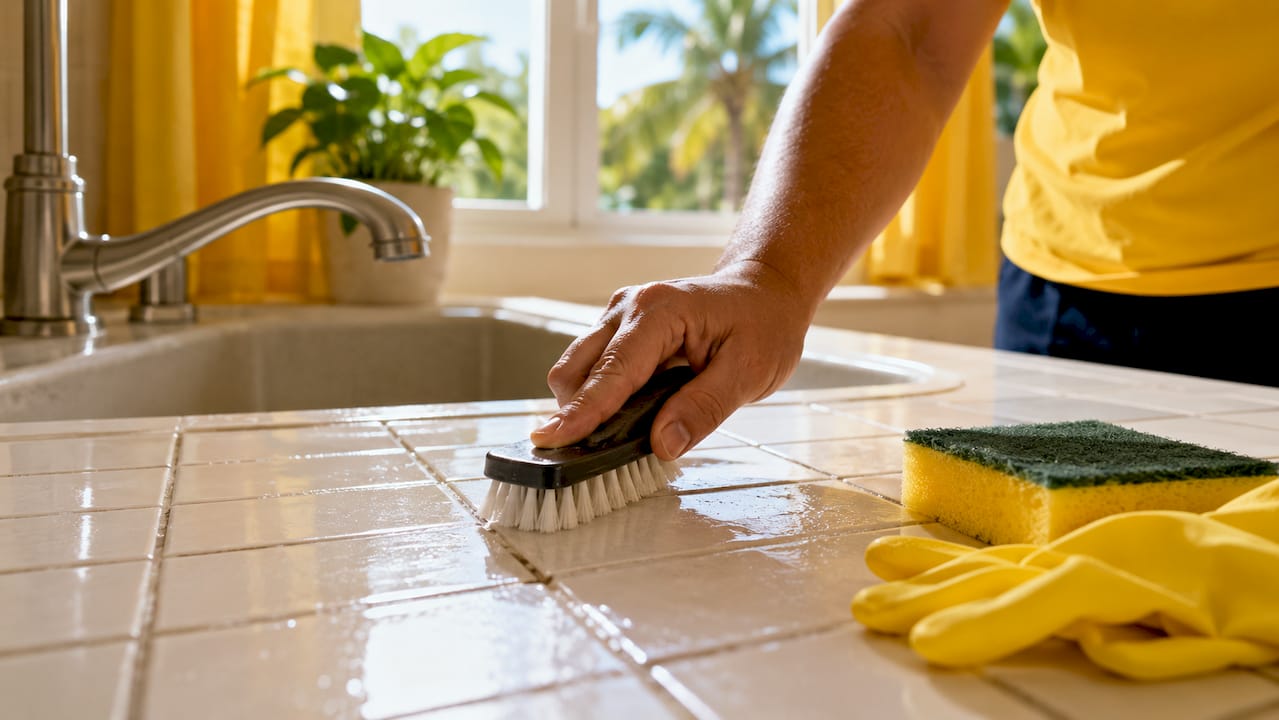
Sponges fill a different role. The dual-sided design, with a soft face and an abrasive back, handles most kitchen tasks. Replace sponges every two to three weeks. A sponge that smells bad is spreading bacteria, not removing it.
For Tampa Bay homeowners dealing with mold-prone grout in humid bathrooms, a narrow grout brush is worth adding to your kit. It costs under $5 and saves significant scrubbing time on tile joints.
4. Broom, dustpan, and mop
A broom and dustpan combination handles daily floor maintenance faster than any vacuum for hard floors. An angled broom reaches under furniture and into corners. A rubber-edged dustpan picks up fine particles without leaving a line of debris behind.
Mops come in three practical types for home use. String mops hold a lot of water and work well on large tile floors. Spray mops are faster and better suited to sealed hardwood or laminate. Steam mops, like the Bissell SpinWave, operate 80% quieter than comparable models and heat up in 20 seconds. That speed matters when you are cleaning between tasks on a busy day.
For most homes, a spray mop covers daily needs. A steam mop is worth the upgrade if you have tile throughout or deal with sticky messes regularly.
5. Cleaning gloves and spray bottles
Cleaning gloves protect your hands from harsh chemicals and hot water. Thick rubber gloves work for heavy scrubbing. Thinner nitrile gloves are better for quick tasks where you need dexterity.
Reusable spray bottles are just as important. Filling your own bottles with diluted all-purpose cleaner costs a fraction of buying pre-mixed sprays. Label each bottle clearly and keep one in every main cleaning area. This small habit cuts the time you spend walking back and forth during a cleaning session.
6. Cordless vacuum and handheld vacuum
A cordless stick vacuum is the best cleaning equipment for home use when it comes to daily floor care. No cord means you actually use it more often. A quick five-minute pass through the kitchen and living room becomes a habit rather than a chore.
Handheld vacuums handle spot messes on upholstery, stairs, and car interiors. Look for models with brushless motors. They run cooler, last longer, and maintain suction better than brushed motor alternatives.
Pro Tip: Keep your handheld vacuum on a charging dock in a visible spot. When it is out of sight, it gets ignored. When it is accessible, you use it.
7. Robot vacuums with self-cleaning stations
Robot vacuums have moved well past novelty status. Advanced models now offer up to 30,000 Pa suction with self-cleaning mops and dust storage for up to 68 days. That means you can run the robot daily without emptying a bin every other day.
The eufy Robot Vacuum Omni S2 uses a HydroJet 2.0 roller mop with 15N pressure and electrolyzed water to remove stains automatically. That level of automation is genuinely useful for busy Tampa households where sand and humidity create constant floor maintenance needs.
The real value of a robot vacuum is consistency. It runs while you are at work or asleep, so floors stay cleaner between your manual sessions. Evaluate models based on suction power, mop function, and whether the base station handles emptying and washing automatically.
8. Electric spin scrubbers
Electric spin scrubbers are the top cleaning gadgets for bathrooms and kitchens. They replace the physical effort of scrubbing tile, grout, and tub surrounds. The difference between a good model and a cheap one comes down to torque.
Many entry-level scrubbers stall under pressure, which makes them useless on tough grime. The HOTO Grip spin scrubber spins at 400 RPM and maintains that speed even when pressed firmly against a surface. That consistency is what separates a useful tool from a frustrating one.
Look for models that include multiple brush head attachments. A flat pad handles large tile surfaces. A cone brush fits into grout lines and faucet bases. A corner brush reaches where flat pads cannot.
9. All-purpose cleaning solutions
Home organization experts argue that a few basics like all-purpose soap, baking soda, and vinegar can replace dozens of specialty cleaners. This approach saves money, reduces storage clutter, and simplifies your routine.
Here is how the core three work together:
- All-purpose soap: Diluted dish soap in a spray bottle handles countertops, appliances, and most hard surfaces
- White vinegar: Mixed with water at a 1:1 ratio, it cuts through mineral deposits, soap scum, and light grease
- Baking soda: Used as a paste with water, it scrubs without scratching and neutralizes odors in drains and refrigerators
Hydrogen peroxide at 3% concentration works as a disinfectant on cutting boards and bathroom surfaces. It is safer than bleach for most home uses and does not require rinsing on non-porous surfaces.
Specialty cleaners like oven degreaser or toilet bowl cleaner are worth keeping on hand for specific tasks. Use them sparingly. Most daily cleaning does not require them.
10. How to select and maintain your tools for longevity
Choosing quality over quantity is the single most important buying principle for cleaning tools you need. Two good microfiber cloths outperform ten cheap ones. A well-maintained vacuum with clean filters outperforms a newer model with clogged airways.
Maintaining your cleaning tools often impacts cleaning effectiveness more than the power or technology of the tools themselves. A vacuum with a full bin loses suction fast. A mop head that has not been washed spreads dirt instead of removing it.
- Wash microfiber cloths after every two to three uses in warm water without fabric softener
- Rinse mop heads after each use and allow them to dry fully before storing
- Empty vacuum bins when they reach half full, not completely full
- Check brush rolls on vacuums monthly and remove tangled hair or string
- Replace sponges every two to three weeks regardless of appearance
Pro Tip: Try the 20/10 cleaning rule: clean for 20 minutes, then take a 10-minute break. This method trains your brain to associate cleaning with a reward, which makes it easier to stay consistent over time.
Grouping your supplies in a portable caddy dramatically boosts cleaning efficiency and encourages routine maintenance. Keep one caddy per floor if your home has multiple levels. Everything in one place means no wasted trips and no excuses to skip a room.
11. Which tools work best for different home setups?
Not every home has the same cleaning challenges. Floor type, pets, and living situation all affect which tools deliver the best results. The table below matches common home setups to the tools that perform best in each situation.
| Home setup | Best tools | Why it works |
|---|---|---|
| Pet owners | Robot vacuum with anti-tangle brush, lint roller | Anti-tangle brush designs reduce maintenance time and prevent suction loss from pet hair |
| Renters on a budget | Microfiber cloths, spray mop, cordless handheld vacuum | Low cost, no installation required, easy to move between homes |
| Hardwood floors | Dry microfiber mop, spray mop with hardwood solution | Avoids excess moisture that warps wood over time |
| Tile and grout | Electric spin scrubber, steam mop, grout brush | High torque and heat break down mineral deposits and mold |
| Small spaces | Handheld vacuum, compact caddy, multi-surface spray | Fewer tools needed; portability matters more than power |
| Seasonal deep cleaning | Steam mop, electric scrubber, pressure washer (exterior) | High-intensity tools for tasks done a few times per year |
For homeowners in St. Petersburg and Clearwater, where salt air accelerates buildup on windows and exterior surfaces, adding a bin cleaning guide and a pressure washer to your seasonal kit makes a real difference. Salt deposits on outdoor furniture and trash bins build up faster than in inland areas.
Renters face a specific constraint: they cannot modify the home. That means no permanent installations and no tools that risk damaging surfaces. A spray mop, a cordless vacuum, and a caddy of multipurpose solutions cover nearly every renter’s cleaning need without risking a security deposit.
Key takeaways
The most effective home cleaning kit combines a small set of versatile manual tools with one or two well-chosen gadgets, maintained consistently and organized for easy access.
| Point | Details |
|---|---|
| Manual tools first | Microfiber cloths, scrub brushes, and spray bottles handle 90% of daily cleaning tasks. |
| Choose gadgets by torque and function | Electric scrubbers and robot vacuums only add value when they maintain performance under real use conditions. |
| Simplify your solutions | All-purpose soap, vinegar, and baking soda replace most specialty cleaners and reduce clutter. |
| Maintain tools regularly | Cleaning your tools after each use preserves their effectiveness longer than upgrading to newer models. |
| Match tools to your setup | Pet owners, renters, and homeowners with different floor types each need a slightly different core kit. |
What I have learned after years of watching people clean
Most people buy too many cleaning products and too few good tools. I see it constantly. A cabinet full of specialty sprays, a cheap mop that falls apart in three months, and a vacuum that loses suction because nobody cleaned the filter. The result is a home that never feels truly clean despite the effort.
The routine home cleaning guide I recommend to Tampa Bay homeowners always starts with the same foundation: three to four microfiber cloths, one good spray mop, a cordless vacuum, and a caddy with three multipurpose solutions. That is it. Everything else is optional.
Technology is genuinely useful when it solves a specific problem you actually have. A robot vacuum is worth every dollar if you have pets or hardwood floors throughout your home. It is a waste of money if you live in a small apartment and clean once a week anyway. The same logic applies to electric scrubbers. If your bathroom tile has grout that you dread scrubbing, a high-torque scrubber pays for itself in the first month. If your bathroom is small and easy to wipe down, a good brush and some baking soda does the same job.
The one habit that separates people with genuinely clean homes from people who feel like they are always behind is consistency, not equipment. A five-minute daily pass with a microfiber cloth and a handheld vacuum keeps a home cleaner than a three-hour Saturday session every two weeks. Build the habit around the tools you already have before spending money on upgrades.
— Matt
When your tools are not enough, Floridacc is
Even the best home cleaning kit has limits. Grout that has not been deep cleaned in years, buildup behind appliances, or a full move-out clean requires more than a spray bottle and a mop.

Floridacc serves homeowners and renters across Tampa, Clearwater, and St. Petersburg with residential cleaning services built around real results. The team uses professional-grade equipment and eco-friendly products to handle the deep cleaning that your everyday tools cannot reach. Whether you need a one-time deep clean or a recurring service to stay ahead of the mess, Floridacc makes it easy to book and easier to maintain. Request a free estimate at floridacc.com and see what a professional clean actually looks like.
FAQ
What are the most important cleaning tools for a home?
Microfiber cloths, a spray mop, a cordless vacuum, scrub brushes, and a set of spray bottles cover the majority of home cleaning tasks. These tools handle daily maintenance across most floor types and surfaces.
How much does a basic cleaning kit cost?
Basic cleaning supplies cost around $40, cleaning solutions around $20, and a vacuum between $60 and $400. A complete starter kit runs between $140 and $200 depending on the vacuum you choose.
Are robot vacuums worth buying for home use?
Robot vacuums are worth the investment for pet owners and homes with hard floors throughout. Models with self-cleaning stations and high suction power run consistently without daily manual effort.
What cleaning solutions do I actually need?
All-purpose soap, white vinegar, baking soda, and hydrogen peroxide cover nearly every cleaning task in a home. Specialty cleaners like oven degreaser are useful but only needed occasionally.
How often should I replace my cleaning tools?
Replace sponges every two to three weeks, mop heads every two to three months, and vacuum filters every three to six months. Microfiber cloths last for hundreds of washes when cared for properly.