TL;DR:
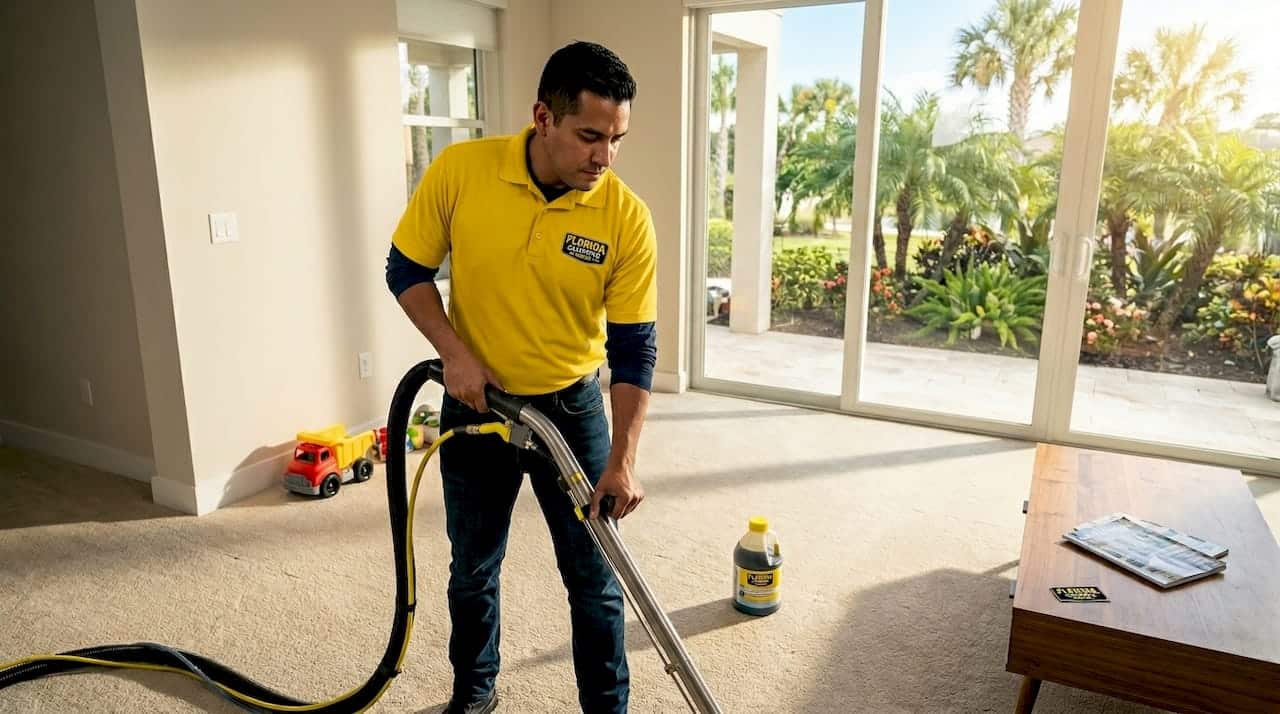
- Most “steam cleaning” actually refers to hot water extraction, which targets deep soil and contaminants.
- Regular professional cleaning improves indoor air quality, extends carpet lifespan, and prevents mold growth.
- Proper method, equipment, and timely drying are essential for effective cleaning, especially in humid Tampa Bay.
Most Tampa Bay homeowners book what they think is “steam cleaning” and assume the job is done the modern, high-tech way. The truth? What most carpet cleaning companies actually perform is a completely different process called hot water extraction, and understanding that difference could save you money, protect your carpets, and keep your indoor air quality genuinely healthy. Carpet cleaning is far more than running a machine over your floors. It involves removing dry soil, embedded allergens, and biological contaminants while carefully managing moisture so carpets dry properly and odors stay away. This guide breaks down every method, the real benefits, what to expect from a professional appointment, and how to keep your carpets in top shape between services.
Table of Contents
- What is carpet cleaning? The essentials explained
- Common carpet cleaning methods: Hot water extraction vs. others
- Benefits of professional carpet cleaning for your property
- What to expect: The professional carpet cleaning process
- Carpet cleaning frequency and maintenance tips
- Our perspective: What most homeowners miss about carpet cleaning
- Get pro-level carpet cleaning and more with Florida Cleaning Crew
- Frequently asked questions
Key Takeaways
| Point | Details |
|---|---|
| True carpet cleaning defined | Professional carpet cleaning removes embedded contaminants and uses industry standards for effective results. |
| Know your methods | Most ‘steam cleaning’ is hot water extraction, offering deep cleaning and effective soil removal. |
| Routine vs. restorative care | Routine cleaning handles everyday soil; restorative cleaning targets deep contamination for a healthier home. |
| Choose qualified pros | Industry standards matter—pick services that follow recognized best practices to avoid residue and odors. |
| Maintenance extends results | Regular vacuuming and spot treatments extend the life of your professionally cleaned carpets. |
What is carpet cleaning? The essentials explained
First, let’s get clear on what professional carpet cleaning actually means.
Most people picture vacuuming when they hear “carpet cleaning,” but professional carpet cleaning is an entirely different animal. Vacuuming removes loose surface debris, nothing more. True professional carpet cleaning goes much deeper, targeting the stuff that vacuuming can never reach: embedded dry soil, sticky residues, biological contaminants like pet dander and dust mites, allergens, and bacteria that settle deep into carpet fibers over time.
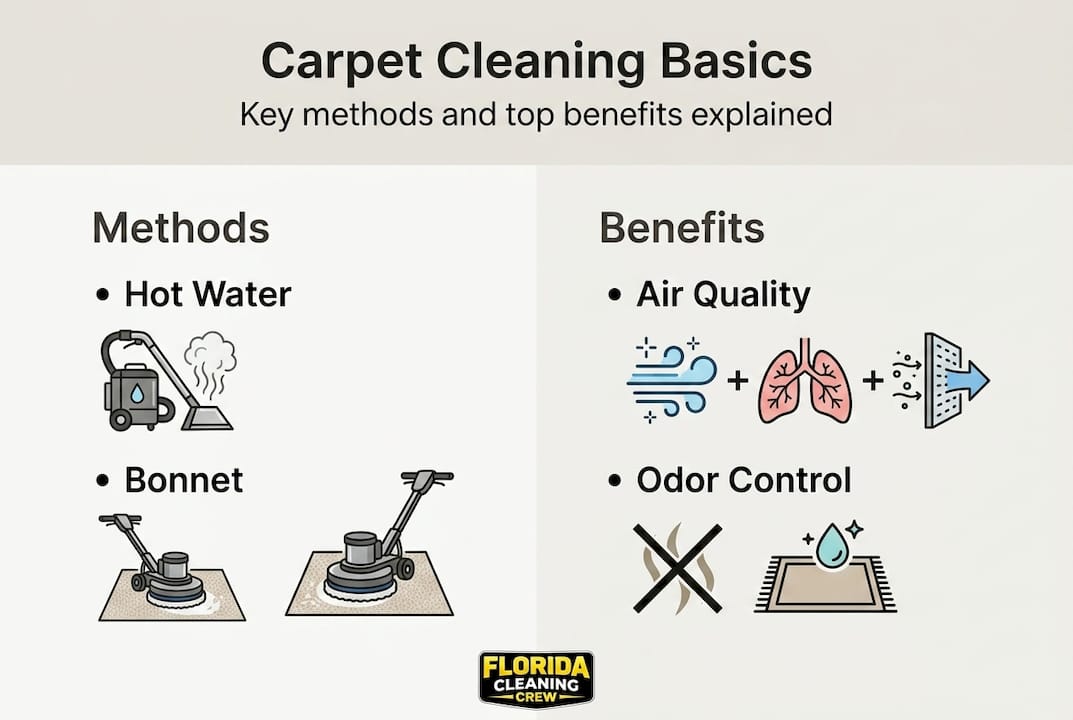
The IICRC S100 standard defines it clearly: “Carpet cleaning is professional textile-floor-care work intended to remove both dry soil and embedded contaminants from carpet fibers (and typically to manage moisture and drying to avoid residue or odor).” That last part about moisture is more important than most people realize. Improper moisture management is one of the most common reasons carpets smell bad after cleaning or develop mold underneath the pad.
Professional carpet cleaning targets several distinct types of contaminants:
- Dry soil: Fine particulates like sand, dust, and grit that work their way into carpet fibers and act like tiny razor blades, cutting and degrading fiber structure over time
- Oily soils: Cooking grease, skin oils, and tracked-in grime that bind to carpet fibers and make surfaces look dull and gray
- Biological contaminants: Pet dander, dust mite waste, mold spores, and bacteria that trigger allergies and respiratory issues
- Stains and residues: Spilled liquids, food particles, and old cleaning product residue that bonds to carpet fibers
Industry standard note: The IICRC S100 standard, the national benchmark for professional carpet care, outlines minimum procedures for cleaning, moisture management, and drying to protect both the carpet and the home’s air quality. Certified cleaners follow this standard. Non-certified services often don’t.
Working with carpet cleaning experts who follow these industry standards makes a measurable difference in outcome. The standard matters because it sets expectations for everything from pre-inspection to final drying time. What sets pros apart from budget operations is usually their commitment to these benchmarks, not just their equipment.
One thing Florida homeowners deal with that residents in drier climates don’t is elevated humidity. Tampa Bay’s climate means carpets absorb moisture from the air more readily, which makes proper drying after any cleaning method especially critical. A carpet that stays wet for more than 24 hours in Florida’s humidity can develop mold underneath the pad, completely undoing the benefits of the cleaning.
Understanding these fundamentals helps you ask the right questions when hiring a service and sets realistic expectations for what good carpet cleaning actually delivers.
Common carpet cleaning methods: Hot water extraction vs. others
With a clear definition, let’s see how the most common carpet cleaning methods stack up.
The term “steam cleaning” is everywhere in carpet cleaning marketing, and it creates real confusion. Most services advertised as steam cleaning are actually performing hot water extraction (HWE). According to flooring industry experts, a common “carpet cleaning” approach sold as “steam cleaning” is actually hot water extraction: hot water and cleaning solution are injected into the carpet pile and then extracted with powerful suction. True steam cleaning uses superheated dry steam, which is rarely used on residential carpet because of the risk of fiber damage and high cost. The confusion is understandable, but it matters when evaluating what you’re actually paying for.
Here’s a clear breakdown of the main methods available:
| Method | How it works | Drying time | Best for | Residue risk |
|---|---|---|---|---|
| Hot water extraction (HWE) | Hot water and solution injected, then extracted | 6 to 12 hours | Deep cleaning, heavily soiled carpet | Low if done correctly |
| Dry compound cleaning | Absorbent powder worked into carpet, then vacuumed | Under 1 hour | Light maintenance, quick turnovers | Low |
| Bonnet cleaning | Rotary machine with an absorbent pad | 1 to 2 hours | Commercial maintenance cleaning | Moderate |
| Encapsulation | Crystal-forming chemical traps soil, then vacuumed | 1 to 2 hours | Interim maintenance | Low to moderate |
| True steam cleaning | Superheated dry steam applied to surface | 2 to 4 hours | Sanitizing hard surfaces, limited carpet use | Very low |
For most residential and rental properties in Tampa Bay, hot water extraction is the industry gold standard for deep cleaning. It physically flushes contaminants out of the carpet rather than just masking them. The drawback is longer drying time, which can be a challenge for Airbnb hosts or property managers doing quick turnovers. That’s where dry compound or encapsulation methods can fill a practical gap, though they don’t match HWE for deep soil removal.
Understanding these deep cleaning steps is especially useful for properties that see high foot traffic. Bonnet cleaning, for instance, is popular in hotels because it’s fast, but it only cleans the top third of the carpet fiber. Over time, soil migrates back to the surface, meaning it looks clean for a few days and then quickly looks dirty again. It’s a maintenance tool, not a true deep cleaning solution.
For a side-by-side technical comparison of HWE vs true steam cleaning, reviewing the chemistry and mechanics helps clarify exactly what each method accomplishes at the fiber level.
Pro Tip: Always ask your carpet cleaner specifically whether they use truck-mounted or portable extraction equipment. Truck-mounted units generate higher water pressure and stronger suction, which means faster drying times and better soil removal compared to portable machines. In Tampa Bay’s humidity, faster drying is a significant advantage.
For property managers handling lease turnovers, a practical approach is to use deep cleaning explained as a framework: schedule HWE between tenants for thorough cleaning and use interim maintenance methods like encapsulation every few months during a tenancy.
Benefits of professional carpet cleaning for your property
Now that you know what methods are out there, let’s look at why professional cleaning makes a difference.
The benefits of regular professional carpet cleaning go well beyond aesthetics, though a freshly cleaned carpet absolutely does improve the way a room looks and feels. For Tampa Bay homeowners and property managers, the stakes are higher than just appearances.
Indoor air quality. Carpets act as filters, trapping airborne particles like dust, pollen, pet dander, and mold spores. Over time, those filters fill up, and foot traffic kicks particles back into the air you breathe. Professional cleaning removes embedded soil and contaminants that accumulate in carpet fibers, improving the air quality of the space significantly. For households with children, elderly residents, or anyone with asthma or allergies, this is a genuine health issue, not a luxury.
Longer carpet lifespan. Dry soil particles trapped in carpet fibers are abrasive. Every time someone walks across the carpet, those particles grind against the fibers, causing premature wear. Regular professional extraction removes that abrasive material and extends the functional life of your carpet by years. Given that replacing carpet in an average Tampa Bay home can cost anywhere from $2,000 to $8,000 depending on square footage, extending carpet life through routine professional cleaning is a straightforward financial decision.
Appearance and property value. First impressions matter, especially in the rental and real estate markets. Clean carpets signal a well-maintained property and can directly influence a tenant’s decision to sign a lease or a buyer’s willingness to make an offer. Property managers who invest in regular professional carpet care report fewer complaints about property condition and higher tenant satisfaction overall.
Key benefits at a glance:
- Removes allergens and biological contaminants that vacuuming misses
- Restores carpet appearance and texture, making rooms feel fresher
- Extends carpet lifespan by removing abrasive embedded soil
- Prevents mold growth by addressing moisture issues before they develop
- Reduces odors from pets, cooking, and everyday use
- Supports a healthier indoor environment for occupants
Mold and odor prevention. In Tampa Bay’s humid climate, carpets that absorb moisture from spills, tracked-in rain, or even ambient humidity can develop mold in the padding beneath. Professional cleaning paired with proper drying protocols removes the organic material that mold feeds on. This is especially important in rental properties where the previous tenant’s habits may have left behind moisture damage you can’t see on the surface.
Scheduling deep cleaning on a consistent calendar rather than waiting until carpets look visibly dirty is one of the smartest moves property managers can make. By the time a carpet looks truly dirty, the embedded soil load is already causing fiber damage. Proactive cleaning is always cheaper than reactive replacement.
What to expect: The professional carpet cleaning process
Understanding the benefits matters, but what will actually happen when you schedule a professional cleaning?
Knowing what a professional appointment involves helps you prepare your space, set expectations, and get the best results from the service. The process is more involved than most people expect.
Preparation steps for you:
- Clear small items, breakables, and personal belongings from carpeted areas before the team arrives
- Secure pets in a separate area so they don’t walk through wet carpet or interfere with equipment
- Identify any specific stains or problem areas and point them out during the initial inspection
- Move fragile or irreplaceable furniture items yourself rather than relying on the cleaning team to handle them
- Plan to keep foot traffic off cleaned areas for at least 6 to 12 hours after service
The typical professional carpet cleaning process:
- Pre-inspection: Technicians assess carpet type, fiber composition, and soil levels to choose the appropriate method and cleaning solution
- Pre-vacuuming: Dry soil is removed first with a commercial vacuum, because injecting water into a heavily soiled carpet without pre-vacuuming pushes dry soil deeper into the fibers
- Pre-treatment: Spot and stain pre-treatment is applied to problem areas and allowed to dwell before main cleaning begins
- Agitation: A rotary brush or grooming rake works the pre-treatment into the fibers to loosen embedded soil
- Hot water extraction: The main cleaning pass injects hot water and solution, then immediately extracts it along with loosened contaminants
- Post-treatment: Spot checks address any remaining stains, and a neutralizing rinse removes any cleaning agent residue
- Grooming and drying: Carpet is groomed with a rake to lift the pile, and airflow is maximized to begin drying
IICRC minimum procedures and methods are outlined by national standards to avoid common problems like residue and odor. A professional following these standards will always do a pre-inspection and pre-vacuum before the main cleaning. If a cleaner skips straight to the wet cleaning step, that’s a sign they’re cutting corners.
| Stage | Time required | What it achieves |
|---|---|---|
| Pre-inspection | 5 to 10 minutes | Identifies problem areas and fiber type |
| Pre-vacuuming | 10 to 20 minutes | Removes dry soil before moisture is introduced |
| Pre-treatment and agitation | 10 to 15 minutes | Loosens embedded contaminants |
| Hot water extraction | 20 to 45 minutes per room | Core soil and contaminant removal |
| Post-treatment and grooming | 10 to 15 minutes | Addresses residual spots, sets fiber pile |
| Drying | 6 to 12 hours | Complete moisture evaporation |
Pro Tip: Open windows and run ceiling fans or air conditioning after your carpet cleaning appointment. In Tampa Bay’s humidity, maximizing airflow dramatically reduces drying time and prevents moisture from lingering in the padding. Some professional cleaners bring air movers, which speeds the process even further.
Reviewing a pre-cleaning your rooms checklist before your appointment helps avoid last-minute delays. Property managers handling lease turnovers can also use a move-in cleaning checklist to coordinate carpet cleaning with the broader property preparation process.
Carpet cleaning frequency and maintenance tips
After a thorough professional cleaning, ongoing maintenance makes all the difference.
The frequency of professional carpet cleaning isn’t one-size-fits-all. It depends on your specific situation, how the space is used, and who (or what) lives in it.
General guidelines for cleaning frequency:
- Single-adult households with no pets: Once every 12 to 18 months
- Families with children: Every 6 to 12 months
- Pet owners: Every 4 to 6 months, sometimes more for heavy shedders or accident-prone animals
- Rental properties and Airbnb units: Between every tenancy change, plus at least once during long-term leases
- High-traffic commercial or multi-use spaces: Every 3 to 6 months
The IICRC distinguishes between routine cleaning, which maintains appearance and hygiene, and restorative cleaning, which addresses significant contamination or damage. Routine cleaning keeps carpets in good condition. Restorative cleaning is needed when routine maintenance has been neglected or when a major event like flooding, a pet accident, or a heavy soiling episode has occurred. Restorative cleaning is more intensive, takes longer, and costs more because it requires additional passes, stronger treatments, and extended drying time.
Practical maintenance tips to extend the time between professional cleanings:
- Vacuum consistently. High-traffic areas should be vacuumed two to three times per week. Low-traffic bedrooms can go once a week. This removes loose soil before it embeds.
- Use doormats at every entry point. A good quality mat outside and a second absorbent mat inside each door captures soil and moisture before it reaches your carpet. Studies show that proper matting systems can reduce the amount of soil tracked onto carpet by up to 80%.
- Address spills immediately. Blot spills with a clean white cloth from the outside of the spill toward the center. Never rub or scrub, which spreads the stain and pushes it deeper into fibers.
- Use the right spot cleaner. Enzyme-based cleaners work best for pet accidents because they break down the organic compounds causing both the stain and the odor. Avoid cleaners with heavy fragrances that mask odors without eliminating them.
- Rotate furniture periodically. Furniture legs create pressure points that compact carpet fibers. Moving furniture a few inches every six months prevents permanent crushing and allows fibers to recover.
Pro Tip: For rental properties, build carpet cleaning into your turnover budget and lease terms from the start. Specifying in the lease agreement that professional carpet cleaning is required at move-out removes ambiguity and reduces disputes over security deposits.
Understanding how often to deep clean your home helps you plan a maintenance calendar that keeps carpets fresh without over-cleaning, which can accelerate wear if done incorrectly.
Our perspective: What most homeowners miss about carpet cleaning
All the practical information aside, here’s what we’ve learned the hard way, and what you won’t hear from marketing brochures.
The biggest mistake Tampa Bay homeowners make is confusing “clean-looking” with genuinely clean. Carpets can look presentable on the surface while harboring months of embedded soil, bacteria, and allergens deep in the pile. Conversely, some people schedule professional cleaning only when the carpet looks visibly dirty, at which point the abrasive soil has already shortened the carpet’s lifespan significantly.
Here’s the counterintuitive truth: the best time to clean your carpet is before it looks like it needs it.
Method choice matters more than most marketing makes clear. A cheap service using a portable extraction unit with low suction and cool water will leave behind more moisture and more residue than a truck-mounted unit using properly heated water. The carpet may look similar immediately after, but in Tampa Bay’s humidity, residue left in fibers attracts new soil faster. Within a few weeks, a poorly cleaned carpet looks dirty again, and the homeowner assumes carpet cleaning “just doesn’t last.” The method and the equipment were the problem, not the carpet.
We’ve also seen a pattern in rental properties where property managers focus entirely on cost per cleaning and skip asking about drying time and extraction method. A cheap bonnet cleaning job might cost less upfront, but it leaves soil in the lower carpet fibers and can leave behind enough moisture to encourage mold growth under the pad in Florida’s climate.
Our practical wisdom: insist on professional cleaning differences before booking any service. Ask whether the technician is IICRC-certified. Ask about their drying time expectations. Ask what equipment they’re using. A legitimate professional cleaner will answer these questions confidently and specifically, not vaguely.
Get pro-level carpet cleaning and more with Florida Cleaning Crew
Ready to see and feel the difference professional cleaning makes?
At Florida Cleaning Crew, we bring certified, experienced technicians to homes and properties across the Tampa Bay area. Our Tampa Bay carpet cleaning services follow industry-standard protocols for extraction, drying, and spot treatment, so your carpets come out genuinely clean, not just surface-fresh.

Whether you’re a homeowner looking for routine carpet care, a property manager scheduling turnover cleanings, or an Airbnb host needing a fast, thorough refresh between guests, we have flexible scheduling and transparent pricing. Our house cleaning Tampa Bay services pair seamlessly with carpet cleaning for complete property care. Explore our full cleaning solutions or request a free estimate today. Local, licensed, insured, and ready to help your property look its very best.
Frequently asked questions
Is professional carpet cleaning worth it for rental properties?
Yes, it extends carpet lifespan, removes deep contaminants, and keeps your property market-ready for tenants. Since professional cleaning removes embedded soil and contaminants that degrade fibers, regular service is far cheaper than early carpet replacement.
How long does carpet take to dry after hot water extraction?
Typically, carpets dry in 6 to 12 hours, depending on humidity, ventilation, and carpet type. In Tampa Bay’s humid climate, running air conditioning and ceiling fans significantly speeds up the drying process.
What is the difference between routine and restorative carpet cleaning?
Routine cleaning maintains appearance and hygiene on a regular schedule, while restorative cleaning targets significant contamination or damage. As defined by industry standards, restorative cleaning involves more intensive methods, additional passes, and longer drying periods.
Can moisture from carpet cleaning cause mold?
Proper methods and thorough drying prevent mold, but improper cleaning or slow drying can raise risks. In Florida’s climate, this is especially important, making it critical to hire professionals who use equipment with strong extraction and who set realistic drying time expectations.