Decluttering your house is the process of systematically removing unnecessary items to create more organized, calming living spaces. Research confirms this is not just about tidiness. Cluttered homes raise cortisol, the body’s primary stress hormone, while organized spaces correlate with healthier stress patterns. A 2025 survey in the Journal of Environmental Psychology found that clutter reduces positive affect and life satisfaction by making the home feel less beautiful and restorative. The good news is that you do not need a weekend marathon or a total lifestyle overhaul. A focused, room-by-room approach with the right mindset gets you there faster than you think.
How to declutter your house: what you need before you start
The biggest reason decluttering stalls is starting without a plan. Before you touch a single drawer, gather your supplies and set your expectations.
Basic supplies to have ready
You need four containers, one for each sorting category:
- Keep — items you use regularly and want to retain
- Donate — items in good condition that someone else can use
- Recycle — paper, cardboard, electronics, and materials that need proper disposal
- Trash — broken, expired, or unsalvageable items
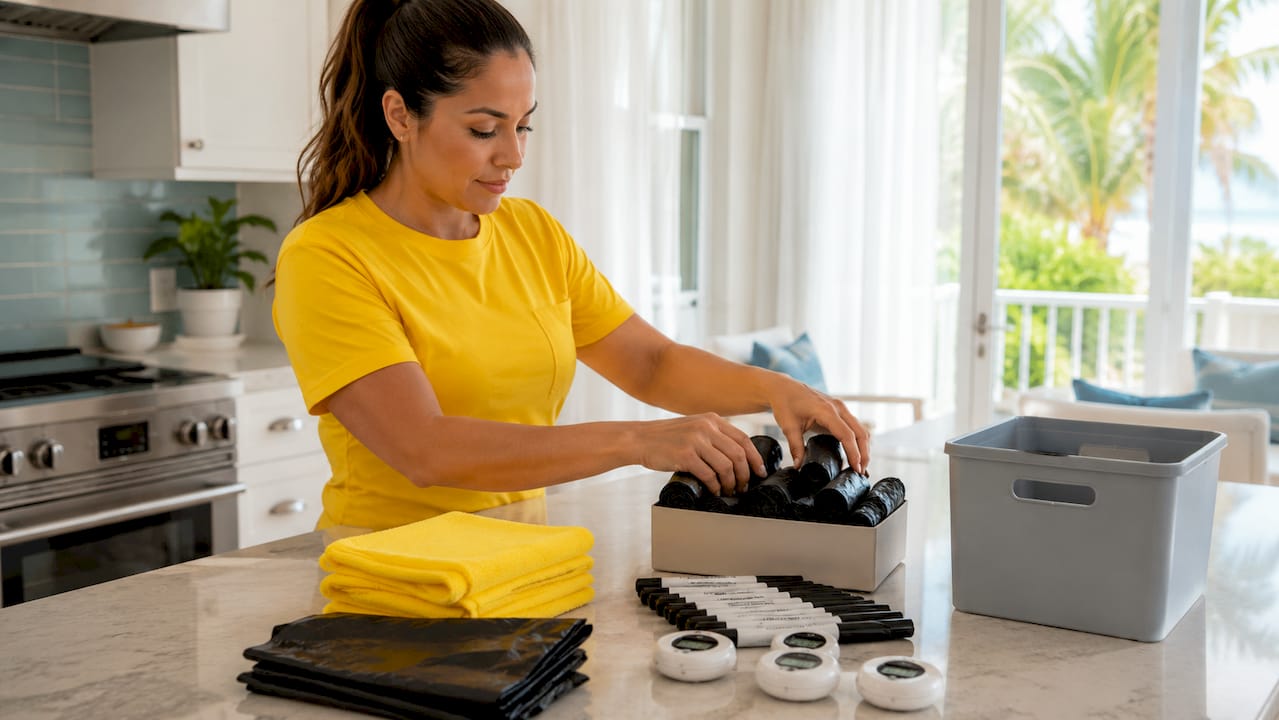
Add a roll of trash bags, a marker for labeling boxes, and a timer. That is the full toolkit.
The mindset shift that actually works
Starting small builds momentum. Professional organizer Laura Kinsella points out that quick wins, like clearing a single drawer, maintain energy and confidence far better than tackling an entire room at once. Attempting too much at once creates decision fatigue, which is the mental exhaustion that makes you keep things you should let go. Set a realistic goal for each session. One shelf, one cabinet, one corner.
The “Core 4” sorting system formalizes this: every item gets placed into Keep, Donate, Recycle, or Trash. No “I’ll decide later” pile. That pile is where clutter goes to survive indefinitely.
Pro Tip: Set a timer for 25 minutes before you start. When it goes off, stop. Short, focused sessions prevent burnout and make it easier to show up the next day.
Why decluttering before cleaning matters
Decluttering before house cleaning is not optional. Cleaning around clutter means surfaces never get fully wiped, floors never get fully vacuumed, and dust accumulates in piles of stuff you forgot you owned. Clearing the space first lets cleaning actually work. It is the same reason painters tape before they roll.
What is the best step-by-step method for decluttering a home?
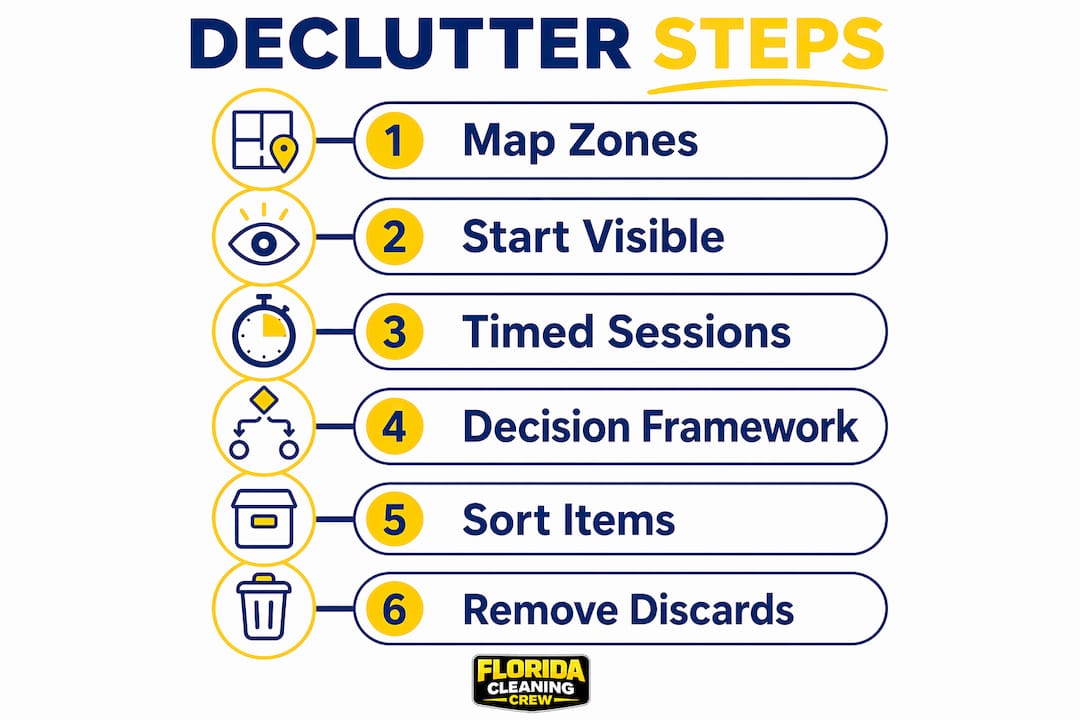
The most effective approach combines category-based sorting with timed sessions and a clear decision framework. Here is how to execute it.
Step 1: Map your zones
Divide your home into zones rather than just rooms. A kitchen has at least three zones: countertops, cabinets, and the pantry. A bedroom has the closet, the nightstand, the dresser, and under the bed. Decluttering by category rather than by room prevents the common problem of finding duplicates scattered across the house. When you pull all your scissors together, you realize you own seven pairs.
Step 2: Start with high-traffic, high-visibility areas
Your entryway, kitchen countertops, and living room surfaces are the areas you see every day. Clearing these first gives you an immediate psychological payoff. You walk into a calmer space within hours, not weeks. That feeling is what keeps you going.
Step 3: Use timed sessions
Best practice calls for 20–45 minute sessions, with one longer weekly session to handle bigger categories like clothing or books. Daily sessions of 20–30 minutes add up fast. After two weeks, you will have spent five to seven hours decluttering without it ever feeling like a full-day project.
Step 4: Apply the decision framework
For every item you pick up, ask three questions:
- Do I use this regularly?
- Does it add real value to my life?
- Would I buy it again today?
If the answer to all three is no, it does not stay. This framework cuts through the “but I might need it someday” thinking that keeps clutter alive.
Step 5: Sort into Keep, Donate, Recycle, Trash
Work through each zone with your four containers. Do not skip the Recycle category. Old electronics, expired medications, and certain plastics need proper disposal, not the trash bin. Many Tampa Bay neighborhoods have designated drop-off points for electronics and hazardous materials.
Step 6: Remove discarded items immediately
Bag and box donate and trash items and get them out of the house the same day. Leaving them in the hallway for “later” is how second-guessing happens. You walk past the bag, pull something out, and the cycle restarts. Same-day removal is one of the most underrated habits in successful decluttering.
Pro Tip: Use a “Maybe Box” for items you genuinely cannot decide on. Label it with a date six months out. If you never opened it by then, donate the entire box without looking inside.
The Maybe Box technique, recommended by professional organizers, works because it removes the pressure of a permanent decision. You are not throwing it away. You are just testing whether you actually need it.
| Step | Action | Time needed |
|---|---|---|
| Map zones | Divide home into specific areas | 15 minutes |
| Start visible areas | Clear countertops and entryway first | 25–45 minutes |
| Timed sorting sessions | Work in 20–45 minute focused blocks | Daily |
| Apply decision framework | Ask 3 questions for each item | Per item |
| Remove discards | Bag and remove same day | End of session |
How to declutter specific rooms in your home
Each room has its own clutter patterns. Knowing what to expect in each space saves time and reduces frustration.
Entryway
The entryway is the most common clutter magnet in any home. Shoes, bags, mail, keys, and coats pile up because this is the transition zone between outside and inside. The fix is simple: give every category its own spot. A hook for bags, a tray for keys, a basket for shoes. Anything without a designated spot gets evaluated for whether it belongs in the house at all.
Kitchen
Kitchen decluttering works best by category:
- Countertops: Remove everything. Put back only what you use daily. The coffee maker stays. The bread maker you used twice does not.
- Cabinets: Check expiration dates on pantry items. Toss duplicates of tools you own in multiples.
- Fridge: Clear expired condiments and leftovers before you organize. A clean fridge is easier to maintain.
The kitchen is also where sentimental clutter hides. That novelty mug from a 2019 conference. The gadget a relative gave you. Dr. Melissa Norberg recommends keeping sentimental items only if they can be displayed and enjoyed, not boxed away. If it cannot be seen, it is not adding value.
Living room
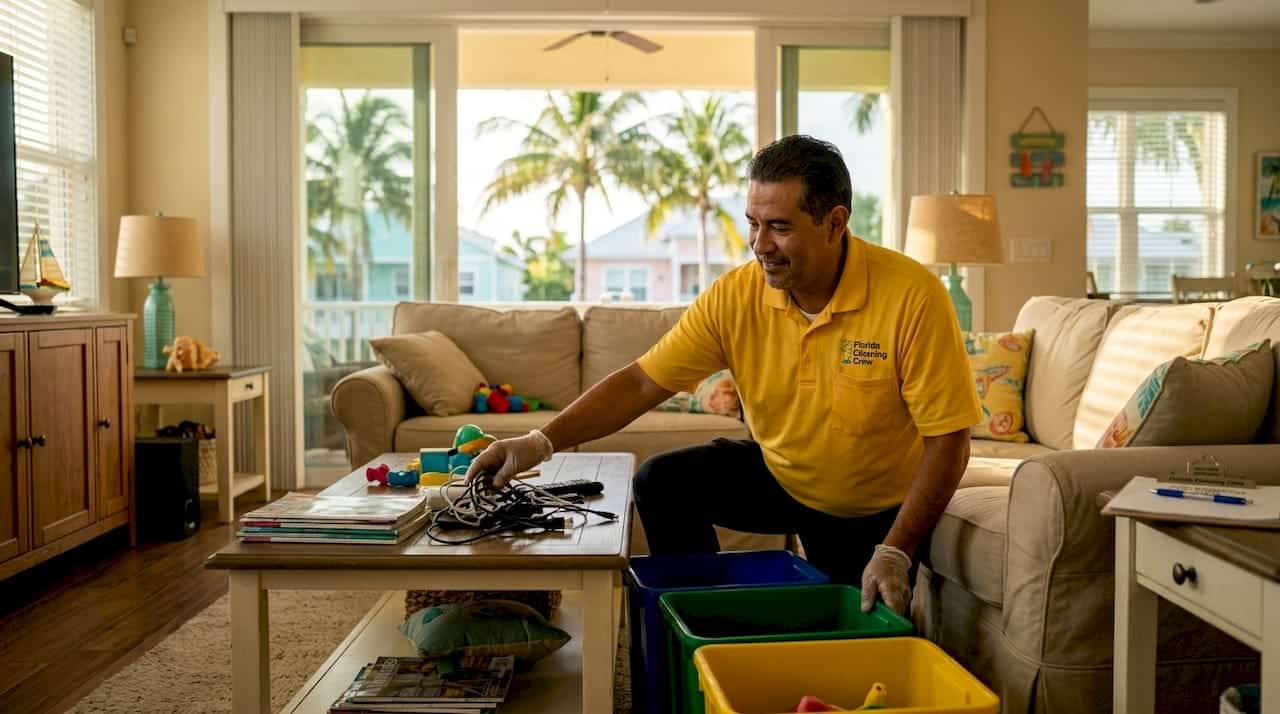
Living rooms collect mixed-use clutter: remotes, chargers, books, toys, decorations, and random objects with no clear home. Sort by category here too. Electronics and their cables in one pass. Books and magazines in another. Decorative items last. Ask whether each decoration actually adds to the room or just fills space.
For families with children, the living room often doubles as a play area. Rotating toys, where only a portion are accessible at once, reduces visual clutter and keeps kids more engaged with what is available.
Closets and clothing
Clothing is where most people get stuck. The most practical approach: pull everything out, then put back only what fits and what you have worn in the last 12 months. Seasonal items can be stored separately using clothes storage solutions that keep off-season pieces accessible but out of the way. Anything that does not fit your current life goes in the Donate box.
Bedroom
The bedroom should be the easiest room to keep clear because its function is rest. Visual clutter in a bedroom directly disrupts sleep quality. Clear the nightstand to just the essentials. Remove anything stored under the bed that you have not touched in over a year. A clutter-free bedroom is one of the fastest wins for daily mental clarity.
How do you keep a home clutter-free after decluttering?
The real challenge is not decluttering. It is staying decluttered. Experts agree that maintaining an organized home is harder than the initial clear-out, and it requires deliberate systems.
The habits that actually work:
- One in, one out rule: Every new item that enters the home means one existing item leaves. Buy a new shirt, donate an old one. This keeps volume stable without requiring constant purges.
- Daily reset: Spend five minutes each evening returning items to their designated spots. This prevents small messes from becoming large ones.
- Assign a home to every item: If something does not have a specific place, it will end up on a counter or a chair. Every object needs a location.
- Seasonal resets: Use the change of seasons as a natural trigger to reassess what is in closets, storage, and cabinets. Spring and fall are ideal.
- Family involvement: Shared spaces require shared responsibility. Assign specific areas to each household member and make the reset routine a household habit, not one person’s burden.
Cleaning a decluttered space regularly reinforces the mental clarity benefits and makes it easier to spot when clutter is creeping back. A clean, clear home is easier to maintain than a cluttered one because there is less friction in the daily routine.
Pro Tip: Keep a small donation box in your closet at all times. When something no longer fits or gets used, drop it in immediately. When the box fills up, take it to a donation center. No scheduling required.
For homeowners who want a structured approach to maintaining both organization and cleanliness, a room-by-room cleaning guide can help you build a repeatable system that works alongside your decluttering habits.
Key Takeaways
Decluttering your home works best when you combine timed sorting sessions, a clear decision framework, and same-day removal of discarded items to prevent second-guessing and maintain momentum.
| Point | Details |
|---|---|
| Start with visible areas | Clear high-traffic zones first for an immediate psychological payoff that keeps you motivated. |
| Use the Core 4 system | Sort every item into Keep, Donate, Recycle, or Trash with no “decide later” pile. |
| Work in short sessions | 20–45 minute timed blocks prevent decision fatigue and make daily progress sustainable. |
| Remove discards same day | Bag and remove donate and trash items immediately to avoid second-guessing. |
| Build maintenance habits | The “one in, one out” rule and daily resets prevent clutter from returning after the initial clear-out. |
What I have learned from years of watching homes get cleaned
The homes that stay clean longest are not the ones that had the biggest declutter. They are the ones where the homeowner changed one small habit after decluttering.
I have seen Tampa Bay homeowners do a full weekend purge, fill a truck with donations, and feel incredible for about three weeks. Then life gets busy, a few things pile up on the counter, and within two months the space looks the same as before. The declutter was real. The system was not.
The emotional side of this is harder than most articles admit. Letting go of a gift from someone you love, or a piece of clothing from a chapter of your life that felt better, is genuinely difficult. Giving yourself permission to display one meaningful item rather than keeping a box of twenty in a closet is not a compromise. It is actually a better way to honor what those things mean.
What I keep coming back to is this: the goal is not a minimalist showroom. The goal is a home that feels like yours, where you can find what you need, and where you can actually relax. That is a much more achievable target. Start with one drawer. Celebrate that. Then do another one tomorrow.
— Matt
When decluttering is done, what comes next?
Once your home is clear, a professional clean makes the results last longer and feel more complete. Tampa Bay homeowners often find that after a big declutter, surfaces and floors need a thorough clean that goes beyond a quick wipe-down.

Floridacc serves homeowners across Tampa, Clearwater, and St. Petersburg with residential cleaning that works alongside your organization efforts. Whether you need a one-time deep clean after a major declutter or a recurring service to keep things fresh, the residential cleaning service guide walks you through exactly what to expect and how to choose the right plan for your home. If you have larger items to remove after sorting, Floridacc also offers junk removal in Tampa Bay to handle the heavy lifting.
FAQ
What does it mean to declutter your house?
Decluttering is the process of systematically sorting and removing items you no longer use or need, leaving only what adds genuine value to your daily life.
How long does it take to declutter a whole house?
The timeline varies by home size and clutter volume, but working in 20–45 minute daily sessions, most homeowners see significant results within two to four weeks.
Should you declutter before or after cleaning?
Declutter first, always. Cleaning around clutter leaves surfaces partially covered and makes the cleaning less effective. A clear space lets you clean thoroughly and efficiently.
What is the best method for deciding what to keep?
Ask three questions for each item: Do I use it regularly? Does it add real value? Would I buy it again today? If the answer to all three is no, it goes.
How do you stop clutter from coming back?
The “one in, one out” rule is the most reliable long-term system. Every new item that enters the home means one existing item leaves, keeping total volume stable without requiring repeated purges.