Most people assume specialty cleaning just means cleaning something more thoroughly. That assumption is where things go wrong. What is specialty cleaning, really? It’s a category of professional cleaning that goes far beyond mops and surface sprays. It involves regulated protocols, industrial-grade equipment, trained technicians, and in many cases, legal compliance requirements. For homeowners, Airbnb hosts, and small business owners in Tampa Bay, the stakes are especially high. The humid Florida climate accelerates mold growth, and high-traffic rentals face contamination risks that standard cleaning simply cannot address.
Table of Contents
- Key takeaways
- What is specialty cleaning and when do you need it
- Specialty cleaning techniques and professional standards
- The real benefits of specialty cleaning
- How to decide when to book specialty cleaning
- My honest take on specialty cleaning in Tampa Bay
- Tampa Bay specialty cleaning services from Floridacc
- FAQ
Key takeaways
| Point | Details |
|---|---|
| Specialty cleaning is not regular cleaning | It involves regulated protocols, specialized equipment, and trained professionals for specific contamination types. |
| Tampa Bay climate increases risk | High humidity in the area makes mold, bacteria, and odor problems more common and more serious. |
| Material type determines treatment | Porous materials often require removal and disposal; non-porous surfaces can be professionally disinfected. |
| There are clear thresholds for professional help | Mold areas over 100 sq ft and any biohazard situation require certified professional intervention. |
| Health and property value are both at stake | Specialty cleaning reduces allergens, prevents structural damage, and protects legal compliance for businesses. |
What is specialty cleaning and when do you need it
Specialty cleaning covers a defined set of professional services designed to handle contamination, damage, or health hazards that go beyond what routine cleaning can resolve. Think of it as the category that sits between standard housekeeping and full-scale remediation work. It includes services like biohazard cleanup, mold remediation, trauma scene cleaning, odor removal, industrial carpet cleaning, and upholstery treatment.
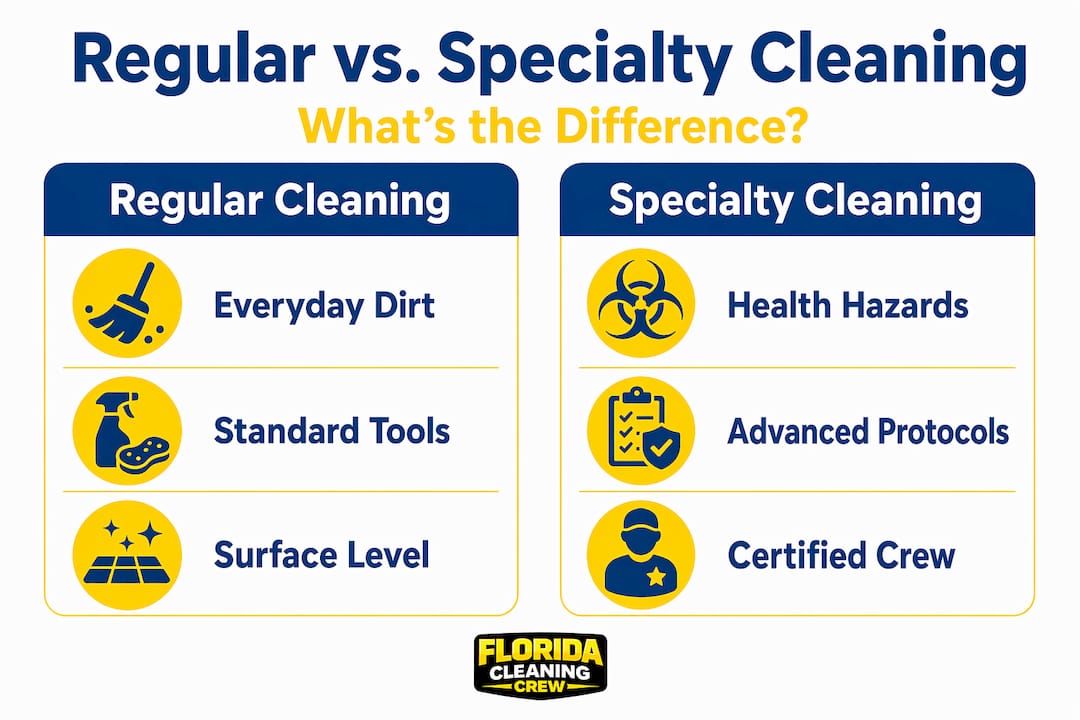
The distinction from regular cleaning is not just about intensity. It’s about scope, training, and compliance. A standard cleaning crew uses general-purpose products and equipment. Specialty cleaning professionals bring EPA-registered disinfectants, containment barriers, HEPA filtration systems, ATP testing meters, and documented procedures that meet OSHA and EPA standards. The difference is significant, and mixing them up can lead to serious health or legal consequences.
Here are the most common types of specialty cleaning services and the settings where they appear:
- Biohazard cleanup: Required after any situation involving blood, bodily fluids, or infectious materials. Common in residential properties after accidents, in healthcare facilities, and occasionally in short-term rentals.
- Mold remediation: Addresses fungal growth in walls, ceilings, HVAC systems, and crawl spaces. Particularly relevant in Tampa Bay where humidity-driven mold growth is a frequent problem after rain events or plumbing leaks.
- Trauma scene cleaning: A subset of biohazard cleanup covering unattended deaths, crime scenes, and accident sites. Strictly regulated and requires specialized personal protective equipment.
- Industrial carpet cleaning: Uses hot water extraction and commercial-grade machines to deep clean carpets in offices, hotels, and rental properties. Far beyond what a residential vacuum or home steam cleaner can accomplish.
- Odor remediation: Targets smoke, pet, sewage, and decomposition odors at the molecular level using ozone treatment or hydroxyl generators, not just masking sprays.
- Upholstery and fabric treatment: Addresses allergens, stains, and biological contamination in furniture, auto interiors, and hospitality seating.
For Tampa Bay property owners specifically, the risk of needing specialty cleaning is elevated year-round. The region’s subtropical climate creates conditions where moisture intrusion happens fast, mold follows quickly, and rental turnover can spread contamination between guests if standard cleaning is the only line of defense. Understanding what sets professional cleaning apart is the first step toward protecting your property and the people in it.
DIY attempts at specialty cleaning are genuinely risky. Without proper containment, biohazard cleaning can spread pathogens to previously unaffected areas. Without source identification, mold removal is temporary at best. Without proper equipment and training, the person doing the cleaning faces serious exposure risks.
Specialty cleaning techniques and professional standards
Understanding how specialty cleaning actually works helps you evaluate providers and ask the right questions. These are not simple processes. Each type of specialty cleaning has a specific methodology, and skipping steps creates real problems.
Biohazard cleanup protocols
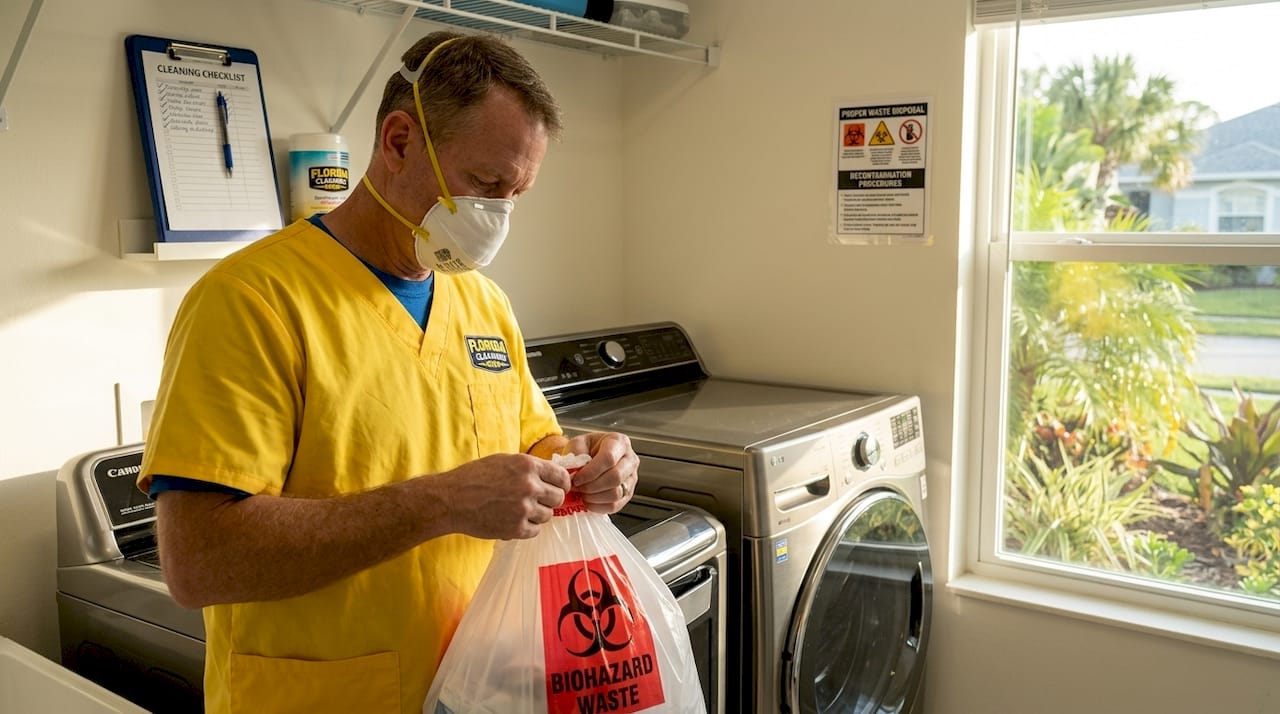
Biohazard remediation must follow OSHA’s Bloodborne Pathogen Standard (29 CFR 1910.1030) and EPA disposal guidelines. That means trained technicians wearing appropriate personal protective equipment, physical containment of the affected area, use of hospital-grade EPA-registered disinfectants, and regulated waste disposal through licensed haulers.
After cleaning, verification testing using ATP meters confirms that microbial contamination has been reduced to safe levels. This step is not optional in professional work. It’s the documentation that protects both the property owner and the cleaning company from liability.
Mold remediation steps
The EPA defines different levels of mold remediation based on the extent and location of contamination. Small surface mold on non-porous materials in a contained area is treated differently than widespread growth inside wall cavities.
The process generally follows this sequence:
- Source identification: Locate and eliminate the moisture source before any physical removal begins. Addressing root contamination first is what separates effective remediation from temporary cosmetic fixes.
- Containment setup: Plastic sheeting and negative air pressure systems isolate the work area to prevent spore dispersal.
- Material removal: Porous materials like drywall, carpet, and insulation that are heavily contaminated are physically removed and disposed of as regulated waste.
- HEPA vacuuming and surface treatment: Non-porous surfaces are treated with EPA-approved antifungal agents and HEPA-vacuumed to capture residual spores.
- Post-remediation verification: Air sampling or surface testing confirms contamination levels before containment is removed.
How material type changes everything
One of the most misunderstood aspects of specialty cleaning is how differently porous and non-porous surfaces must be treated. Porous materials contaminated by mold or biohazards generally cannot be reliably decontaminated in place. Drywall, carpet padding, ceiling tiles, and wood framing exposed to sewage or significant mold growth usually need to come out entirely. Non-porous surfaces like tile, sealed concrete, and glass can be treated effectively with clinical-grade disinfectants.
Pro Tip: Before calling any specialty cleaning provider, try to identify where the contamination is coming from. A leaking pipe under the sink or a blocked HVAC drain is often the source. Sharing that information with your provider saves time and gets better results from day one.
Here is a comparison of how specialty and regular cleaning differ across key criteria:
| Criteria | Regular cleaning | Specialty cleaning |
|---|---|---|
| Equipment used | Mops, vacuums, general cleaners | HEPA systems, ATP meters, industrial extractors |
| Regulatory compliance | Not required | OSHA, EPA, local codes often required |
| Trained certification | Not typically required | Required for biohazard, mold, trauma work |
| Material handling | Surface-level treatment | Porous material removal and regulated disposal |
| Verification testing | Not performed | Standard post-cleaning ATP or air testing |
| Effectiveness against pathogens | Limited | Hospital-grade disinfectant efficacy required |
The real benefits of specialty cleaning
The benefits of specialty cleaning extend well past making a space look clean. For Tampa Bay homeowners, Airbnb hosts, and small business owners, the practical impact touches health, property value, and legal protection simultaneously.
Professional carpet cleaning using hot water extraction removes up to 97% of allergens and 90% of surface bacteria. That matters in homes with children, in office environments with high foot traffic, and especially in short-term rentals where guests bring and leave behind a rotating mix of allergens. Standard vacuuming cannot come close to those numbers. Floridacc recommends professional carpet cleaning every three to six months for high-traffic commercial spaces in Tampa Bay.
Here is where specialty cleaning delivers measurable value:
- Indoor air quality: Mold spores, pet dander, dust mites, and VOCs from smoke contamination all degrade air quality. Specialty cleaning addresses these at the source, not just at the surface.
- Allergen and bacteria reduction: The gap between professional methods and DIY cleaning is not marginal. For commercial spaces, hot water extraction is considered the gold standard for carpet decontamination.
- Preventing structural damage: Mold left untreated spreads into framing, subflooring, and HVAC systems. Early professional remediation costs a fraction of the structural repairs that delayed treatment creates.
- Legal compliance and liability protection: Businesses in healthcare, food service, and hospitality face regulatory requirements around contamination control. Proper documentation from a certified specialty cleaning provider is protection in an audit or lawsuit.
- Guest and tenant protection: For Airbnb hosts and property managers, unaddressed biohazards or mold between tenants creates real liability. A vacation rental cleaning checklist that includes specialty cleaning protocols is not optional when incidents occur.
- Property value preservation: Properties in Tampa Bay that develop mold problems or persistent odors face significant devaluation. Specialty cleaning prevents the kind of damage that shows up on inspection reports.
For small business owners in Tampa, Clearwater, and St. Petersburg, the business case is straightforward. A contaminated workspace causes employee health issues, productivity losses, and potential regulatory fines. The cost of professional specialty cleaning is a fraction of those downstream consequences.
How to decide when to book specialty cleaning
Knowing that specialty cleaning exists is one thing. Knowing when your specific situation actually requires it is what matters practically. There are clear indicators and professional thresholds that make this decision easier.
Signs that specialty cleaning is needed:
- You see visible mold covering more than a small surface area, particularly near HVAC vents, under sinks, or along baseboards in bathrooms.
- There is a persistent odor that does not respond to regular cleaning. Smoke, sewage, or musty smells embedded in walls or flooring require odor remediation, not air freshener.
- Someone in the household or building is experiencing unexplained respiratory symptoms, headaches, or allergic reactions that improve when they leave the space.
- There has been a water intrusion event such as flooding, a burst pipe, or HVAC condensate overflow that was not dried out within 24 to 48 hours.
- A biohazard situation has occurred, regardless of apparent scope. Any blood, sewage backup, or unattended situation requires professional assessment.
Mold remediation projects covering more than 100 square feet require professional remediation with containment and documentation for insurance purposes. Below that threshold, thorough DIY treatment may be adequate if the source has been fully eliminated. But in Tampa Bay’s climate, most homeowners are surprised by how fast a small area grows.
When evaluating specialty cleaning providers, ask these questions directly:
- Are your technicians certified for biohazard or mold work specifically?
- Do you carry liability insurance and are you licensed in Florida?
- What verification testing do you perform after the job is complete?
- Will you provide documentation I can share with my insurance company or property manager?
Pro Tip: If you are a Tampa Bay Airbnb host and a guest reports an odor or visible issue, book a professional assessment before the next check-in rather than after. A single complaint documented on your listing profile costs far more than a specialty cleaning call.
For urgent situations, knowing when to book same-day service versus scheduling in advance can be the difference between a contained problem and a widespread one.
My honest take on specialty cleaning in Tampa Bay
I’ve spent years watching property owners in Tampa, St. Petersburg, and Clearwater underestimate what specialty cleaning actually involves. The most common mistake I see is treating it like a premium version of regular cleaning. It’s not. It’s a fundamentally different category of work with different training, different equipment, and in many cases, legal accountability.
The second most common mistake is cleaning over the problem without fixing the source. I’ve seen bathrooms cleaned with bleach after mold growth, only to have the same mold return in six weeks because the HVAC drip pan was never addressed. Cleaning without source resolution is not just ineffective. It’s a waste of money and gives a false sense of safety.
What often surprises people is how much regulatory overlap exists in specialty cleaning. Biohazard work touches OSHA standards, EPA waste disposal rules, and Florida Department of Health requirements simultaneously. Professional specialty cleaning requires combined expertise in public health, occupational safety, and environmental compliance. That’s not something a general handyman or unlicensed cleaner can replicate.
My practical advice for anyone in Tampa Bay: if you are unsure whether a situation requires specialty cleaning, err toward getting a professional assessment. Most reputable providers will tell you honestly whether DIY is adequate. The ones who push you toward an expensive service you don’t need are easy to spot when you ask for the specific compliance documentation they will produce.
Safety and liability are not worth gambling on to save a few hundred dollars.
— Matt
Tampa Bay specialty cleaning services from Floridacc
When a regular cleaning appointment is not enough, Floridacc serves Tampa Bay homeowners, Airbnb hosts, and small business owners with professional cleaning services built around real results. Whether you are dealing with a carpet that needs deep extraction, a rental property that needs documented post-incident cleaning, or a commercial space with ongoing contamination concerns, Floridacc brings licensed, insured, and thoroughly trained crews to every job.
For residential clients, Tampa Bay home cleaning from Floridacc includes services that go well beyond standard maintenance. For business owners in Tampa, Clearwater, and St. Petersburg, commercial cleaning for small businesses addresses the compliance and health protection needs that your space demands. If you want to understand the full scope of what Floridacc offers across property types, request a free estimate through the website and get specific recommendations for your situation.
FAQ
What is specialty cleaning exactly?
Specialty cleaning refers to professional cleaning services that address specific contamination types, such as biohazards, mold, or deep carpet contamination, using regulated protocols, industrial equipment, and trained technicians rather than general cleaning methods.
How does specialty cleaning differ from regular cleaning?
Regular cleaning maintains surface cleanliness using general-purpose products. Specialty cleaning resolves health hazards and contamination using EPA-registered disinfectants, containment procedures, verification testing, and compliance documentation that standard cleaning cannot provide.
What are examples of specialty cleaning services?
Common examples include biohazard cleanup, mold remediation, trauma scene cleaning, industrial carpet extraction, odor remediation using ozone or hydroxyl treatments, and upholstery decontamination for allergens and biological matter.
When should I hire a specialty cleaning company vs. doing it myself?
Hire a professional when mold covers more than 100 square feet, when any biohazard is present, or when persistent odors and health symptoms suggest contamination that surface cleaning has not resolved. DIY may be adequate for small, well-contained non-porous surface issues where the moisture or contamination source has been fully eliminated.
How often should businesses schedule specialty cleaning services?
For high-traffic commercial spaces, professional carpet cleaning is recommended every three to six months. Biohazard and mold assessments should be scheduled immediately after any incident and periodically in climate-sensitive environments like those found in Tampa Bay.