TL;DR:
- Pressure washing removes mold, algae, and grime that damage surfaces and pose safety hazards.
- Tampa Bay’s humid, salty climate requires regular exterior pressure washing for maintenance and property value.
- Professional services protect surfaces and property while preventing costly repairs from DIY mistakes.
Pressure washing is one of those things that looks simple from the outside. You point a hose, water shoots out, and the driveway looks brand new. But in Tampa Bay, where humidity hovers year-round and salt air rolls in from the Gulf, the reality is far more layered. Mold, algae, and grime don’t just make your property look bad. They eat into surfaces, create slip hazards, and quietly chip away at your home’s value. This guide breaks down exactly what pressure washing is, how it works, why Tampa’s climate makes it non-negotiable, and how to get the most out of every cleaning session, whether you hire a pro or want to understand what they’re doing on your property.
Table of Contents
- Understanding pressure washing: The basics
- Why pressure washing matters in Tampa Bay
- DIY or professional? Risks and rewards
- How to maximize property value and curb appeal
- The overlooked truth: Why pressure washing is worth it in Tampa Bay
- Professional pressure washing for Tampa Bay homes and businesses
- Frequently asked questions
Key Takeaways
| Point | Details |
|---|---|
| Powerful cleaning method | Pressure washing uses high-pressure water to remove tough stains and buildup from exterior surfaces. |
| Essential in Tampa Bay | Regular washing prevents mold, algae, and surface damage in Tampa’s humid climate. |
| Professional advantage | Pros use specialized equipment and protect property while maximizing results and safety. |
| Value and curb appeal boost | Effective pressure washing can increase property value by up to 10 percent. |
| Routine maintenance | Homes and businesses benefit from annual or semi-annual cleaning to stay fresh and inviting. |
Understanding pressure washing: The basics
Now that you know why maintenance matters, let’s break down what pressure washing actually involves.
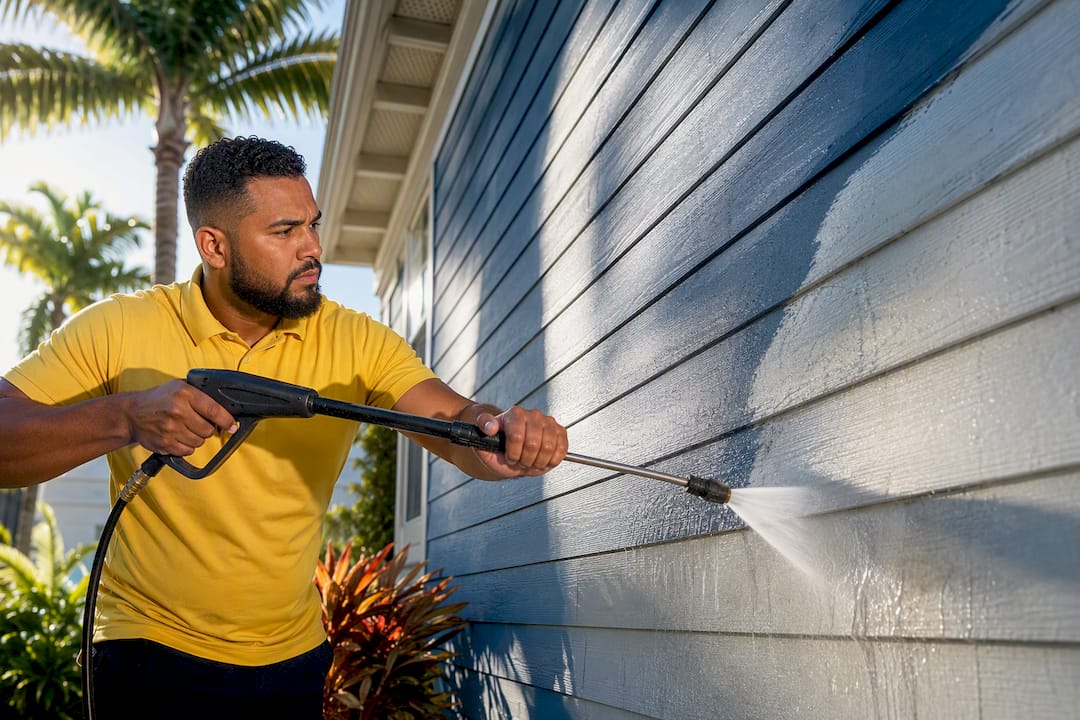
Pressure washing is a cleaning method using high-pressure water (1,500-4,000 PSI) to remove dirt, grime, mold, algae, and other contaminants from durable exterior surfaces like concrete, siding, decks, and driveways. It’s not just a powerful squirt gun. It’s a calibrated system where two measurements work together to determine how effective and how safe the cleaning will be.
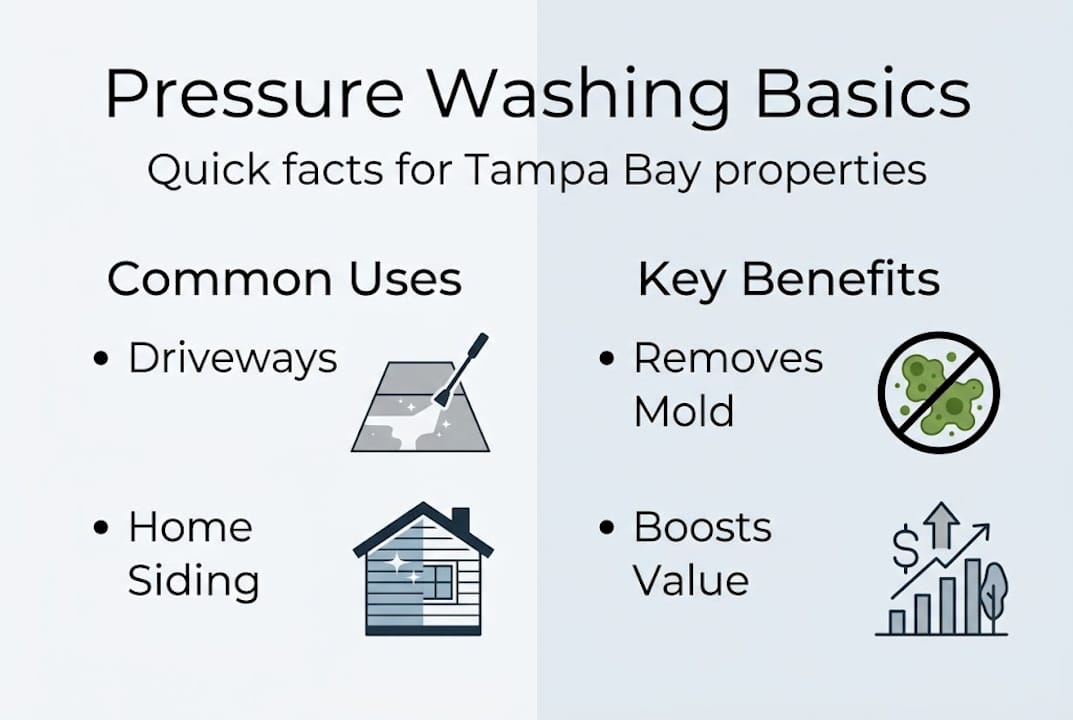
PSI (pounds per square inch) measures the pressure of the water stream. GPM (gallons per minute) measures the volume of water flowing through the machine. Here’s the key insight most people miss: high PSI with low GPM can scratch or etch a surface without actually rinsing it clean. The right combination of both is what lifts stubborn grime and rinses it away completely.
The nozzle you attach to the wand changes everything. Each nozzle is color-coded and produces a different spray angle:
- Red (0 degrees): Extremely concentrated. Used for stripping paint or blasting caked-on grease from metal. Never use this on wood or stucco.
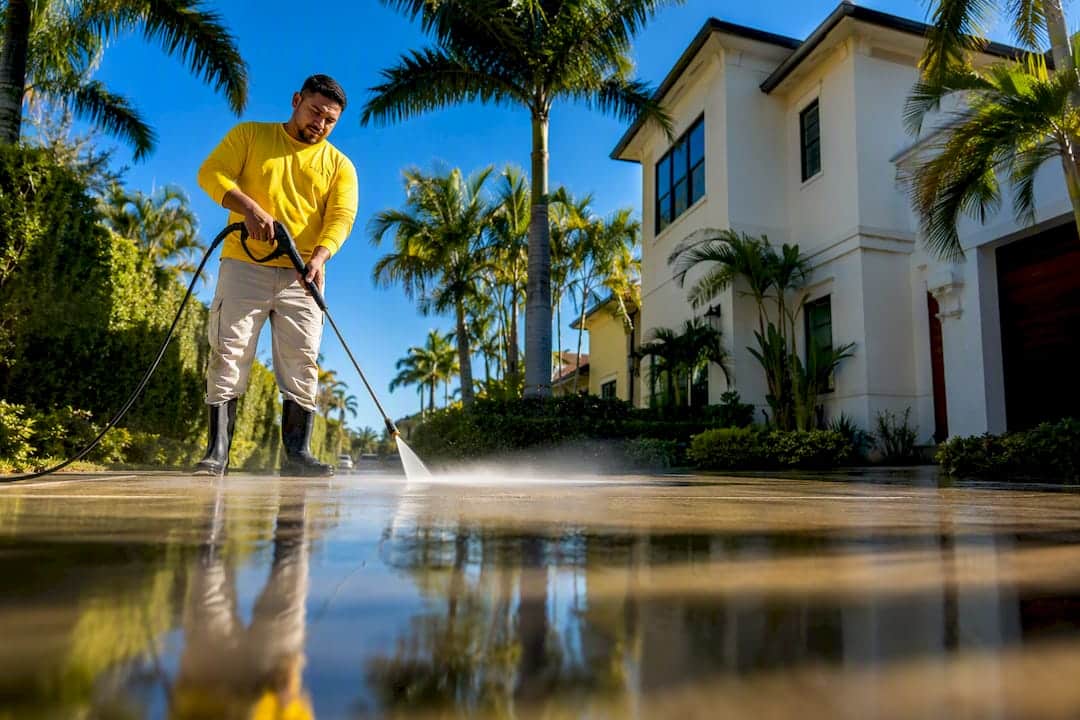
- Yellow (15 degrees): Aggressive cleaning for concrete and brick. Good for driveways.
- Green (25 degrees): General-purpose cleaning for most exterior surfaces.
- White (40 degrees): Gentle enough for siding, fences, and outdoor furniture.
- Black (65 degrees): Low pressure, used mainly for applying soap or detergent.
Surface cleaners are another tool worth knowing about. These are rotating disc attachments that clean large flat areas like driveways and pool decks evenly, without the streaking that a standard wand can leave behind.
Surfaces that pressure washing handles well:
| Surface | Recommended PSI range | Notes |
|---|---|---|
| Concrete driveway | 2,500-3,000 PSI | Use surface cleaner for even results |
| Wood deck | 500-1,200 PSI | Low pressure only; high PSI splinters wood |
| Vinyl siding | 1,300-1,600 PSI | Wide-angle nozzle, work top to bottom |
| Brick or pavers | 1,500-2,000 PSI | Avoid direct spray on mortar joints |
| Roof (soft wash) | Under 500 PSI | Requires chemical treatment, not raw pressure |
Pro Tip: When in doubt, start with a lower PSI setting and test a small, hidden area first. You can always increase pressure, but you cannot undo etched concrete or splintered wood.
The bottom line is that pressure washing is a precision tool, not a brute-force one. The right setup for a concrete driveway would destroy a painted wood fence. Understanding this distinction is the first step toward getting real results without expensive mistakes.
Why pressure washing matters in Tampa Bay
Understanding the essentials is just step one. Here’s why local conditions make pressure washing a top priority in Tampa Bay.
Tampa Bay sits in a subtropical climate zone. That means high humidity, frequent afternoon rain showers, intense UV exposure, and for coastal properties, a steady dose of salt air from Tampa Bay and the Gulf of Mexico. This combination creates the perfect environment for mold, mildew, algae, and biofilm to grow on virtually every outdoor surface.
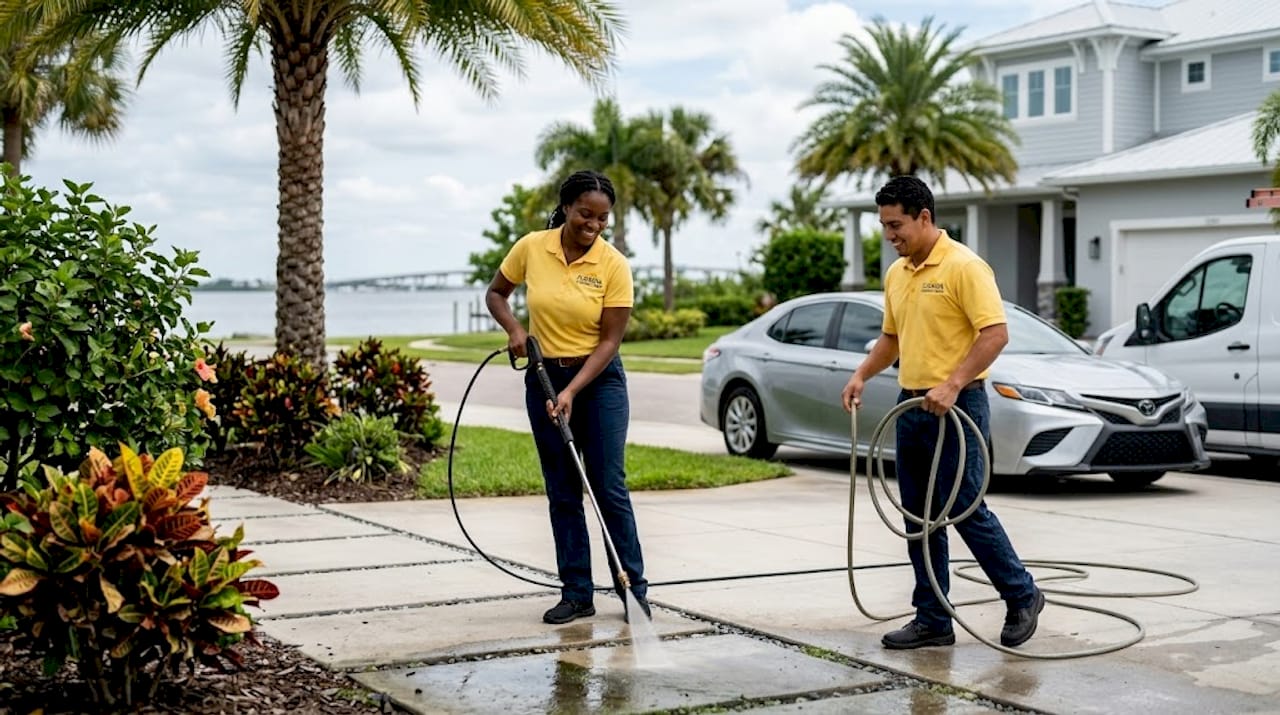
According to local cleaning experts, annual pressure washing is essential in Tampa Bay’s humid, subtropical climate, with driveways needing attention every 6 to 12 months to combat mold, algae, and mildew accelerated by humidity, rain, and salt air. That’s not marketing language. That’s just what the climate demands.
Here’s what’s happening on your property right now if it hasn’t been cleaned recently:
- Algae and mold colonize concrete. They start as a faint green or black tint and spread quickly in the shade. Left alone, they make walkways dangerously slippery.
- Salt deposits attack siding and metal fixtures. Coastal properties see accelerated corrosion on gutters, window frames, and metal fasteners.
- Mildew penetrates porous surfaces. Stucco and wood absorb moisture. Once mildew gets in, surface cleaning alone won’t fix it.
- Roof edges and overhangs trap debris. Organic material collects, retains moisture, and feeds fungal growth that can work its way under shingles.
The pressure washing tips for Tampa’s climate are different from what you’d follow in a dry state like Arizona. Here, it’s not about occasional cosmetic touch-ups. It’s about staying ahead of a climate that never stops working against your property.
Which property areas are most at risk in Tampa Bay?
- North-facing surfaces (less sun, more moisture retention)
- Shaded driveways and patios under tree canopy
- Pool decks and areas near irrigation systems
- Roof edges, gutters, and fascia boards
- Siding on the windward side of the home
The financial case is just as compelling. Property value can increase by up to 10% with consistent exterior maintenance, and pressure washing is one of the most cost-effective ways to get there. A clean exterior signals to buyers, guests, and neighbors that the property is well-maintained, which directly affects perceived and actual market value.
Recommended cleaning frequency by surface:
| Surface | Recommended frequency in Tampa Bay |
|---|---|
| Concrete driveway | Every 6-12 months |
| Home exterior/siding | Annually |
| Wood or composite deck | Every 12-18 months |
| Pool deck | Every 6-12 months |
| Roof (soft wash) | Every 1-2 years |
For a deeper look at why pressure washing matters beyond just appearances, the science of surface degradation in humid climates tells a clear story. Regular cleaning isn’t optional maintenance. It’s preventive care for one of your biggest investments. You can also check service areas in Tampa Bay to confirm coverage near your property.
DIY or professional? Risks and rewards
Once you realize how important regular cleaning is, it’s natural to wonder: Should I do this myself, or call in an expert?
Renting a pressure washer from a hardware store costs around $50 to $100 per day. That sounds like a deal until you account for what can go wrong. DIY pressure washing is one of the most common sources of preventable exterior damage on Florida homes.
Common DIY mistakes in Tampa Bay:
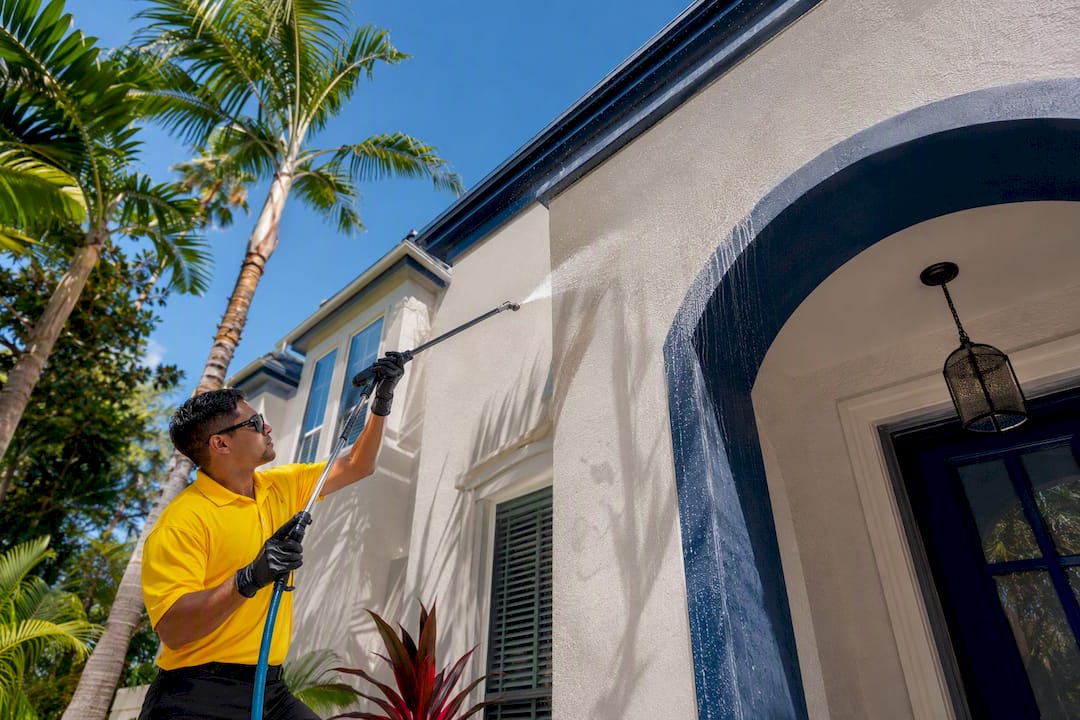
- Etching stucco. Florida homes often have stucco exteriors, which are porous and fragile under high pressure. One wrong nozzle choice and you’re looking at costly repairs.
- Forcing water behind siding. Angling the wand upward drives water into wall cavities, which leads to mold growth inside the wall and potential structural damage.
- Uneven cleaning patterns. Without a surface cleaner attachment and proper technique, you end up with visible streaks and lines that look worse than the original dirt.
- Damaging landscaping. High-pressure overspray strips bark, shreds leaves, and can kill plants close to the house.
- Personal injury. Pressure washers at 3,000 PSI can cut skin. This is not an exaggeration.
Professionals bring commercial-grade equipment that outperforms rental units significantly. They also know how to prep a property before cleaning: covering plants, sealing electrical outlets, pre-treating mold with the right detergents, and adjusting PSI settings for each specific surface.
As noted in local pressure washing research, DIY risks include etching stucco, water intrusion, and uneven cleaning, while professionals use commercial gear, proper prep to protect plants and windows, and tailored PSI and nozzle combinations. The average Tampa house wash runs $146 to $336, with whole-home cleaning reaching up to $600 for larger properties.
“The cost of a professional pressure wash is almost always less than the cost of repairing what a bad DIY job can damage.”
For detailed guidance on protecting your home’s exterior, the house exterior cleaning tips page walks through surface-specific best practices that apply directly to Tampa Bay homes.
Pro Tip: Always request proof of licensing and insurance before hiring any pressure washing service. If a contractor damages your siding or landscaping without proper coverage, you’re the one absorbing that cost.
For business owners, the stakes are even higher. A commercial property with a stained or algae-covered entrance sends a message to customers before they even walk through the door. Professional cleaning with a documented service record also supports property management compliance and lease renewal negotiations.
If you’re ready to skip the guesswork, get a pressure washing quote and find out exactly what your property needs.
How to maximize property value and curb appeal
With the right method and frequency in mind, here’s how you can get the most out of pressure washing for your property.
Pressure washing doesn’t just make things look clean. It actively extends the lifespan of exterior surfaces. Algae and mold retain moisture against concrete, wood, and siding. Over time, that moisture causes cracking, warping, and rot. Removing it regularly means you’re delaying expensive repairs, not just improving appearances.
According to local pricing and value data, a Tampa house wash averages $239, with whole-home cleaning ranging from $300 to $600, and consistent exterior maintenance delivering a value boost of up to 10%.
That’s a meaningful return on a relatively small investment. Here’s how to structure your approach to get the most out of it:
- Start with a property inspection. Walk the perimeter and note areas with visible algae, mold staining, oil spots, or efflorescence (the white chalky deposits that appear on concrete). These are your priority zones.
- Schedule cleaning before major events. Listing your home for sale, hosting a large event, or preparing for peak rental season are all ideal times to schedule a professional wash.
- Bundle services for better results. Pressure washing pairs naturally with window cleaning because both improve curb appeal and are best done together. Cleaning windows after pressure washing prevents dirty runoff from re-contaminating the glass.
- Create a recurring schedule. Rather than reacting to visible dirt, set a calendar reminder. Driveways every 6 to 12 months. Siding annually. Decks every 12 to 18 months. Consistency prevents the kind of buildup that requires aggressive (and riskier) cleaning.
- Document the work. Keep records of service dates and what was cleaned. This is useful for real estate disclosures, insurance purposes, and property management reporting.
Value and lifespan impact by surface:
| Surface | Lifespan without cleaning | Lifespan with regular cleaning |
|---|---|---|
| Concrete driveway | 15-20 years | 25-30 years |
| Wood deck | 10-15 years | 20-25 years |
| Vinyl siding | 20 years | 30+ years |
| Painted surfaces | 5-7 years between repaints | 8-12 years between repaints |
For Airbnb hosts and short-term rental owners in Tampa Bay, curb appeal is directly tied to booking rates and guest reviews. A property that photographs well and feels clean on arrival earns better ratings and repeat bookings. Working with Tampa cleaning experts who understand the local climate and surface types means you’re not just cleaning. You’re protecting your income.
The 10% property value increase tied to exterior maintenance is not theoretical. Real estate agents consistently report that homes with clean, well-maintained exteriors spend fewer days on the market and attract stronger offers. First impressions are formed in seconds, and a pressure-washed driveway and facade signal that the rest of the home has been cared for just as well.
The overlooked truth: Why pressure washing is worth it in Tampa Bay
You’ve seen how pressure washing protects and beautifies your property. Here’s why it matters even more than most people realize.
Most homeowners treat pressure washing as a cosmetic task. Something you do when the driveway looks embarrassing or when you’re getting ready to sell. That mindset costs money in Tampa Bay.
This city’s climate is relentless. The combination of heat, humidity, and seasonal storms doesn’t give your exterior surfaces a break. Skipping one year of cleaning doesn’t just mean a dirtier driveway. It means mold has had 12 more months to work its way into grout lines, wood grain, and stucco. It means algae has made your walkway a liability. It means the paint on your siding has been degrading under a layer of biological growth that traps moisture against it.
We’ve seen properties where one missed season of cleaning led to wood rot that required full deck board replacement. The deck wash would have cost a few hundred dollars. The repairs cost several thousand.
The pressure washing importance in 2026 goes beyond aesthetics. It’s about maintaining a safe, healthy environment for your family, your tenants, or your customers. Slip-and-fall incidents on algae-covered walkways are a real liability risk for business owners and landlords.
In Tampa Bay, pressure washing is maintenance, not a luxury. Treating it as optional is like skipping oil changes because the car still runs. Eventually, the neglect catches up, and the repair bill is far larger than the prevention would have been. The smartest property owners we work with don’t wait until things look bad. They schedule cleaning the way they schedule any other routine maintenance, because they understand what the alternative costs.
Professional pressure washing for Tampa Bay homes and businesses
If you’re ready to protect your biggest asset while saving time, here’s how to take the next step.
At Florida Cleaning Company, we handle the full range of exterior cleaning needs for Tampa Bay homeowners, landlords, and business owners. From driveways and pool decks to full home exteriors, our team uses commercial-grade equipment, surface-appropriate PSI settings, and eco-friendly detergents to get lasting results without risking damage to your property.

We’re fully licensed and insured, and every job comes with a satisfaction guarantee. Whether you need a one-time deep clean before a sale or a recurring maintenance schedule for a rental property, we make the process easy. You can book a professional pressure washing directly online, explore our exterior house cleaning service to see what’s included, or get a free estimate with no obligation. Let us handle the hard work so your property stays clean, safe, and looking its best year-round.
Frequently asked questions
What surfaces should not be pressure washed?
Avoid pressure washing windows, asphalt shingles, painted wood, and delicate landscaping. Professionals use tailored PSI and nozzles to protect fragile surfaces, but some materials simply cannot withstand high-pressure water without damage.
How often should I pressure wash my Florida property?
Driveways need cleaning every 6 to 12 months, and home exteriors should be washed annually in Tampa Bay’s humid climate to prevent mold and algae buildup from becoming a structural issue.
Can pressure washing really increase property value?
Yes. Consistent exterior maintenance, including pressure washing, can deliver a value boost of up to 10% by improving curb appeal and extending the lifespan of exterior surfaces.
Is pressure washing safe for all exterior materials?
Not all materials can handle standard pressure washing. Porous or fragile surfaces like stucco, painted wood, and older mortar need lower pressure or professional assessment, since DIY risks include etching stucco and forcing water behind siding, which can cause lasting damage.