Outdoor space cleaning for rentals covers the scheduled maintenance of a property’s exterior areas — yards, patios, balconies, walkways, gutters, pool surrounds, parking areas, and exterior windows — to keep the property safe, functional, and presentable. Under the implied warranty of habitability, landlords are responsible for structural and common-area work, while tenants typically handle routine tidying of spaces they use exclusively, provided the lease spells that out clearly. If your lease is silent on the subject, responsibility for safety-related exterior work defaults to the landlord. Before your next listing or turnover, check the lease language, photograph current conditions, and schedule any professional work — gutter cleaning, soft washing, or debris removal — that the property needs.
Table of Contents
- What outdoor space cleaning for rentals actually includes
- Who handles what: landlord vs. tenant responsibilities
- How often should outdoor cleaning happen?
- What does outdoor rental cleaning cost?
- Safety, local rules, and lease language to watch
- When to hire a professional and what to expect
- How to run an outdoor inspection and document what you find
- Key Takeaways
- What most people get wrong about outdoor rental cleaning
- Floridacc handles outdoor rental cleaning across Tampa Bay
- Useful sources
- FAQ
What outdoor space cleaning for rentals actually includes
Rental property outdoor upkeep breaks into three broad categories: landscaping and lawn care, hard-surface and structural cleaning, and amenity and safety upkeep. Here is what each covers at the task level.
Landscaping and grounds:
- Lawn mowing, edging, and weeding on a regular schedule
- Hedge and shrub trimming to keep sightlines clear and growth off the structure
- Debris pickup after storms — branches, leaves, and windblown trash
- Trash and junk removal including bulk items left by departing tenants
Hard-surface and structural cleaning:
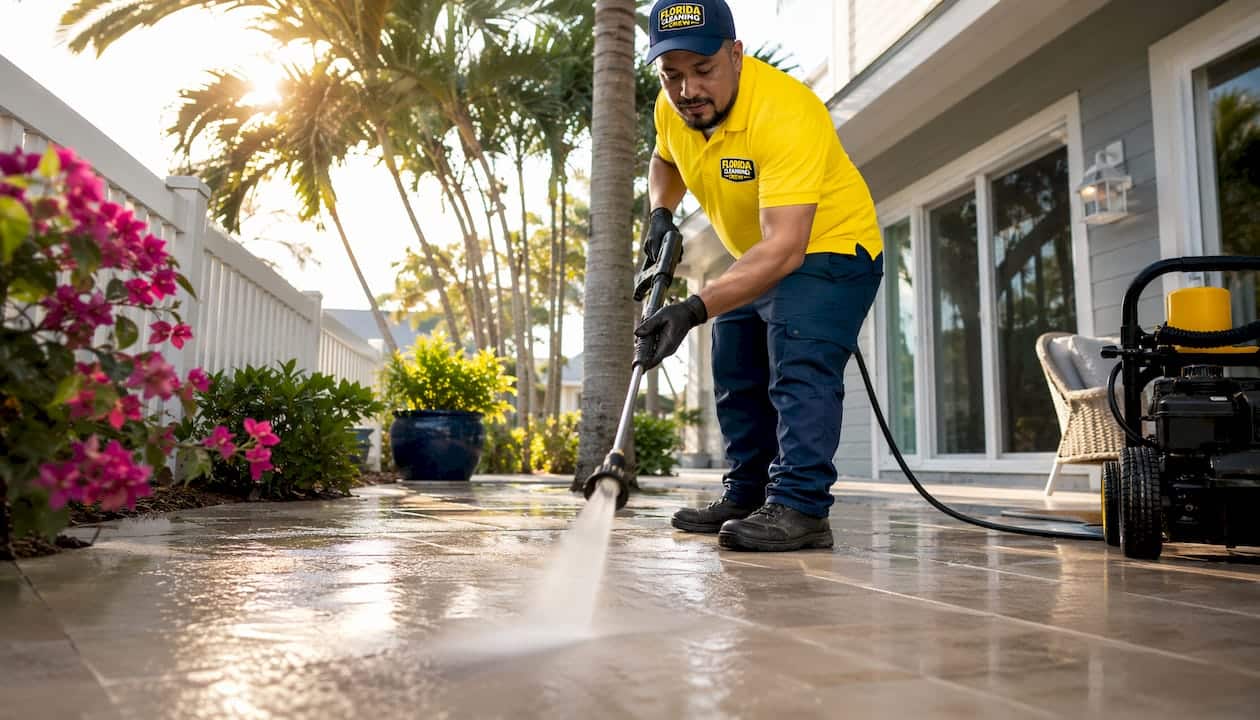
- Pressure washing or soft washing of siding, driveways, patios, walkways, and decks. Soft washing uses low pressure plus cleaning solutions to remove biological growth without etching stucco, older siding, or painted surfaces — the right call for most Florida exteriors
- Gutter and downspout cleaning and inspection, especially before hurricane season
- Deck, balcony, railing, and stair sweeping with a check for loose boards or corroded fasteners
- Exterior window cleaning and screen inspection
Amenity and safety items:
- Pool-area skimming, deck cleaning, and surrounding surface maintenance
- Firepit cleanup and grill-area degreasing
- Exterior lighting checks and dumpster enclosure upkeep
- Standing-water elimination to reduce mosquito breeding
Tampa Bay properties also need attention to local water-use rules and proper green-waste disposal. Yard clippings and chemical runoff cannot go into storm drains under local ordinance, so confirm disposal methods with your waste hauler or municipality before scheduling large landscaping jobs.
Who handles what: landlord vs. tenant responsibilities
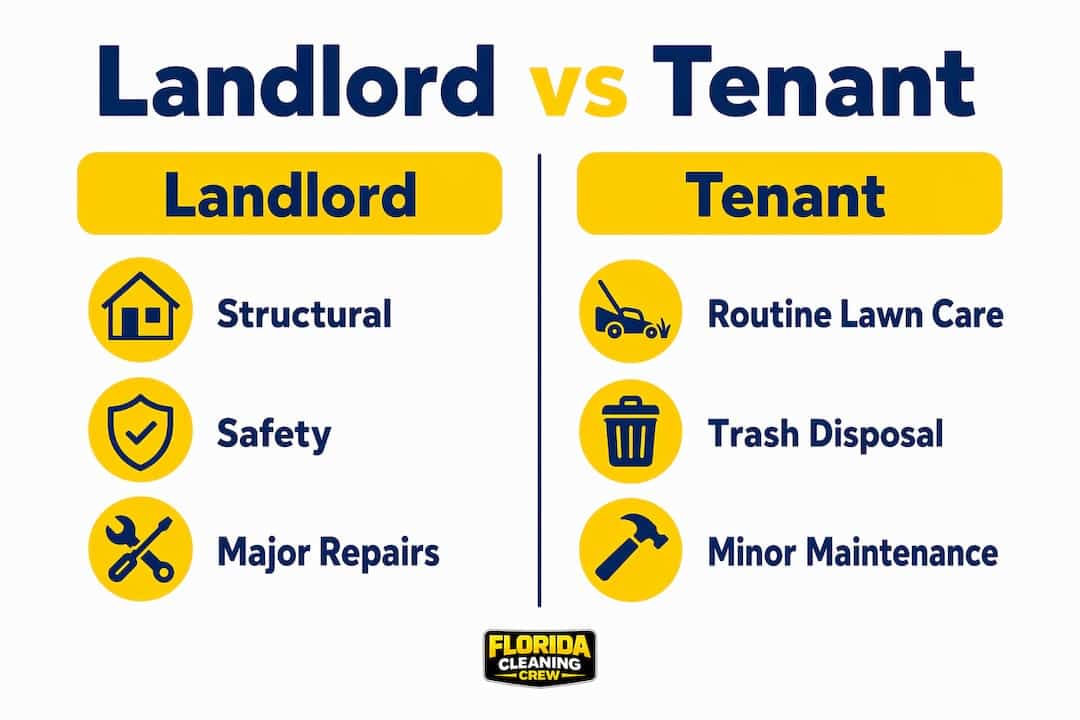
The lease is the first place to look, but it does not have unlimited authority. Courts and landlord-tenant guides treat structural and safety repairs as the landlord’s responsibility regardless of what a lease says, because those duties flow from the implied warranty of habitability and cannot be signed away.
Standard split for single-family rentals:
- Landlord covers: gutter function, roof drainage, structural deck and balcony integrity, major tree work, and any common-area exterior spaces
- Tenant covers: routine lawn mowing, patio sweeping, and keeping exclusive-use outdoor areas reasonably tidy — when the lease explicitly assigns those tasks
Standard split for multi-family properties:
- Landlord handles all common-area exterior maintenance: shared walkways, parking lots, pool surrounds, and landscaping
- Tenant handles surface tidying of their own balcony or patio only
When the lease is silent:
Per Nolo guidance on habitability, landlords retain responsibility for anything that affects safety or structural integrity. A vague lease clause that says “tenant maintains yard” does not transfer liability for a rotting deck railing.
Making assignments enforceable:
- Write specific task lists into the lease or a signed addendum
- Consider compensating tenants or supplying tools when assigning ongoing yard work
- Document move-in condition with dated photos before the tenant takes possession
Pro Tip: Add a one-page outdoor maintenance addendum to every lease. List each task, who performs it, and how often. Attach move-in photos. That single document resolves most security-deposit disputes before they start.
How often should outdoor cleaning happen?

Routine tasks need a weekly or biweekly rhythm. Everything else follows a seasonal or event-triggered schedule.
Baseline routine (weekly or biweekly):
- Lawn mowing and edging
- Trash and debris pickup
- Pool-area skimming for short-term rentals
Seasonal cadence:
- Spring: Gutter cleanout, soft washing of siding and walkways, landscaping refresh, and HVAC condenser clearance. Spring is the standard time for a coordinated deep clean between owners, tenants, and vendors
- Summer: Irrigation system check, pest and standing-water prevention, and a mid-season exterior walk-through
- Fall: Leaf and gutter prep before the rainy season ends; check drainage around the foundation
- Pre-hurricane season (May): Full exterior inspection — gutters, downspouts, deck fasteners, loose fence panels, and any overhanging branches. Pair this with an HVAC checklist to cover condenser clearance and exterior equipment at the same visit
- Post-storm (immediate): Walk the full perimeter for debris, standing water, and structural damage before tenants return
Turnover cleans are a different category entirely. A turnover is a complete exterior reset: gutters, soft washing, window cleaning, pool-area service, and a photo-documented condition report. Schedule a professional service for every turnover, not just annual ones. Coastal properties in Clearwater and St. Petersburg also benefit from more frequent soft-wash cycles because salt air accelerates biological staining on siding and concrete.
Property managers recommend at least three to four exterior walk-through inspections per year plus an immediate check after any major storm.

What does outdoor rental cleaning cost?
Costs vary by property size, surface material, access difficulty, and local market rates. The ranges below are estimates for the Tampa Bay area and are meant to help you budget, not replace a written quote.
| Service | Typical price range | Frequency |
|---|---|---|
| Lawn care (mow, edge, blow) | $40–$100 | Weekly or biweekly |
| Pressure / soft washing (home exterior) | — | Seasonal (2x/year) |
| Gutter cleaning | — | 2x/year or after storms |
| Exterior window cleaning | — | Seasonal or turnover |
| Junk / debris removal | — | Turnover or as needed |
| Pool-area cleaning | $80–$200 | Weekly (short-term rentals) |
| Firepit / grill deep clean | — | 2x/year |
Routine exterior cleaning also protects building materials by preventing moisture-trapping biological buildup, which can extend material lifespan and reduce repair costs over time.
Budgeting approach: Set an annual exterior maintenance line item. A common rule of thumb is to reserve 1–2% of the property’s value per year for all maintenance, with a portion earmarked for exterior work. Plan separately for storm contingencies, since a single hurricane cleanup can exceed a full season’s routine budget.
Pro Tip: Bundle services when possible. A vendor who handles soft washing, gutter cleaning, and window cleaning in one visit typically costs less than three separate bookings and causes less disruption for tenants.
Safety, local rules, and lease language to watch
Some outdoor cleaning tasks carry real physical risk, and others carry legal risk if assigned to the wrong party.
Non-delegable landlord duties:
- Structural safety of balconies, decks, and elevated walkways is non-delegable to tenants even when a lease attempts to transfer it. Local inspection laws in Tampa, Clearwater, and St. Petersburg can impose additional owner obligations on elevated structures
- Roof drainage and gutter function are owner responsibilities regardless of who the lease assigns routine cleaning to
Safety precautions for anyone doing outdoor work:
- Use a stabilized ladder on level ground; never lean a ladder against a gutter
- Wear eye protection and chemical-resistant gloves when handling pressure-washing detergents or pool chemicals
- Keep electrical fixtures and outlets in mind when working near pools or wet surfaces
- Hire licensed pros for any task involving heights above one story or chemical application near water features
Local and environmental rules:
- Tampa, Clearwater, and St. Petersburg all have water-use restrictions that affect irrigation schedules and pressure-washing runoff
- HOA rules in many Tampa Bay communities add requirements for lawn appearance, fence condition, and exterior paint that go beyond standard lease terms
- Green waste (clippings, branches) must go to designated disposal sites, not storm drains
Lease language recommendations:
- Specify which party handles routine tasks versus repairs
- Include vendor access notice periods (typically 24–48 hours) so tenants are not surprised by scheduled exterior work
- State whether the landlord or tenant pays for consumables like fertilizer or pool chemicals
This article is general information, not legal advice. Confirm current landlord-tenant rules with a qualified attorney or your local housing authority for your specific situation.
When to hire a professional and what to expect
Some jobs are genuinely DIY-friendly. Others are not, and the wrong call costs more than the pro would have.
Hire a pro for:
- Gutter cleaning above one story
- Soft washing vs. pressure washing decisions on stucco, painted wood, or older siding. The wrong method can etch concrete, strip paint, or force water behind siding
- Tree-service cleanup after storms
- Pool-area maintenance on short-term rentals
- Turnover deep cleans where you need before-and-after documentation
- Hoarding or bulk junk removal
What a quality provider delivers:
- Written scope of work before the job starts
- Method disclosure: soft wash or pressure wash, and why
- Proof of liability insurance and worker’s compensation coverage
- Local business license and references from similar Tampa Bay properties
- Before-and-after photos as standard deliverables, not an add-on
Pro Tip: Ask any vendor to state their proposed method in writing before booking. A company that cannot explain why they are choosing soft wash over pressure wash for your siding has probably not assessed the surface. Request photos from a previous similar job to confirm they have done it before.
For exterior windows specifically, rental host window care in Tampa Bay involves salt-air residue that standard squeegee work misses. A pro with the right solution handles it in one visit.
How to run an outdoor inspection and document what you find
Good documentation prevents disputes. Here is a repeatable workflow for move-in, routine checks, and move-out.
- Start with big-ticket items. Walk the gutters, roofline, deck railings, walkways, and drainage areas first. These are the items most likely to generate disputes or repair costs.
- Photograph each area with date-stamped images. Use your phone’s native camera with location services on. Wide shot first, then a close-up of any defect, then a contextual shot showing where the defect sits on the property.
- Note maintenance requests in writing. If a tenant flags a loose railing or a clogged downspout during move-in, log it with a timestamp and confirm receipt in writing.
- Store copies in cloud storage. Google Drive, Dropbox, or a property management platform all work. Local-only copies get lost.
- Schedule follow-up based on severity. A loose board on a deck railing is a same-week repair. Surface staining on a patio walkway can go on the next seasonal schedule.
- Repeat the full workflow at move-out. Compare move-out photos directly against move-in photos before making any security-deposit deductions for outdoor condition.
A vacation rental cleaning checklist can double as your photo-inventory template for short-term rental turnovers, since it already maps the exterior areas guests interact with most.
Key Takeaways
Outdoor space cleaning for rentals is a landlord-led responsibility for structural and common areas, a tenant responsibility for routine exclusive-use tidying when the lease says so, and a professional job whenever safety or surface damage is at stake.
| Point | Details |
|---|---|
| Lease determines the split | Landlords own structural and safety duties; tenants handle routine tidying only when the lease explicitly assigns it. |
| Seasonal cadence matters | Run three to four exterior inspections per year plus an immediate check after every major storm. |
| Turnover is a full reset | A turnover clean covers gutters, soft washing, windows, and a photo-documented condition report, not just a sweep. |
| Budget proactively | Reserve 1–2% of property value annually for maintenance; plan a separate contingency for storm cleanup. |
| Floridacc for local help | Tampa Bay owners can request an outdoor cleaning estimate from Floridacc for pressure washing, gutters, windows, and junk removal. |
What most people get wrong about outdoor rental cleaning
The biggest mistake property owners make is treating outdoor cleaning as a cosmetic task rather than a maintenance one. A dirty patio does not look great, but biological growth trapped against stucco or wood siding is actively degrading the building envelope. In Tampa Bay’s humidity, that process moves faster than most owners expect.
The second mistake is assigning outdoor tasks to tenants without spelling out exactly what that means. “Tenant maintains yard” in a lease has been argued in court more times than anyone wants to count. It does not tell a tenant whether they are responsible for tree trimming, gutter cleaning, or just mowing. Vague language creates disputes; specific language prevents them.
Salt-air exposure along the coast from St. Petersburg to Clearwater also changes the math on cleaning frequency. Properties within a few miles of the water need soft washing more often than inland Tampa properties, because salt residue holds moisture against surfaces and speeds up corrosion and staining. Twice a year is the floor for coastal rentals, not the ceiling.
For Airbnb hosts, the outdoor reset between guests is often the detail that drives reviews. Guests notice a dirty pool deck or a firepit full of ash from the previous stay. Scheduling a quick outdoor turnover alongside the interior clean is a small cost with a measurable impact on ratings.
Floridacc handles outdoor rental cleaning across Tampa Bay
Keeping up with exterior maintenance on a rental property takes time, the right equipment, and knowledge of local surfaces and regulations. Floridacc covers the full range of outdoor cleaning services for Tampa Bay rental owners and managers: pressure and soft washing, gutter cleaning, exterior window cleaning, pool-area maintenance, and junk removal for turnovers.

Every job comes with licensed and insured technicians, eco-friendly product options, and a satisfaction guarantee. Floridacc serves Tampa, Clearwater, St. Petersburg, and the surrounding area, so you get a local team that knows how salt air, humidity, and hurricane season affect your property specifically.
Ready to get a quote or schedule a seasonal deep clean? Visit the residential cleaning service guide to see what’s included and request an estimate, or go straight to house cleaning Tampa Bay to book.
Useful sources
- Implied warranty of habitability — Cornell Law
- The implied warranty of habitability: landlord’s duty — Nolo
- Outdoor maintenance services for property managers — Buildium
- Balcony, patio, and outdoor space tenant rights — ReadYourLease
- Spring cleaning tips for rental properties — Redwood RPM
- Exterior cleaning impact on property management — Monster Property Partners
- Pressure washing vs. soft washing — Floridacc
- Landlord duties and tenant responsibilities — ManageCasa
- Tampa Bay municipal water-use rules: check your city’s public works or utilities department for current irrigation and runoff restrictions
- HOA rules: request a current copy of your community’s CC&Rs from your HOA management company
FAQ
What does exterior cleaning for a rental include?
Exterior cleaning covers lawn care, pressure or soft washing of siding and hard surfaces, gutter cleaning, exterior window washing, pool-area maintenance, and debris or junk removal. The exact scope depends on the property type and lease terms.
How much should I budget for patio or outdoor cleaning?
Patio and hard-surface cleaning in the Tampa Bay area typically costs between moderate and higher price ranges for a full soft or pressure wash, with pool-area service priced variably per visit for short-term rentals. Costs vary by surface size, material, and access.
Who is responsible for lawn care in a rental property?
In single-family rentals, the lease often assigns routine lawn care to the tenant, but the landlord retains responsibility for structural safety and major tree work. In multi-family properties, landlords generally maintain all shared exterior areas.
Does outdoor cleaning apply to rental cars?
Rental car return conditions are set by the rental company’s contract, not landlord-tenant law. Standard agreements require the car returned in the condition it was received; exterior cleaning expectations are stated in the rental agreement itself.
When should a rental property owner hire a pro for outdoor cleaning?
Hire a professional for any task above one story, soft or pressure washing decisions on delicate surfaces, turnover deep cleans requiring documentation, and junk removal. Floridacc handles all of these for Tampa Bay rental properties.