Most homeowners in Tampa Bay wipe down their countertops and call it a day. But what is appliance cleaning service, really, and how does it differ from the quick once-over you give your oven before a family dinner? The honest answer is that professional appliance cleaning goes far deeper than any sponge or spray bottle can reach. It targets the internal buildup of grease, lint, mineral deposits, and bacteria that quietly reduce your appliances’ efficiency and shorten their lifespan. This article breaks down exactly what the service includes, what it costs, and when it makes sense to stop doing it yourself.
Table of Contents
- Key takeaways
- What is an appliance cleaning service?
- Benefits of professional appliance cleaning
- How professional appliance cleaning works
- Costs, frequency, and what affects the price
- DIY vs. professional cleaning: knowing the difference
- My honest take on what homeowners overlook
- Professional appliance cleaning in Tampa Bay
- FAQ
Key takeaways
| Point | Details |
|---|---|
| Surface cleaning is not enough | Grease, lint, and bacteria accumulate in vents, coils, and filters that a standard wipe-down never reaches. |
| Safety is a real concern | Lint buildup in dryer vents is a leading fire hazard that professional cleaning directly addresses. |
| Cost is lower than you think | Most professional appliance cleaning appointments run between $50 and $150 per appliance depending on type and condition. |
| Frequency matters | Most kitchen appliances benefit from professional deep cleaning at least once or twice a year. |
| DIY has real limits | Self-cleaning oven cycles and basic maintenance supplement professional service but cannot replace it. |
What is an appliance cleaning service?
An appliance cleaning service is a professional cleaning appointment where trained technicians clean your household appliances at a level that goes beyond what standard household products and effort can achieve. That means they work on the inside, the outside, the filters, the coils, the vents, and the mechanical components that accumulate grime over months of daily use.
Which appliances does the service cover?
Most professional appliance cleaners handle the following:
- Refrigerators: Coil cleaning behind and beneath the unit, interior shelf and drawer disinfection, door gasket scrubbing, and drip pan removal
- Ovens and ranges: Interior degreasing, burner cleaning, broiler pan scrubbing, and ventilation hood filters
- Microwaves: Interior splatter removal, turntable disinfection, and exterior vent cleaning
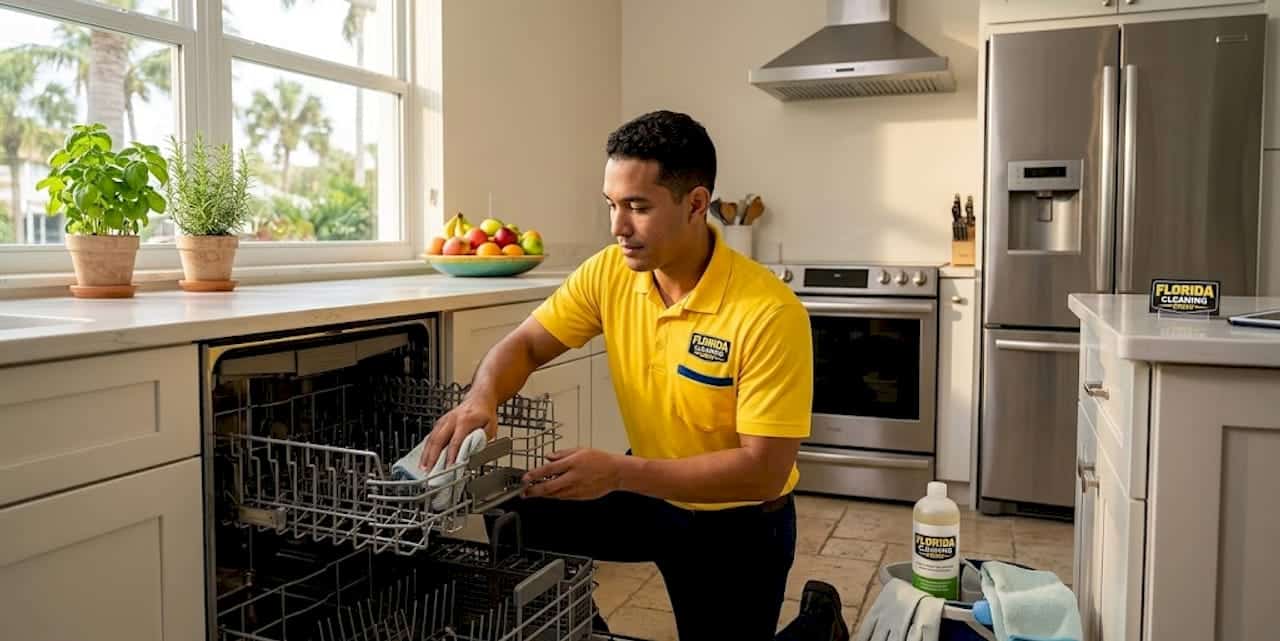
- Dishwashers: Filter removal and cleaning, spray arm unclogging, door seal scrubbing, and interior deodorizing
- Dryers: Lint trap deep cleaning, exhaust vent clearing, drum wiping, and exterior cabinet cleaning
- Washing machines: Drum cleaning, detergent drawer scrubbing, door seal mold removal, and drain filter clearing
The difference between what a homeowner does and what a professional does is not just time. It is the tools and the knowledge of where grime actually hides. Professionals disassemble parts that most people do not realize are removable. They access vents and coils that require special brushes or vacuum attachments.
Surface cleaning vs. deep cleaning
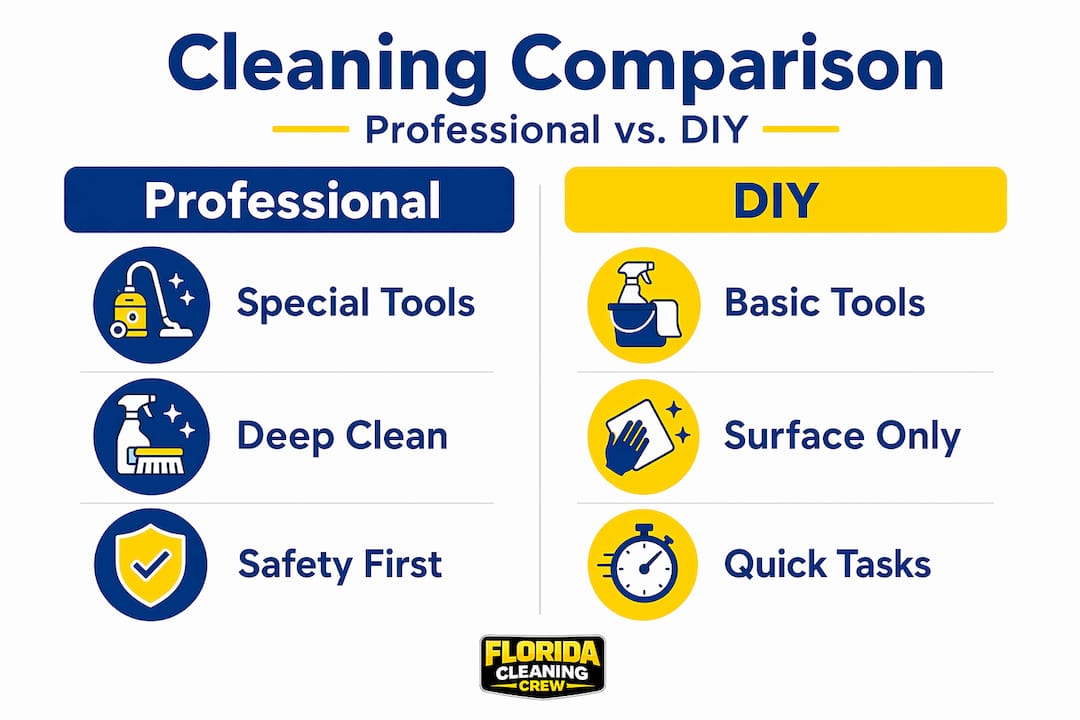
Surface cleaning means wiping down the exterior, clearing visible crumbs, and maybe running a self-cleaning cycle. Deep cleaning means that professionals remove more dirt, dust, and germs than conventional cleaning by targeting the internal components that affect performance and safety. A refrigerator coil caked with dust makes the compressor work harder. A clogged dryer vent raises the risk of fire. Neither of those problems shows up on the surface.
Professional cleaners also use products designed for specific appliance materials. They know not to use abrasive materials on stainless steel finishes and opt for microfiber cloths instead, wiping with the grain to avoid permanent scratching. That level of material awareness is hard to replicate without experience.
Benefits of professional appliance cleaning
Understanding the appliance cleaning service benefits goes well beyond having a shiny oven. The real payoff shows up in your energy bills, your repair costs, and your household safety.
Here are the most significant benefits, ranked from most immediate to most long-term:
-
Improved energy efficiency: Refrigerator condenser coils coated in dust force the compressor to run longer to maintain temperature. Cleaning those coils can reduce energy use noticeably. The same logic applies to dryer vents. A partially blocked vent means longer drying cycles, which means higher electricity bills.
-
Extended appliance lifespan: Appliances fail prematurely when they are forced to work harder than designed. Regular deep cleaning reduces mechanical stress and catches early warning signs of wear. A technician who notices a failing door gasket on your refrigerator is saving you from a compressor replacement.
-
Fire hazard elimination: Lint buildup in dryer vents is a primary cause of restricted airflow and a documented fire hazard. This is not a scare tactic. It is one of the most common and preventable home fire causes in the United States, and professional cleaning addresses it directly.
-
Better hygiene and allergen control: The interior of a dishwasher or washing machine is a warm, moist environment. Without regular deep cleaning, it becomes a breeding ground for mold and bacteria. This is especially relevant for households in Tampa Bay and Clearwater, where humidity levels accelerate that process.
-
Odor removal: Burnt food residue in ovens and microwaves, mold in washing machine seals, and stagnant water in dishwasher filters all produce persistent odors. Professional cleaning eliminates the source rather than masking it.
-
Time savings: A thorough oven deep clean done properly takes two hours or more if you include soaking removable parts, scrubbing interior walls, and cleaning the broiler. A professional handles all of that while you focus on something else.
Pro Tip: Schedule your dryer vent cleaning at the same time as your annual HVAC filter replacement. Both involve airflow systems, and grouping them keeps your home’s ventilation in peak condition year-round.
How professional appliance cleaning works
Transparency matters when you are letting someone work inside your home and disassemble parts of your appliances. Here is what a standard professional appliance cleaning appointment actually looks like from start to finish.
The typical appointment process
Most professional appointments take 1 to 2 hours depending on the number of appliances and their condition. A technician typically follows this sequence:
Step 1: Inspection. The tech looks at each appliance before touching it. They note any obvious damage, unusual odors, or mechanical concerns. This protects both the homeowner and the cleaner from disputes about pre-existing conditions.
Step 2: Disassembly of accessible parts. Shelving, drawers, filters, lint traps, spray arms, burner grates, and drip trays are removed where applicable. Professionals know which parts can be safely removed and which should stay in place.
Step 3: Cleaning components individually. Each removed part gets soaked, scrubbed, or rinsed using appropriate products. Mixing different cleaning products can damage appliance components and create chemical hazards, so professionals use products with known compatibility rather than reaching for whatever is under the sink.
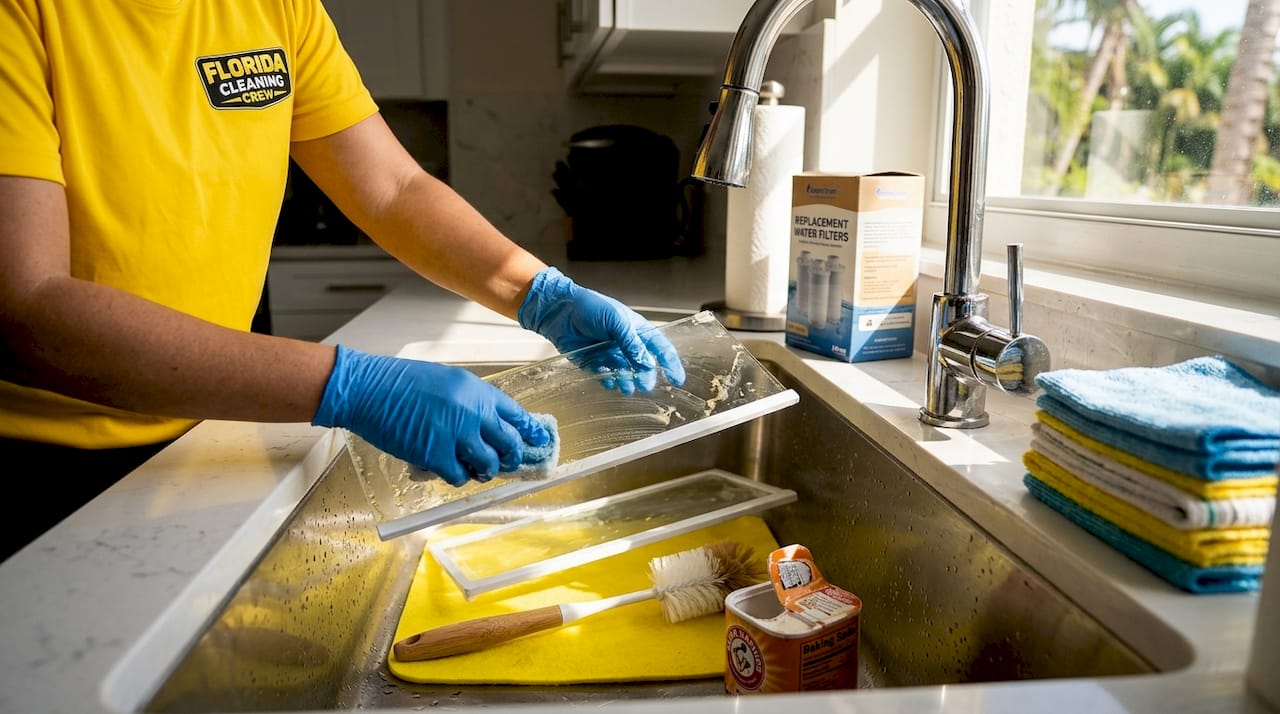
Step 4: Interior and vent cleaning. The interior cavity, coils, vent channels, and any accessible mechanical areas are cleaned using brushes, microfiber tools, or low-pressure steam depending on the appliance type.
Step 5: Reassembly and wipe-down. All parts go back in place. The exterior gets a final wipe using material-appropriate products. Stainless steel surfaces get microfiber treatment. The tech confirms everything is functioning correctly before leaving.
Professional cleaning vs. self-cleaning cycles
| Method | Time Required | Depth of Clean | Safety Considerations | Best For |
|---|---|---|---|---|
| Self-cleaning oven cycle | 3 to 6 hours | Surface interior only | Requires ventilation; should not be left unattended | Light residue between deep cleans |
| DIY manual cleaning | 1 to 3 hours | Moderate | Risk of wrong product use | Routine wipe-downs |
| Professional deep cleaning | 1 to 2 hours per appliance | Interior, filters, coils, vents | Trained product and disassembly knowledge | Full maintenance cleaning |
The oven self-cleaning cycle is a good example of where homeowners overestimate how much work is being done. Oven self-cleaning cycles can last up to 6 hours and should never be run unattended. They also do not clean burner grates, the broiler, ventilation filters, or the exterior. A professional cleaning covers all of those in a fraction of the overall time.
Pro Tip: Before your professional cleaning appointment, pull your appliances away from the wall if possible. This gives technicians immediate access to coils and vents and cuts appointment time significantly.
Costs, frequency, and what affects the price
One of the most common questions homeowners in St. Petersburg and Tampa ask before booking is: what does this actually cost?
Typical price ranges
The cost of appliance cleaning service varies by appliance type, condition, and how many units you are having cleaned at once. Here is a general breakdown for the Tampa Bay market:
| Appliance | Estimated Price Range | Frequency Recommended |
|---|---|---|
| Oven and range | $75 to $150 | Every 6 to 12 months |
| Refrigerator (including coils) | $60 to $120 | Once or twice a year |
| Dryer (including vent) | $80 to $150 | Annually, or every 6 months with heavy use |
| Dishwasher | $50 to $100 | Every 6 to 12 months |
| Washing machine | $60 to $100 | Every 6 to 12 months |
| Microwave | $40 to $80 | As needed |
For context, $50 per hour is considered fair in the professional cleaning industry, reflecting true market rates rather than individual wages. Bundling multiple appliances in one appointment almost always brings the per-unit cost down.
Factors that affect your cost
Several variables will move your quote up or down:
- Appliance age and condition: A refrigerator that has never had its coils cleaned in eight years costs more to service than one maintained annually.
- Brand and model complexity: Some high-end appliances have more components to disassemble and require more time.
- Add-on services: Combining appliance cleaning with a broader residential cleaning service often reduces the total cost.
- Location within Tampa Bay: Service rates in Clearwater and Tampa tend to align closely, though demand can affect pricing seasonally.
The cost-versus-value calculation is straightforward. A professional dryer vent cleaning at $120 is cheap compared to a house fire or a $600 dryer replacement. An oven cleaning at $100 is far less than a heating element repair caused by grease buildup.
DIY vs. professional cleaning: knowing the difference
There are things you can and should do between professional appointments. Knowing where that line falls saves you money and prevents accidental damage.
What you can safely do yourself
- Wipe down exterior surfaces weekly using appropriate products for the material
- Empty and rinse the dryer lint trap after every use
- Run a dishwasher cleaning tablet through an empty cycle monthly
- Clean the inside of the microwave with warm soapy water and a microfiber cloth after spills
- Wipe washing machine door seals after each wash to prevent mold growth
For guidance on building these habits into a regular routine, cleaning routines for Tampa homes offer practical frameworks homeowners can adopt alongside professional service.
Where DIY has real limits
Self-cleaning oven cycles are convenient but should be treated as a supplement, not a solution. Self-cleaning features do not replace regular maintenance and prompt spill cleanup. Running a self-clean cycle on a heavily soiled oven produces excessive fumes and does nothing for external components.
Refrigerator coils require a coil brush and a vacuum, tools most homeowners do not own. Dryer vent systems that run through long wall channels need rotating brush kits that reach further than the basic lint trap pull. And any cleaning that involves partial disassembly of internal components, such as dishwasher spray arms or washing machine drain filters, carries a real risk of damage if done without the right technique.
There is also the chemical compatibility issue. Professionals avoid mixing cleaning agents that can react with each other or with appliance materials. A homeowner who grabs whatever cleaner is nearby and applies it to a rubber door gasket can cause cracking that leads to leaks and costly repairs.
When your appliances are due for a thorough inspection alongside cleaning, that is the clearest signal to call in a professional. Technicians often catch small mechanical issues early because they are already inside the appliance. That secondary benefit is something no DIY session provides.
For those ready to step up their overall home cleaning approach, reviewing deep cleaning steps for homes is a good way to understand what a full-service cleaning covers and how appliance cleaning fits into that broader picture.
My honest take on what homeowners overlook
I have talked with enough Tampa Bay homeowners to know that appliance cleaning is the most consistently skipped maintenance task in an otherwise well-kept home. People replace appliances that had years of life left in them because they attributed declining performance to age when it was actually buildup. A refrigerator running constantly, a dryer taking two cycles to dry a load, an oven that smells off. These are all signs that cleaning, not replacement, was the fix.
What I have found is that the homeowners who do the best job of maintaining their appliances are not the ones who clean the most aggressively. They are the ones who know their limits. They do the easy weekly maintenance themselves and schedule a professional service once or twice a year. That balance is what actually extends appliance life without wasting money.
I also think people underestimate the importance of hiring a licensed and insured company for this work. When someone is disassembling parts of your dishwasher or cleaning inside your oven, you want to know that any accidental damage is covered. A company without insurance puts that risk on you.
One more thing worth saying: frequency matters more than intensity. A light monthly wipe-down combined with a thorough professional appliance cleaning every six months will outperform a single marathon cleaning session once every two years every single time.
— Matt
Professional appliance cleaning in Tampa Bay
If you live in Tampa, Clearwater, or St. Petersburg and your appliances are overdue for a real cleaning, Floridacc handles residential cleaning with the kind of thoroughness most homeowners cannot achieve on their own.

Floridacc is a licensed and insured cleaning company serving the Tampa Bay area with flexible scheduling that fits around your life, not the other way around. Their team uses eco-friendly, appliance-safe products and brings the tools needed to reach the parts of your home that standard cleaning misses. Whether you need a one-time deep clean or want to set up a recurring schedule, their residential cleaning services cover the full scope of home maintenance cleaning, including appliances. Getting a free quote is straightforward, and there is no pressure to commit before you understand exactly what is included.
FAQ
What does an appliance cleaning service include?
A professional appliance cleaning service typically includes interior and exterior cleaning of appliances like refrigerators, ovens, dishwashers, dryers, and microwaves, with attention to filters, vents, coils, and seals that standard cleaning misses.
How much does appliance cleaning service cost?
Costs range from $40 to $150 per appliance depending on the type and condition, with bundle pricing available when multiple appliances are cleaned in one appointment.
How often should I schedule professional appliance cleaning?
Most appliances benefit from professional deep cleaning once or twice a year, with more frequent service recommended for heavily used dryers or dishwashers in busy households.
Is it safe to let professionals disassemble my appliances?
Yes, reputable professional appliance cleaners are trained to safely remove and reassemble accessible parts like filters, spray arms, and drip trays, and a licensed and insured company covers any accidental damage.
Can I just use the self-cleaning cycle on my oven instead?
The self-cleaning cycle handles some interior residue but takes 3 to 6 hours, should not run unattended, and does not clean burner grates, ventilation filters, or exterior components the way a professional service does.