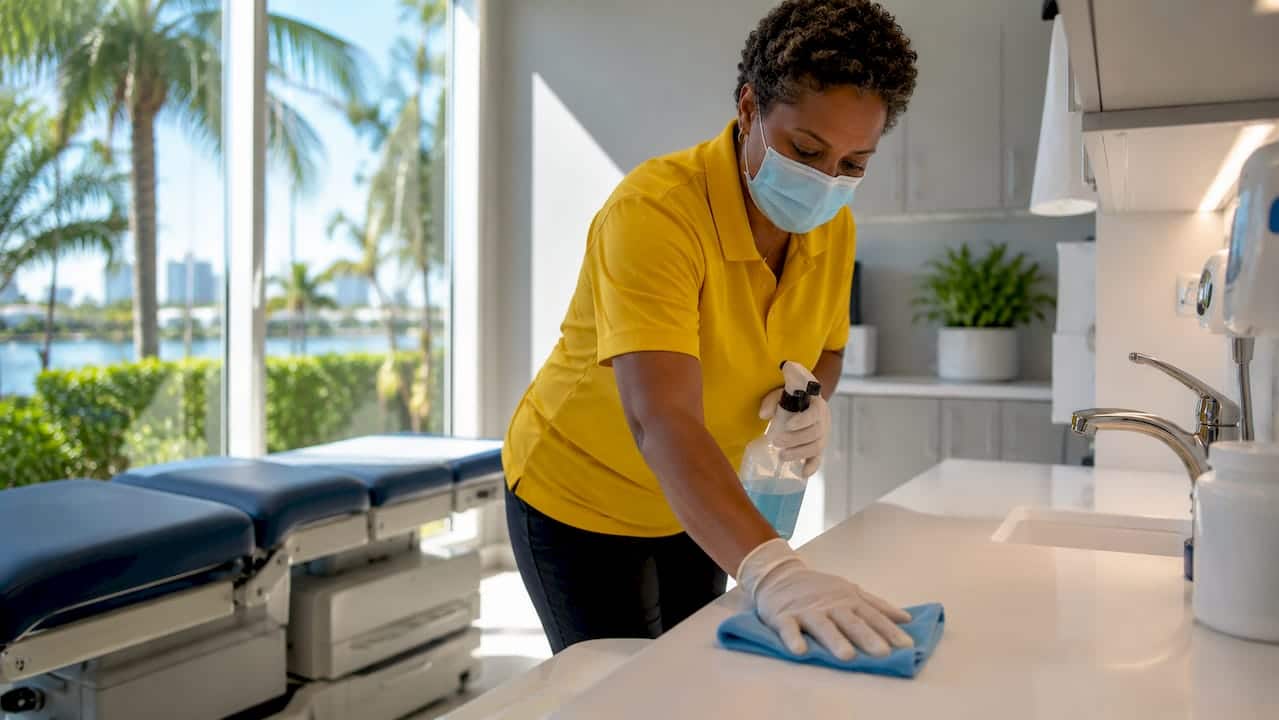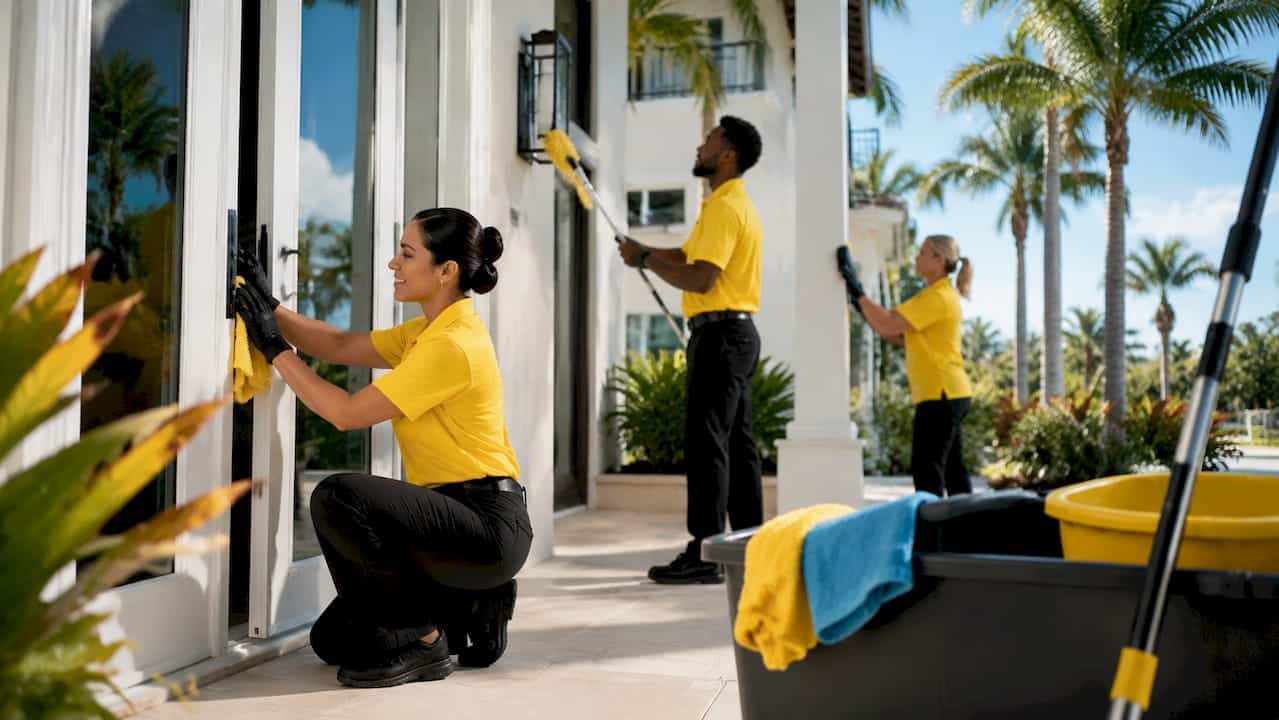

Deep cleaning signs are specific, measurable indicators that your home requires more than routine maintenance to restore a hygienic baseline. Regular mopping, wiping, and vacuuming keep surfaces looking presentable, but they cannot remove layered particulates, biofilm, or embedded odors once buildup crosses a critical threshold. Recognizing these indicators early protects your health, preserves your home, and makes ongoing upkeep far easier. For Tampa Bay homeowners and renters dealing with coastal humidity and salt air, these signs appear faster than most people expect.
1. What are the top deep cleaning signs in your home?
The ten indicators below are the most reliable signals that your home needs a clinical-grade reset rather than another round of routine cleaning.
Persistent odors that don’t clear after airing out
A home that still smells stale, musty, or sour after opening windows for several hours has odor compounds embedded in soft furnishings, grout, or wall surfaces. Routine cleaning moves surface particles around but does not extract the source. If the smell returns within a day of cleaning, that is a clear sign you need deep cleaning.
Sticky residue on baseboards and surfaces
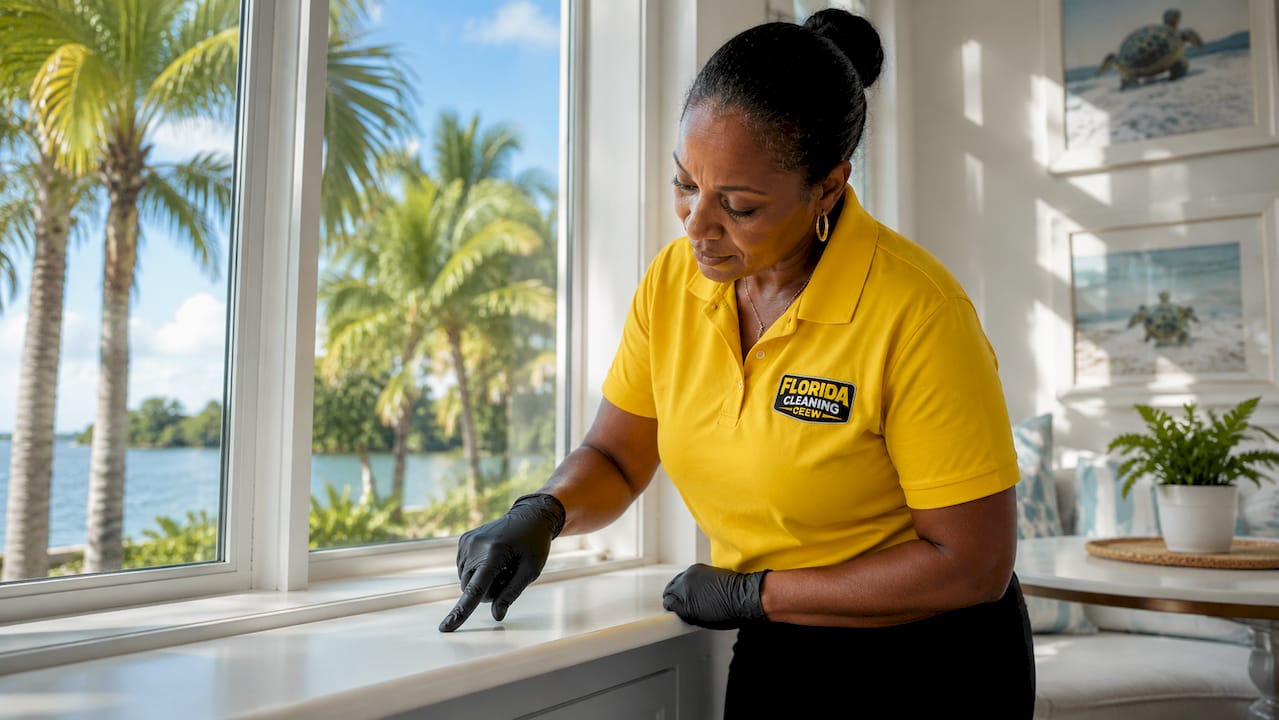
Run a finger along your baseboards. If the surface feels tacky rather than smooth, you are detecting a layer of salt aerosol and dust that routine dusting only redistributes across surfaces. This is called the Sticky Test, and it is one of the fastest self-checks available to any homeowner. Sticky residue requires hot water extraction or steam treatment to fully lift.
Grout and caulk discoloration
Gray or brown grout that does not respond to mopping is not a stain. It is a biofilm matrix made up of bacteria, mold spores, and fungal hyphae embedded into the porous surface. Simple wiping cannot remove it. Effective removal requires physical scrubbing followed by high-temperature steam treatment at 275°F to prevent rapid recolonization.
Dust that returns within days of cleaning
Dust that reappears on shelves, vents, and light fixtures within two or three days of cleaning signals a reservoir problem. Sub-micron construction dust and fine particulates cling to surfaces in inaccessible areas and recirculate through the air every time an HVAC system runs. Standard vacuum cleaners cannot capture these particles. HEPA-13 filtration vacuuming combined with wet wiping is required to stop the cycle.
Cleaning sessions taking longer with shorter-lasting results
When your regular cleaning routine takes more time but the results don’t last as long, buildup is working against you. You are essentially cleaning on top of accumulated grime rather than removing it. A deep clean resets the baseline so future maintenance sessions become faster and more effective.
Visible buildup in neglected areas
Check behind the toilet, under the refrigerator, inside cabinet hinges, and around window tracks. Visible grime in these spots means the home has not received a thorough clean in a significant amount of time. These areas are the clearest indicators for deep cleaning because they are ignored during routine sessions.
Worsening allergy or asthma symptoms indoors
If household members sneeze more at home than outside, or wake up congested, the indoor environment is likely the cause. Dust mites in bedding and mattresses are a primary indoor allergy trigger, and the American Academy of Allergy, Asthma and Immunology recognizes dust mite reduction as a medical strategy. Deep cleaning soft furnishings, mattresses, and upholstery directly reduces these symptoms.
Kitchens and bathrooms that feel grimy despite regular cleaning
Grease, soap scum, and hard water stains accumulate in layers that surface wiping cannot reach. Kitchens and bathrooms show these signs earlier than other rooms because of daily moisture and heat exposure. When these rooms feel grimy immediately after you clean them, the buildup is at the source, not just the surface.
Avoidance of specific cleaning tasks
When you find yourself skipping the oven interior, the shower grout, or the area behind appliances because the task feels too difficult, that avoidance is itself a sign. Difficulty is a signal that buildup has reached a level beyond what routine tools and products can handle. A professional deep clean removes the barrier and resets those areas to a maintainable state.
More than 30 days since the last thorough clean
The 30-Day Rule is a professional cleaning threshold. Once a home goes beyond 30 days without a comprehensive deep clean, standard maintenance cleaning can no longer restore a hygienic baseline due to layered particulates and biofilm. This is the point where professional-grade intervention becomes necessary.
Pro Tip: Set a phone reminder every 30 days to do a quick Sticky Test on your baseboards and a visual check of your grout. These two checks take under two minutes and tell you more about your home’s condition than a full visual walkthrough.
How the 30-Day Rule defines when to deep clean
The 30-Day Rule is a professional cleaning industry standard that marks the point where maintenance cleaning loses effectiveness and a clinical-grade process called an “Asset Reset” becomes necessary. Most homeowners assume that cleaning more frequently solves buildup problems. It does not. Frequency and depth are two different things.
Here is what happens inside a home after 30 days without a deep clean:
- Particulate layering: Fine dust, skin cells, and airborne grease settle into layers on horizontal surfaces, inside vents, and behind appliances. Each layer bonds to the one beneath it, making surface wiping progressively less effective.
- Biofilm establishment: Bacteria and mold spores colonize grout, caulk, and drain areas, forming a protective matrix that resists standard cleaning products.
- Odor embedding: Volatile organic compounds from cooking, pets, and moisture absorb into soft furnishings and wall surfaces, making the home smell stale regardless of how often you clean.
- Allergen accumulation: Dust mite populations in bedding and upholstery grow to levels that trigger respiratory symptoms in sensitive individuals.
“Many homeowners mistakenly believe frequent routine cleaning solves buildup problems that actually require clinical-grade deep cleaning to extract particulate matter and biofilm.” — Professional cleaning industry standard, as documented in expert cleaning assessments.
The Asset Reset concept means bringing every surface, including those rarely touched during routine cleaning, back to a clean baseline. Once that baseline is restored, regular maintenance cleaning becomes faster and more effective. Think of it as restarting from zero rather than trying to catch up on a growing deficit.
Understanding the difference between house cleaning and deep cleaning is the first step toward making smarter decisions about your home’s care schedule.
Practical tests to detect buildup at home
You do not need professional equipment to assess whether your home has crossed into deep-clean territory. These sensory and visual tests give you a reliable picture in under ten minutes.
1. The Sticky Test
Run a clean finger along a baseboard, the top of a door frame, or the side of a kitchen cabinet. A smooth result means the surface is clean. A tacky or gritty result means salt aerosol and dust layers have bonded to the surface. In Tampa Bay, coastal salt air accelerates this process significantly compared to inland homes. Heat-based extraction methods are required to fully remove this type of buildup.
2. The biofilm check
Look at your shower grout under good lighting. Healthy grout is uniform in color. Grout showing gray, brown, or black streaks that do not wipe away with a damp cloth has active biofilm. Biofilm comprises extracellular polymeric substances and diverse bacterial colonies that require scrubbing followed by thermal shock treatment to inhibit recolonization.
3. The vent and fixture check
Remove a vent cover and look at the inside edge. A thick gray or brown coating means the HVAC system is circulating contaminated air through the home. Check ceiling fan blades and light fixture rims using the same approach. Buildup in these areas confirms that airborne particulates have been accumulating for an extended period.
4. The odor test
After airing the home for two hours with windows open, walk back in from outside and take a slow breath. A neutral or fresh smell is a good sign. A musty, stale, or food-related odor that greets you at the door means odor compounds are embedded in surfaces, not just floating in the air.
Pro Tip: The nose adapts quickly to familiar smells. Ask a friend or neighbor to do the odor test for you. They will detect what you have stopped noticing.
Here is a quick reference for the most common self-check areas and what to look for:
| Area | What to check | Sign of needed deep clean |
|---|---|---|
| Baseboards | Sticky or gritty texture | Salt aerosol and dust bonding |
| Grout lines | Color uniformity | Gray, brown, or black streaking |
| HVAC vents | Inside edge coating | Thick gray or brown buildup |
| Mattress surface | Visible discoloration or odor | Dust mite accumulation |
| Under appliances | Visible debris or grease | Extended cleaning neglect |
What deep cleaning signs reveal about your health
The symptoms of dirty spaces go beyond aesthetics. Accumulated contaminants in a home directly affect respiratory health, sleep quality, and overall comfort. This connection is well established in allergy and indoor air quality research.
Dust mites are the most common indoor allergen. They thrive in bedding, mattresses, and upholstered furniture, feeding on shed skin cells. The American Academy of Allergy, Asthma and Immunology identifies dust mite reduction as a medical strategy for managing asthma and allergic rhinitis. Deep cleaning these areas removes the habitat, not just the surface layer.
Biofilm in bathrooms and kitchens presents a separate concern. The bacterial colonies embedded in grout and caulk release volatile compounds that affect indoor air quality. Poor indoor air quality is linked to disrupted sleep, increased fatigue, and worsened respiratory symptoms, particularly in children and older adults.
Sudden increases in sick days and air quality complaints in shared spaces often indicate deep-seated dust and bacterial buildup that surface cleaning cannot address. The same principle applies in homes where family members experience recurring respiratory issues.
A deep clean checklist that includes mattresses, upholstery, vents, and grout addresses these health triggers at the source. Cleaning around and under furniture, rather than just in front of it, removes the allergen reservoirs that routine cleaning leaves untouched.
When Tampa Bay homeowners should schedule a professional deep clean
Tampa Bay’s climate creates specific conditions that accelerate the need for deep cleaning. High humidity promotes mold and mildew growth in bathrooms and under sinks. Coastal salt air deposits sticky films on surfaces faster than in drier, inland environments. Homes near the water in Clearwater, St. Petersburg, and Tampa proper experience this salt aerosol effect year-round.
Timing your deep clean around these factors makes a practical difference:
- After summer: Florida’s rainy season drives humidity indoors. A deep clean in september or october removes mold spores and moisture-related buildup before cooler months.
- Before the holidays: A clean baseline makes entertaining easier and reduces the cleaning load during busy periods.
- After renovation or construction: Fine construction dust settles deep into cabinetry and vents. HEPA-13 filtration vacuuming and wet wiping are required to prevent recirculation and surface abrasion.
- When moving in or out: A move-in cleaning checklist that includes deep cleaning tasks sets the right baseline from day one.
Preparing for a professional deep clean is straightforward. Clear countertops and floors of clutter so the cleaning team can access all surfaces. Point out specific problem areas like stained grout, sticky baseboards, or odor sources. Professionals use HEPA filtration vacuuming, steam treatment, and specialized degreasers to address buildup that household products cannot reach.
The goal of a professional deep clean is not just a cleaner home today. It is a reset that makes every future cleaning session faster, easier, and more effective. Booking based on the signs you observe, rather than waiting for a fixed date on the calendar, is the most reliable approach to how often your house should be deep cleaned.
Key takeaways
Recognizing deep cleaning signs early prevents buildup from reaching the point where routine cleaning becomes ineffective and health impacts become noticeable.
| Point | Details |
|---|---|
| The 30-Day Rule matters | After 30 days without a deep clean, maintenance cleaning cannot restore a hygienic baseline. |
| The Sticky Test works | A tacky baseboard confirms salt aerosol and dust bonding that routine dusting cannot remove. |
| Biofilm needs thermal treatment | Grout discoloration is a biofilm sign requiring steam at 275°F, not just wiping. |
| Allergy symptoms are a signal | Worsening indoor allergies point to dust mite and allergen buildup in soft furnishings. |
| Signs beat schedules | Book a deep clean when you observe indicators, not just when a calendar date arrives. |
What I’ve learned from Tampa Bay homes that skip deep cleaning
Working with homeowners across Tampa, Clearwater, and St. Petersburg, I have seen one pattern repeat itself constantly. Homeowners who clean regularly assume their home is clean. They are not wrong about the effort. They are wrong about the result.
Routine cleaning is maintenance. It keeps the surface level presentable. But it does not touch the biofilm in the shower grout, the dust reservoir inside the HVAC vents, or the allergen buildup in the mattress. These are the areas that drive indoor air quality problems and make allergy seasons feel worse than they should.
The homeowners who notice the biggest improvement after a deep clean are almost always the ones who were cleaning the most regularly. That sounds counterintuitive, but it makes sense. They were maintaining a dirty baseline without realizing it. Once the baseline resets, their regular cleaning actually works.
My honest advice: trust your senses over your schedule. If the house smells off, if the grout looks wrong, if your allergies are worse indoors than outside, those are not minor annoyances. They are your home telling you something specific. The difference between what deep cleaning includes versus what routine cleaning covers is significant, and understanding it changes how you approach home care entirely.
Tampa Bay’s salt air and humidity mean these signs appear faster here than in most other parts of the country. That is not a reason to feel behind. It is a reason to pay attention to the right indicators and act on them when they show up.
— Matt
Floridacc residential deep cleaning for Tampa Bay homes
When the signs are clear, the next step is straightforward. Floridacc serves homeowners and renters across Tampa, Clearwater, and St. Petersburg with residential deep cleaning that addresses the specific indicators covered here, from biofilm in grout to allergen buildup in soft furnishings.

Floridacc uses HEPA filtration vacuuming, steam treatment, and eco-friendly degreasers to reset your home to a clean, maintainable baseline. The team is licensed, insured, and familiar with the specific challenges that Tampa Bay’s coastal climate creates for home hygiene. The residential cleaning service guide covers what to expect, how to prepare, and which services fit your home’s current condition. If you have spotted any of the signs in this article, that is your cue to get a free estimate and book a reset.
FAQ
What are the most common deep cleaning signs?
The most common indicators include persistent odors after airing out, sticky baseboards, grout discoloration, rapidly returning dust, and worsening indoor allergy symptoms. These signs confirm that routine cleaning is no longer sufficient.
How often should a home receive a deep clean?
The 30-Day Rule marks the professional threshold. Once a home goes beyond 30 days without a thorough deep clean, maintenance cleaning cannot restore a hygienic baseline on its own.
Can I do the Sticky Test myself?
Run a clean finger along a baseboard or door frame. A tacky or gritty result confirms salt aerosol and dust bonding that requires hot water extraction or steam treatment to remove.
Why do allergy symptoms worsen indoors?
Dust mites in bedding and mattresses are a primary indoor allergen. The American Academy of Allergy, Asthma and Immunology recognizes dust mite reduction through deep cleaning as a medical strategy for managing respiratory symptoms.
Does regular cleaning replace deep cleaning?
Regular cleaning maintains surfaces but cannot remove biofilm, embedded odors, or sub-micron particulates. Deep cleaning addresses buildup at the source and resets the baseline so routine maintenance becomes effective again.