TL;DR:
- Tampa Bay homes require more frequent deep cleaning cycles due to humidity, pollen, and storms.
- Proper preparation and scheduling around seasonal weather help maintain a cleaner, healthier home.
- A hybrid approach of monthly maintenance and quarterly professional cleaning best manages environmental buildup.
Living in Tampa Bay means dealing with a level of humidity, pollen, and seasonal grime that homeowners in drier climates simply don’t face. Most people know their home needs a deep clean, but figuring out when, how often, and who should do it is where the confusion starts. Tampa’s humidity compresses cleaning cycles compared to dry climates, meaning what works on a six-month schedule in Arizona may need to happen every six weeks here. This guide walks you through understanding your specific cleaning needs, preparing your property, booking the right help, and verifying that the job was done right. By the end, you’ll have a practical, repeatable system built for Tampa Bay’s unique conditions.
Table of Contents
- Understanding deep cleaning needs in Tampa Bay
- Preparing for deep cleaning: Tools, supplies, and prerequisites
- Step-by-step guide to scheduling deep cleaning
- Verifying results and troubleshooting scheduling challenges
- What most Tampa Bay guides miss about deep cleaning scheduling
- Professional support for deep cleaning in Tampa Bay
- Frequently asked questions
Key Takeaways
| Point | Details |
|---|---|
| Climate-tailored scheduling | Tampa Bay’s humidity and pollen demand more frequent, flexible deep cleaning schedules than in dry climates. |
| Hybrid DIY and pro approach | Monthly self-maintenance plus quarterly professional deep cleaning delivers optimal results in Tampa. |
| Preparation makes scheduling easy | Gather supplies, prepare your space, and communicate needs for smooth appointments and higher satisfaction. |
| Check results and revise | Always verify cleaning quality and reschedule as needed, especially after major weather or seasonal events. |
Understanding deep cleaning needs in Tampa Bay
Not every cleaning session qualifies as a deep clean. Regular cleaning covers the visible stuff: wiping counters, vacuuming floors, scrubbing the toilet. Deep cleaning goes further. It targets grout lines, baseboards, behind appliances, inside cabinets, ceiling fans, window tracks, and the kinds of surfaces that collect months of buildup before anyone notices.
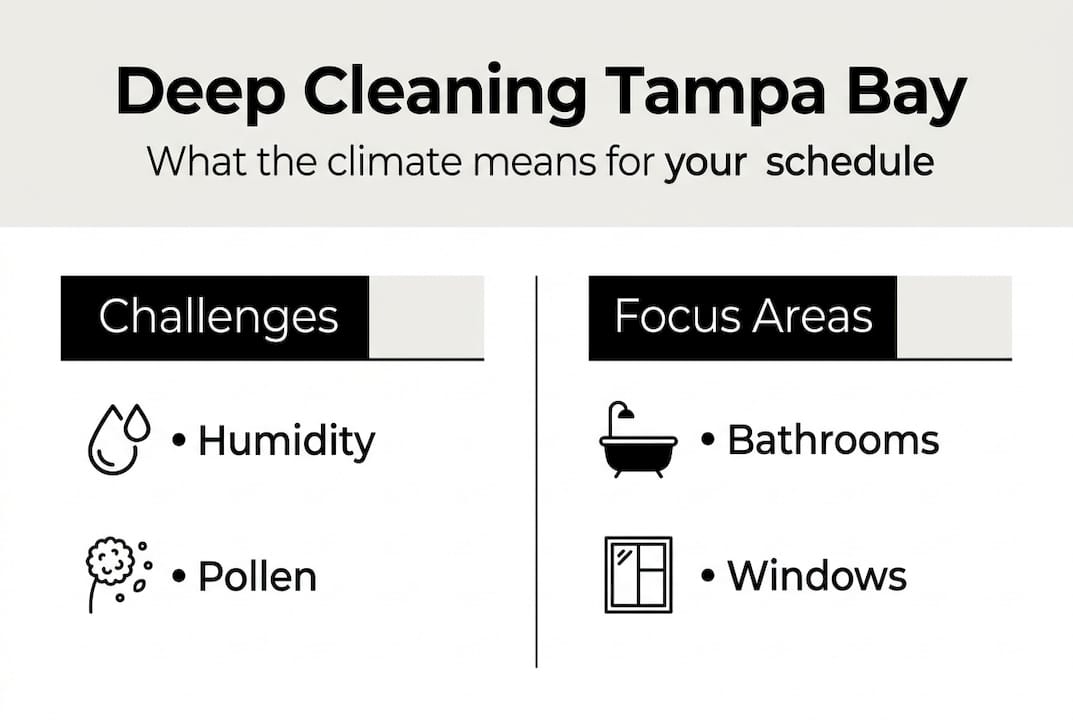
In Tampa Bay, the climate changes the equation significantly. High humidity encourages mold and mildew growth in bathrooms, under sinks, and around window seals. Seasonal pollen from oak and pine trees coats surfaces indoors and out. Hurricane season brings moisture intrusion that can leave hidden damp spots. These factors mean your home accumulates grime faster than you’d expect, and standard cleaning routines often can’t keep up.
Here’s a quick look at how regular and deep cleaning compare in a Tampa Bay context:
| Feature | Regular cleaning | Deep cleaning |
|---|---|---|
| Frequency | Weekly or biweekly | Monthly to quarterly |
| Surfaces covered | Visible, high-traffic areas | All surfaces, including hidden spots |
| Tools needed | Basic mops, vacuums, sprays | Specialized tools, steam cleaners |
| Time required | 1 to 2 hours | 4 to 8 hours or more |
| Best for | Maintenance between deep cleans | Resetting cleanliness baseline |
Who needs deep cleaning most? Homeowners with pets, children, or allergy sufferers benefit from more frequent cycles. Property managers handling short-term rentals or turnover units need deep cleans between every tenant. Households near construction sites or water bodies face extra particulate and moisture exposure.
Key situations that call for a deep clean include:
- Moving in or out of a property
- After a hurricane or heavy storm event
- Seasonal transitions, especially spring and fall
- Before or after hosting large gatherings
- When mold or musty odors are detected
For Tampa Bay homes specifically, deep cleaning frequency recommendations lean toward quarterly professional sessions, with monthly self-maintenance in between. Understanding what deep cleaning actually involves helps you set realistic expectations and communicate clearly with your cleaning provider.
Pro Tip: Plan your deep cleaning schedule around two key Tampa Bay seasons. Schedule a thorough clean in spring before hurricane season begins, and again in fall after pollen season peaks. These two anchor points give your property the best chance of staying ahead of climate-driven buildup.
According to the service frequency guide, ISSA-certified professionals are recommended for humid regions because they follow standardized protocols that account for moisture-related risks. Working with certified pros means you’re not just getting a cleaner home, you’re getting one that’s treated with methods designed to last in Florida’s climate. The cleaning frequency guide for Tampa Bay homes reinforces this with local-specific data on how often different property types should be serviced.
With the need for tailored deep cleaning in Tampa established, let’s get specific on preparing for a successful schedule.
Preparing for deep cleaning: Tools, supplies, and prerequisites
Preparation makes or breaks a deep clean. Whether you’re doing it yourself or hiring a team, showing up unprepared wastes time and often means areas get skipped or done poorly. Here’s what you need before the cleaning starts.
Essential supplies and tools:
| Category | Items needed |
|---|---|
| Cleaning agents | Degreaser, mold remover, grout cleaner, glass cleaner |
| Tools | Microfiber cloths, scrub brushes, extendable dusters, steam mop |
| Safety items | Gloves, eye protection, ventilation fans |
| Organization | Labeled bins, trash bags, donation boxes |
| HVAC care | Fresh filters, vent covers for dust containment |
Before the cleaning crew or your own session begins, site preparation is essential. Clutter on counters, floors, and closets prevents cleaners from reaching the surfaces that need attention most. Move furniture away from walls where possible, clear out under-sink cabinets, and make sure all rooms are accessible.
HVAC systems deserve special attention. Change your air filter before a deep clean so the system isn’t recirculating dust that gets stirred up during cleaning. If you have ceiling fans, clean the blades before running the HVAC to avoid spreading debris.
Tasks homeowners and property managers should complete before the appointment:
- Remove personal items, valuables, and fragile decor
- Empty trash cans throughout the property
- Clear countertops and tabletops of clutter
- Identify and note any areas needing special attention
- Ensure pets are secured or removed from the property
- Confirm access to all rooms, closets, and utility areas
- Check that water and electricity are available for cleaning equipment
A hybrid approach, meaning you handle monthly upkeep yourself and bring in professionals for quarterly deep cleaning, is widely considered the most cost-effective strategy for Tampa Bay properties. It keeps your home in good shape between professional visits without burning out your budget.
Pro Tip: Walk through your property with a sticky note pad before the cleaning appointment. Mark any surfaces or areas that need extra attention, like a water stain under the bathroom sink or grout discoloration in the shower. Hand the notes to your cleaner at the start. This simple step prevents miscommunication and ensures nothing gets overlooked.
For property managers, reviewing a move-in checklist before scheduling helps you align the deep clean with tenant expectations and lease requirements. It also protects you legally by documenting the property’s condition. If you’re considering ongoing service, the benefits of recurring cleaning for Tampa Bay homes are substantial, especially for rental properties where turnover is frequent and standards are high.
The expert cleaning advice from Florida cleaning authorities consistently points to preparation as the single biggest factor in cleaning quality. A well-prepped property allows cleaners to focus on actual cleaning rather than organizing or navigating obstacles.
Once you’re properly equipped and prepped, it’s time to schedule the actual deep cleaning process.
Step-by-step guide to scheduling deep cleaning
Scheduling a deep clean isn’t just picking a date on the calendar. Done right, it’s a process that accounts for your property’s needs, your preferred method, and Tampa Bay’s seasonal realities.
-
Assess your property’s current condition. Walk through every room and note areas with visible buildup, odors, or damage. This assessment helps you decide whether you need a full deep clean or targeted work in specific zones.
-
Choose your cleaning method. Decide between DIY, hiring professionals, or a hybrid approach. DIY works for smaller spaces and lighter buildup. Professionals handle large properties, severe mold, or post-storm situations. The professional cleaning process is worth understanding before you decide, since it clarifies what you’re actually paying for.
-
Set your scheduling anchor points. Use Tampa Bay’s seasons as your guide. Spring cleans should happen before June, ahead of hurricane season. Fall cleans target October or November, after the worst pollen months.
-
Book your professional appointments in advance. Quality cleaning services in Tampa Bay fill up fast, especially in spring. Book at least two to three weeks ahead for your quarterly professional sessions.
-
Plan your monthly maintenance tasks. Between professional visits, schedule your own weekly or biweekly maintenance to keep surfaces clean and reduce the workload at each deep clean.
-
Communicate your priorities to your provider. Share your assessment notes, flag problem areas, and discuss any climate-specific concerns like mold risk or pet dander buildup.
-
Confirm logistics before the appointment. Verify arrival time, access arrangements, and any products the cleaner will use. If you prefer eco-friendly products, confirm this in advance.
“For Tampa, ISSA-certified protocols and humidity-driven cycles are vital.”
The hybrid scheduling approach, combining monthly self-maintenance with quarterly professional deep cleans, consistently delivers the best results for Tampa Bay properties. It’s not just about cleanliness. It’s about protecting your investment from the long-term damage that humidity and mold can cause.
Pro Tip: Avoid scheduling deep cleans during Tampa Bay’s peak storm months of August and September. Weather delays and post-storm cleanup demands make it harder to get reliable service. Aim for May, October, or January as your professional cleaning months.
For rental properties, aligning deep cleans with tenant turnover is smart planning. Review move-out cleaning expectations so you know exactly what standard the property should meet before a new tenant arrives. This protects your deposit process and your reputation as a property manager.
Now that you’ve successfully scheduled a cleaning, let’s discuss how to verify the results and ensure ongoing success.
Verifying results and troubleshooting scheduling challenges
A deep clean is only as good as the results it delivers. After every session, take time to verify the work before signing off or releasing payment.
Verification checklist after a deep clean:
- Grout lines in bathrooms and kitchens are visibly clean
- Baseboards are dust-free and wiped down
- Appliances are cleaned inside and out, including behind the refrigerator
- Window tracks and sills are free of debris and mold
- Ceiling fans and light fixtures are dust-free
- Cabinets are wiped inside and out
- All floors are mopped or vacuumed, including under furniture
Common scheduling mistakes and how to fix them:
- Booking too close to storm season: Reschedule professional cleans to May or October to avoid weather disruptions.
- Skipping the prep work: Cleaners who arrive to a cluttered space spend time organizing instead of cleaning. Always prep the day before.
- Ignoring humidity spikes: After heavy rain or flooding, humidity affects cleaning effectiveness. Wait 24 to 48 hours after a major weather event before scheduling.
- Not communicating problem areas: Always brief your cleaner on specific concerns before they start.
- Setting unrealistic time frames: A thorough deep clean of a 2,000-square-foot home takes six to eight hours. Don’t rush it.
Best practices for vendor communication:
- Confirm the scope of work in writing before the appointment.
- Provide a detailed list of priorities ranked by importance.
- Ask for a walkthrough at the end of the session to review results together.
- Give specific feedback rather than general complaints if something was missed.
- Build a relationship with one reliable provider rather than switching vendors constantly.
The Tampa-specific cleaning advice from Florida cleaning authorities highlights that humidity-related rescheduling is a real factor in this region. Properties near the water or in low-lying areas of Tampa Bay may need to adjust their schedules more frequently than inland homes. Using a frequency guide tailored to Tampa Bay helps you build a realistic plan rather than relying on generic national recommendations.
Review your deep cleaning basics periodically to make sure your standards haven’t slipped and that you’re still targeting the right areas as your household’s needs evolve.
With your cleaning successfully scheduled and verified, here’s our expert perspective on effective deep cleaning management in Tampa Bay.
What most Tampa Bay guides miss about deep cleaning scheduling
Most cleaning guides hand you a checklist and call it done. What they rarely address is the underlying logic that makes a schedule actually work in Tampa Bay’s specific environment.
The biggest oversight is treating deep cleaning like a fixed calendar event. The truth is, Tampa’s climate doesn’t follow a predictable pattern. A wet spring followed by an early hurricane can push your entire cleaning plan off by weeks. Rigid schedules break down under those conditions. Flexible ones don’t.
The professional cleaning insights we’ve gathered from years of working in this region point to one consistent pattern: homeowners who treat deep cleaning as a response to conditions, not just a date on the calendar, maintain cleaner properties with less effort. They clean before the humidity peaks, not after the damage is visible.
The hybrid DIY and professional approach is also underrated. People either try to do everything themselves and burn out, or they outsource everything and lose track of their property’s condition. The sweet spot is monthly self-maintenance with quarterly professional sessions. You stay connected to your property’s needs, and the professionals handle what you can’t.
Pro Tip: Build a two-week buffer into your schedule around Tampa Bay’s most unpredictable months. If a storm pushes your October clean to November, that’s fine. The buffer keeps you from scrambling.
Seasonal triggers are smarter than static dates. Pre-hurricane spring cleans and post-pollen fall cleans align with Tampa Bay’s actual rhythm, not a generic national calendar.
Professional support for deep cleaning in Tampa Bay
Knowing the right schedule is one thing. Having a trusted team to execute it is another.

At Florida Coastal Cleaning, we work with homeowners and property managers across Tampa Bay to build cleaning plans that actually fit the local climate and your specific property type. Our residential cleaning services cover everything from routine maintenance to full deep cleans, using eco-friendly products and licensed, insured professionals. If your floors need extra attention, our carpet cleaning experts use methods designed for Florida’s humidity levels. We also help clients understand what sets professional cleaning apart from DIY efforts, so you can make informed decisions about your cleaning investment. Contact us today for a free estimate and a customized cleaning plan built for Tampa Bay.
Frequently asked questions
How often should I schedule deep cleaning for a Tampa Bay home?
Most Tampa Bay homes benefit from monthly maintenance plus quarterly professional deep cleaning due to the region’s high humidity and seasonal pollen cycles. Properties near water or with pets may need more frequent professional visits.
What’s the difference between regular cleaning and deep cleaning?
Regular cleaning handles visible, high-traffic surfaces on a routine basis, while deep cleaning removes built-up grime, allergens, and bacteria from hidden areas using specialized tools and products. Deep cleaning takes significantly more time and effort.
Do I need to prepare my property before scheduling a deep cleaning?
Yes. Site prep ensures efficient cleaning and better results, so declutter all spaces, clear access to every room, and flag any areas with specific concerns before your cleaner arrives.
Is professional cleaning necessary, or can I do it myself?
A hybrid approach works best: handle basic weekly or biweekly maintenance yourself and bring in professionals for quarterly deep cleans to address the buildup that DIY methods can’t fully reach.