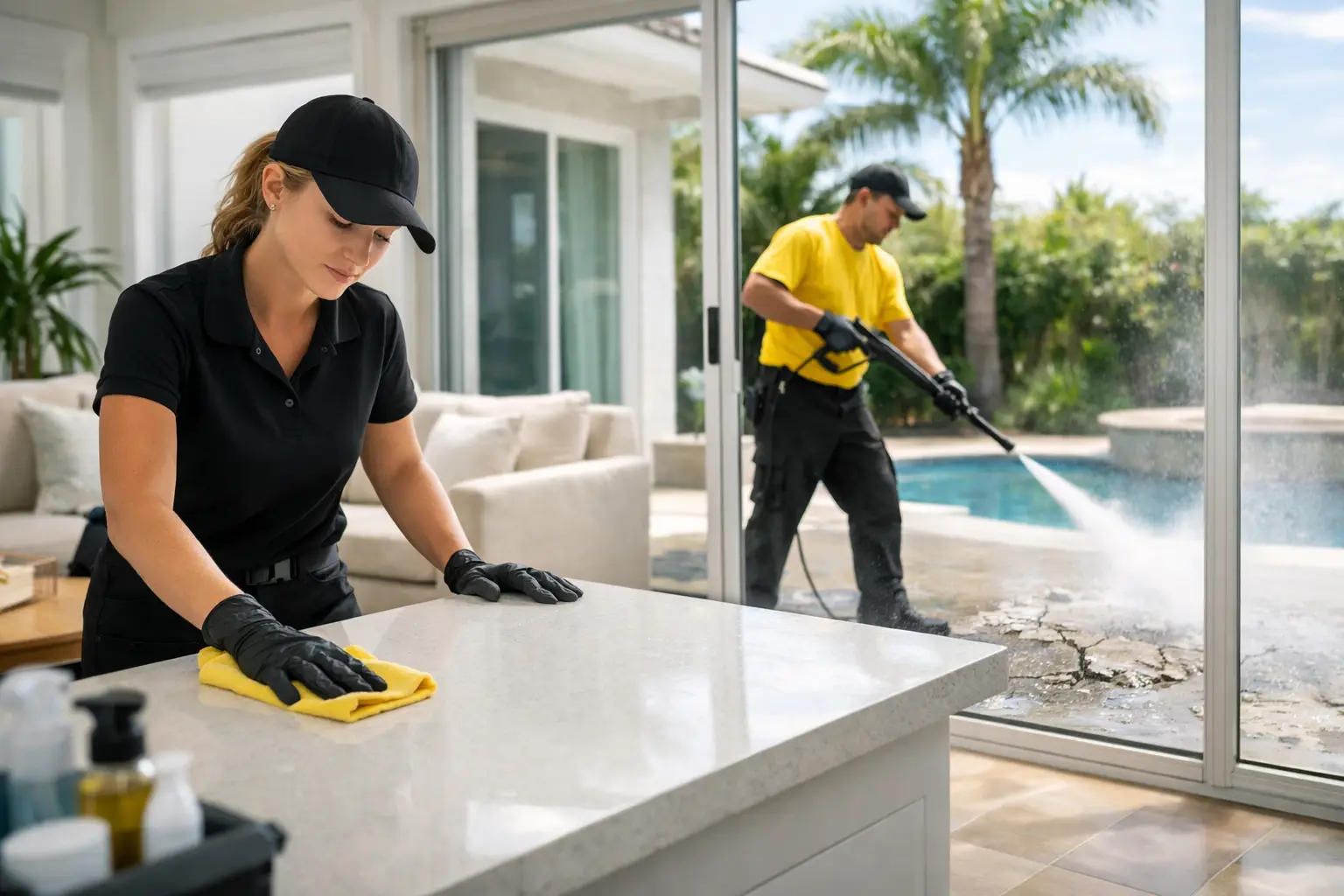
A concrete driveway should not come away from a cleaning looking rougher than it did before. But that does happen, and it usually starts with one question: can pressure washing damage concrete? Yes, it can. The good news is that the damage is usually preventable when the surface is evaluated first and the right pressure, nozzle, and technique are used.
Concrete is tough, but it is not indestructible. Age, curing quality, weather exposure, previous repairs, and even the type of stain on the surface all affect how well it handles pressure washing. A newer, well-finished driveway can usually tolerate more than an older pool deck with surface wear and small cracks. That difference matters more than most people realize.
Why pressure washing can damage concrete
The biggest misunderstanding is assuming that harder blasting always means better cleaning. On concrete, too much pressure can strip away the surface layer, leave visible lines, and expose the aggregate underneath. Once that top layer is scarred, the slab may look permanently patchy even after it dries.
Damage also happens when the wrong nozzle is used too close to the surface. A narrow spray tip concentrates force into a very small area. That can etch concrete fast, especially if the operator pauses in one spot or starts too aggressively on a weakened section.
Water pressure is only part of the equation. Volume, angle, distance, dwell time, and cleaning solution all play a role. In many cases, concrete gets damaged less by the machine itself and more by poor technique.
What pressure washing damage looks like on concrete
Some problems show up immediately. Others become obvious only after the surface dries. If you are trying to decide whether a slab can be safely cleaned, it helps to know what damage actually looks like.
Etching is one of the most common issues. It appears as light, wand-shaped marks or stripes where the surface has been cut away. On a driveway or walkway, those marks can stand out at certain times of day when the light hits them.
Pitting is another issue. Instead of smooth cleaning, the concrete develops tiny craters or a rough, sandpaper-like texture. This is more likely on aging concrete or surfaces that already have freeze-thaw wear, scaling, or weak finishing.
There is also spalling, where the top layer starts breaking off in flakes or chips. Pressure washing does not always cause spalling from scratch, but it can make an existing weak area much worse. That is why pre-inspection matters.
When concrete is most at risk
Not every slab carries the same risk level. Older concrete is generally more vulnerable, especially if it has hairline cracking, crumbling edges, prior patch repairs, or visible wear. Decorative concrete, stamped finishes, and painted or sealed surfaces also need extra care because the goal is not just cleaning dirt away – it is preserving the finish.
Fresh concrete can be a problem too. If a slab has not fully cured, pressure washing can interfere with the surface before it reaches full strength. In most cases, newly poured concrete should be left alone long enough to cure properly before any aggressive washing is considered.
Florida properties add another layer to this. In the Tampa Bay area, concrete often deals with heat, humidity, algae, mildew, sprinkler overspray, and organic staining. Those conditions make exterior cleaning necessary, but they do not always require maximum pressure. Often, a lower-pressure approach with the right treatment does a better job and puts the surface at less risk.
Can pressure washing damage concrete if the pressure is too high?
Yes, and high pressure is the most obvious reason. But the exact number is not the only thing that matters. A machine set too high for the surface can cut into concrete, especially if paired with the wrong tip or used by someone trying to remove a stain too quickly.
This is where experience matters. Some stains respond best to detergent and dwell time, not more force. Oil spots, rust marks, tire residue, algae, and red clay do not all clean the same way. Treating every stain with maximum pressure is how good concrete gets damaged for the sake of a faster pass.
Professional crews usually test a small area first. That allows them to check how the concrete reacts before cleaning the full surface. It is a simple step, but it prevents a lot of expensive mistakes.
The difference between safe cleaning and surface damage
Safe concrete cleaning starts with surface condition, not machine size. A sound slab with heavy dirt may handle a stronger setup than a fragile slab with only mild discoloration. The right process balances cleaning power with surface protection.
Distance from the concrete matters. Keeping the nozzle too close sharply increases impact. So does using an aggressive tip on corners, edges, or repaired spots. Consistent movement matters too. If the wand stays still for even a moment, the spray can leave a permanent mark.
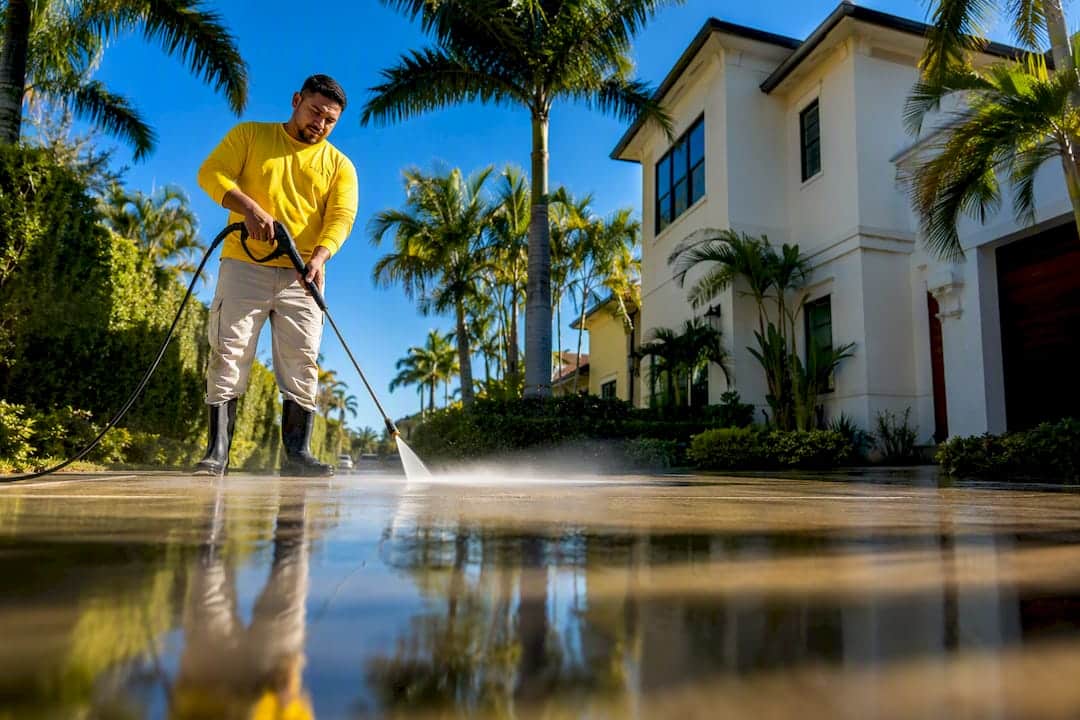
Equipment choice matters as well. Surface cleaners often provide more even results on large flat areas because they distribute pressure more consistently than a handheld wand. That reduces visible striping and helps protect the finish. For many driveways, sidewalks, and parking areas, that is a better method than freehand blasting.
Surfaces that need extra caution
Some concrete surfaces should always be approached carefully. Pool decks are a good example because the area may already have a textured coating or a cooler deck finish designed for foot traffic. Too much pressure can remove that coating or create uneven wear.
Garage floors can also be tricky if they are sealed, coated, or stained. The concrete itself may be strong, but the finish on top may not be able to handle aggressive washing. The same goes for painted walkways and decorative entry areas.
Commercial properties have their own concerns. High-traffic sidewalks, loading areas, dumpster pads, and storefront aprons may look durable, but they often have patchwork repairs or chemical exposure that weakens the surface over time. A one-size-fits-all approach is not a safe approach.
How to avoid damaging concrete during pressure washing
The first step is inspection. Look for cracks, flaking, soft spots, patched sections, loose coating, and signs of old damage before cleaning begins. If the slab is already failing at the surface, pressure washing may need to be adjusted or replaced with a gentler method.
The second step is choosing the right cleaning strategy for the actual problem. Organic growth like algae and mildew often responds better to treatment plus controlled washing than brute force. General dirt may only need moderate pressure. Deep stains may require more than water alone.
Technique is where results are won or lost. The spray should be kept at a safe distance, moved evenly, and tested in an inconspicuous section first. Large areas should be cleaned in a way that avoids striping and keeps the finish consistent from edge to edge.
For property owners, the practical takeaway is simple: if a surface is old, decorative, sealed, recently poured, or already damaged, it is worth slowing down before turning full pressure on it. Cleaning should improve curb appeal, not create repair work.
Is soft washing better than pressure washing for concrete?
Sometimes, yes. Soft washing is usually associated with siding and roofs, but parts of the process can be useful on concrete too, especially when the main issue is organic growth rather than embedded grime. If algae, mildew, or surface staining are the problem, a treatment-first approach can reduce how much pressure is needed afterward.
That does not mean high-pressure cleaning is wrong. It means the method should fit the surface and the stain. On some properties, the best result comes from a combination of cleaning solution, controlled pressure, and proper rinsing. The safest approach is rarely the most aggressive one.
When it makes sense to call a professional
Concrete cleaning looks simple until the surface starts showing lines, gouges, or peeled coating. At that point, the cost of fixing the damage is far higher than the cost of cleaning it correctly in the first place. That is especially true for large driveways, decorative patios, commercial entries, and pool areas.
A qualified crew should know how to identify weak concrete, choose the right equipment, and clean evenly without overworking the slab. For property owners who want the job done right the first time, that matters more than just showing up with a powerful machine. Companies like Florida Cleaning Crew handle pressure washing as part of broader property care, which helps when the goal is protecting the surface while improving the look of the whole exterior.
Concrete can absolutely handle professional cleaning. It just needs the right approach. If you are looking at a stained driveway or slippery walkway, the smart question is not whether it can be cleaned. It is whether it can be cleaned without taking years off the surface.