TL;DR:
- Tampa’s humid climate accelerates mold and grime buildup, making pressure washing essential for property maintenance.
- Correct equipment, surface-specific techniques, and eco-friendly detergents are key to safe and effective cleaning.
- Professional pressure washing services help avoid damage, ensure compliance, and deliver long-lasting curb appeal.
Tampa’s warm, humid climate is a breeding ground for mold, mildew, algae, and grime that builds up on exterior surfaces faster than almost anywhere else in the country. If you own or manage a property here, you’ve probably noticed how quickly a clean driveway or freshly painted siding can look dull and dirty again. Pressure washing is one of the most effective ways to fight back, protecting your investment and keeping curb appeal strong year-round. But grab the wrong nozzle, use too much pressure, or skip the prep work, and you can cause real damage. This guide walks you through everything you need to know to pressure wash smarter, safer, and with results that actually last.
Table of Contents
- How to choose the right pressure washer for your property
- Surface-specific techniques: Siding, driveways, patios, and decks
- Detergents, eco-friendly solutions, and safe application practices
- Preparing your property for stress-free pressure washing
- Common pitfalls to avoid and troubleshooting tips
- A Tampa pro’s take: What most pressure washing guides miss
- Professional pressure washing — Your shortcut to spotless curb appeal
- Frequently asked questions
Key Takeaways
| Point | Details |
|---|---|
| Pick the right equipment | Match PSI, GPM, and attachments to your property’s surfaces and cleaning needs. |
| Tailor techniques to each surface | Adjust methods and nozzle types for siding, driveways, patios, and decks to prevent damage. |
| Prioritize eco-friendly washing | Use environmentally friendly detergents to protect your landscaping and local water systems. |
| Prepare thoroughly | Prepping the area and equipment minimizes risk and ensures a smoother cleaning process. |
| Consider professional help | For tough jobs or greater peace of mind, local experts can deliver reliable, lasting results. |
How to choose the right pressure washer for your property
Now that you understand why pressure washing is a Tampa essential, let’s make sure you start with the right equipment. The market offers dozens of models, and picking the wrong one is one of the most common mistakes homeowners make before they even start cleaning.
Electric vs. gas-powered pressure washers is the first decision you’ll face. Electric models are quieter, lighter, and easier to maintain. They work well for patios, vehicles, outdoor furniture, and light siding jobs. Gas-powered units deliver significantly more force and are better suited for driveways, large commercial surfaces, and heavy-duty stain removal. For most Tampa homeowners handling routine maintenance, a quality electric model is enough. Property managers overseeing multiple units or large commercial spaces will usually want gas.
PSI and GPM are the two numbers that matter most on any spec sheet. PSI (pounds per square inch) measures water pressure, while GPM (gallons per minute) measures water flow. Together, they determine cleaning power. A higher PSI cuts through tough grime, but too much PSI on the wrong surface causes etching or gouging. GPM affects how quickly you rinse a surface clean. For residential use, 1,500 to 2,500 PSI with 1.4 to 2.0 GPM handles most jobs. For concrete driveways or commercial work, 3,000 PSI and above is more effective.
| Surface type | Recommended PSI | Recommended nozzle |
|---|---|---|
| Wood decks | 500 to 1,200 | 25° or 40° |
| Vinyl siding | 1,200 to 1,500 | 25° or 40° |
| Concrete driveways | 2,500 to 3,000 | 15° or surface cleaner |
| Patios (pavers) | 1,500 to 2,000 | 25° |
| Vehicles | 1,200 to 1,500 | 40° |
Essential attachments make a big difference in results. A surface cleaner attachment is a rotating disc that keeps pressure even across flat surfaces like driveways, preventing the streaky arc patterns you get from a single nozzle. Turbo nozzles spin water in a tight circular pattern for extra cutting power on stubborn stains. Extension wands let you reach second-story siding without a ladder. Foam cannons apply detergent evenly before rinsing.
As pressure washing professionals point out, selecting the correct power and feature set prevents damage and maximizes cleaning efficiency. This is especially true in Tampa, where the importance of pressure washing locally goes beyond aesthetics and directly affects property longevity.
For Tampa’s climate specifically, look for stainless steel or brass fittings instead of plastic, which degrades faster in heat and humidity. Store your unit indoors or under cover between uses to extend its lifespan.
Pro Tip: After each use, run clean water through the system for 30 seconds to flush out detergent residue. This one habit prevents clogged nozzles and extends the life of your pump significantly.
Surface-specific techniques: Siding, driveways, patios, and decks
With the proper pressure washer selected, it’s time to look at how to adapt your methods for different surfaces around your home or property. One setting does not fit all, and this is where most DIY mistakes happen.
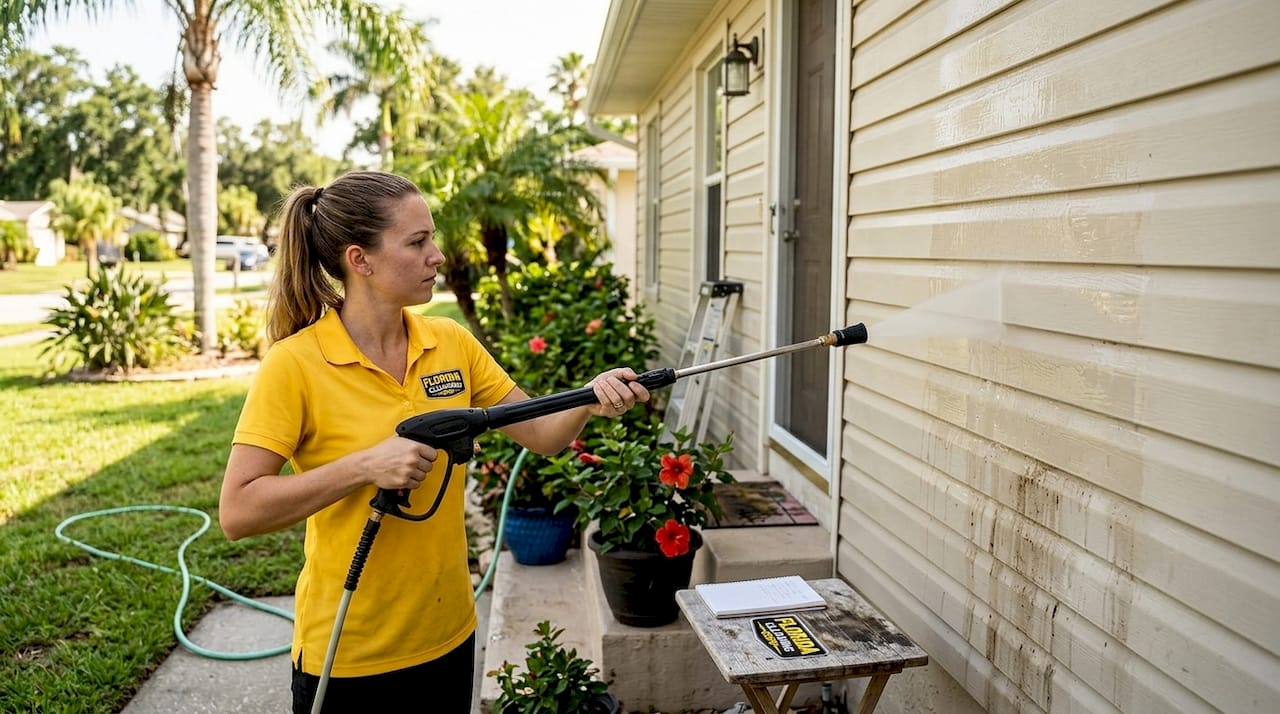
Vinyl and fiber cement siding need a gentler touch than most people expect. Use a 25° or 40° nozzle and keep pressure between 1,200 and 1,500 PSI. Always spray at a downward angle, never upward, because forcing water behind siding panels causes moisture damage and mold growth inside walls. Work in sections from top to bottom, overlapping slightly to avoid dry lines.
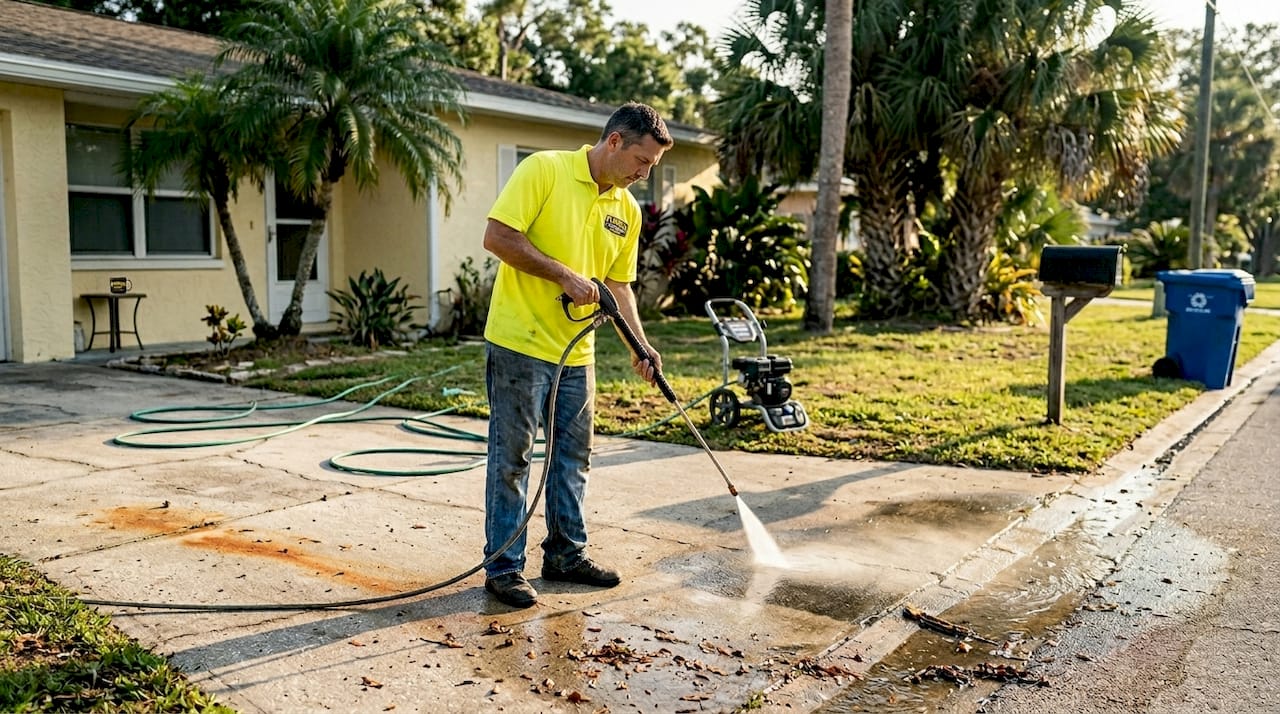
Concrete driveways can handle much more force. A surface cleaner attachment at 2,500 to 3,000 PSI gives you even, streak-free results. Pre-treat oil stains with a degreaser and let it dwell for 5 to 10 minutes before washing. Rinse from the highest point of the driveway downward so dirty water flows away from the structure.
Here’s a step-by-step process that works for most surfaces:
- Clear the area of furniture, vehicles, and loose debris.
- Pre-wet surrounding landscaping to dilute any chemical runoff.
- Apply detergent using a low-pressure soap nozzle, working from the bottom up to prevent streaking.
- Let the detergent dwell for 3 to 5 minutes (never let it dry on the surface).
- Rinse from top to bottom using the appropriate nozzle for the surface.
- Inspect for missed spots and repeat if necessary.
- Allow the surface to dry completely before replacing furniture or applying sealant.
Wood decks are the most damage-prone surface you’ll clean. Pressure that’s too high raises wood grain, causes splintering, and can void deck warranties. Stick to 500 to 1,200 PSI with a wide 40° nozzle. Move the wand with the grain of the wood, keeping it at least 12 inches from the surface. After cleaning, let the deck dry for 48 hours before staining or sealing.
“Applying the correct method and pressure per surface extends property life and keeps finishes intact.” Skipping this step is one of the leading causes of premature surface wear in Tampa properties.
Patios and pavers need special attention because high pressure can dislodge the sand between joints. Use a 25° nozzle and moderate pressure, then reapply polymeric sand to joints after washing if needed.
For mold, mildew, and algae, which are extremely common in Tampa’s humidity, a sodium hypochlorite-based cleaner applied at low pressure (soft washing) is far more effective than blasting with high pressure alone. Professional pressure washing tips consistently recommend soft washing for organic growth because it kills the root rather than just removing the surface layer. This is also why exterior cleaning matters so much in this region.
Pro Tip: In Tampa, plan to pressure wash siding and driveways at least twice a year. The combination of summer rain, humidity, and heat creates ideal conditions for algae and mildew to return within months.
Detergents, eco-friendly solutions, and safe application practices
Understanding surface-specific techniques leads naturally into choosing the right detergents and applying them responsibly. The cleaning agent you choose can make or break your results, and in Tampa, it also affects your yard, your neighbors’ yards, and local waterways.
Common detergent types and their uses:
- Mold and mildew removers: Sodium hypochlorite-based formulas. Effective on siding, roofs, and patios. Use diluted (1 to 3% concentration) for most surfaces.
- Degreasers: Alkaline-based cleaners for oil, grease, and tire marks on driveways and garage floors.
- Rust removers: Oxalic acid-based products for rust stains on concrete and metal fixtures. Handle with care and avoid contact with plants.
- General purpose cleaners: Surfactant-based soaps that work well for light dirt and dust on siding and fences.
- Algae and organic stain removers: Quaternary ammonium compounds that kill biological growth at the root.
| Contaminant | Recommended cleaner type | Dwell time |
|---|---|---|
| Mold and mildew | Sodium hypochlorite | 5 to 10 min |
| Oil and grease | Alkaline degreaser | 5 to 15 min |
| Rust stains | Oxalic acid | 3 to 5 min |
| Algae and moss | Quaternary ammonium | 10 to 15 min |
| General dirt | Surfactant soap | 2 to 5 min |
Environmental responsibility matters here. Tampa Bay’s stormwater system connects directly to local waterways, and harsh chemicals that run off your driveway can end up in the bay. Eco-friendly detergents prevent lawn, garden, and stormwater damage while still delivering strong cleaning results.
For a DIY eco-friendly option, a mix of white vinegar, water, and a small amount of dish soap handles light mildew and general grime on many surfaces. It’s not as powerful as commercial formulas, but it’s safe around pets, kids, and plants. For tougher jobs, look for biodegradable, phosphate-free commercial cleaners labeled safe for aquatic environments.
Safe application practices are non-negotiable. Always read the label before mixing or applying any chemical. Never mix bleach with ammonia-based cleaners, as this creates toxic fumes. Store chemicals in their original containers, away from heat and direct sunlight. Wear chemical-resistant gloves, eye protection, and closed-toe shoes whenever you’re handling concentrated detergents.
To protect your landscaping during a wash, pre-soak plants and grass with plain water before applying detergent. This dilutes any chemical that lands on leaves. Rinse the surrounding area thoroughly after you finish.
Pro Tip: Apply detergent using your pressure washer’s low-pressure soap nozzle (usually black), not a high-pressure tip. High pressure with detergent creates excessive foam, wastes product, and reduces dwell time effectiveness.
Preparing your property for stress-free pressure washing
Having the right solutions is only part of successful pressure washing. The rest is all about solid preparation. A few minutes of prep work saves hours of cleanup and prevents the kind of accidental damage that turns a Saturday project into a costly repair.
Pre-wash checklist:
- Close all windows and doors, including garage doors.
- Cover outdoor electrical outlets and light fixtures with plastic bags or waterproof tape.
- Move patio furniture, potted plants, and decorations away from the work area.
- Disconnect and store garden hoses that might get tangled or damaged.
- Pre-wet all surrounding landscaping to dilute potential chemical exposure.
- Check the forecast. Avoid pressure washing before heavy rain, which will just wash away your work.
- Inspect the surface for cracks, loose paint, or damaged caulk that could worsen under pressure.
Securing pets and valuables is easy to overlook when you’re focused on equipment setup. Keep pets indoors during the entire session. The noise alone stresses most animals, and chemical exposure is a real risk. Remove any outdoor furniture cushions, rugs, or decorative items that could absorb water or chemicals.
Protective gear is not optional. Wear safety glasses or goggles to protect against debris and chemical splash. Use waterproof boots with non-slip soles because wet surfaces are slippery. Chemical-resistant gloves protect your hands during detergent handling. Long pants and a long-sleeve shirt protect skin from overspray.
Spotting trouble areas before you start saves time and prevents damage. Look for peeling paint, rotting wood, cracked mortar, or areas where caulk has failed. These spots need manual cleaning or repair before any water pressure is applied. Blasting a compromised surface accelerates the damage.
As pre-washing checks show, proper preparation prevents 80% of the most common property damage issues during pressure washing sessions. That’s a number worth taking seriously.
For windows near the areas you’re cleaning, review window prep best practices before you start, since pressure washing near glass requires extra care. You can also find more detailed cleaning guides for other areas of your property.
Pro Tip: Walk the entire perimeter of your property before starting and take photos of any existing cracks or damage. This protects you if anyone questions whether the pressure washing caused a pre-existing issue.
Common pitfalls to avoid and troubleshooting tips
Once you’re prepared, it’s smart to know the common issues that catch DIYers and property managers off guard. Even experienced users run into problems, and knowing how to respond quickly saves time and prevents frustration.
Top pressure washing mistakes:
- Using the wrong nozzle: A 0° red nozzle concentrates all pressure into a single point and can cut through wood, etch concrete, and strip paint. Always start with a wider nozzle and adjust as needed.
- Getting too close to the surface: Distance controls effective pressure. Most surfaces need at least 12 to 18 inches of clearance. Closer is not always better.
- Skipping the rinse: Leaving detergent on a surface causes streaking, residue buildup, and in some cases, surface damage. Always rinse thoroughly.
- Washing in direct sunlight: Heat causes detergent to dry before it can work properly. Wash in the early morning or on overcast days for best results.
- Ignoring water flow direction: Always work downhill and away from structures to prevent water intrusion.
Fixing streaks and uneven cleaning usually comes down to technique. If you see arc-shaped streaks on a driveway, you used a single nozzle without a surface cleaner attachment. Go back over the area with a surface cleaner at consistent speed. For siding streaks, re-apply detergent to the affected area, let it dwell, and rinse with smooth, overlapping passes.
“Improper technique can increase repair costs and time spent significantly.” Rushing through a pressure washing job almost always creates more work in the end.
Troubleshooting equipment issues is straightforward once you know what to look for. If the washer loses pressure mid-job, check for a kinked hose, a clogged nozzle, or a low water supply. If it won’t start, check the fuel level, spark plug, and choke setting on gas models. Electric models often trip a GFCI outlet when there’s moisture near the connection.
Signs you need a professional include persistent staining after multiple passes, surfaces that show damage after light cleaning, multi-story areas you can’t safely reach, and any situation involving hazardous materials like lead paint or asbestos. Expert help for common issues is available when the job outgrows your equipment or comfort level.
A Tampa pro’s take: What most pressure washing guides miss
Armed with the essential tips and troubleshooting strategies, it’s helpful to consider what local Tampa Bay professionals see every day. Most online guides are written for a generic national audience, and Tampa’s conditions are anything but generic.
Here’s the reality: Tampa’s yearly pressure washing perspective is completely different from what homeowners in drier climates deal with. The combination of year-round warmth, frequent afternoon rain, and salt air near the coast means mold and algae return within weeks on some surfaces, not months. A twice-a-year schedule that works in Atlanta might leave a Tampa property looking neglected by February.
Another thing most guides gloss over is the real cost of overconfidence. Renting a gas-powered unit for the first time and immediately tackling a two-story home or a wood deck with old paint is a recipe for expensive repairs. We’ve seen homeowners strip paint off siding, crack grout between pavers, and blow water into wall cavities, all from using too much pressure on the wrong surface. The repair bill always costs more than a professional cleaning would have.
Cheap detergents are another hidden problem. Bargain-bin cleaners often contain harsh chemicals that bleach landscaping, corrode metal fixtures, and leave residue that attracts dirt faster than before. Spending a few extra dollars on a quality, biodegradable formula protects your property and your yard.
Finally, HOA compliance is a real concern in many Tampa communities. Some associations have specific rules about cleaning frequency, approved chemicals, and runoff management. Professionals who work in the area know these guidelines and can keep you on the right side of your HOA without extra hassle.
Professional pressure washing — Your shortcut to spotless curb appeal
If you’re ready to make your property shine but want the easiest and safest route, consider professional pressure washing. Sometimes the tools, time, or confidence just aren’t there for a full DIY session, and that’s completely fine.

At Florida Cleaning Crew, we bring licensed, insured professionals to your Tampa Bay property with commercial-grade equipment and eco-friendly detergents that protect your surfaces and your yard. Our Tampa Bay pressure washing services cover driveways, siding, patios, decks, and commercial surfaces, all handled with the right technique for each material. Whether you need a one-time deep clean or regular maintenance, our residential cleaning experts deliver results that last. Explore our full cleaning solutions and request a free estimate today. Booking takes minutes, and the results speak for themselves.
Frequently asked questions
How often should I pressure wash my property in Tampa’s climate?
Most Tampa properties benefit from pressure washing once or twice a year, though Tampa’s humidity and rapid mold buildup may call for more frequent cleaning on shaded or coastal surfaces.
Is pressure washing safe for all exterior surfaces?
Most surfaces are safe when you match the correct nozzle and PSI to the material, but improper settings can damage exterior finishes, especially on softwood, old paint, or deteriorating caulk.
What’s the difference between power washing and pressure washing?
Power washing uses heated water while pressure washing relies on high-pressure cold water. Both clean effectively, but heated water breaks down oil, grease, and tough organic stains faster.
Can pressure washing harm my landscaping or pets?
Yes, strong chemicals and high pressure can both cause harm. Eco-friendly detergents minimize risk to landscape and wildlife, and keeping pets indoors during the session eliminates exposure entirely.
When should I hire a professional instead of doing it myself?
Hire a professional for multi-story homes, stubborn stains that survive multiple passes, or any time you’re unsure about the right equipment. Pros handle jobs that require specialized skills, commercial equipment, or local compliance knowledge.