Recurring cleaning is the single most effective way to keep a vacant listing market-ready, prevent costly deterioration, and protect your cash flow between tenants or buyers. If a property has just gone vacant, schedule frequent visits initially, then adjust frequency based on vacancy duration and local climate humidity. Three things happen when you get this right:
- Listing photos stay sharp and show-ready without last-minute scrambles
- Small problems like moisture intrusion or pest activity get caught before they become repair bills
- You build a documented inspection record that protects you with insurers, buyers, and code inspectors
Table of Contents
- Why does recurring cleaning matter so much for vacant listings?
- What does a recurring vacant-property cleaning visit actually cover?
- How often should you clean a vacant home?
- Does recurring cleaning actually save money?
- How does recurring cleaning reduce legal and maintenance risks?
- How does cleaning keep your listing photos and showings sharp?
- How do you choose a cleaning vendor for vacant properties?
- What are the day-to-day logistics of recurring vacant-property cleaning?
- How do you measure whether the program is working?
- How Florida Cleaning Crew handles recurring services for vacant Tampa Bay listings
- Key Takeaways
- Why vacant cleaning is really about preservation
- Florida Cleaning Crew keeps your vacant listings ready to show
- Useful sources
- FAQ
Why does recurring cleaning matter so much for vacant listings?
A vacant property is not a property at rest. Without daily activity, dust accumulates, humidity builds, and small issues compound quietly. Routine maintenance schedules prevent deterioration and signal to potential tenants and buyers that the property is actively managed. That signal matters more than most owners realize.
The financial case is straightforward. A professionally maintained vacant unit leases faster and holds its asking price better than a neglected one. Industry property managers consistently report that regularly maintained vacant listings turn over faster and generate stronger market perception than units left to sit. Every week a unit sits dirty is a week it photographs poorly, shows badly, and costs you holding expenses.
There is also a preservation argument that goes beyond cosmetics. In humid climates like Tampa Bay, absence of activity accelerates wear. Mold, moisture intrusion, and pest activity move fast when no one is watching. Recurring cleaning functions as preventive maintenance, not a cosmetic extra. Each visit is a checkpoint.
Statistic callout: Unchecked vacancy introduces mold, moisture intrusion, pest infestation, equipment failure, and vandalism risk. Industry case examples show remediation costs routinely far exceed the cost of routine inspection and cleaning programs.
Pro Tip: Schedule the first recurring visit within 48 hours of a tenant moving out. That first clean establishes a baseline condition record and catches any move-out damage before it worsens.
What does a recurring vacant-property cleaning visit actually cover?
Recurring cleaning differs from a one-time deep clean in a fundamental way. The goal is preservation, documentation, and early detection, not remediation. Here is what a standard vacant-unit visit should cover:
Core room-by-room tasks:
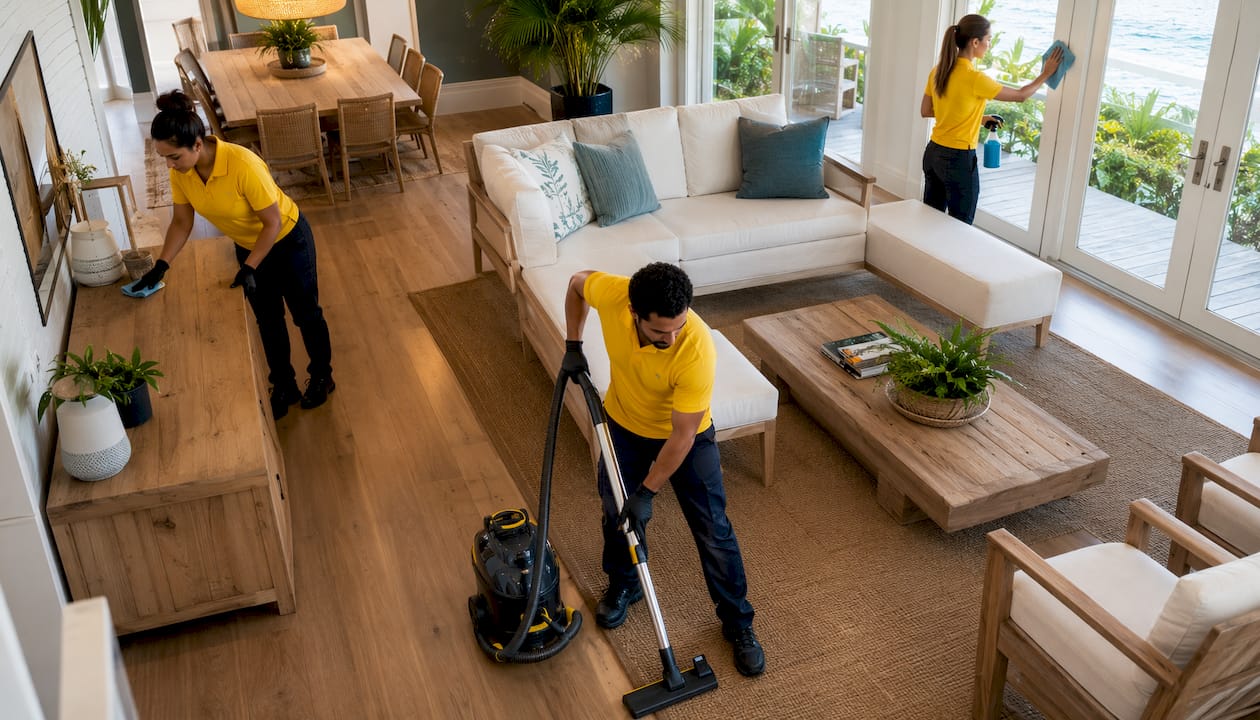
- Dust all surfaces, ceiling fans, light fixtures, and window sills
- Sweep, mop, or vacuum all floors (including under appliances if accessible)
- Wipe down kitchen countertops, cabinet fronts, and appliance exteriors
- Clean bathroom fixtures, mirrors, and tile surfaces
- Clear vents and return air grilles of dust buildup
- Wipe interior window glass and tracks
- Check and empty any standing water in sinks or trays
Inspection and documentation items (required at every visit):
- Timestamped photos of each room, including any condition changes
- Written notes on any new stains, odors, water marks, or pest signs
- HVAC filter condition check and dehumidifier water level
- Door and window lock confirmation
- Quick condition score (1–5 scale) logged in a shared report
Common add-ons to quote separately:
- Carpet shampooing (quarterly or after specific events)
- Deep appliance cleaning (oven interior, refrigerator coils)
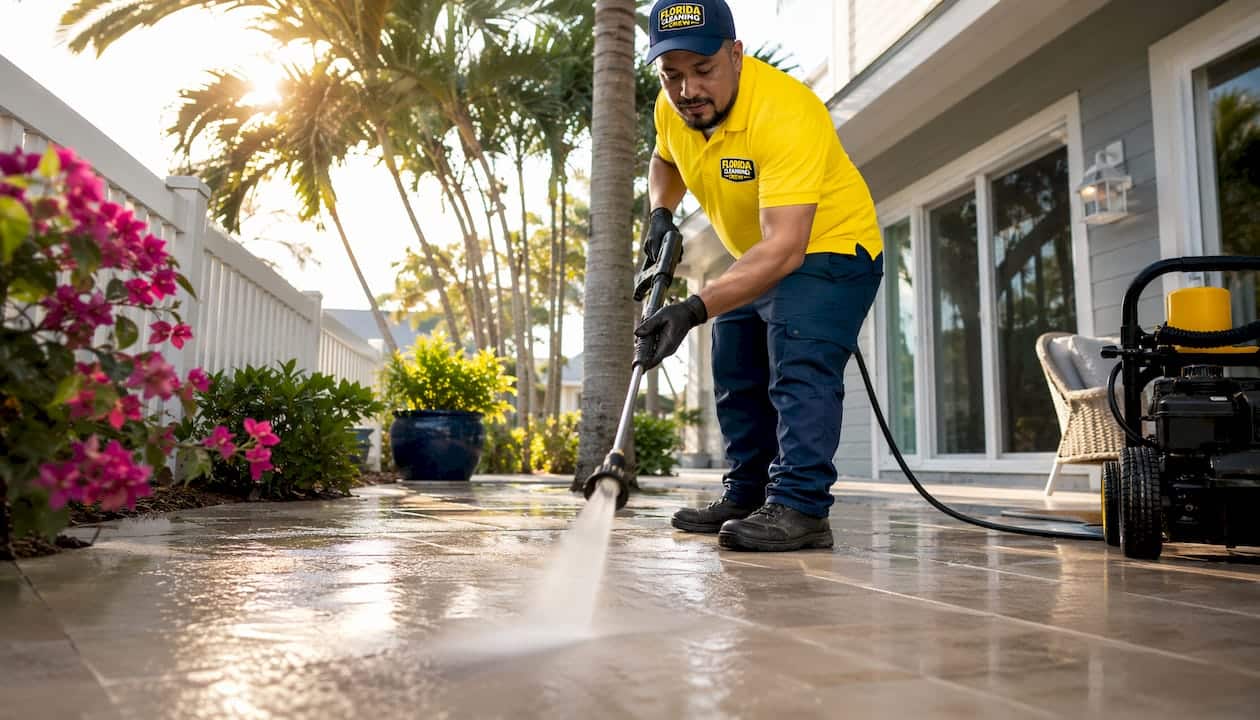
- Pressure washing of exterior surfaces and driveways
- Dehumidifier servicing or repositioning
- Pest prevention touchpoint (bait station check, entry point sealing)
Urgent flags to escalate immediately:
- Water stains on ceilings or walls (new or expanding)
- Musty odor indicating active mold
- Visible pest activity or droppings
- Electrical signs: tripped breakers, scorch marks, flickering lights
For tenant turnover cleaning specifics, the scope expands further, but the recurring vacant visit is leaner and focused on condition monitoring.
How often should you clean a vacant home?

Cadence depends on three variables: how long the property has been vacant, what type of property it is, and where it sits geographically. For Tampa Bay properties, humidity is the deciding factor more often than anything else.
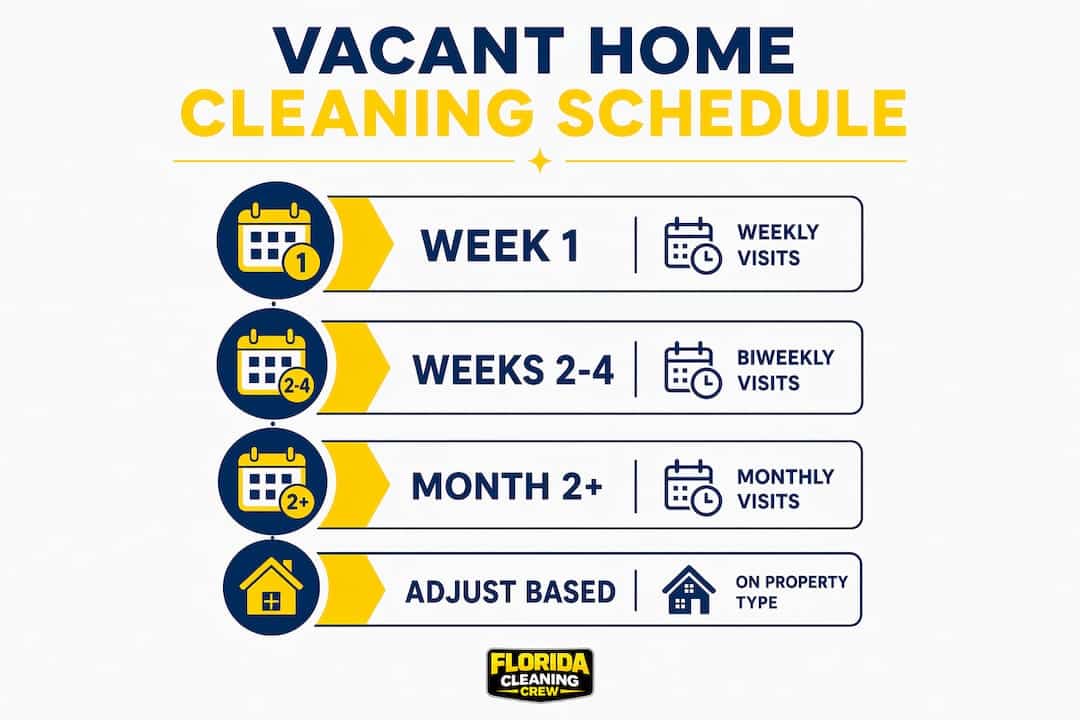
First 30–60 days of vacancy
Frequent visits are worth the cost during this early vacancy period to catch move-out damage and moisture shifts, keeping photos current and problems detected early.
After an extended vacancy with no showing activity, less frequent visits are usually sufficient for well-sealed properties with active management and minimal risks.
Property type adjustments
Single-family homes with yards need exterior checks added to the cadence, especially in Florida where grass and landscaping deteriorate fast. Condos with shared HVAC and limited exterior exposure can sometimes stretch to monthly visits. Vacation rentals that cycle between guests and vacancy need same-day turnover cleaning protocols layered on top of any recurring program.

Tampa Bay climate notes
Florida’s humidity creates a specific risk profile. Mold can establish in as little as 24–48 hours in the right conditions, and pest pressure is year-round. Properties without active dehumidification should be visited at least biweekly regardless of vacancy length. After heavy rain events, a construction project nearby, or any HVAC shutdown, escalate to weekly visits until conditions stabilize.
Statistic callout: Vacant property management best practices recommend documented inspection schedules as a standard operational control, with professional management reducing emergency repairs and preserving re-leasing timelines.
A practical threshold many property managers use: once a vacancy crosses 30–45 days, the risk and insurance exposure increase enough that professional recurring visits become more cost-effective than DIY oversight.
Does recurring cleaning actually save money?
The short answer is yes, and the math is not complicated. A recurring vacant-property cleaning visit in the Tampa Bay market typically runs in the range of $150–$300 per month, depending on property size and scope.
Compare that to what gets avoided. Mold remediation, pest extermination, and HVAC repairs due to neglect often incur substantial costs, far exceeding routine cleaning program expenses. None of those figures account for additional vacancy days while repairs are completed.
| Risk Event | Typical Avoided Cost | Recurring Program Cost (Monthly) |
|---|---|---|
| Mold remediation (moderate) | — | $150–$300 |
| Pest extermination (established) | $300–$800 | $150–$300 |
| HVAC repair from neglect | — | $150–$300 |
| Extended vacancy (1–2 extra weeks) | Lost rent or holding cost | $150–$300 |
The importance of cleaning vacant properties is clearest when you frame it this way: the program cost is fixed and predictable; the avoided costs are variable and potentially severe.
Statistic callout: Real estate cleaning guides consistently link pre-listing and vacancy cleaning to faster showings and stronger buyer or tenant perception, directly shortening the time a property sits on the market.
Keeping utilities minimally active during vacancy also matters here. Turning off electricity entirely creates maintenance blind spots. A dehumidifier that cannot run, or a leak that cannot be detected because water is off, turns a small problem into a large one. The cost of minimal utility service is almost always less than the cost of what it prevents.
How does recurring cleaning reduce legal and maintenance risks?
Vacant properties carry liability exposure that occupied ones do not. Slip hazards from moisture, mold that affects neighboring units in a condo building, code violations from visible neglect, and vandalism that goes undetected for weeks are all real risks. A recurring cleaning program addresses each of them systematically.
Risk checklist for each visit:
- Mold monitoring: check high-humidity areas (bathrooms, under sinks, window frames)
- Pest signs: look for droppings, entry points, or structural damage
- Security check: confirm all doors and windows are locked, no signs of forced entry
- Slip hazards: check for standing water, loose flooring, or debris
- Photo documentation: timestamped images of every room logged to a shared folder
What your service contract should include:
- Written scope of work with specific tasks listed for each visit
- Defined visit frequency and what triggers an escalation to more frequent visits
- Photo inspection log deliverable after every visit
- Emergency response window (how quickly the vendor contacts you if an urgent issue is found)
- Insurance indemnity clause confirming the vendor carries liability coverage
- Satisfaction policy or re-service guarantee
Pro Tip: Add a predefined escalation path to your service agreement. If the cleaning crew finds a water stain, mold sign, or pest activity, the contract should specify exactly who gets notified, within what timeframe, and what the next step is. Leaving that undefined means problems sit until the next scheduled visit.
How recurring cleaning intersects with your insurance policy is worth a direct conversation with your insurer. Many vacancy insurance clauses require documented maintenance activity to keep coverage valid. A photo inspection log from each cleaning visit is exactly the kind of evidence that supports a claim or defends against a dispute.
How does cleaning keep your listing photos and showings sharp?
First impressions in real estate are formed from listing photos, and those photos are taken once. If the property deteriorates between the photo shoot and a showing, the gap between expectation and reality costs you credibility with buyers and tenants. Recurring cleaning closes that gap.
Photo-ready checklist for each recurring visit:
- Windows cleaned inside and out (natural light is the cheapest staging tool available)
- Floors swept, mopped, and free of scuff marks
- Countertops wiped and clear of dust or water spots
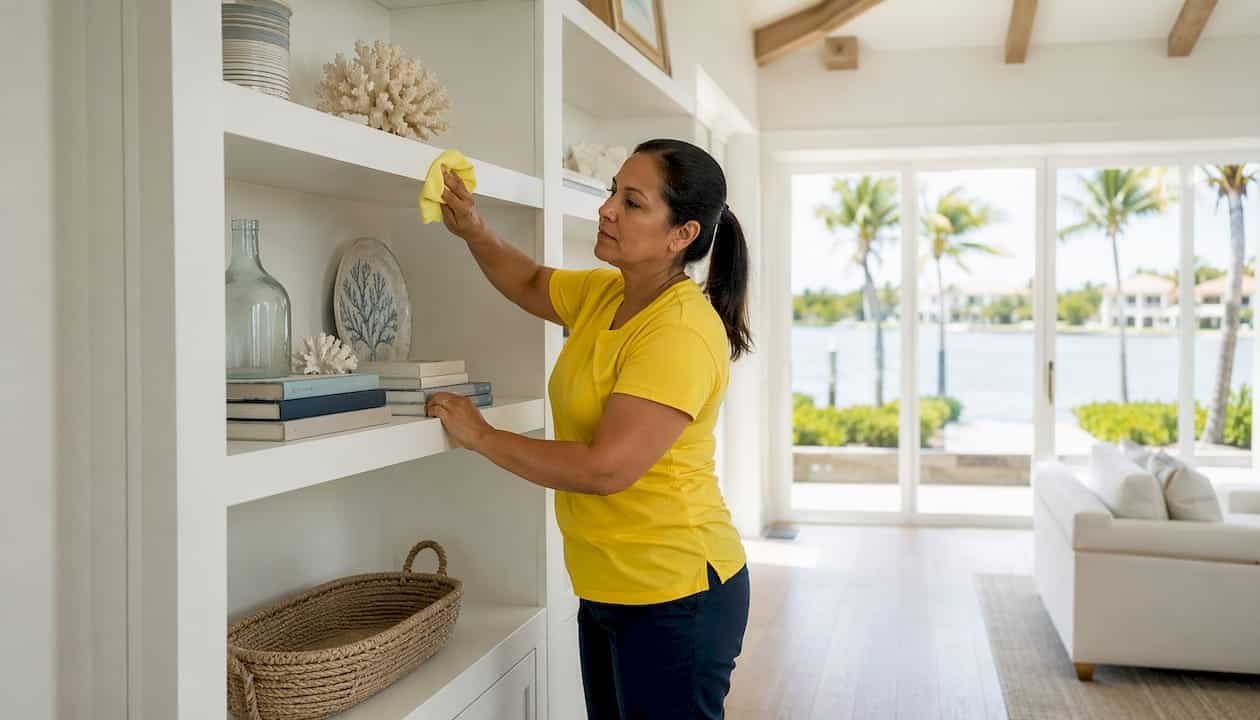
- Staging surfaces (shelves, mantels, bathroom vanities) dusted and reset
- Mirrors and glass surfaces streak-free
- Exterior entry cleaned and free of debris or cobwebs
Coordination tips for showings:
- Schedule recurring visits 24–48 hours before any showing or open house, not the same day
- Give your cleaning vendor a shared calendar or showing schedule so they can flag conflicts
- After a showing, do a quick walk-through check rather than a full clean, unless the property was left in poor condition
Staged properties benefit especially from recurring visits. Dust settles on staged furniture within days, and a property that looked polished in photos but feels dusty at a showing loses the buyer’s confidence fast. Recurring cleaning for Tampa Bay homes keeps that staged look intact through a long vacancy without requiring a full re-stage before every showing.
Window cleaning deserves specific attention. In Florida, salt air and humidity leave windows streaked and dull within weeks. Clean windows change how a property photographs and how it feels during a walkthrough.
How do you choose a cleaning vendor for vacant properties?
Not every cleaning company is set up for vacant-property work. The scope, documentation requirements, and access logistics are different from a standard residential clean. Here is how to evaluate a vendor before signing anything.
Vendor QA checklist:
- Licensed and insured (ask for a certificate of insurance, not just a verbal confirmation)
- Background-checked crews (especially important for properties with lockbox access)
- References specifically for vacant-property or property-management work
- Same-day or next-day flexibility for urgent pre-showing cleans
- Portfolio or examples of inspection reports and photo logs from past work
Service agreement checklist:
- Written scope of work with specific tasks per visit
- Defined visit frequency and escalation triggers
- Photo log deliverable after each visit (timestamped, room-by-room)
- Inspection items listed (condition score, issues found, flags for follow-up)
- Response SLA for urgent findings (24 hours is a reasonable standard)
- Insurance indemnity language
- Satisfaction policy or re-service clause
Red flags on proposals:
- Vague scope (“general cleaning” with no task list)
- No mention of documentation or photo logs
- No proof of insurance or background checks
- No escalation process for maintenance issues found during a visit
- Pricing that seems too low to cover the actual scope described
Run a trial period of two to four visits before committing to a long-term contract. Track three simple metrics: on-time arrival rate, inspection report completion rate, and issue-detection rate. A vendor who shows up on time, delivers a complete report, and flags a problem you did not know about is worth keeping.
A caretaker or coordinated cleaning vendor who manages documentation and vendor scheduling reduces turnover delays caused by uncoordinated service calls and missing paperwork.
What are the day-to-day logistics of recurring vacant-property cleaning?
Access, security, and scheduling coordination are where most recurring programs break down in practice. Getting these details right from the start prevents the friction that causes vendors to skip visits or owners to lose track of what was done.
Access options and tradeoffs:
- Lockbox: Simple and low-cost. Works well for trusted vendors. Rotate the code periodically and log who accessed it and when.
- Smart lock with temporary codes: More control. You can issue time-limited codes per visit and see access logs. Best for high-value properties or longer vacancies.
- Key management service: Useful when multiple vendors (cleaning, landscaping, HVAC) need coordinated access. Adds a layer of accountability.
Security best practices for vacant-property vendors:
- Require photo documentation at arrival and departure
- For high-value properties, require two-person crews
- Ask vendors to carry clear company ID and display it during visits
- Confirm that the vendor’s insurance covers work in unoccupied properties (some policies exclude this)
Scheduling around showings:
- Keep a shared calendar that your cleaning vendor, real estate agent, and property manager can all view
- Build a standing rule: no showings within four hours of a cleaning visit without confirmation
- After any showing, send a quick condition check request to your vendor for the next visit
Scheduling rental turnovers around showings and cleaning visits is a coordination skill that pays off in fewer last-minute scrambles and more consistent presentation.
How do you measure whether the program is working?
A recurring cleaning program without reporting is just an expense. With reporting, it becomes a documented asset-protection record. Here is what to require and track.
Required fields in each visit report:
- Date and time of visit
- Crew member name(s)
- Timestamped photos (minimum one per room, plus any flagged issues)
- Quick condition score per room (1–5 scale)
- Issues found and urgency level (routine, monitor, urgent)
- Tasks completed (checklist confirmation)
Monthly metrics to track:
- Visits completed vs. scheduled (on-time rate)
- Issues detected per visit
- Repairs required and average cost
- Days-to-ready after an issue was flagged and resolved
- Photo log completion rate
A one-page monthly vacancy report shared with the property owner and insurer does not need to be elaborate. Date, condition summary, issues found, actions taken, and next scheduled visit. That document is what protects you if a buyer, tenant, or insurer questions whether the property was maintained.
A disciplined documentation workflow, specifically photo logs, dated checklists, and a shared report, is the most valuable single control you have to defend against claims of neglect and demonstrate continuous care.
How Florida Cleaning Crew handles recurring services for vacant Tampa Bay listings
A practical example helps make the program concrete. Consider a vacant single-family home in the South Tampa area, three bedrooms, two bathrooms, sitting empty after a tenant moved out. The owner is listing it for sale and expects a 60–90 day vacancy.
Initial risk assessment findings:
- High humidity in the master bathroom (no exhaust fan running)
- Dust accumulation on ceiling fans and vents after two weeks
- Exterior entry showing cobwebs and minor debris
Scope and cadence used:
- Weeks 1–4: weekly visits covering full interior clean, photo log, dehumidifier check, and exterior entry wipe-down
- Weeks 5 onward: biweekly visits with the same scope, plus a monthly window cleaning add-on for listing photo refresh
- Pressure washing of the driveway and front entry scheduled before the first open house
Results and proof points:
- Moisture issue in the master bathroom flagged on visit two and resolved before mold established
- Consistent photo logs provided to the listing agent for use in marketing updates
- Property remained show-ready throughout the vacancy with no emergency cleans required before showings
- Listing agent confirmed the property photographed consistently well across multiple shoot updates
Florida Cleaning Crew serves Tampa, Clearwater, and St. Petersburg with licensed and insured crews and delivers photo inspection reports with every recurring visit. If you manage vacant listings in the Tampa Bay area and want to see what a trial visit looks like, that is the right place to start.
Key Takeaways
Recurring cleaning preserves a vacant listing’s market-ready condition, prevents expensive deterioration, and protects cash flow by catching problems before they become repair bills.
| Point | Details |
|---|---|
| Start weekly, then adjust | Visit weekly for the first 30 days, then shift to biweekly or monthly based on vacancy length and climate risk. |
| Documentation is the program | Require timestamped photo logs and a condition score after every visit to protect against insurer and buyer disputes. |
| Remediation costs far exceed prevention | Mold, pest, and HVAC repair costs can run $500–$6,000+, compared to $150–$300 per month for a recurring program. |
| Tampa Bay humidity changes the math | Florida’s climate makes biweekly visits the minimum for properties without active dehumidification. |
| Floridacc for Tampa Bay listings | Florida Cleaning Crew provides recurring vacant-property cleaning with licensed crews, photo reports, and local availability across Tampa, Clearwater, and St. Petersburg. |
Why vacant cleaning is really about preservation
Most people think of cleaning as something you do when a property looks dirty. For vacant listings, that framing gets you into trouble. By the time a vacant property looks dirty, the real damage, mold behind a wall, a slow leak under a sink, pest activity in a crawl space, has usually been building for weeks.
The properties that sell or lease fastest are not necessarily the ones that were cleaned most aggressively. They are the ones that were monitored consistently. A biweekly visit that catches a moisture problem in week three is worth more than a deep clean in week eight after the damage is done.
Tampa Bay’s climate makes this more urgent than it is in drier markets. Humidity does not wait for your next scheduled visit. Neither do pests. The agents and managers who treat recurring cleaning as a preservation program, not a cosmetic service, spend less on emergency repairs and close deals faster. That is not a theory. It is what the documentation shows, visit after visit.
Florida Cleaning Crew keeps your vacant listings ready to show
Vacant listings in Tampa Bay need more than an occasional sweep. Florida Cleaning Crew provides recurring cleaning programs built specifically for property managers, real estate agents, and homeowners managing empty units across Tampa, Clearwater, and St. Petersburg.

Every visit includes a photo inspection report, a documented condition score, and a crew that is licensed, insured, and background-checked. Services cover interior recurring cleans, photo-ready window cleaning, pressure washing for curb appeal, and junk removal when a unit needs clearing before showings. There are no vague scopes and no surprise gaps in documentation.
If you have a vacant listing that needs a consistent maintenance program, request a free estimate and get a written scope for your first visit. The trial period starts there.
Useful sources
- UmbrellaOne: Managing Vacant Commercial Buildings — Covers the operational case for routine maintenance schedules and inspection programs for unoccupied properties.
- All Right Home Cleaning: What Happens to a House When It Stays Empty — Details the specific deterioration risks (mold, HVAC, odor) that develop during extended vacancy without recurring maintenance.
- Dello Investments: Vacant House Guide for Homeowners — Practical homeowner guidance on vacancy management, insurance considerations, and inspection scheduling.
- Swan Intelligence: Vacant Property Management Services — Industry best practices for documented inspection schedules and professional management of vacant units.
- OxMaint: Vacant Property Maintenance Checklist — Checklist-based guidance with remediation cost context for neglected vacant units; used for ROI and risk sections.
- Miracle Maid: Key Benefits of Vacancy Cleaning for Landlords — Positions professional vacancy cleaning as a speed and quality advantage for landlords managing turnovers.
- My Property Managed: What Property Caretakers Do — Explains how coordinated caretaking and vendor management reduces turnover delays and documentation gaps.
- HomesMSP: Selling a Vacant Home Without Losing Leverage — Covers cost management and maintenance discipline for sellers managing vacant listings through closing.
FAQ
What does recurring cleaning mean for a vacant property?
Recurring cleaning means scheduled visits at a set frequency (weekly, biweekly, or monthly) focused on preservation, condition monitoring, and documentation rather than one-time remediation. It is the difference between reactive cleaning and proactive maintenance.
What decreases property value the most during a vacancy?
Moisture intrusion, mold, and pest infestation cause the most significant value loss in vacant properties, particularly in humid climates like Tampa Bay. These issues compound quickly when no one is monitoring the property between visits.
How often should you clean a vacant home?
Weekly visits for the first 30 days, then biweekly or monthly depending on vacancy length, property type, and climate risk. In Florida’s humidity, biweekly is the practical minimum for properties without active dehumidification.
What is the 80/20 rule in house cleaning?
The principle applied to cleaning suggests that a small subset of tasks (floors, bathrooms, kitchens, and high-touch surfaces) account for most of the visible condition impact. For vacant properties, those same areas are also the highest-risk zones for moisture and pest activity.
Is professional cleaning worth it for an empty home?
Yes. Professional recurring visits prevent long-term damage, generate the documentation insurers and buyers expect, and keep listings photo-ready without last-minute scrambles. Florida Cleaning Crew’s recurring programs for Tampa Bay vacant listings are designed specifically for this use case.