Most people think spring cleaning is just wiping down counters and opening windows. It’s not. What is spring cleaning, really? It’s a full seasonal reset for your home, your health, and honestly, your mindset. Homes accumulate months of dust, allergens, clutter, and grime that everyday cleaning simply doesn’t reach. For Tampa Bay homeowners, where humidity and coastal air accelerate buildup, that reset becomes even more pressing. This guide walks you through exactly what spring cleaning involves, why it matters more than you might expect, and how to do it without burning out halfway through the bathroom.
Table of Contents
- Key takeaways
- What spring cleaning actually is
- The real benefits of spring cleaning
- A room-by-room spring cleaning framework for Tampa Bay homes
- Expert strategies and mistakes to avoid
- Keeping the results year-round
- My honest take on spring cleaning in Tampa Bay
- Ready to tackle spring cleaning in Tampa Bay?
- FAQ
Key takeaways
| Point | Details |
|---|---|
| Spring cleaning goes deeper | It targets areas and tasks that regular weekly cleaning skips entirely. |
| Health benefits are real | Thorough cleaning reduces allergens, lowers stress hormones, and improves sleep quality. |
| Tampa Bay homes need extra attention | Humidity, coastal dust, and subtropical pollen make seasonal deep cleaning especially valuable here. |
| Focused cleaning beats marathons | Short, room-by-room sessions prevent burnout and produce better results than all-day sprints. |
| Maintenance keeps results lasting | Small daily habits lock in the gains from your spring clean for months afterward. |
What spring cleaning actually is
Spring cleaning is not an extension of your regular Saturday routine. It’s a deliberate, thorough pass through your entire home that targets the buildup, neglect, and disorder that accumulates over months. Think of it as the difference between maintaining a car and taking it in for a full service. You can wash the exterior every week, but eventually, the filters need replacing and the engine needs attention.
Regular cleaning handles visible surfaces: vacuuming floors, wiping stovetops, cleaning toilets. Spring cleaning goes further. It covers the spots you rarely think about and the tasks that only need doing once or twice a year.
Here’s what typically falls under the spring cleaning umbrella:
- Washing windows inside and out, including tracks and frames
- Deep cleaning behind and under appliances like the refrigerator and stove
- Wiping down baseboards, ceiling fans, and light fixtures
- Laundering curtains, duvets, blankets, and throw pillows
- Decluttering closets, cabinets, and storage areas
- Cleaning out the refrigerator and pantry
- Scrubbing grout, descaling faucets, and sanitizing high-touch surfaces
- Organizing paperwork, junk drawers, and utility areas
The timing matters too. Spring is the traditional window because winter seals homes tight, trapping pollutants, pet dander, and stagnant air inside for months. Opening up the house in spring and doing a thorough clean helps flush out that accumulated indoor pollution. The history of spring cleaning runs deep across cultures, from Persian “khaneh tekani” to Jewish Passover preparation, all rooted in the same instinct: purge the old and make space for the new.
For Tampa Bay homes specifically, spring also coincides with the tail end of dry season and the start of rainy season prep. Gutters, window seals, and moisture-prone areas like bathrooms and laundry rooms deserve extra attention before the humidity climbs.
The real benefits of spring cleaning
This is where most people underestimate what a proper spring clean actually does for them.
The most concrete benefit is air quality. People spend around 90% of their time indoors, and indoor pollutant levels can be significantly higher than outdoors. Dust mites, mold spores, pet dander, and volatile compounds from cleaning products and furniture all accumulate inside. A thorough spring cleaning for allergies specifically targets these triggers, and improving indoor air quality can reduce respiratory disease transmission risk by up to 80%.
“Spring cleaning acts as a natural reset for body and mind, helping regulate stress hormones and reduce clutter-induced sensory overload.” — Real Simple
The mental benefits are backed up too. Spring cleaning reduces cortisol levels and releases endorphins, which is why people consistently report feeling lighter and more focused after a thorough clean. Clutter creates visual noise that taxes your brain constantly, even when you’re not consciously noticing it. Clearing it removes that low-grade stress.
Sleep quality is another payoff that surprises people. Dust mites and allergens in bedding and bedroom surfaces contribute to nighttime congestion, coughing, and disrupted sleep. Cleaning promotes better sleep directly through allergen reduction and indirectly through the physical activity involved in cleaning, which helps regulate cortisol and supports a healthier sleep cycle.
For Tampa, Clearwater, and St. Petersburg residents, the subtropical climate adds another layer. Warm, humid conditions year-round mean mold, mildew, and dust mites thrive faster here than in drier climates. Spring cleaning is not just a nice tradition in this region. It’s genuinely necessary maintenance.
A room-by-room spring cleaning framework for Tampa Bay homes
The easiest way to approach how to spring clean without getting overwhelmed is to move room by room, with a clear list of tasks for each space. Don’t start in five places at once.
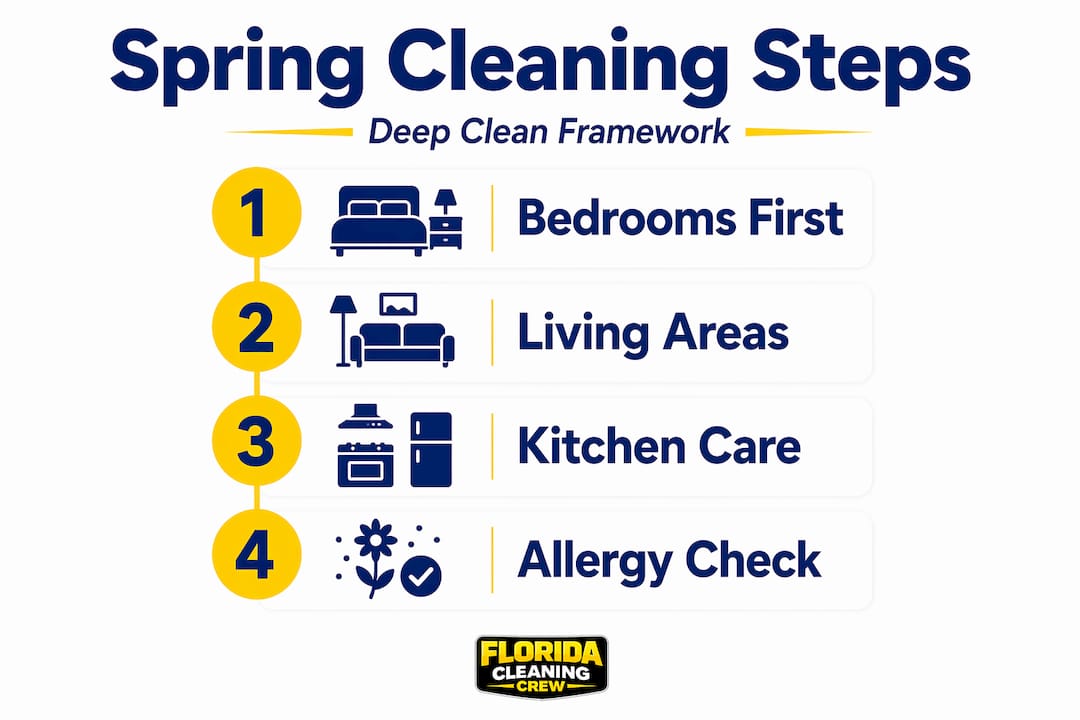
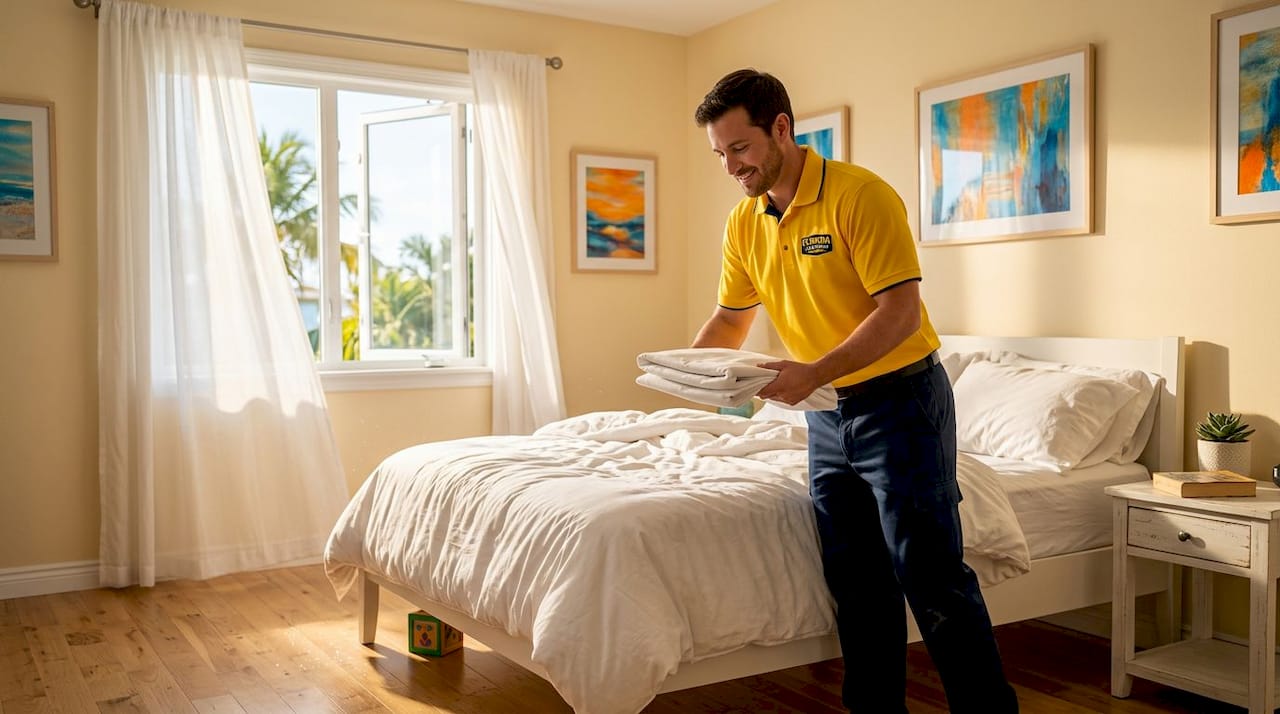
Start with bedrooms. These rooms carry the highest allergen load per square foot in most homes. Strip all bedding, wash everything on a hot cycle, and deep-clean pillows at least twice a year to remove sweat, skin cells, and dust mites. Vacuum the mattress using a HEPA-filtered machine, wipe down baseboards and ceiling fans, and clear out the closet while you’re at it.
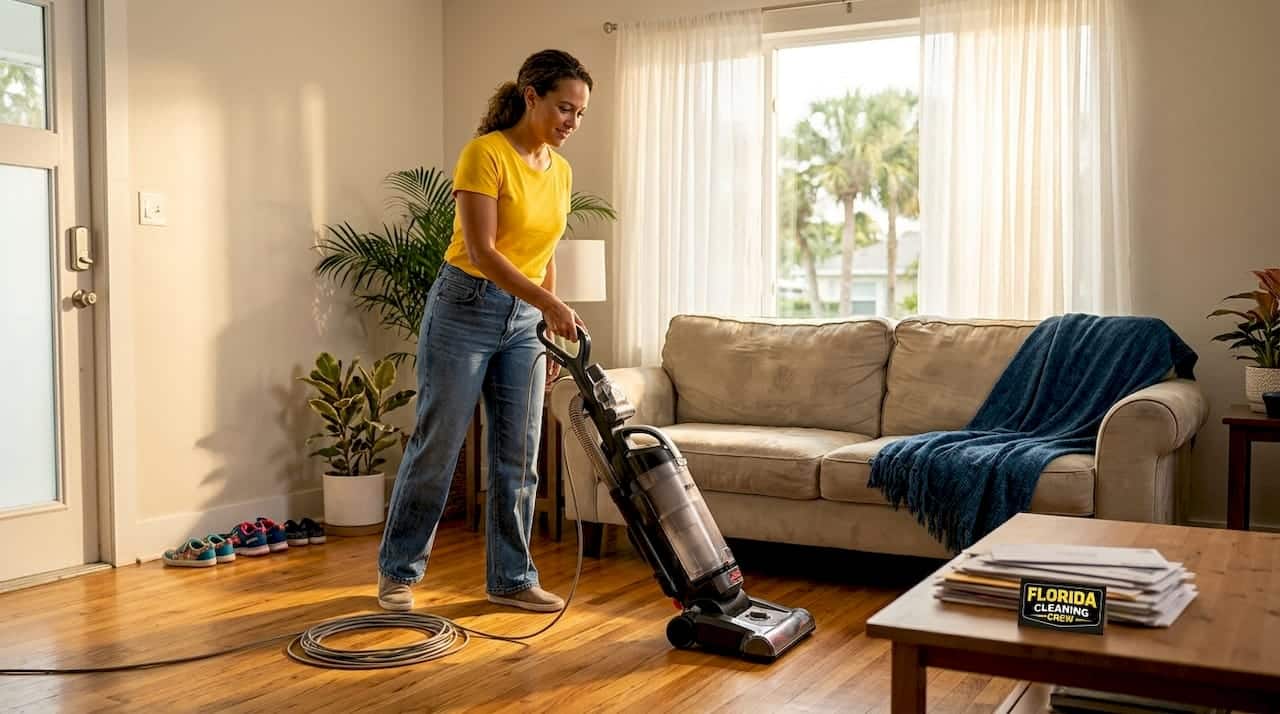
Move to the living areas. Upholstered furniture holds an enormous amount of dust and dander. Vacuum cushions, under cushions, and along the back of the sofa. Wipe electronics and entertainment units. Clean windows and the tracks they sit in. In Tampa Bay homes, coastal dust and salt particles can settle on blinds and window frames much faster than in inland areas, so these areas often need more attention than homeowners expect.
Tackle the kitchen thoroughly. Pull the refrigerator out, clean behind it, and vacuum the coils. Degrease the range hood filter. Soak oven racks in hot, soapy water rather than scrubbing them dry, which prevents surface damage and reduces the spread of particles in the air. Wipe down cabinet fronts, clean out the pantry, and check expiration dates.
Address bathrooms last. Descale showerheads and faucets, scrub grout lines, wash the shower curtain or clean the glass enclosure, and sanitize all high-touch surfaces. Check under sinks for moisture or mold, which is especially common in Florida’s humidity.
Here’s a practical sequence to follow:
- Declutter before you clean. Removing items from shelves and surfaces first makes cleaning faster and more thorough.
- Clean from top to bottom in every room. Dust and debris fall downward, so always finish with floors.
- Ventilate as you go. Open windows and run fans to push particles out rather than circulating them.
- Do laundry in batches. Wash all soft items from one room before moving to the next.
- Label and donate as you declutter. Keep a box nearby for items to donate, discard, or relocate.
Pro Tip: In Florida’s humidity, check behind furniture and appliances for early signs of mold during your spring clean. A small amount of moisture behind a dresser or washing machine can develop into a real problem by the time summer arrives.
When choosing cleaning tools, vacuum selection makes a measurable difference. True HEPA filters trap 99.97% of particles as small as 0.3 microns, while cheaper HEPA-style filters only capture 85 to 90%. That gap matters when you’re trying to reduce allergens rather than just redistribute them. This is a worthwhile investment if anyone in your home has allergies or asthma.
For green cleaning options, white vinegar, baking soda, and plant-based concentrates handle the majority of spring cleaning tasks without the fumes that come with harsh commercial products. This matters especially in a home with children, pets, or anyone with respiratory sensitivity.
For more detailed guidance on what a professional-level deep clean covers, the deep cleaning guide for homeowners at Floridacc is worth reading before you start.
Expert strategies and mistakes to avoid
Knowing what to clean is only half the picture. How you approach it determines whether you actually finish.
The most common mistake is treating spring cleaning like a single event. People block off one Saturday, try to do the entire house, and quit by midday because they’re exhausted and the kitchen still looks the same. That approach reliably produces frustration and an unfinished project.
Professional cleaners recommend 30-minute focused bursts or a room-by-room approach over several days instead. This keeps momentum up and lets you see real progress, which makes it easier to continue.
A few other strategies worth adopting:
- Wet-dry cleaning order: Wet-dry cleaning methods reduce allergen aerosolization significantly compared to dry dusting. Vacuum first, then wipe with a damp cloth. Dry dusting just moves particles into the air temporarily before they resettle.
- Sealed vacuum systems: A sealed, bagged vacuum prevents allergen leaks during cleaning. Without a sealed system, even a true HEPA filter can allow air to bypass the filter entirely, pushing contaminated air back into the room.
- Avoid scented products in confined spaces: Fragrance in cleaning sprays often comes from volatile compounds that worsen indoor air quality, particularly in bathrooms and closets without ventilation.
- Take breaks with intention: Set a timer for 25 to 30 minutes of focused work, then take a 10-minute break. This is not just a comfort tip. Rushing through cleaning tasks increases the chance of cross-contaminating surfaces and skipping steps.
Pro Tip: If you find certain cleaning tasks genuinely exhausting or physically difficult, that’s often a signal those areas need professional attention rather than a harder personal effort. There’s no award for doing it all yourself if the results suffer.
Knowing what to declutter also affects how effective your spring clean feels afterward. The goal is not just clean surfaces. It’s a home where every item has a place and the surfaces can actually be maintained. Clearing out items you no longer use or need reduces the total cleaning surface area going forward.
Keeping the results year-round
A thorough spring clean means nothing if the home returns to its previous state by August. Sustaining the results requires building a few small habits, not scheduling another marathon cleaning session in three months.
The most effective approach is what behavioral researchers call habit stacking. Pairing small decluttering tasks with daily activities makes them stick far better than treating maintenance as a separate chore. Put away two items before you make coffee. Wipe the stovetop while dinner cools. These micro-habits compound over time.
For Tampa Bay homes specifically:
- Ventilate regularly. Florida’s indoor air quality drops when homes stay sealed with AC running constantly. Running exhaust fans and occasionally opening windows during drier periods helps flush pollutants.
- Schedule monthly spot checks. Pick one area per month for a deeper clean: grout one month, kitchen appliance coils the next. This distributes the effort instead of letting it pile up again.
- Reassess storage twice a year. Spring and fall are natural checkpoints to evaluate what’s being stored and whether it still needs to be. Two passes a year prevents the gradual accumulation that makes the next spring clean feel overwhelming.
- Monitor humidity. Keep indoor humidity between 30 and 50 percent to limit mold and dust mite growth. A basic hygrometer costs under $15 and tells you when to run a dehumidifier.
- Schedule a professional deep clean annually. No matter how consistent your maintenance is, a professional pass once a year catches what daily habits miss. For guidance on timing, Floridacc’s resource on how often to deep clean your home breaks this down clearly.
Airbnb hosts in Clearwater and St. Petersburg should build post-stay deep cleans into their standard operating procedure rather than treating them as optional. Guests notice the difference, and so do your reviews.
My honest take on spring cleaning in Tampa Bay
I’ve talked to a lot of Tampa Bay homeowners about cleaning over the years, and there’s a pattern I keep seeing. People either skip spring cleaning entirely because it feels too overwhelming, or they do a surface-level version and wonder why the house still feels heavy and stuffy a week later.
Here’s what I’ve found to be true: the single biggest reason spring cleaning fails is that people set unrealistic expectations for a single session. They expect to transform the house in one day and when they don’t, they write off the whole effort. That’s not a motivation problem. It’s a planning problem.
What I’ve seen make a genuine difference, especially in Florida homes, is treating spring cleaning as a week-long project rather than a single event. One room per evening, or one zone per weekend morning. That’s it. The results are better, the process is less miserable, and the person actually finishes.
The local climate also makes this more urgent than I think people realize. Mold, dust mites, and allergens don’t behave the same way here as they do in a dry northern climate. I’ve seen homes in Tampa where a guest bedroom hadn’t been deep cleaned in two years, and the air quality in that room was genuinely affecting the occupant’s sleep and allergies. They thought they were dealing with a seasonal pollen problem. They were actually dealing with a cleaning problem.
The mindset shift that changes everything is simple: think of spring cleaning as maintenance, not punishment. It’s the same way you’d think about changing the oil in your car or getting a dental checkup. Skipping it doesn’t mean nothing bad is happening. It just means you’ll deal with it later, and later always costs more.
— Matt
Ready to tackle spring cleaning in Tampa Bay?

If your spring cleaning list feels longer than your available time, Floridacc is here to help. The team serves homeowners across Tampa, Clearwater, and St. Petersburg with licensed, insured residential cleaning services that go well beyond surface-level results. Whether you need a one-time seasonal deep clean to reset your home or recurring maintenance to keep it there, the process is straightforward and the results are consistent.
Floridacc uses eco-friendly products, brings professional-grade equipment, and works around your schedule. Airbnb hosts, busy families, and property managers throughout the Tampa Bay area trust Floridacc to deliver thorough, reliable results every visit. If you’re ready to hand off the hard part, explore home cleaning services in Tampa Bay and request a free estimate directly from the site.
FAQ
What is spring cleaning and how is it different from regular cleaning?
Spring cleaning is a thorough, seasonal deep clean that covers tasks skipped during weekly maintenance, including behind appliances, inside cabinets, and soft furnishings like curtains and bedding. Regular cleaning maintains surfaces; spring cleaning resets the entire home.
How long does spring cleaning typically take?
The time varies depending on home size and condition, but most professionals recommend spreading the work over several days using 30-minute focused sessions per room rather than attempting the entire home in a single day.
Is spring cleaning especially important for allergy sufferers?
Yes. Thorough spring cleaning for allergies removes dust mites, mold spores, and pet dander that accumulate over winter, and improving indoor air quality this way can reduce respiratory risks significantly.
What should you declutter during spring cleaning?
Focus on items you haven’t used in the past 12 months, expired pantry and medicine cabinet contents, duplicate tools or kitchen items, and clothing that no longer fits or gets worn. A good rule is: if it doesn’t have a purpose or a home, it goes.
How do you maintain a clean home after spring cleaning?
The most effective method is habit stacking: pairing small tidying tasks with daily routines and scheduling one focused area per month for a slightly deeper clean. For Tampa Bay homes, monitoring humidity and ventilating regularly between full cleans makes a measurable difference.