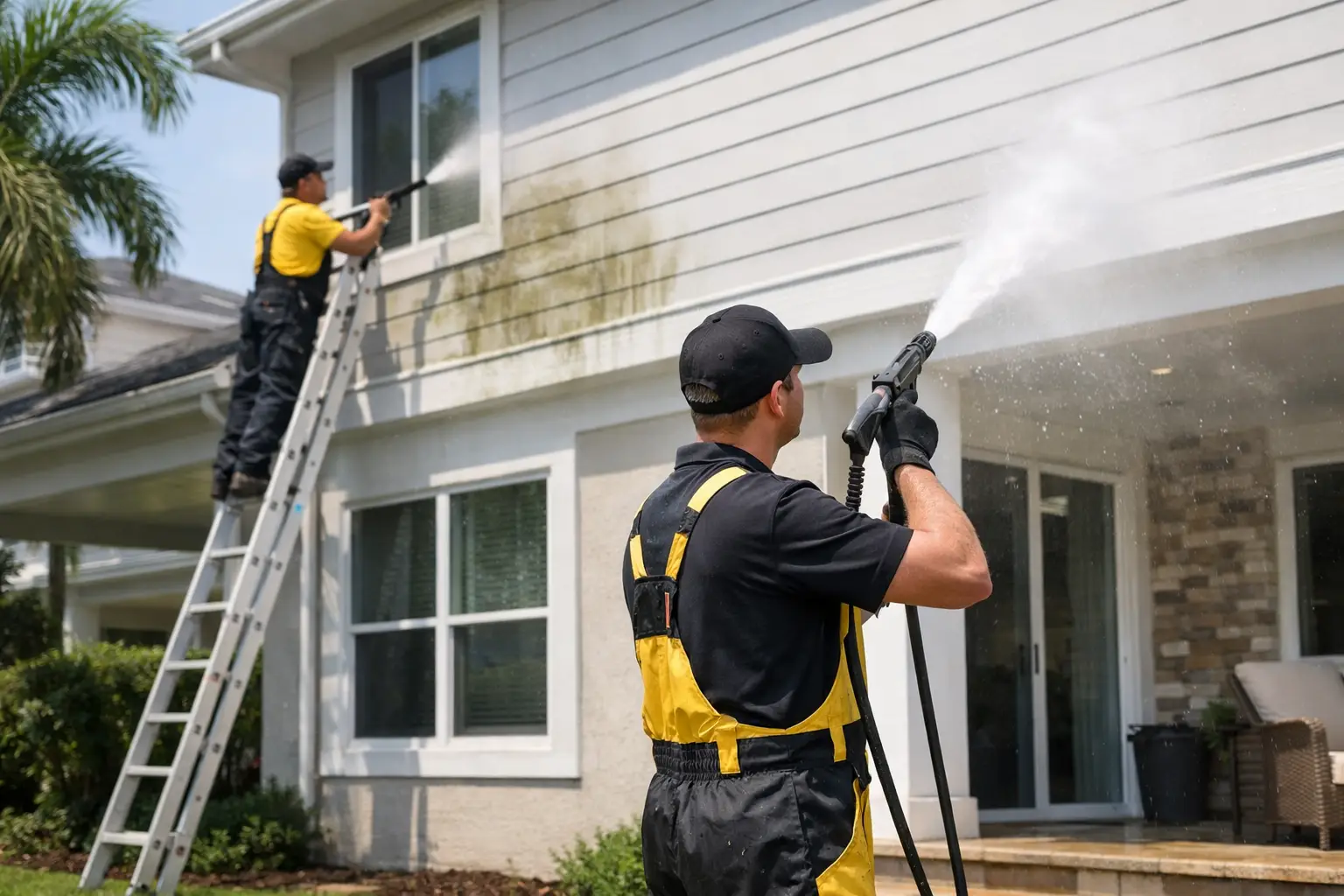
That green film on the siding is not just an eyesore. In Florida, moisture, heat, pollen, mildew, and road grime build up fast, and pressure washing house exterior surfaces the wrong way can do real damage just as quickly. The goal is not simply to blast dirt off the walls. It is to clean the home thoroughly without forcing water behind siding, stripping paint, or leaving streaks and scars.
For homeowners, property managers, and short-term rental hosts, exterior washing is part appearance and part property maintenance. A cleaner exterior improves curb appeal, helps surfaces last longer, and keeps a home or building from looking neglected. But the method matters. Different materials, finishes, and levels of buildup call for different pressure, detergents, and rinse techniques.
When pressure washing house exterior surfaces makes sense
Exterior washing is usually worth scheduling when you can see algae, mildew staining, spider webs, dirt runoff under gutters, pollen buildup, or dingy patches on siding and trim. If you are getting a property ready to sell, turning over a rental, or cleaning up after a long wet season, it can make an immediate difference.
It also helps before painting, staining, or minor exterior repairs. Cleaning first gives you a better surface to inspect and work on. On a commercial property or vacation rental, a clean exterior also sends a message that the place is maintained, which matters more than many owners realize.
That said, not every surface should be treated with the same force. There is a big difference between rinsing vinyl siding, cleaning stucco, and washing painted wood. A strong machine in untrained hands can crack, gouge, or lift materials that were in decent shape before the job started.
What can go wrong with the wrong approach
The biggest mistake people make is assuming more pressure means better cleaning. In practice, higher pressure often means higher risk. Water can be driven behind siding panels, into soffits, around window frames, and through small cracks where it does not belong. Once moisture gets trapped, mold, rot, and interior staining can follow.
Painted surfaces are another concern. If paint is already loose or aging, aggressive washing can strip it unevenly. On stucco, too much pressure can leave visible etching or break off weak spots. On older homes, worn caulking and sealant may not stand up to a hard spray.
There is also the issue of detergents. The wrong cleaner can affect landscaping, leave residue on surfaces, or fail to kill the organic growth that caused the staining in the first place. A house may look better for a week, then the green and black streaking comes right back because the surface was only rinsed, not properly treated.
Soft washing vs. high-pressure cleaning
For many homes, soft washing is the better method. Soft washing relies on lower pressure and the right cleaning solution to break down mildew, algae, dirt, and organic buildup before rinsing it away. It is safer for many siding materials and usually gives a more complete clean because it treats the source of staining instead of just knocking the surface layer loose.
High-pressure cleaning still has a place. It can be effective on durable, hard surfaces like certain concrete areas, some brick, and heavily soiled exterior elements designed to handle stronger force. But for house siding, trim, painted finishes, and delicate exterior features, lower pressure and a controlled process are often the smarter choice.
This is where experience matters. A trained crew adjusts the method to the surface instead of using one setting for everything on the property.
Which exterior materials need extra care
Vinyl siding is common and generally responds well to washing, but it still needs the right angle and pressure. Spray directed upward can push water behind the panels. Painted vinyl needs even more caution because faded or chalking areas can be marked up by an overly aggressive rinse.
Stucco is another material that requires judgment. It holds dirt and organic growth in its textured surface, but it can also chip or etch. Soft washing is often the safer route, especially when the finish is older or has hairline cracks.
Wood siding and trim can be cleaned successfully, but wood is less forgiving than many people think. Too much pressure can fur the surface, strip paint, or scar softer sections of the grain. If a home has older painted wood, washing should be approached as surface care, not force cleaning.
Brick is durable, but mortar joints can be vulnerable if they are aging or already compromised. Fiber cement siding holds up well when cleaned correctly, though pressure still needs to be controlled. Windows, screens, door seals, exterior lighting, and decorative trim all need protection during the process.
Timing matters more than most people expect
Exterior washing is not just a matter of finding an open afternoon. Weather conditions can affect both cleaning performance and results. On very hot days, detergents can dry too fast on the surface and leave uneven results if the work is not managed properly. Wind can carry overspray onto windows, nearby vehicles, or neighboring areas.
After storms or during stretches of high humidity, buildup may be heavier than it appears from the driveway. Shaded sides of the home often hold more algae and mildew, while front-facing elevations may show more dust, pollen, and traffic-related grime. A proper assessment looks at the whole property, not just the most visible wall.
For rental properties and listings, timing is also about presentation. If photos, showings, guest check-ins, or routine maintenance are coming up, it makes sense to plan exterior cleaning before the property starts drawing attention.
DIY or hire a professional?
For a small, accessible area with light buildup, some owners handle exterior washing on their own. If you already understand detergent handling, nozzle selection, water flow, and surface safety, that can work. But many DIY jobs go sideways for simple reasons: the wrong tip, standing too close, spraying at the wrong angle, or using household cleaners that were never meant for exterior washing.
Hiring a professional is usually the better call when the home is two stories, the siding is delicate, the staining is heavy, or the property has landscaping and exterior features that need protection. It is also the safer option if you want the work done quickly without trial and error.
A licensed and insured service adds another layer of protection. That matters when technicians are working around windows, rooflines, electrical fixtures, and painted finishes. For owners managing multiple properties or tight schedules, reliable scheduling and clear communication are just as valuable as the cleaning itself.
What a quality service should include
A good exterior wash starts before the machine turns on. The crew should identify the surface types, inspect problem areas, pre-treat where needed, and protect vulnerable spots around the property. The cleaning process should match the condition of the home, not follow a one-size-fits-all script.
You should also expect attention to runoff, surrounding plants, windows, entryways, and visible finish quality. If the only plan is to spray everything hard and move on, that is not careful property maintenance. It is a shortcut.
For many customers, exterior washing works best as part of broader property care. If the windows are spotted, the driveway is stained, or the interior is being prepared for guests, buyers, or tenants, bundling services can save time and reduce the hassle of coordinating multiple vendors. That is one reason companies like Florida Cleaning Crew approach homes and commercial properties as full-service maintenance jobs, not isolated tasks.
How often should you wash a house exterior?
There is no single answer because location, shade, landscaping, traffic exposure, and building materials all affect buildup. Many homes benefit from exterior washing about once a year. Others, especially in humid areas or near heavy tree cover, may need more frequent service to keep algae and mildew from taking over.
For Airbnb hosts, retail storefronts, and professionally managed properties, appearance standards may justify a tighter schedule. For owner-occupied homes, the right timing is often when discoloration becomes obvious or before a major event like listing the property or hosting family.
The best approach is to clean before buildup becomes stubborn. Light to moderate contamination is easier and safer to remove than months of embedded growth.
Is it worth it?
When done correctly, yes. A clean exterior changes how a property looks from the street, but it also helps protect the surfaces you are already paying to maintain. Siding, trim, paint, and masonry all last better when dirt, algae, and moisture-holding grime are not allowed to sit for long periods.
The key is treating exterior washing as maintenance, not punishment. You do not need the most aggressive method. You need the right one for the material, the climate, and the condition of the property.
If your home or building is starting to look weathered, a careful exterior wash can make it look maintained again without turning a cleaning job into a repair job. That is usually the difference between a rushed result and one that actually holds up.