
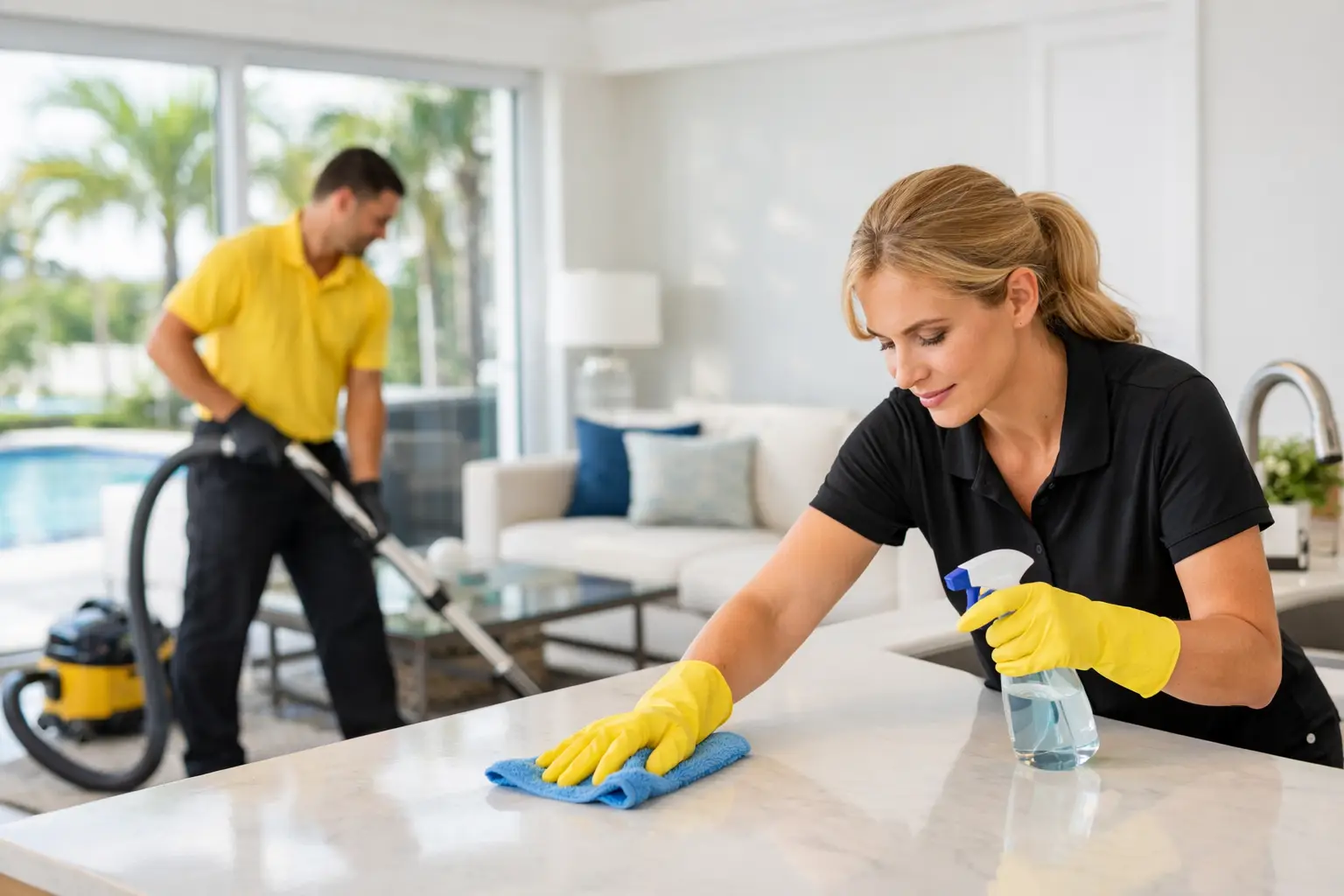
If you have ever looked around your home or business and thought, “It’s clean, but it still doesn’t feel clean,” that is usually where the question starts: what does deep cleaning include? A deep clean goes beyond routine upkeep. It targets buildup, neglected surfaces, and the hard-to-reach areas that collect dust, grease, soap scum, and grime over time.
For homeowners, property managers, Airbnb hosts, and business owners, that difference matters. A standard cleaning keeps a space presentable. A deep cleaning resets it. It is the service people book before guests arrive, before recurring service begins, after months of busy schedules, or when a property needs more than a quick surface pass.
What does deep cleaning include in most spaces?
In most cases, deep cleaning includes the tasks that are not done every visit during a regular cleaning. Think detailed hand-wiping, scrubbing, spot removal, and attention to places that are usually skipped when time is tight.
That often means baseboards, door frames, light switches, vents, blinds, ceiling fans, window sills, and the areas behind or underneath furniture if accessible. In kitchens, it usually includes degreasing surfaces, wiping cabinet fronts, cleaning backsplashes, scrubbing sinks and fixtures, and giving extra attention to appliances from the outside. In bathrooms, it typically means removing buildup around tubs, showers, tile, toilets, sinks, mirrors, and fixtures.
Floors are also treated differently. Instead of a quick vacuum and mop, deep cleaning usually means edge work, attention to corners, heavier soil removal, and more detailed treatment based on the flooring material.
The key point is simple: deep cleaning is about detail and condition, not just appearance.
The difference between standard cleaning and deep cleaning
A lot of confusion comes from the fact that both services cover the same rooms. The difference is the level of labor inside those rooms.
A standard cleaning is maintenance-focused. It is meant to keep a reasonably clean property under control. If the counters are already in decent shape, the floors are not heavily soiled, and the bathroom has light use, standard service is often enough.
A deep cleaning is a heavier reset. It is better for first-time service, homes that have gone several weeks or months without professional cleaning, rentals between demanding guest stays, or offices where foot traffic has added grime in corners and touchpoints. It takes more time because crews are not just removing loose dust and visible debris. They are dealing with stuck-on residue, layered dirt, and the places that affect how clean a property actually feels.
That is why deep cleaning usually costs more than standard recurring service. It is not a pricing trick. It reflects the added labor, supplies, and detail required to get the property to a higher baseline.
What a deep cleaning usually includes by room
Kitchen
The kitchen is one of the biggest problem areas in any property because grease and food residue build up gradually. At first glance, it may look fine. Up close, cabinet faces, appliance handles, backsplashes, and corners often tell a different story.
A deep clean in the kitchen usually includes detailed cleaning of countertops, sink basins, faucet fixtures, cabinet exteriors, backsplash surfaces, stovetop areas, microwave interiors or exteriors depending on service scope, and outside surfaces of larger appliances. Floors get extra attention around edges and under accessible furniture.
If a property needs inside-the-oven or inside-the-refrigerator cleaning, that may be included only if requested in advance. Many companies treat those as add-ons because they can significantly change the labor involved.
Bathrooms
Bathrooms are where deep cleaning is easiest to notice. Soap scum, hard water marks, grime around fixtures, and buildup in grout lines can make a bathroom feel dirty even after a standard wipe-down.
A deep bathroom clean usually includes scrubbing showers, tubs, tile walls, sinks, counters, toilets, mirrors, and fixtures in more detail than a maintenance visit. Crews often focus on corners, edges, grout lines, and around the base of the toilet, where hidden buildup tends to collect. Cabinet exteriors, light dusting of reachable vents, and floor edge work are also common.
In Florida properties, humidity can make bathrooms a bigger maintenance issue. Moisture tends to magnify buildup and can make neglected areas harder to clean if left too long.
Bedrooms and living areas
In bedrooms, living rooms, and common spaces, deep cleaning usually means detailed dusting and wiping rather than just surface tidying. Ceiling fan blades, blinds, baseboards, door frames, window sills, vents, and furniture exteriors are often part of the job.
Floors are vacuumed or mopped with more attention to edges, corners, and furniture lines. Cobweb removal is usually included. If upholstered furniture or carpets need extraction, shampooing, or stain treatment, that is typically a separate specialty service rather than part of a standard deep clean.
Offices and commercial spaces
For offices and small commercial properties, deep cleaning often includes workstations, waiting areas, break rooms, restrooms, touchpoints, glass partitions, and floor detailing beyond the normal nightly or weekly routine.
The exact scope depends on the business type. A medical-adjacent office, retail space, or shared workspace may have very different needs. High-touch points like door handles, counters, chairs, reception desks, and restroom fixtures usually get more attention during a deep clean because those surfaces affect both appearance and customer confidence.
What deep cleaning does not always include
This is where expectations matter. Deep cleaning is thorough, but it is not always unlimited.
Laundry, dishwashing, decluttering, heavy trash removal, biohazard cleanup, mold remediation, exterior window cleaning, pressure washing, and hauling large unwanted items are usually separate services. Inside cabinets, inside drawers, inside ovens, inside refrigerators, and cleaning behind heavy appliances may or may not be included unless specifically listed in the scope.
That is why a clear estimate matters. A reliable company should tell you what is included, what counts as extra labor, and what needs to be added separately. That protects both sides and helps avoid surprises on service day.
When a deep clean is worth booking
A deep clean makes sense when the property has drifted past what routine upkeep can handle. That might mean dust on baseboards, visible buildup in the shower, sticky kitchen surfaces, or floors that still look dull after mopping.
It is also a smart starting point before recurring service. Many professional companies recommend beginning with a deep clean so the home or business can be brought to a manageable standard first. After that, recurring visits are more efficient and more consistent.
For short-term rentals, deep cleaning is often scheduled between seasons, after heavy guest turnover, or before important booking periods. For homeowners, common trigger points include spring cleaning, holiday hosting, move-ins, move-outs, post-renovation touchups, and pre-sale prep. For businesses, it is often booked before inspections, after busy periods, or when regular janitorial work has not addressed the details.
How to tell if your property needs one
A simple test is this: if the main issue is clutter, you may need organizing first. If the main issue is dust, residue, grime, and neglected detail work, you likely need a deep clean.
Another sign is when routine cleaning no longer creates a noticeable improvement. If the surfaces get wiped but the property still feels stale or worn down, buildup is probably the issue. Deep cleaning addresses that hidden layer.
For landlords and property managers, odor can also be a clue. While deep cleaning does not solve every odor problem, it often removes the grime and residue that contribute to lingering smells in kitchens, bathrooms, and high-traffic common areas.
How to prepare for a deep cleaning service
Preparation does not need to be complicated, but a little planning helps the crew work faster and more thoroughly.
Pick up personal items, paperwork, toys, clothing, and loose clutter so accessible surfaces can actually be cleaned. If you want inside-appliance cleaning or another extra task, mention it before the appointment instead of assuming it is included. If there are fragile items, limited-access rooms, or problem areas you want prioritized, point those out early.
For commercial spaces or rentals, it also helps to schedule service during lower-traffic hours when possible. That reduces interruption and gives the crew room to work safely and efficiently.
Why scope matters more than labels
Not every company uses the same checklist. One provider’s deep cleaning package may be more detailed than another’s, and some companies build their scope around the property type rather than using one fixed list for every job.
That is why the best question is not just what does deep cleaning include. It is also, what does your deep cleaning include for my space? A condo, family home, office suite, and vacation rental can all require different levels of detail. The right service should match the condition of the property, the timeline, and the result you need.
At Florida Cleaning Crew, that practical approach is what customers tend to value most – clear scope, dependable crews, and work that is done with enough detail to make a real difference.
If your space looks okay on the surface but still feels overdue, that usually means it is time for more than a basic clean. A proper deep cleaning should leave you with a space that feels reset, easier to maintain, and ready for what comes next.